lift+love family stories by autumn mcalpin
Since 2021, Lift+Love has shared hundreds of real stories from Latter-day Saint LGBTQ individuals, their families, and allies. These stories—written by Autumn McAlpin—emerged from personal interviews with each participant and were published with their express permission.

A LIFT+LOVE FAMILY STORY
My brother is gay…
My brother is gay.
We are both now in our mid-50s, so that means our journeys started in the 1960s. Here is a bit of a retrospective:
As kids, I never thought anything was different about Joe. We were brother and sister, and that was that. Joe was Joe. He was, however, the cutest. The family landed on that word - “cutest” - because it summed up everything about him: his kind nature, wit, charm, musical gifts, insights, and intelligence, not to mention his good looks or that he was always followed by a flock of adoring friends. It was evident everywhere we went, not just in our family. I’d hear people tell my parents how extraordinary he was. People would stop me on the street and tell me. Once I even overheard a complete stranger exclaim, “I travel every year from Sioux City just to see Joe!” This became easier to hear as I got older - when I could finally discern that, truly, Joe really is the cutest. It worked its way into the family lexicon: “Why did Joe beat us in Monopoly?... get the extra slice of pie? ... get chosen as valedictorian speaker?” “Because Joe is the cutest, naturally.” The saying was a joke rooted in truth.
All this cuteness never occurred to me to be anything more than just outrageous luck.
In those times (the 70s), the only references that I ever heard publicly about gay people were very negative. Very negative. Vulgar and fear-based. But at home, if the topic were to come up, we heard a much different story. Being gay was just different - no better, no worse - but because it affected such a small minority of people, we should always be kind and loving - they were vulnerable. Mom spoke of San Francisco with respect. Wasn’t it wonderful that a city opened its doors wide to people that had been rejected by family and society? A place where everyone could live peaceably?
What a dichotomy of perspectives!
So I went on my merry way and landed at BYU. Joe went to a small liberal arts school in the Midwest. I couldn’t understand his choice. We had grown up with so few church members that I was DYING to get to the land of the Mormons. He hadn’t enjoyed the scouting program at church and was often the only boy there his age. Church was just awkward for him - except for the music, where he was in a regular rotation of providing the special musical numbers in sacrament meeting.
Finally, after graduation (now the 80s), Joe came out to me. What? I never once connected the dots. Never.
That was certainly a different time. Joe wasn’t like the negative words that I had heard on the street. Not one bit. He was great. He was the best. I was lucky he was on my team. And although our family had a more loving and broad description of the complexities of homosexuality, I still hadn’t considered it being that close to me. Willful ignorance?
Here’s the part of the story where I now hang my head in shame: I tried to talk him out of it. “Your life would be so much easier if you just wouldn’t be gay. OK?” He was very patient with me. Explained a TON about it not just being a sex thing, but a worldview thing. And that it wasn’t a choice, it simply was. These conversations went on for many years as he worked to educate me. Back then the word “ally” was only a WWII reference for the good guys. It would have been a useful word for me to understand.
So we went on. He left the church after the church left him.
We hit bumps along the way, but we always managed to put each other first over differing views or allegiances. Most of that grace was on his part, and sadly, not on mine. With more exposure and learning, more growth came. Meanwhile, I knew in my gut that what I heard at church was incorrect. I chalked it up to old-school ideas. (I mean, face cards? Really?) So it was an easy step to see that “the words” were not infallible. Also, as I matured in the gospel and spent more time in the scriptures, I became more and more troubled - good trouble - that a lot of our commonly held beliefs are not grounded in scriptures or in Christ at all. Then came the explosion of light as online resources, including Lift+Love, created a wellspring and repository of archived lived experiences. Open conversations here and there. T and this created a calm strength. All of this has helped me to articulate my views more clearly and to more openly disagree with lessons, casual conversations, and off-hand comments that wander into hurtful paths. I am at once grateful for this, while also ashamed that I couldn’t get there on my own. But still, I am here now.
Joe and I remain close still. Very close. My husband and I attended and participated in his beautiful wedding. Our kids love spending time with Joe and his husband, sending them outlandish Happy Guncles’ Day cards. All is well between us.
Except. Except for the church aspect. He is very supportive of our affiliation and our work in the church, but he is sharp and direct about many of the church’s actions, comments, and inconsistencies. I have grown to love this. It is real. It challenges me. It is not an echo chamber.
I am also aware that this is my version of the story. Joe would likely have more and different things to say. I work hard to keep positivity between us because there can still be hot spots that sting, and that is exactly why I share this anonymously. I was and remain a witness - an evolving witness - to this story.
In summary, Joe remains the cutest. I have changed. A lot. I still worry about being a crummy big sister at a very important time and for a very long time. But grace is beautiful. On my end, I try to do better because I know better. I advocate calmly and firmly for others. I keep an open door. I seek to love my neighbor --as my highest ideal. I keep an open door. And from where I stand, I can see light, and it is beautiful.!
** We’d like to thank our (anonymous) contributor this week for sharing your heart and wisdom. Artwork: Anselm Kiefer’s “The Renowned Orders of the Night”
THE STEPHENSON FAMILY
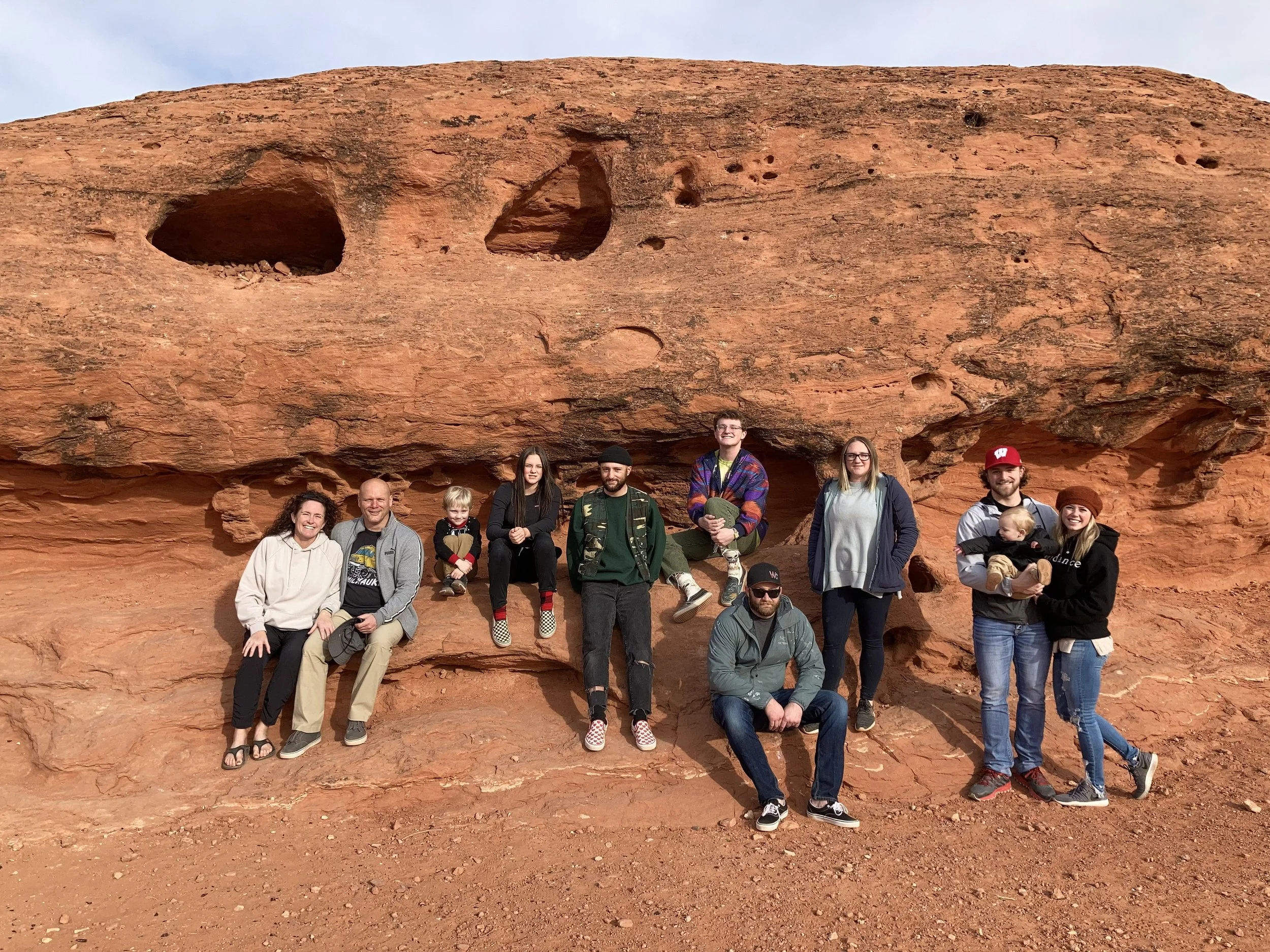
Every Christmas Eve, you can find the Stephenson family ice skating with their cousins near their hometown of South Jordan, UT, then eating dinner at Red Robin, a tradition that began several years ago when dinner plans were abruptly canceled and they found themselves with nowhere to eat.
Every Christmas Eve, you can find the Stephenson family ice skating with their cousins near their hometown of South Jordan, UT, then eating dinner at Red Robin, a tradition that began several years ago when dinner plans were abruptly canceled and they found themselves with nowhere to eat. The tradition stuck. As did that of the Stephenson kids decorating their tree and the house each year while their mom, Kelli, acts as holiday music DJ on the couch after hanging her one and only decoration – a Bah Humbug wreath on the front door. Additional (more traditional) holiday week festivities include looking at lights, shopping, a Chic-fil-A run, opening sibling and grandkid gifts on Christmas Eve, and movie nights featuring several holiday classics: Elf, Christmas Vacation, A Christmas Story, Family Man, and Daddy’s Home 2. But one thing that sets the Stephenson apart from many families is that Kelli and Scott have not one but two LGBTQ+ sons in their line-up of five kids: Ashly (a 28-year-old married mother of two), Colby – 23, Eli – 21, Zach – 19, and Emma – 16.
Kelli says that while she sensed Zach was gay since he was very young, older brother’s Eli coming out really shocked her. He was 15 and the revelation came at a stressful time for the family. Their oldest daughter was living with them and expecting a baby any day, their youngest daughter had just been diagnosed with diabetes, and middle child Eli had been struggling with sibling dynamics and mental health issues for some time. But Kelli had just experienced a small victory, coming in third place Masters at the Utah Valley Marathon. After the race, she climbed into the car with Scott, eager to celebrate, but it was clear he was in a grumpy mood. He abruptly shared that Zach had texted him and told him that Eli was gay. It was a long drive home.
When Scott and Kelli got home, they asked Eli about his brother’s text. Eli said he was bisexual and that it was a big reason he had been struggling so much the past couple of years. A few months later, Eli shared that he was actually gay, then a few years later, pansexual, and now, along with his partner, identifies as nonbinary using the pronouns they when with friends and he at home. Kelli says Eli’s life has been marked with a series of struggles over the years – well beyond his sexuality. He started seeking counseling shortly after coming out, and still sees the same wonderful counselor who has helped both him and Zach over the years. Kelli says, “At first he thought he’d try to stay in the church and marry a woman. But that idea was fleeting as he learned to love and embrace his true self.” Eli’s branched out of his SLC family’s turf to Provo of all places, where he enjoys visiting Encircle with his partner, and finds the BYU culture rather affirming. Kelli was also pleasantly surprised to find the Utah Valley community largely loving when she marched in her first Pride event this summer near BYU’s campus. While she expected slurs and bottles to be thrown, she says instead, they received supportive honking and loving cheers.
Eli currently attends an Episcopalian church in Provo, where he enjoys lighting the unity candles and listening to sermons given by a female Deacon whom he respects and connects with. His parents recently joined him for a Sunday Service and they felt a very strong and affirming spirit and knew their son had found a good place to feed his spirit and feel God’s love and acceptance. They are pleased that he has found a faith home: “Everyone needs a place where they feel like they belong.” While Eli doesn’t agree with LDS doctrine in its entirety and has struggled with some policies, Kelli says he always felt loved and accepted by the people in the ward in which he was raised. Recently he called her to find out what time church was in their previous ward because he wanted to go visit the people he loved – including some “prickly pears” that other congregants found hard to connect with.
While Eli has held many jobs trying to find his place in the world, and has taken his time with his schooling, he recently took a criminal justice class at SLCC taught by his police officer father, and Scott told Kelli, “He’s so smart. One of the best writers I’ve ever taught.” His final paper was on transgender rights in the prison system. Eli would like to be an English teacher someday, like his mom.
While Zach was also outed at age 15, ironically by Eli (sibling revenge cycle complete), his experience has been different in that he has always felt an affinity for the gospel. But Kelli says he struggled to feel accepted by some of the young men in the ward and experienced incessant bullying from a group of girls while in high school. He was always the Stephenson’s most religious child, and had excelled with school, always maintaining a 4.0 until the bullying began. His last two years of high school were difficult, but he did eventually find his place. He also was a spiritual giant in seminary where, according to his teacher, “he practically taught the class” until he abruptly quit at the end of his senior year due to a group of “toxic friends” who talked him into it. He still regrets this choice as it left his seminary teacher wondering what he could have done better. Zach now works every Sunday and no longer attends church, but Kelli says he will still defend the gospel and hopes to find a partner who has an LDS background and hopes one day to be able to attend an affirming ward together with his spouse.
Kelli says, “Zach’s testimony is stronger than mine, by mountains. When he first came out, he was adamant he’d marry a woman instead of a man, until a year later when he realized that marrying a woman might end up destroying a family 20 years later. He won’t do that.” From 16, he knew he needed to be true to who he was in order to find peace and happiness. He hopes to be able to do that within the church somehow. None of the Stephenson’s five children attend church anymore for various reasons. Kelli and Scott still attend and take their grandson. They appreciate that their new neighbors and the bishopric of their new ward seem to prioritize love and acceptance for all. So far, they have been met with kindness, and every lesson taught and conversation with those in leadership has been inclusive and kind.
Scott wasn’t raised in the church, but grew up in Utah, where he recounts some childhood neighbors were told to steer clear of his non-LDS family. Kelli was raised in the church but many of her friends and neighbors were not LDS. She was taught to love and accept everyone, regardless of their religion. Kelli says Scott (who serves in YM while she teaches the five-year-olds in Primary) now definitely knows the scriptures better than she does and has a testimony that awes her. His life was not easy, but he had the example of amazing convert grandparents who were a pillar of strength for him.
Of her testimony, Kelli says, “I have the faith of a child. I just know that the church is true, and I don’t know why. I do not question the gospel, although sometimes I may question an individual within the gospel. I have this strange ability to dismiss things I don’t agree with,” says Kelli. “I can hear something troubling at conference or church and think, ‘Well, that doesn’t seem right,’ and just move on. I generally talk to God in my head and simply say, ‘I don’t understand this, but I know you do and will help me understand.’ This is what I did with the Exclusion Policy in 2015. God guided my research and helped me understand the intent, even though I believed the policy would not accomplish this purpose the way it was written, and I didn’t agree with it. This always worked until that one talk at BYU -- that one was hard because the message was incongruent with the past messages of this apostle.” Referencing Elder Holland’s August 2021 talk to the school’s faculty, Kelli posted on her Facebook account: “My faith is not wavering. My testimony has not been shaken. I am as strong in the church as ever. It’s ok to question and/or be hurt by a talk from a prophet or an apostle. It says nothing about my faith and does not mean I do not sustain my leaders and the leaders of the church. Jesus taught us to go after the one when the ninety and nine are safe and together. That’s what flying a pride flag or wearing a rainbow pin or putting up a welcome sign for LGBTQ+ youth who are brave enough to go to seminary does — it goes after the one. The ninety and nine have been safe and welcomed all along; the one has been made to feel unwhole, wrong, and often cast out as a sinner when they are just being who God made them. I will continue to rainbowfy every part of my life that I can to call back and welcome the one. I see them, I hear them, I love them, they are my children (literally and figuratively).”
Indeed, Kelli shows her LGBTQ+ support visually in her middle school English classroom and is co-chairing the first GSA club at her school this year. The district doesn’t allow Pride flags to be hung and Kelli’s own kids would prefer not to have that visual announcement hung at all times in their own home. But her sons love that Kelli does what she can within district policy and uses rainbows in her classroom décor, from stickers on her always present Swig cup, to the rainbow mug that holds the rainbow popsicle sticks used to randomly call on students, to a 3-D rainbow butterfly mural on one wall, as well as a sign that greets every student at the door: “All are welcome here.” “I survive each day because my kids tell me they love me. I’m not a perfect parent, but I apologize when I make mistakes, so they know I’m trying. And Zach and Eli have told me they’re glad they have me so that gives me peace.” In turn, Kelli’s grateful that things are now easier for her kids than they were 30 years ago for her close friend’s mother who was gay, and even 10 years ago for another family member who came out as gay in a family steeped in LDS tradition and culture. “I know it’s cliché, but we need to just love. That’s all. No judgement or casting stones or questioning, just love.” She is very grateful that extended family has shown nothing but love and acceptance for her children. That love goes a long way in allowing them to live authentic lives without fear of repercussions from family, the ones they need the most.
Right before the Stephenson family moved this summer, Zach approached the pulpit to bear his testimony in the ward in which he’d been raised. He pulled a card out of his scriptures that Kelli thought he’d lost a long time ago. It was a note his bishop had given him when he was 15 and feeling he was unworthy to be ordained a priest because he was gay. But Zach had kept that card, which contained the scripture D&C 18:10 and the simple words “You are loved” -- three words he really wanted to share. Three words that say it all.


DAVID SMURTHWAITE
“One afternoon when everyone was out of the house, I snuck into the back of my mother’s closet,” says David Smurthwaite of Salt Lake City, UT, recalling his childhood. “There was a really old dress tucked away I’d never seen my mom wear – and rightfully so – and I stole it away to my room along with collected dregs of makeup rejects from our guest bathroom. And there, behind a locked bedroom door, I first experimented with expression….
“One afternoon when everyone was out of the house, I snuck into the back of my mother’s closet,” says David Smurthwaite of Salt Lake City, UT, recalling his childhood. “There was a really old dress tucked away I’d never seen my mom wear – and rightfully so – and I stole it away to my room along with collected dregs of makeup rejects from our guest bathroom. And there, behind a locked bedroom door, I first experimented with expression.”
This coming-of-age discovery at age 11 was how gender dysphoria first manifested in David’s life – decades before he understood what the term actually meant. But he vividly remembers that early wrestle with body image and feeling uncomfortable in his own skin. Envisioning himself in feminine form was “an exciting, comforting thought,” David says. “It brought with it a flood of emotions I didn’t know how to process at the time, but I knew I felt them.”
David now has compassion for that 11-year-old boy who felt he “was doing something wrong because it was not discussed in church.” His experience of gender dysphoria up until that point had only been what he had witnessed on Ricki Lake or Jerry Springer. From a moral standpoint, even at a young age he felt he needed to sort it out so he made an appointment with his bishop, who he remembers as a loving, grandfather-type. The bishop was loving and listened compassionately before advising, “That’s probably something we shouldn’t be doing.” David left with a reinforced standpoint that it was wrong to explore this side of himself. He snuck the dress back in his mother’s closet, threw away the makeup, and tried to bury this perceived “moral defect” for decades. As cyclical feelings would resurface, he’d shove them down with remorse. And while balancing this silent cycle on his own, he proceeded to get married, have four kids and “raise an amazing family with amazing experiences. But there was always an underlying situation I wasn’t giving attention to.”
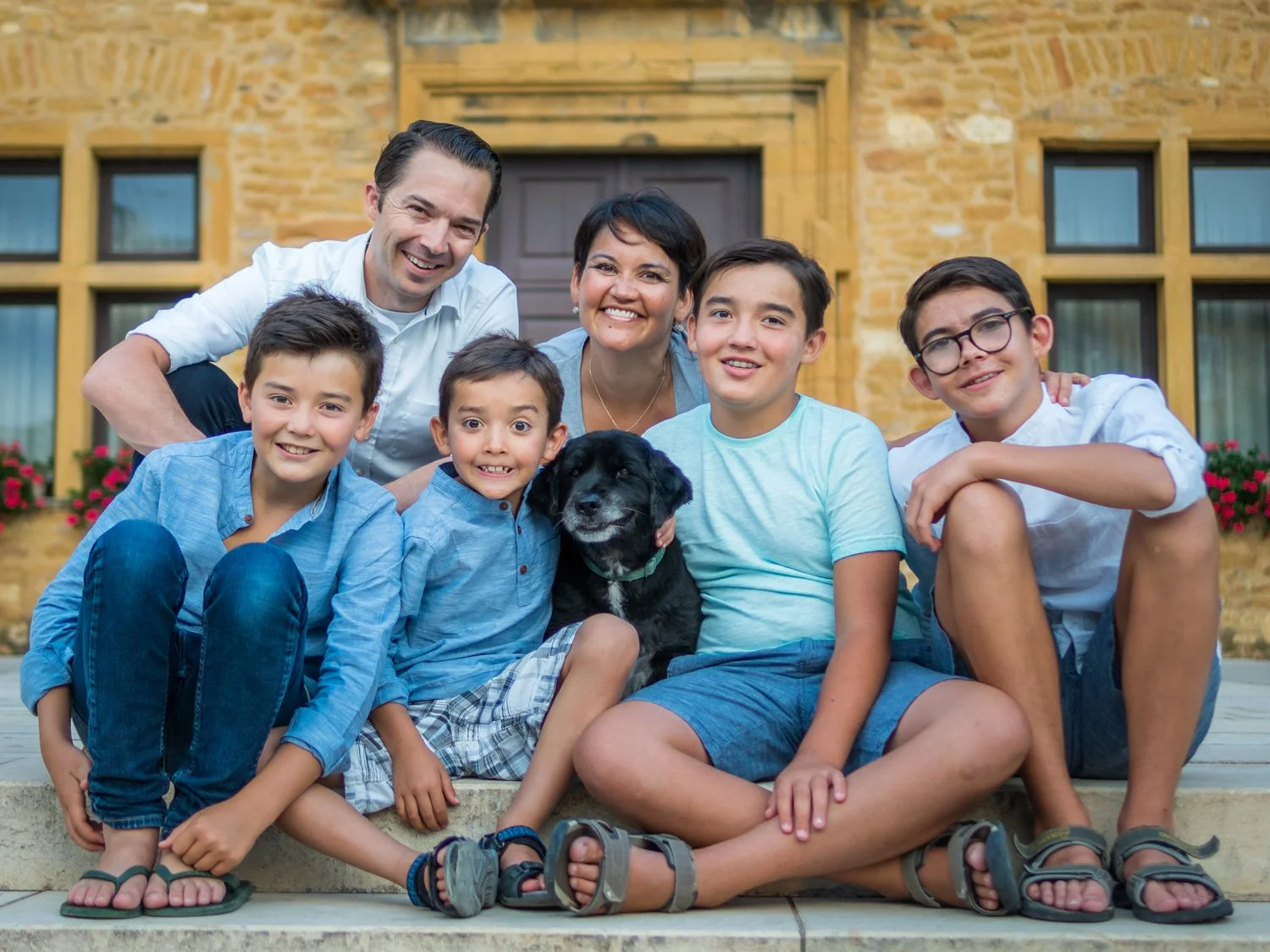
Business took the Smurthwaite family around the world. They spent several years living abroad while raising sons Noah – now 17, Sam – 15, Oliver – 13, and Eliot – 11. While living outside Lyon, France, another wave of feeling arose for David. At this point exhausted, David finally decided to explore the why behind what he’d been living with for three decades. This time an online search of “why do I feel like a woman sometimes?” unveiled a wealth of information and new vocabulary. “It was scary, intimidating, yet somewhat comforting to know there was a world out there with medical and psychological explanations for what I’d been feeling for decades. I was drowning in data. But when I searched in an LDS context, I was bombarded by stories of many broken homes and those struggling with faith.”
In an hour and a half, David went from decades-long repression to a full exposure to a world that might belong to him. The effect was overwhelming. He had to step away from his computer and go for a run to escape a sudden sensation of drowning.
When he returned, his wife Marisa could sense something was wrong. They’d enjoyed 16 years of blissful marriage in which they’d always shared everything, except this one thing, which David says he’d kept from her out of shame, guilt and fear. Upstairs in their bedroom, David took Marisa by the hands and had the most difficult conversation of their marriage. “It was like telling the love of my life I’d been diagnosed with an incurable disease, and had no idea what to do about it. It felt so new, fresh, raw – and there were no answers. Just a lot of fear, uncertainty and sadness.”
After a long night of little sleep, the next morning, David slipped out of bed and went to his home office. And there, the former returned missionary, bishop, and temple worker dropped to his knees and prayed to know how to reconcile these two very separate parts of himself that seemed to be in direct contradiction to each other. He was overwhelmed by a simple yet sacred response from his Heavenly Parents: “It doesn’t matter.” Not that he nor his experience of gender dysphoria didn’t matter, but that the eternal being he was didn’t change based on outward appearance. That the things that would keep him grounded were the covenants he’d made to the people he cherished the most. “It was such a beautiful moment,” David recounts. In an instant, I was shown a glimpse of my eternal existence in contrast to my mortal experience – which is wrought with cultural norms and man-made influences. It planted a seed of my divine identity that I’ve been able to nourish over the years. I continue to recognize it as I move through this experience.”
David is immensely grateful for a supportive wife who gave him space to explore his gender dysphoria. Together, they started trying to learn from healthy resources. They’d often end up in tears as they read stories of transition that at times brought up feelings of fear, loss, and uncertainty.
The Smurthwaites were living in Rwanda when David decided it was time to tell his four boys, prior to following a prompting to go public with his story. It was also important to David for his kids to know any complex feelings they might be experiencing in their own lives were valid and worthy of expression. “True to their nature, and that of most youth, they were remarkably unphased by the conversation. Just so loving and accepting.” Now, he says they’ll often come home from school (in Utah) and share that a kid introduced themselves as nonbinary or trans in a no big deal kind of way.
David cherishes his roles as Marisa’s husband and a father of four. However, even in the midst of their love and support, it’s hard to not feel alone at times. “The reality is that when you’re dealing with a gender experience and how to navigate that, there are still some things that are wholly private. I got married and raised a family of boys under certain terms of conditions – part of that was that I look the part of a loving husband and father. And while I love those roles and am comfortable expressing as male, there is a part of me that craves a fuller expression than the norm. Some things I have to shoulder on my own outside of these relationships I treasure the most.”
David is grateful for an extended family who also fully embraced his news when he shared it two years ago. His family had returned from France to visit Utah and while sitting in a circle at a gathering, several family members also shared things they were dealing with at the time and David felt comfortable sharing his news. He describes it as a beautiful moment as they acknowledged there are times when lines blur between trials becoming blessings and vice versa.
As a former bishop, David recognizes that while one of the things leaders want to offer their ward families most is comfort and answers, that one of the most valuable pieces of advice leaders can recognize is that we don’t know everything. As a writer by trade, David recently surveyed 100+ LGBTQIA+ youth and young adults and asked what advice they’d offer a church leader. The resonating response was that they’d want to hear more phrases like “You’re loved and I want you here.” Or “I don’t know right now but I’d love to hear more.” David says, “The second you say ‘I don’t know all the answers but I’m really grateful for who you are and that you’ve come to me with this info and we can walk together,’ you build that safe space of love and inclusion where people feel welcome.”
David continues, “I have been so inspired by the exchanges I’ve had with people in the LGBTQIA+ space when it comes to their spirituality. A lot have had to leave their religion behind, but still have a much deeper understanding of the divine. This should be celebrated. There should be zero shame in this part of the journey because this is discipleship. Discipleship is not following the herd, believing what everyone else believes. Discipleship can be lonely; there’s often anguish and hard work involved. That’s because it’s where we develop and forge a relationship with both ourselves and divine parents.”
David also hopes that in some ways, we can return to an 1830s mindset where our religion intersects with truth. “There are so many big questions still out there. The beauty of our faith is our strong belief that more light and knowledge will be made known as we have the courage to implore and plead with divine parents. The answers will be given. And those answers will become canon. And hopefully our posterity will just inherit them as truth.”


THE OSTERMILLER FAMILY
“It was just an average Tuesday, and probably the millionth time I’d picked Nicole up from soccer practice,” says Mike Ostermiller of Kayesville, UT. Driving home, they were stuck in traffic, trying to make conversation. On Mike’s mind was a recent experience his wife Kristy had shared, after walking into Nicole’s room and finding her watching a video of two girls kissing. Mike decided it was time to bring it up. Nicole, who was 15 and struggling with depression at the time, didn’t come out and say the words “I’m gay” directly, but she made it clear to her dad that she was attracted to girls instead of boys. Mike says, “I had this moment that I don’t know that any parent plans for. I hadn’t.” But following his gut, Mike turned to his daughter and said, “Nicole, I appreciate you sharing that. I can tell that took a lot of bravery on your part. I love you, and we’re going to figure this out. I don’t know that I’m ready to have this conversation with you today. You’ve trusted me with this information, and I only get one chance to respond. I don’t want to screw it up.” With that, both exhaled and shelved the conversation….
“It was just an average Tuesday, and probably the millionth time I’d picked Nicole up from soccer practice,” says Mike Ostermiller of Kaysville, UT. Driving home, they were stuck in traffic, trying to make conversation. On Mike’s mind was a recent experience his wife Kristy had shared, after walking into Nicole’s room and finding her watching a video of two girls kissing. Mike decided it was time to bring it up. Nicole, who was 15 and struggling with depression at the time, didn’t come out and say the words “I’m gay” directly, but she made it clear to her dad that she was attracted to girls instead of boys. Mike says, “I had this moment that I don’t know that any parent plans for. I hadn’t.” But following his gut, Mike turned to his daughter and said, “Nicole, I appreciate you sharing that. I can tell that took a lot of bravery on your part. I love you, and we’re going to figure this out. I don’t know that I’m ready to have this conversation with you today. You’ve trusted me with this information, and I only get one chance to respond. I don’t want to screw it up.” With that, both exhaled and shelved the conversation.
For Mike and Kristy, the next couple days were a blur of reading, praying, and scouring sites for any personal experiences they could get their hands on. Mike says, “For two days, I couldn’t eat or work or sleep well. I just studied every piece of information I could get. I was so struck and embarrassed by how little I knew about the subject. I think of myself as a well-read person, and thought I knew something about this, but it became abundantly clear, I didn’t.” One of the most common pieces of advice Mike read was that when your child comes out, it’s time to stop worrying about church, school, neighbors, etc. – what anyone else thinks. The most important thing is to focus on saving your child’s life. He says, “I remember thinking, ‘Well, that’s ridiculous, I can see how that applies to others, but Nicole’s a straight A student, she’s been raised by a loving family in an upper-middle class household. There’s no way she could be suicidal’.” But after Mike finally continued the conversation with Nicole later that week – which was a pleasant one once Nicole realized she’d have both of her parents’ support, Mike turned back while leaving her room and said, almost as an aside, “Nicole, you’ve never thought about hurting or killing yourself over this, have you?” And in that moment, he watched as his tough, strong-willed, typically dry-eyed daughter’s eyes now welled with tears as she said, “Daddy (a name she never uses), I’ve thought about that every single day for the last two years. Every night, I go to bed and think ‘I’m not sure I’ll be around tomorrow night. I’ll just wake up and see how it goes’.”
With that, a switch flipped in Mike’s brain. A successful CEO and attorney, he has since incorporated lobbying the UT legislature for LGBTQ equality into his advocacy efforts, as well as serving on the board at Encircle, where Nicole also now works as a program assistant. Mike says, “Now, five years later, I no longer have anxiety about my daughter coming out, but instead over the notion: what if I didn’t have this experience? Where would I be? I now understand unconditional love so much better. Sure, it’s been challenging and complicated, but it’s been such a beautiful journey for our family. Whatever curves and bumps lie ahead, I’m sure our whole family will benefit from them.”
For Kristy, her daughter’s coming out was a different journey, as it took her a bit longer to wrap her head around how to reconcile her church’s teachings with the love for a child whose path might now look different. She now laughs at the cluelessness she showed toward the “clues” Nicole had left along the way for her parents, hinting at her orientation. Like the video, which Kristy says she still didn’t equate with being gay at the time. Once Kristy realized that was the case, she turned toward a respected therapist and friend who told her, “It’s ok if you grieve and mourn the path you’d set up for Nicole to take. Now she’s going to be on a different path. It’s okay to take some time to process. And then, it’s time to pick up the pieces and help Nicole, even though she’s not going down the same mission and temple marriage journey you envisioned in the LDS faith. You need to still be her parent and her friend and help her. What’s most important is her core values.”
With this, Kristy encouraged Nicole to maintain the same structure and values with which they’d raised their other kids (Bryan – now 24, Sarah – 18, and Spencer – 15). She still had a curfew and was expected to be honest, avoid alcohol, keep the law of chastity. And while her parents understood and supported her aversion to attending church activities, at first, they asked her to attend Sunday services with them until after a few months when the anxiety got to be too much for Nicole, who said she’d do fine all week long, but then crack under the pressure of Sundays. “We made course corrections,” says Kristy, “as together we learned what worked best for her.” Like when Nicole was ready to start dating. Kristy says, “I remember thinking ‘Ok, here we go. I’m not sure if I’m ready for this’,” but the two would have frank conversations in which Nicole told her mom how she could make things easier for her. “I appreciated that. We’re now in a good place. She’s very patient and understanding, and this experience has taught me to be more patient and understanding as well. I wouldn’t trade it for the world.”
Nicole was also going to counseling at the time, and after several months finally felt ready to tell her siblings. Kristy says they all had cute reactions, especially younger brother Spencer who said, “Nicole, that’s fine if you’re gay – I love you, but you’re still not taking my X-box.” In reality, Kristy says, “Our kids have more unconditional love, and realize that no one’s higher or lower on the scale of human hierarchy. Everyone deserves to be loved. There’s nothing wrong with anyone; no one’s broken. They’ve all wanted to support Nicole in whatever she’s doing, and they’ve also gotten involved with Encircle and other LGBTQ support groups. Now, Nicole’s doing great; our whole family’s doing great.”
Nicole is now 20 and lives with her girlfriend and their cat Milo in Salt Lake, where in addition to working at Encircle, she’s studying psychology at the University of Utah. The Ostermillers are grateful their community of friends and family have all shown them support in the best ways they respectively know how. Kristy says, “It’s interesting because I’ve observed that often non-religious people are often more immediately accepting of our LGBTQ+ brothers and sisters whereas those of us brought up in religious paradigms often have to think for a minute first when presented with something contrary to what we perceived was the prescribed path. It was the same for me at first. Loving and accepting Nicole has never been hard. It has taken some time to reconcile my beliefs because I love my religious beliefs. I’ve had to study, think and pray about it. There are certain aspects of my church’s teachings regarding LGBTQ issues that I now struggle to understand, and I’m okay with that. I feel that I can still love and accept my daughter and be a member of my church.”
The Ostermillers strongly feel that by sharing stories like theirs, hearts will be softened as understanding is increased. And then, we can move closer to their goal to “not just accept but CELEBRATE people who are LGBTQ.” Mike believes, “It’s really important that we have these conversations and listen to our LGBTQ family members and friends. And for any who have an opportunity to teach or preach in any religious setting, I hope people are mindful of the fact that what they say and how they say it has real impact on people’s well-being and emotional health, sometimes in a life-threatening way. Let’s all take a minute before speaking to ask: ‘does this need to be said? Is there a better way to say it?’ Let’s all love better, more. It comes down to that. Let’s just love each other.”


THE HIGGINBOTHAM FAMILY
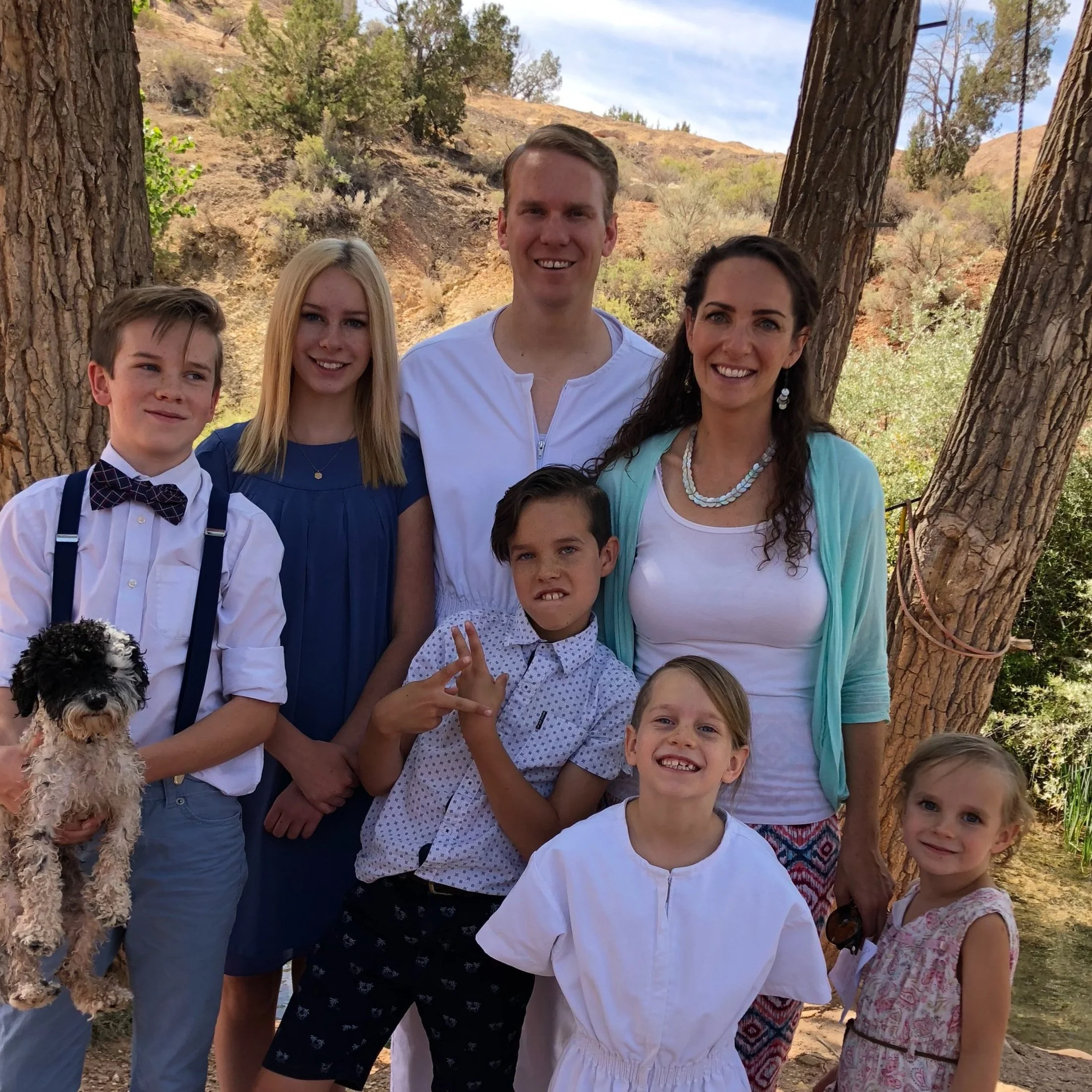
“As soon as Lu was born, my husband and I were sitting on our bed and looking at this cute little baby with black hair that stuck up in every direction, and we both felt that there was something about this child that we couldn’t quite put our finger on,” says Leah Higginbotham of Highland, Utah. She and husband Dylan are the parents of Olivia – 19, Gage – 17, Nash – 14, Lu – 11, and Lila – 8. Leah says that as Lu (birth name: Lucy) grew, as soon as they could express a preference, Lu was always in boy clothes and wanted their hair cut short. One of Lu’s first sentences when Leah tried to put her toddler in something pink was, “No, I a boy,” as Lu pushed her mother away. Every Sunday was a struggle trying to get Lu into a dress for church. The rest of the week, the Higginbothams allowed Lu to dress as preferred, which frequently attracted comments like, “Oh she’s a tomboy. I used to be a tomboy…” But as Lu grew, instead of leaning away from being a boy, Lu leaned into it even more….
“As soon as Lu was born, my husband and I were sitting on our bed and looking at this cute little baby with black hair that stuck up in every direction, and we both felt that there was something about this child that we couldn’t quite put our finger on,” says Leah Higginbotham of Highland, Utah. She and husband Dylan are the parents of Olivia – 19, Gage – 17, Nash – 14, Lu – 11, and Lila – 8. Leah says that as Lu (birth name: Lucy) grew, as soon as they could express a preference, Lu was always in boy clothes and wanted their hair cut short. One of Lu’s first sentences when Leah tried to put her toddler in something pink was, “No, I a boy,” as Lu pushed her mother away. Every Sunday was a struggle trying to get Lu into a dress for church. The rest of the week, the Higginbothams allowed Lu to dress as preferred, which frequently attracted comments like, “Oh she’s a tomboy. I used to be a tomboy…” But as Lu grew, instead of leaning away from being a boy, Lu leaned into it even more.
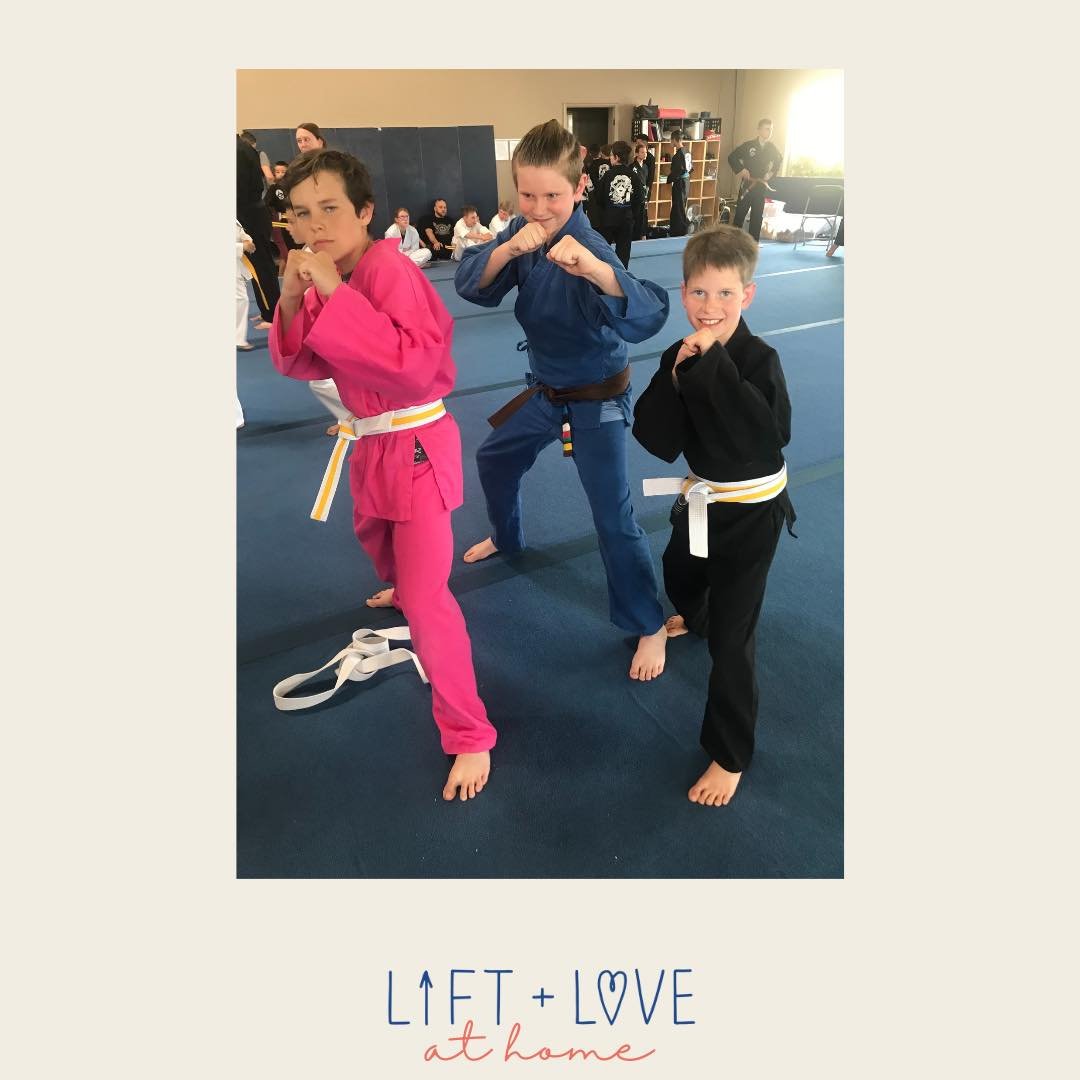
Lu’s parents always let them just wear the clothes. For Leah and Dylan, it was not a big deal. Lu also played on all-boy baseball teams. They were obsessed with all sports, actually, as well as Star Wars, playing Lego, and Lu excels at martial arts. “Anything a typical boy would be into, Lu loves doing it.” But for Leah, there was always a hang up with Lu’s hair. She says, “Lu has shiny hair with a white streak – ‘a ghost spot’ -- that runs through it. I kept Lucy’s hair long, and it was always a fight. One time we compromised with a side shave, and I added in a side lightning bolt. As I first shaved Lu’s hair, I started to cry; Lu started to cry. We hugged, and it was a beautiful moment.” Shortly after, Lu turned eight and was baptized, and Leah incorporated the letters CTR into Lu’s hairstyle. A few months later, they shaved Lu’s full head – a big moment for Leah. “And I was okay with it. When I took that buzzer to Lu’s head, I felt a release of emotions. Those golden locks held all those hopes and dreams… and here was a real moment when I could let go of expectations, and let Lu be the person he is.”
The Higginbothams are in a homeschool co-op, and their kids meet twice a week with 30 other families. One week, Lu asked Leah if they could be called Luca at the co-op -- just to try it out. Leah sent the request to the other co-op families who responded with a positive, “Great! Let us know how we can support you.” Leah was touched when a teacher also reached out to say, “Sorry, I’ve slipped up a couple times, but please let me know how I can help.”
Leah says, “That’s where we’re at – this trial period. A grey zone. I usually call them Luca. A lot of cousins and others still say Lucy. Lu doesn’t seem to care. Lu’s middle name is Love, and that 100% embodies this child. They want to be friends with everyone, they love everyone. Lu is generally an easygoing kid. When I ask if they’re bothered by being called Lucy at times, they shrug and say, ‘It’s the name you gave me’.”
Lu’s older sister Olivia, who is heavily involved in theatre, left the LDS church a couple years ago because it was too hard for her to reconcile the stance on LGBTQ issues, having so many LGBTQ friends. Leah says, “She’s a real warrior for Lu and ready to honor any name/pronoun changes.” Leah says, “I’m also now having a harder time going to church and listening to people’s unkind, uninformed comments in classes, but I really want to build a bridge instead of a wall. I want to be in the church to fight for Lu. Lu’s baptism was the most spiritual experience any of us have ever had -- we kind of expected angels to come down singing. It took place on a crystal clear day outdoors in a fresh water stream in a tiny town called Fayette, UT, where my ancestors are from. Right after the baptism, Lu asked, “When can I go in the baptismal font in the temple?” Leah says Lu has been looking forward to that day since, but now is asking – “Wait, I have to get baptized for girls? Why not boys? And why can’t I baptize others like Gage can?” Leah hates that she has to say, “Sorry, because you were born with girl parts.”
But still, this hasn’t dampened Lu’s desire to go to the temple, now just a month away. Leah herself feels both “excited and nervous” for that same moment. Lu wears a three-piece suit to church and “looks so sharp” every week, says Leah. For Dylan, it’s been more of a struggle as his fourth child’s identity doesn’t align with a lot of his firmly held beliefs. But Leah has seen more understanding as of late. She says, “Just this week, for the first time Dylan called Lu by his chosen name of Luca. It was just a ‘Luca, put on your shoes to get into the car’ kind of thing but it was a big deal for me.” Leah says Dylan used to watch a lot of political commentary that was very black-and-white about gender issues, but lately he has tried to “turn off the noise.” Recently, a pundit made a comment that ruffled Leah, and she was happy to hear her husband say, “That guy obviously hasn’t had a gay kid.” Now, Dylan also listens to Listen, Learn and Love and Latter Gay Stories podcasts, and Leah says he practices more of a “the older I get, the less I know” mindset about things.
Leah’s awareness as to the different paths some face started at an early age. She grew up with a younger brother with special needs, including a deformed body and severe speech impediment. Leah says, “I know his spirit is fully intact. And because of him, I’ve worked with lots of special needs people – and I see all these people with temporary mortal bodies that do not match up with their spirits. I think it can sometimes be easy for people to see that some disabled bodies don’t match. But when I look at Lu, I feel the same – not that Lu has a physical handicap, but that Lu’s temporal body does not match up with their spirit. I know that someday everything will be reconciled. In the meantime, I hope people will be kind, and that Lu will find happiness and hope.”
The Higginbotham kids all love and embrace each other, though for some it’s easier than others to understand what Lu’s experiencing. Older brother Gage has experienced moments of discomfort adjusting to Lu’s new name and gender identity, but remains staunchly defensive of Lu regardless. Once, when the Higginbothams were in Arizona visiting family, they had gone to walk around the grounds of the Mesa temple, and to a nearby park. After Leah and Dylan circled the pond, they returned to find Gage with his arm around Lu, both walking to the car. Lu was visibly upset. A mom from the playground ran up to tell Leah “You’re raising your kids right. They stuck up for your kid.” Once inside the quiet sanctuary of their car, the kids shared that a girl on the playground started throwing rocks and screaming profanities at Lu because she’d heard the Higginbotham kids calling Lu “Lucy” while wearing “boy clothes.” Lu’s siblings quickly came to their defense, circling and protecting Lu from the bully. In the car, Lu broke down sobbing, “Why would someone say that? Why would someone do that? I didn’t do anything to her.” Riled, Leah later posted about the incident on Facebook, saying, “You’ve got to choose a side. Are you going to be on the side that’s throwing rocks or standing on the side that’s protecting? This is what our LGBTQ kids face every day. Pick a side.”
When the Higginbothams returned from their trip, their house was covered with hearts, posters, plates of treats, and positive messages that filled Lu’s tank for weeks after in a “Gee Mom, people sure do love me” kind of way. Many of the sentiments still hang today in Lu’s room.
As Leah reflects on what it’s been like to raise Lu, she says, “I had someone tell me once that gay people can’t feel the Holy Ghost, and I have never been so close to punching someone in the face. I was so hurt by that because as I think back on my 21 years as a wife and mother, my top five spiritual experiences all involve Lu. I have seen miracles surrounding this child. I have seen angels protecting this child. I have been given visions that have literally saved Lu’s life. So I know for a fact that God is very much involved in Lu’s life. Lu feels the Holy Ghost. Lu knows they’re a child of God. This is what reassures me as I face all the fears and the unknown future.”



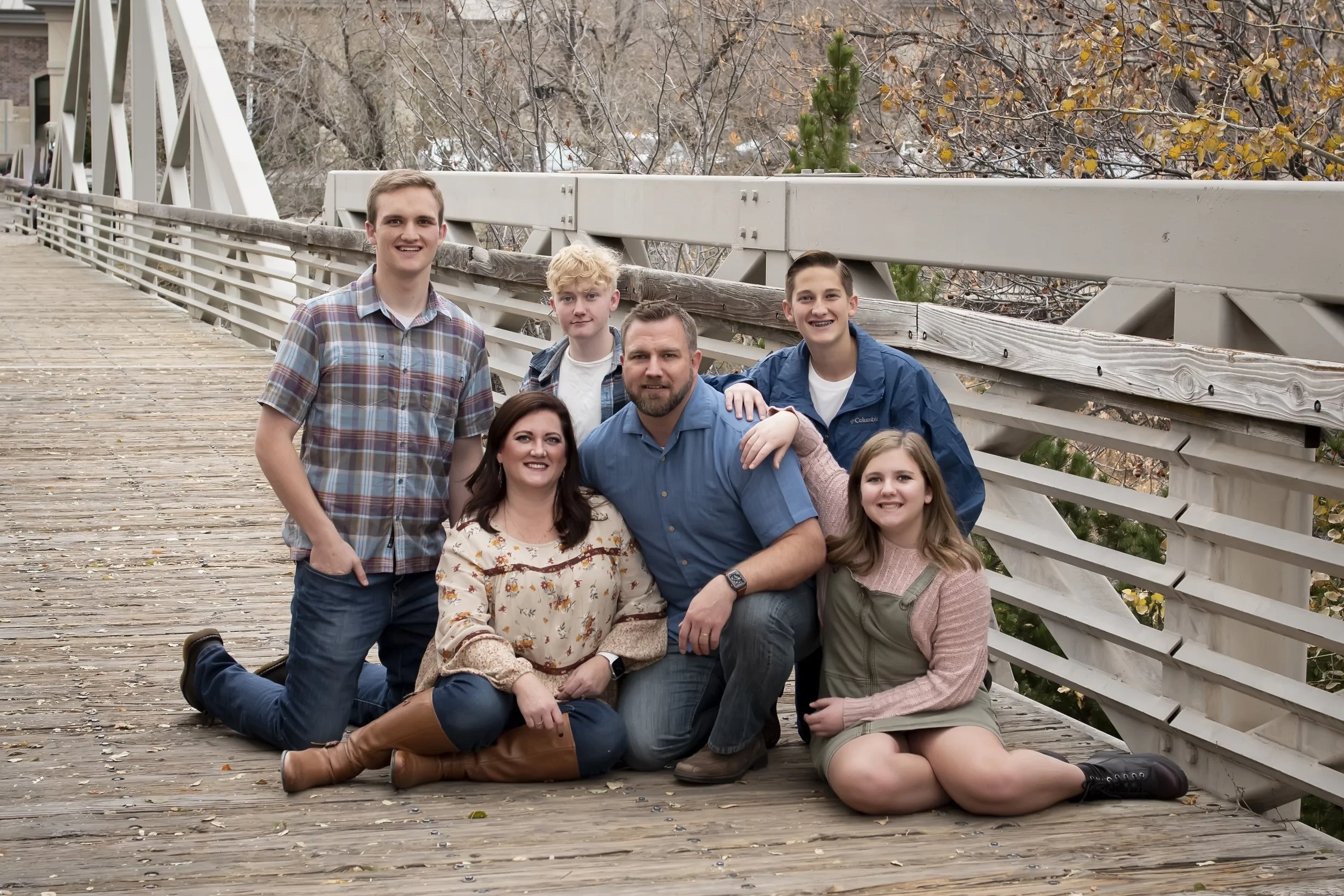
THE KELLY FAMILY
“When he was 13, Aiden, (who went by Emma at the time), came to me on a mundane Saturday morning, with a ghostlike expression and journal in hand. I was working in the kitchen; my husband Joseph was folding laundry. Emma said, ‘Mom, I need you to look at something. Can we go somewhere private’?” Annalee was then led outside where she silently read the confessions of her second born child who had she had always known as her little girl. She read Emma’s words that she had “no attraction to boys whatsoever,” and confession that she was gay. Annalee read all this silently, but inside felt like she was screaming. “I didn’t see this coming.” (continued)
“When he was 13, Aiden, (who went by Emma at the time), came to me on a mundane Saturday morning, with a ghostlike expression and journal in hand. I was working in the kitchen; my husband Joseph was folding laundry. Emma said, ‘Mom, I need you to look at something. Can we go somewhere private’?” Annalee was then led outside where she silently read the confessions of her second born child who had she had always known as her little girl. She read Emma’s words that she had “no attraction to boys whatsoever,” and confession that she was gay. Annalee read all this silently, but inside felt like she was screaming. “I didn’t see this coming.”
Annalee and Joseph watched as Emma soon after cut her hair and expressed a desire to dress in a more masculine way. As they grieved the loss of the future they anticipated their child would have, Annalee went to a Northstar conference. New in her journey, she wondered what they had done wrong, and how could they help their child feel their love. At the time, Annalee and Joseph had no idea that another unexpected announcement would be coming. A few years later, (then) Emma stayed home from school, feeling sick, and confessed that, “My brain does not match my biological sex. I want to use he/him pronouns; I like the name Aiden.”
Annalee says “I had just digested him being gay; I didn’t fathom he might also be transgender.” For LDS-raised Annalee, everything up until that point had fit into neat little boxes. She was a returned missionary, college graduate, married in the temple to another RM, two-time Young Women’s president and mother of four: Josh – now 21, Aiden – 19, Caleb – 16 and Lizzy – 14. She says she had always been the type of person who saw things as black and white, and “used to feel being gay or trans was a choice.” Annalee has a gay sister who she always believed had chosen this -- to the extent that she didn’t invite her sister’s girlfriend into her house, saying she “didn’t want that modeled for the kids.” Before it was her own child who had come out, Annalee used to wonder, “Why would anything go against the plan God has for His children?”
But it wasn’t until Annalee saw Aiden writhing on the floor, clawing at his chest, hating his body and assigned gender, that it hit her – why would anyone choose this?
Ever since Aiden first came out as gay, the Kellys have always been on the same page as a couple, in putting their family first. When their son told them he’s transgender, they did wonder if it might be a phase. But as it became clear it was more than that, together they mourned the loss of their child’s given pronouns, name and identity, and moved into full love and support mode. She says, “I hate that it was Aiden’s suffering that finally softened my heart. I’ve learned line upon line that Aiden is who he says he is, and I know him now fully as my second born son. We know that him leaving church is what it is, and he needed to do that to find peace. Through his suffering, I have grown closer to Jesus Christ more than I have from any other element. Jesus has walked with me as I’ve walked with Aiden, and He’s taken me to other beautiful, lesser-known corners of His vineyard.”
From Aiden’s perspective, he says his childhood experience probably sounds similar to those of most queer kids. “I knew I was different from a young age; I just didn’t have the language to describe why, having grown up in the environment I did.” After Aiden came out as gay, he still continued to question his identity, and it was through social media that he finally figured out exactly what he was experiencing. “I found an account of a transgender person and scrolled through posts from their history to their transition to their current state and something finally felt so right. I thought, that’s me! That’s who I am. Once I learned the term ‘transgender,’ I KNEW I was a boy.”
As a child, Aiden says he loved to play pretend, and always cast himself in a male role. He loved action figures, and always chose playing with Ken over Barbie. He’s grateful his friends at the time just went with it. But around the age of 15, Aiden says, “Once I realized what I was, it wasn’t something I could keep to myself if I wanted to keep living. I felt so dark, and knew if I couldn’t be myself, I would die. I just felt that way. Today, if I had to live as a girl, I’d be dead.” And indeed, it was a loving bishop who reassured Annalee back when the family was struggling with everything that “I’d rather have a transgender son than a dead daughter.”
Once Aiden’s parents got on the same page with him, he began transitioning. In his sophomore year, he had to leave high school for a trimester for mental health reasons; and when he returned, he found his former friends weren’t there for him anymore. He reasons that this drifting away partly had to do with him also stepping away from their church community. But Aiden quickly became involved in his school’s drama program, and for the next three years, he says, “That was my home, and I made the best friends I’ve ever had. They didn’t even hesitate when I said I was trans. They loved me for me. It felt so nice to be loved without a second thought. It will always mean so much to me.”
After high school graduation, Aiden moved to West Jordan, UT, where he is now thriving. He loves the bigger town atmosphere. “I’m happier than I’ve ever been,” he says, and he laughs that he now often sings along to Billie Eilish’s song “Happier Than Ever” with authenticity. Aiden loves working both at the box office at the U of U, and Culvers. He has reconnected with some friends he made at Northstar, and they share an affinity for filmmaking -- a career he’d like to pursue someday. He has dated a few girls, and would like to find a relationship in the future, but says he understands that, “It’s complicated to find girls attracted to a transgender male. But someday I hope to find a girl who likes me for me.”
In retrospect, Aiden says he is grateful for the good times he experienced at church – girls’ camp, friends, and some especially kind and loving Young Women’s leaders who really showed up for him during hard times. “There was nothing anyone could have done differently – I just couldn’t be there anymore. At first, I didn’t want to leave, but some of the teachings were really harmful. I wouldn’t go back; but it wasn’t all bad,” Aiden says.
Aiden respects the relationship and involvement his parents still have with the church, and they admire the maturity he shows in not questioning their faith as a lack of respect or love for him. Annalee says, “He knows I have questions about the LDS culture and stuff, but he know this is where we need to be.” And Aiden also knows they are always there for him.
For many years, the Kellys have co-hosted a monthly support group for LGBTQ+ people and families in their Idaho Falls area along with the (recently featured) Taylor family. Open Arms typically welcomes a standing room only-sized crowd as dozens come each month to hear and share stories and find acceptance and love. Aiden lauds the attendees as “some of the kindest people in the LDS community – I wish everyone was that loving.”
Annalee takes great comfort in the Open Arms group who has embraced them while creating an equally safe space for others. She also appreciates that she has come to a place where she can maintain a firm faith in God and also understand her son’s divinity. “I celebrate that I have my Aiden – he’s taught me so much, and I wouldn’t trade those tears of the past for anything. I’m so grateful for everything I’ve learned.”
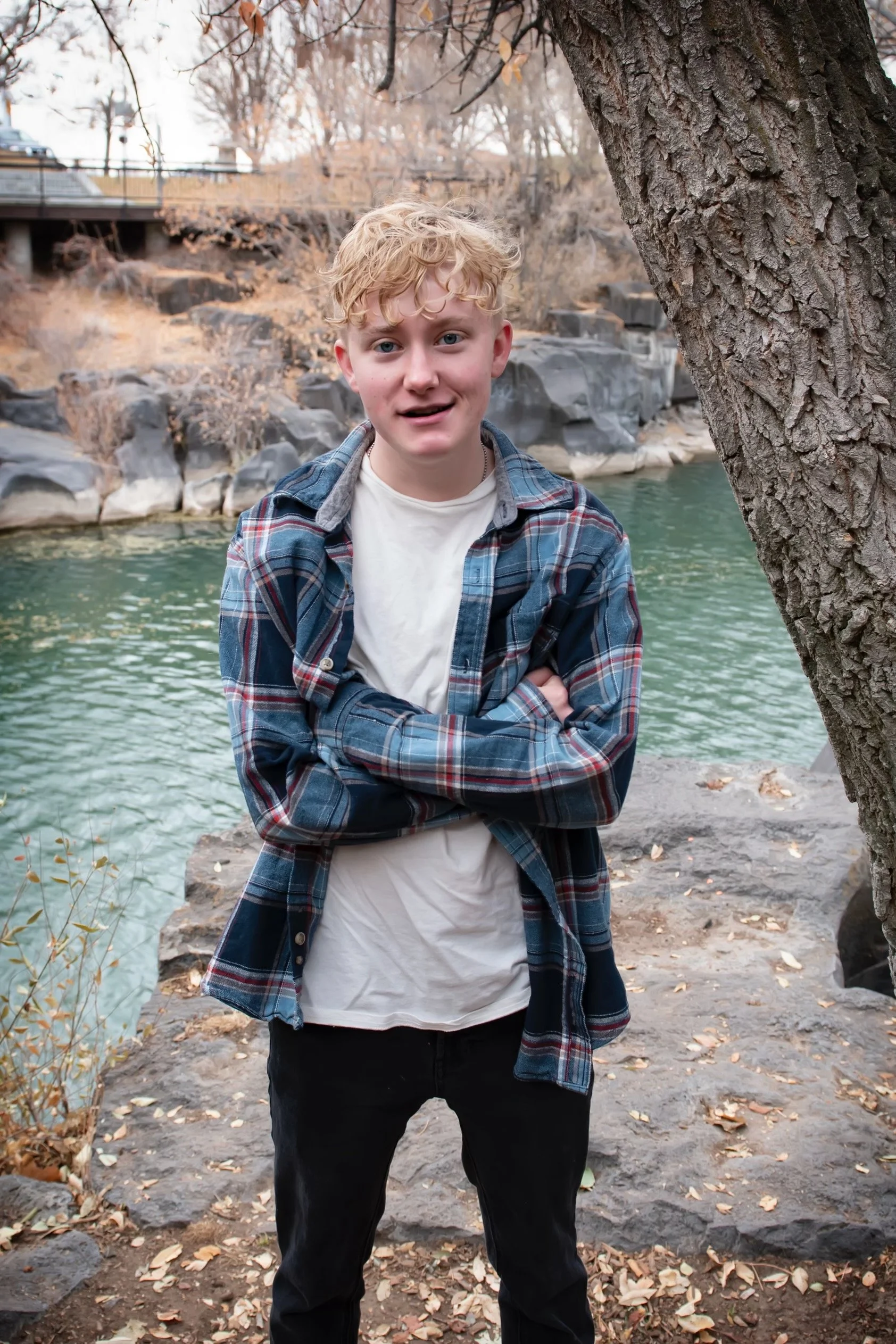

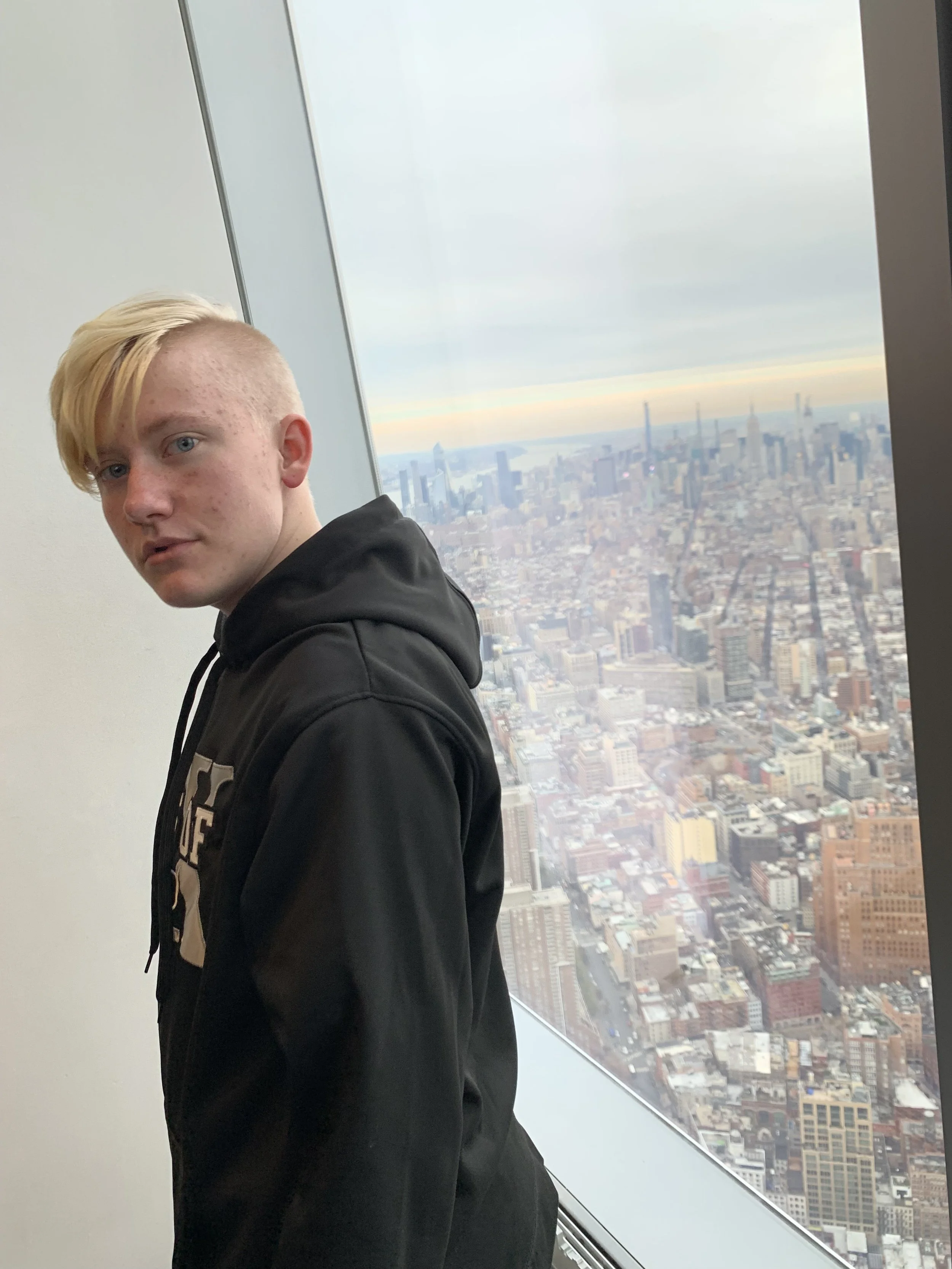
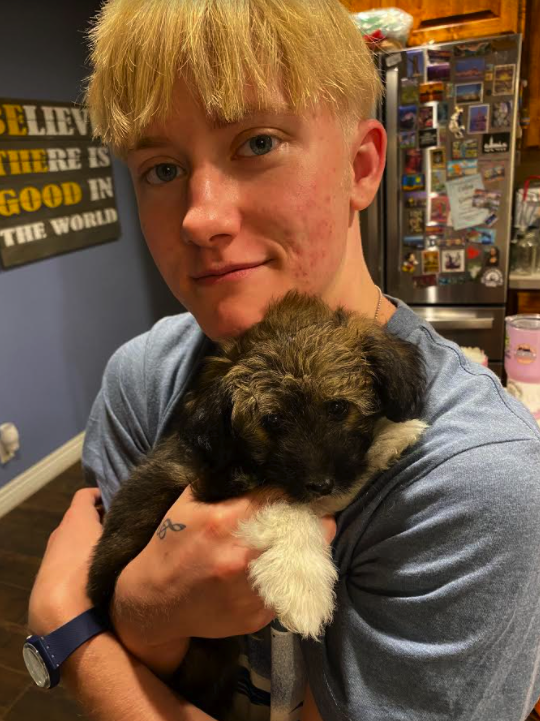
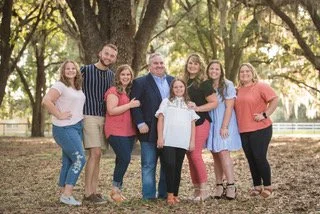
THE HUNTER FAMILY
John and Jenie Hunter of Brandon, FL had been trying to have children for some time when the opportunity presented itself to adopt a baby boy from a teen mom in Tennessee. They were ecstatic to bring their son Nicholas (now 24) home, and further thrilled when they were able to later have five biological daughters, Grace – 21, twins Ellie and Sarah Jane – 19, Mary – 17, and Kate – 12. As they raised their kids, John and Jenie noticed other differences about Nick -- besides being the oldest and only boy. They wondered how much nature vs. nurture played into things. “He was always exceptionally artistic,” says John. “He’d come to me and say, ‘Dad, draw me the ship from Star Wars,’ and I was like ‘Uh…,’ and then he’d proceed to draw it out with incredible detail. He saw the whole world in lines and shapes. He was always so creative. We love that about him.”…
John and Jenie Hunter of Brandon, FL had been trying to have children for some time when the opportunity presented itself to adopt a baby boy from a teen mom in Tennessee. They were ecstatic to bring their son Nicholas (now 24) home, and further thrilled when they were able to later have five biological daughters, Grace – 21, twins Ellie and Sarah Jane – 19, Mary – 17, and Kate – 12. As they raised their kids, John and Jenie noticed other differences about Nick -- besides being the oldest and only boy. They wondered how much nature vs. nurture played into things. “He was always exceptionally artistic,” says John. “He’d come to me and say, ‘Dad, draw me the ship from Star Wars,’ and I was like ‘Uh…,’ and then he’d proceed to draw it out with incredible detail. He saw the whole world in lines and shapes. He was always so creative. We love that about him.”
Nick also went through phases of becoming consumed with random passions – tractors, diamonds, skeletons, Faberge eggs. As he grew, his parents noticed more differences between him and their other kids and they started to wonder if he might be gay. When Nick was 14, Jenie could tell something was weighing on him and they started going to counseling. Shortly after, she says, “I went to the temple and had an impression where the Lord told me, ‘Nick’s gay.’ I came home and told John, and he believed me.” They decided Jenie would take Nick on a date to discuss it. They went to a museum, and at lunch, Jenie asked her son, “Nick, is this something you’re dealing with?” Nick started crying and said he was so relieved Jenie had asked him, and was so accepting of his affirmative response. He then shared he’d been so nervous his parents would kick him out of the house, based on what had happened to other kids who he had read about online. Jenie went home to John that night and confirmed their impressions were real. John says, “While it didn’t hit us out of the blue like it does for some families, it was still hard. Life was difficult. You could tell Nick was in emotional pain. We were just happy we could have a real discussion about it all.”
Growing up the only son in an LDS household, John says there were built-in expectations that your kid would do this or that, or hit this benchmark, that he’s sure Nick felt the pressure of. The family pivoted as they realized some of those things might not lie in Nick’s future. Jenie says, “We didn’t know a lot of people with gay children and how we should handle everything. We were making it up as we went. We made a lot of rookie mistakes. One time, we even suggested a weekend camp he could go to and maybe he’d come back differently.” John acknowledges there’s both a learning and grieving process all parents of LGBTQ+ go through as they readjust their expectations and preconceived notions of what parenting their kid might be like. Jenie says in hindsight, she’s not sure whether it was the chicken or the egg, but when Nick turned 16, he really started struggling with emotional issues. He started self-medicating with drugs and spent a year in a residential treatment center that initially was a very difficult thing for all the family, but he now credits the experience with saving his life.
The Hunters are very open with their family’s journey, and they say their Florida ward family has been supportive and accepting. Back in high school, Nick started dating guys and his parents were fine with this, as long as he adhered to the same standards they expected of their daughters, many of which were from the For the Strength of Youth pamphlet. They laugh, remembering one time Jenie drove an hour away to meet a guy Nick had a date with just because they had a family rule that they had to first meet all their kids’ dates. John says, “Just because you’re gay, it doesn’t mean you have a different set of standards.”
Jenie was an early morning seminary teacher, and Nick was her best student. Now, as a student at UVU, he attends church “occasionally.” He says things are a little harder culturally for him in Utah, but likes to go back to his home ward in Florida with his family. His parents are impressed how Nick is as much an ally as LGBTQ himself. He’s open with sharing his story as he believes, “If I can help anyone, I’ll do it.” The Hunters have always maintained a strong relationship with lots of love and support, even during his tough years. “Our love is not transactional.” And John and Jenie love that their daughters are the biggest allies and maintain a close relationship with Nick. Both Grace and Sarah Jane, who now attend BYU, are in the same town with him and get together often.
Nick loves his Savior Jesus Christ but chose not to serve a mission because he didn’t feel comfortable teaching all the doctrine. He wants a happy marriage partnership like his parents, and they likewise want him to find his person. Jenie says it’s “heart-breaking” to imagine him living his whole life alone. While Nick’s told his parents a dream of his is to have all his future kids baptized and to have his family in the LDS church, his parents say he still finds it challenging to balance his testimony and beliefs versus other positions of the church. Counseling has been a positive addition to his life, and he is now studying psychology to become an art therapist for kids. He’d like to specialize in helping LGBTQ+ kids.
Currently, while attending school, Nick works as a preschool teacher in Park City, and his parents say he loves the unconditional love the children he teaches show him. They also say he continues to be an amazing artist: “He can turn garage junk into a sculpture we could sell. He can build a robot out of a pool noodle and a broken chair.” John admits it’s a continual process for he and Jenie to build Nick up and reassure him they love him. “We tell him we’re here to support him on his journey and can’t even begin to understand how hard it is. But no matter what, we’ll stand with him. We loved the part in Tom Christofferson’s book about how Tom’s mother said that how the family treats Tom and his partner (of the time) will let all the family members know that nothing can ever change the way their parents feel about them. I’ve had to learn and grow to be able to recognize there’s not just one way, or perhaps my way is not always the only way. There are lots of paths – some zigzag, some have a lot of detours and scenic overlooks, but you eventually make it there.”
John says he loves all the things that are different about Nick, because they help John himself to be a better person. “I’m changing, I’m learning, I’m growing. I have more charity, more understanding, more empathy. This all impacts my journey, too. He’s helping me become who the Lord wants me to be. Having an LGBTQ child allows us a great canvas to grow with. You learn more how the Savior treats everyone. I’m a better person because Nick’s my son.” These lessons have helped John greatly through his current service as stake president as he counsels others who are met with various challenges and growth experiences. He strongly agrees with President Nelson that anytime we show love to another, we are helping people feel the love of their Savior and assisting the work of exaltation.
Jenie also says being Nick’s parent has been a privilege, and she encourages other mothers in her position to “embrace the calling.” When she first understood this was to be her path, Jenie said she barely knew anyone else in her same position, so she went to a good life coach who helped her navigate. She then got certified to coach herself, and she felt the Lord pushing her toward helping other LGBTQ families. You may now recognize Jenie as a familiar face at Lift and Love where we are lucky to have her help Allison run the podcast, support groups, and coaching program. In 2019, when Jenie first stumbled upon @liftandloveorg, she says, “I was impressed that here was a place I can work to keep people tethered to the Savior while navigating their journey as an LGBTQ family. These are some of the most amazing moms I’ve ever met. I want to help people stay connected to Christ and the gospel; He’s our partner in this.”
The Hunters have helped start an LGBTQ FHE group in their Tampa, FL-area stake. John is buoyed by the thought that “there is room in the choir for everyone.” He says, “We have to continue to make everyone feel more welcome at church. It should be diverse. We need and want everyone. Anytime someone wants to make Christ a part of their life, we want them.”
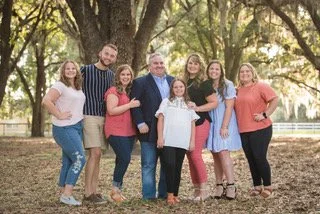
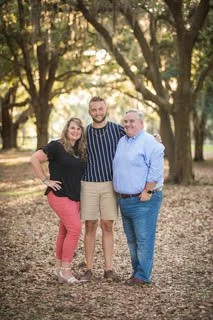

THE TAYLOR FAMILY
“Our story starts with my brother’s, really,” says Amy Taylor of Idaho Falls. It was a cold Christmas Eve night in 2003. Amy’s husband Brooks was working the night shift at the sheriff’s office, so her fresh off his mission brother, Jamison came over to help Amy prep Christmas for her young kids. Once the kids had gone to bed, Jamison opened up to Amy. “He confided he’d been experiencing what he, at the time, called same sex attraction. I was completely surprised; it’s nothing I had ever considered. But in that moment, it changed everything I’d ever thought about gay people. I just felt bad he’d been living alone with this for so long. It made me feel closer to him and I appreciated him telling me. He asked me not to say anything because he planned to change his orientation, and didn’t want anyone knowing he had struggled with SSA,” Amy says.
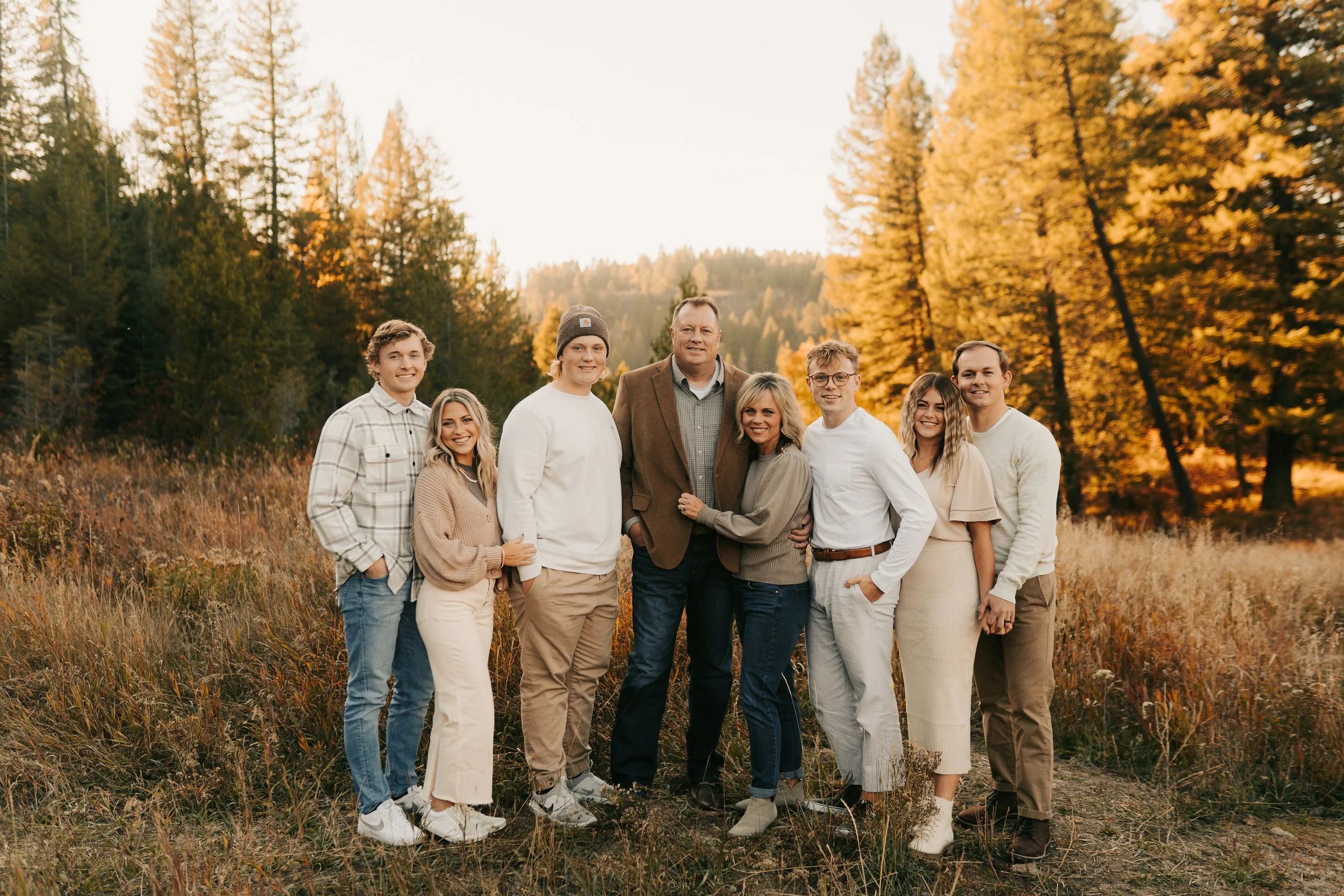
“Our story starts with my brother’s, really,” says Amy Taylor of Idaho Falls. It was a cold Christmas Eve night in 2003. Amy’s husband Brooks was working the night shift at the sheriff’s office, so her fresh off his mission brother, Jamison came over to help Amy prep Christmas for her young kids. Once the kids had gone to bed, Jamison opened up to Amy. “He confided he’d been experiencing what he, at the time, called same sex attraction. I was completely surprised; it’s nothing I had ever considered. But in that moment, it changed everything I’d ever thought about gay people. I just felt bad he’d been living alone with this for so long. It made me feel closer to him and I appreciated him telling me. He asked me not to say anything because he planned to change his orientation, and didn’t want anyone knowing he had struggled with SSA,” Amy says.
That’s when Amy first defined herself as an ally. She watched her overachiever brother who owned his own business pay his way through therapy, intent on changing his orientation because he was intent on having a wife and family. She watched as he systematically dated women, and he even became engaged. But finally one day, he approached Amy and Brooks and said, “This isn’t working. I don’t think I can be with a woman. I don’t think this therapy works. The more I learn about others’ stories, the more I realize therapy might work for awhile, but people rarely change their orientation. And if they do… well, it’s not working for me.” Jamison decided to be celibate – dating women was too stressful. Amy says, “And he didn’t want to do that to a woman, make her live in a relationship where he’s not attracted to her.” But that goal took Jamison down a dark path of hopelessness. It wasn’t until he came out via video, started dating men, and learned to accept himself that they saw his burdens lift. Amy says, “We were learning as he was. I was reading everything I could get my hands on in the LDS-LGBTQ world. I thought there was a path for him in the church because I thought there was a path there for everyone.”
Simultaneously, the Taylors’ extended family were watching Amy and Brooks’ two-year-old son, Jackson, develop an affinity for the performance stage they had built in their home. Following the lead of older sisters Abby (now 24) and Hally (now 22), Jackson would don their dance costumes and prance around with them. “And he was so good at it!” Amy exclaims. Several of their relatives were quite humored by his performances, but their laughter did not sit well with Brooks. The truth is, he and Amy (and Jamison) already sensed what this might mean – Jackson’s preference for tutus over the superhero costumes they had bought him – and Brooks didn’t want anyone mocking his child.
At the time, Jamison shared something he was being told in therapy: that boys benefit from the masculine influences of their fathers. Eventually, Brooks eased back on working two jobs while Amy stepped back into the workplace so Brooks could spend more quality time with Jackson (now 20) and younger brother Lincoln (now 15) camping, motorbiking, hunting “and other guy stuff.” But all along, as Jackson grew, his parents noticed his struggles to assimilate with his peers. Something was just different.
While Jackson liked active activities like climbing, tumbling, and gymnastics, he turned to dressing in his sister’s costumes while they were away, so they wouldn’t become upset. He didn’t really fit in with the guys in their area, but young girls also didn’t always want to play with boys. When Jackson was six, he asked his mom, “Is it bad because I think a boy is cute?” At the time, Amy tried to steer him away from this train of thought by calling it admiration and emulation, not attraction. Looking back, she understands why her reframing bothered her son at the time.
A stake in the area was hosting a special meeting for LGBTQ members and their families, with Ty Mansfield and Fred and Marilyn Matis speaking. With some trepidation, Amy and Brooks decided to go. Their son was not out – not even to them yet – but as they walked into the packed building, Amy said she had one of the most spiritual impressions of her life: “This is where you need to be. These people belong here, and you belong here.” She was deeply moved in a breakout session as the Matises, who had lost their gay son to suicide, reiterated the importance to “just love our kids!” When Amy asked, “How can we do this, when they teach it’s wrong?” The Matises said, “You just do.”
That was Amy’s first moment of cognitive dissonance. At the meeting, they happened to sit behind a group of extended family members who had a gay sibling who had died of AIDS. It was a surprise when the closing prayer was announced, they realized it was another gay family member, their son and nephew, and they were all there to show support. From that moment on, the Taylors felt strongly, “This is our place. This is where we need to be advocating.”
Now in high school, Jackson went through a phase where he tried to boost his masculinity by hanging out with football players. “It was like his last stand of trying to be straight,” says Amy. “We didn’t know until later he was making deals with God and pleading things like, ‘I’ll do anything you ask if you make me not gay…’ and setting arbitrary deadlines for taking his life if it didn’t work out.” Finally, at 14 years old, Jackson came out to his mom first, sobbing, “I don’t want to be gay.” She just held him and said, “I know, but it’s going to be okay.” He then told Brooks and his siblings, knowing his entire family would be supportive and loving. And they were. It was another year before he came out to friends via a video, much like his uncle’s. That was the last night many of his so-called friends ever spoke to him. Others would still talk to him, as long as he avoided speaking of his orientation. Of their ultra-conservative, LDS community, Jamison advised the Taylors, “You need to move if you want him to have normal teen years.” But because of their jobs and because nothing is a given anywhere, moving wasn’t really an option.
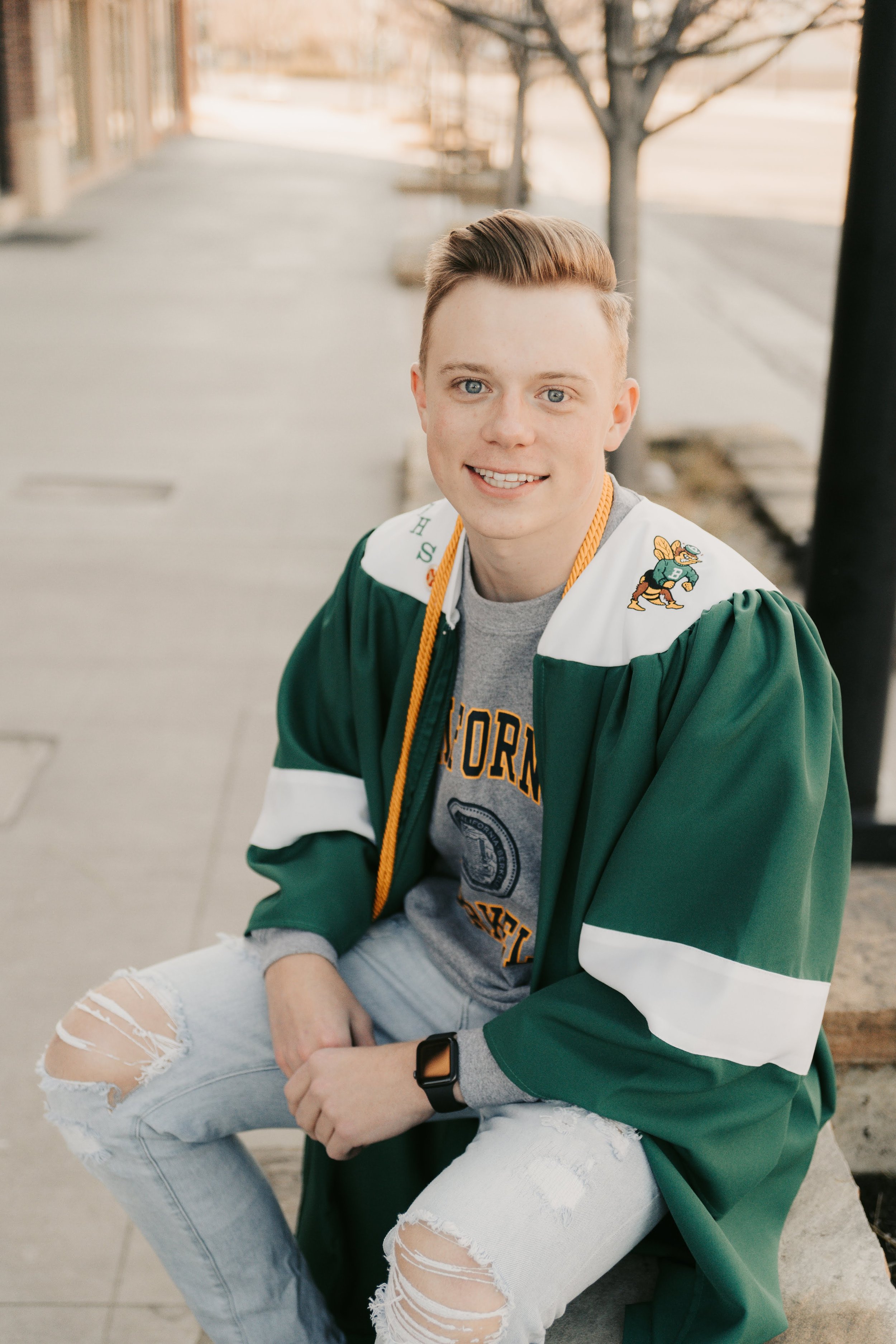
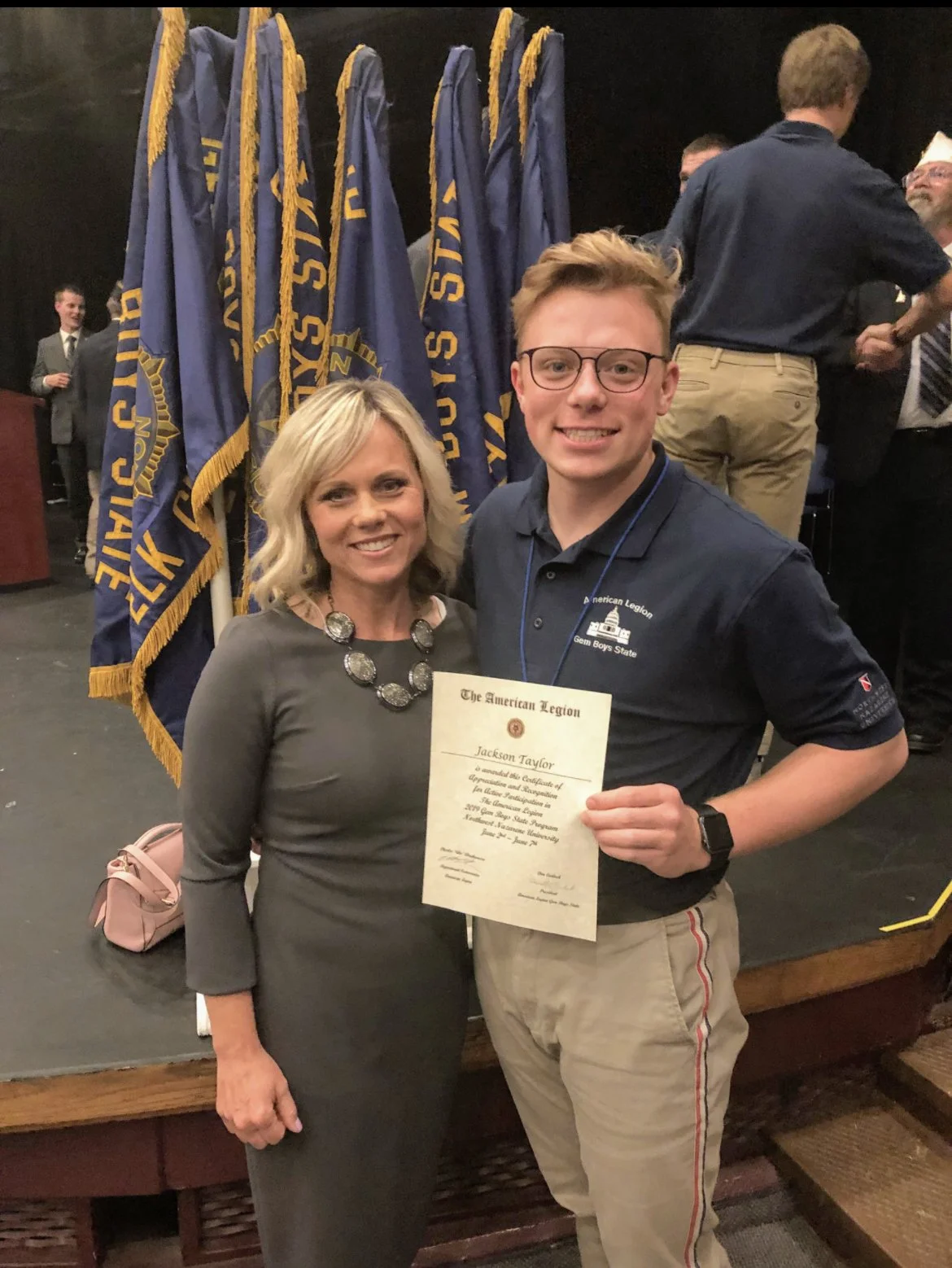
They took Jackson to an Affirmation conference, where for the first time he felt he fit in and made instant friends. They went back to other events, and as Jackson realized the kids around him were amazing, awesome, cool people, that maybe nothing was wrong with him either. In high school, he joined the cheer team, which he loved, but the culmination of his senior year competitions and graduation was diminished by the effects of the 2020 Covid-19 shutdown. Jackson is now a sophomore at UC Berkeley, studying molecular and cellular biology with plans to be a neurosurgeon.
At Berkeley, he has maintained his love for the Savior, saying, “Real Christlike love is freely given and never conditional. It’s hard for me to wrap my head around why church leaders would cause harm to individuals. Hopefully they can try to empathize more, to understand.” Jackson recognizes his upbringing was unique in many ways, namely in that he had “the gold standard of parenting.” He says he never felt anything but love and support from his family, and knew even if church and school were torture chambers, he could go home and feel safe. He doesn’t resent his parents’ activity now, saying, “If they can make church a safe place for kids who don’t have that at home, that’s amazing. Sometimes I wish I could do that, and I’ve felt guilty for not being there – but I just can’t. I have a big pain-baby where the church is concerned, lots of trauma. But at the end of the day, it’s about the doctrine, and not the people, who I struggle with.”
He has now found his tribe in a place where he says people value people and are against any organization that spreads hate or harms others. The Berkeley LDS ward even dedicated a whole month this summer to LGBTQ lessons and support. “I went from an organization-first mentality, to a people-first mentality.”
Meanwhile back home, Amy is now her ward’s Relief Society President and Brooks serves on the High Council. They feel church leaders need LGBTQ families to train them, and have embraced opportunities to offer their leaders advice. Amy says she “probably brings up Jackson weekly, and it probably drives everyone crazy, but I don’t care. I’ve sat in church so many times, so angry, and I’ve thought before, why am I here? And then I got called to be the RS President. And I figured, maybe this is my time to serve; maybe they need me.”
The Taylors have since built a new home, with a specially designed space for a new kind of gathering: Open Arms, their monthly LGBTQ support group. Now five years strong, it’s modeled after a similar one their family members run in Arizona. Open Arms has attracted speakers including Tom Christofferson, Ben Schilaty, Charlie Bird, Richard Ostler, and audiences of over 100. The group started when a family friend - a stake YW president - called Amy for advice, as her daughter had just come out. Amy’s words to her now resonate regularly with so many other parents in their position, “Just love her. Just do whatever it takes to keep your child alive.”


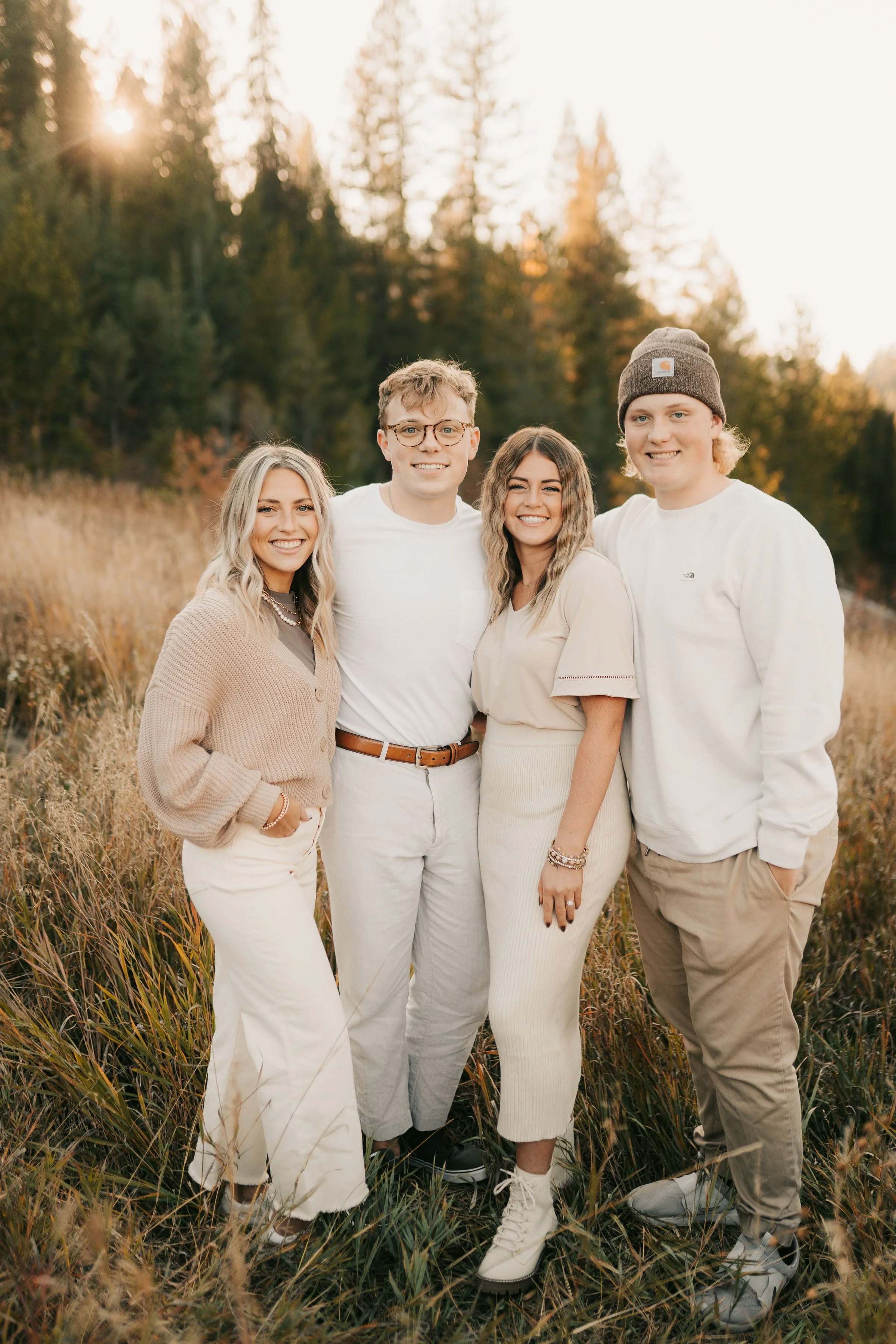

THE CHAPMAN FAMILY
“It wasn’t a shock,” Susan Chapman says of her 21-year-old daughter, Sarah, coming out earlier this year. In fact, when Sarah was in high school, Susan tried to broach the subject herself with a “Hey, so…” Sarah would laugh and tell her friends, “My mom thinks I’m gay.” Susan now knows Sarah wasn’t ready to admit it just yet. Brought up LDS, Sarah was under the impression that perhaps it was something that might go away after she served a mission. But during her mission, Sarah realized this is who she is and it isn’t going anywhere. When she returned, she thought she might date guys, but quickly realized that also wasn’t going to work out. Shortly after, Susan visited her daughter for her birthday, and Sarah shared a particular Questions from the Closet podcast episode with her mom. Susan says she isn’t proud of how she responded at the time, and the next day apologized for not being as open as she would have liked. “When I went home from that trip, I really realized: my daughter is gay. Heavenly Father was preparing me.” She asked Sarah if anything was troubling her. Sarah replied, “I’m just dealing with some stuff.” Susan said, “You might as well tell me because I think you’ll feel better once you do. I already know, but you’re going to have to tell me.” Sarah said, “How did you know?” Susan said, “God told me.”…
The truth is, they were both dealing with a lot of really heavy stuff. In November of 2020, Susan’s husband Ryan had been diagnosed with colon cancer. He had lost his own father to a different form of cancer a year prior, and Ryan’s prognosis also did not look good. Sarah asked her mom not to tell her dad about her orientation, but Susan did – an action that upset her daughter, and the two did not speak for a few days, which was very out of character for them. But Susan needed the support of her spouse – her best friend, and most importantly, she knew that Sarah would need to know she had her dad’s support while he was still with them, if things were to go south.
Indeed, Ryan instantly expressed unconditional love for his daughter, and his own previous ideologies about what it meant to be gay changed on a dime once it hit home with his own daughter. Susan says he told her that up until that point, he wanted to believe it was a choice -- that if someone did not want to be gay, they could choose not to be. To each his own. But now, he knew that he had misunderstood…
“It wasn’t a shock,” Susan Chapman says of her 21-year-old daughter, Sarah, coming out earlier this year. In fact, when Sarah was in high school, Susan tried to broach the subject herself with a “Hey, so…” Sarah would laugh and tell her friends, “My mom thinks I’m gay.” Susan now knows Sarah wasn’t ready to admit it just yet.
Brought up LDS, Sarah was under the impression that perhaps it was something that might go away after she served a mission. But during her mission, Sarah realized this is who she is and it isn’t going anywhere. When she returned, she thought she might date guys, but quickly realized that also wasn’t going to work out. Shortly after, Susan visited her daughter for her birthday, and Sarah shared a particular Questions from the Closet podcast episode with her mom. Susan says she isn’t proud of how she responded at the time, and the next day apologized for not being as open as she would have liked. “When I went home from that trip, I really realized: my daughter is gay. Heavenly Father was preparing me.” She asked Sarah if anything was troubling her. Sarah replied, “I’m just dealing with some stuff.” Susan said, “You might as well tell me because I think you’ll feel better once you do. I already know, but you’re going to have to tell me.” Sarah said, “How did you know?” Susan said, “God told me.”
The truth is, they were both dealing with a lot of really heavy stuff. In November of 2020, Susan’s husband Ryan had been diagnosed with colon cancer. He had lost his own father to a different form of cancer a year prior, and Ryan’s prognosis also did not look good. Sarah asked her mom not to tell her dad about her orientation, but Susan did – an action that upset her daughter, and the two did not speak for a few days, which was very out of character for them. But Susan needed the support of her spouse – her best friend, and most importantly, she knew that Sarah would need to know she had her dad’s support while he was still with them, if things were to go south.
Indeed, Ryan instantly expressed unconditional love for his daughter, and his own previous ideologies about what it meant to be gay changed on a dime once it hit home with his own daughter. Susan says he told her that up until that point, he wanted to believe it was a choice -- that if someone did not want to be gay, they could choose not to be. To each his own. But now, he knew that he had misunderstood.
Susan said that while their community rallied around them through Ryan’s public battle with cancer, she was also privately processing the confirmation of Sarah’s reality. During those first few days, Susan got her hands on every source of information she could and listened to many Audible books to help her understand and prepare. She had a strong impression that this was something her daughter had signed up for in the pre-existence: primarily to advocate for others and create change. The family always joked about their daughter’s leadership and pioneering vision: “Sarah for President,” they’d say. Sarah is the second oldest of siblings Jared -23 (who is married to Brooke), Emma – 19, Joseph – 17, Joshua – 15, and Jacob – 12. As a child, she was very athletic, loving volleyball and basketball, and very intelligent. “I cannot match wit with her. She’s always going to win an argument, so I’ve learned not to argue with her,” laughs Susan.
Her mother also lauds her genuine compassion for others. The Chapman family had two foster kids, ages 4 and 9, when Sarah was in high school and Susan watched Sarah develop an immense compassion for them and frustration with “the system.” Now she’s seeing that compassion shift to another cause: LGBTQ+ equality. “I’m excited to see what she does with it, because she genuinely feels called to help others.” And in turn, so does Susan as her mother. “I guess I must have signed up for this, too.”
Susan is grateful for a predominately supportive local church community who have reached out with love. She is grateful a friend in her Tuscon, AZ ward is now trying to start an LGBTQ support group. Susan’s nephew is gay, so it was “a moot point” for her side of the family, who’ve already been down this road and fully support Sarah. Susan says it’s been nice to see Ryan’s side of the family also show love.
When deciding to come out publicly in a recent Instagram post (@s.chappity), Sarah first consulted Ben Schilaty for advice, and she appreciates those like him who have been open about their orientation. Sarah longs for positive, LGBTQ female role models in the church, and is on track to be one herself. She is employed by the LDS church in a teaching capacity, and is grateful she has been told by her supervisors that she should live her life with authenticity.
Susan says that Sarah has a deep understanding that she is a child of God and that He loves her immensely. She loves sharing this knowledge with her classroom, and hopes to make others in similar positions feel God’s love for them. The first time she acknowledged she’s gay to a class, Sarah said she felt like she was going to throw up, but she felt comforted seeing that a few in the room gave her subtle thumbs up signs. She’s not sure what the future holds, but for now, she feels called to stay in the church and share the message that people like her are loved completely and unconditionally by their Heavenly Parents.
By fully supporting her daughter, Susan says she is also on board to fully support whatever actions and life steps Sarah takes down the road. “I don’t want her to ever be afraid to tell me if she starts dating, or kisses someone. I want us always to be open and close.” Susan, who is crafty, was more than happy to make a fall rainbow wreath that hangs on their door with pride. Several of her friends (of other Christian faiths) have told her how impressed they are with her daughter sharing her truth, and how the family’s love and support have been positively modeled by them as members of the LDS faith. “I think we’ve come a long way, but we’re still learning,” she says. For other parents who may be struggling, Susan offers the wise advice, “Your child is still your child; they didn’t change. They’re the exact same person they were before they told you. So this shouldn’t change anything. I know some parents might feel shocked at first – and I try to remember that. Though, I’m grateful I was prepared and wasn’t totally shocked.”
Susan says there is some learning she observes that needs to take place with certain leaders so that they might be more inspired to create a safe space for our LGBTQ brothers and sisters. “The leadership sets the tone for the ward. So as leaders, we must show love and support. The youth are always listening, and when you’re gay, you’re on hyper alert – you know where you’re safe, and where you’re not. You want to create a ward, stake, and seminary class where you know you’re safe. I worked with the youth, and they knew they were always safe with me.” Susan also wants people to know there is a better way to respond when someone comes out to you. Before Sarah hit send on her post, Susan was comforted knowing she had friends on standby ready to respond with, “We love you. We support you. Thank you for sharing this part of you with us.” She also said there were those who didn’t respond at all and who seemed to avoid Susan the Sunday after her daughter’s post. “You notice.” But overall, they are very optimistic about Sarah finding her place and making change.
On August 23, 2021, Ryan Chapman succumbed to cancer, with his loving family at his side. Susan says that in hindsight, both she and Sarah are grateful that Susan told Ryan what she did when she did, because when he followed up with Sarah shortly after, he was still in strong enough health that their conversation was deep and meaningful. And now, Sarah will forever know she has her father’s full love and support. Susan is also grateful to know that Ryan can and will support Sarah in more ways than they will ever know from the other side.



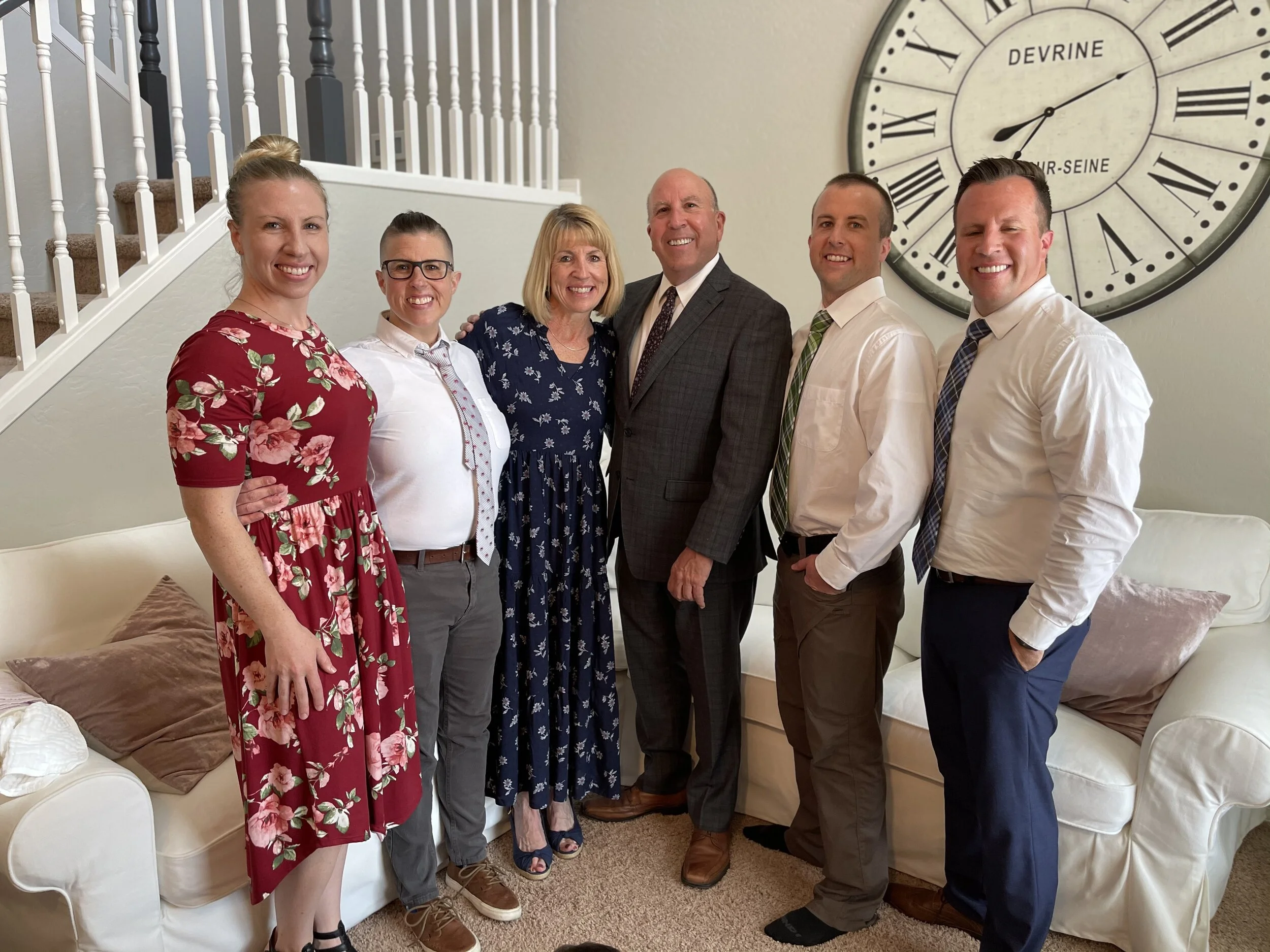
THE SAIS FAMILY
“This is a season Rebecca and Jeff Sais have eagerly anticipated for a long time. Jeff comes from a multi-generational farming family; and after working for four decades in the agricultural business himself, he was able to retire in August. Now the couple is in Provo’s Missionary Training Center preparing to embark on 18 months of senior missionary service in Kentucky, where they have been tasked with developing the church’s ARP program -- an opportunity they say never would have happened if it weren’t for their testimony of the Savior that deepened through raising their daughter, Lindsey (41).
Lindsey is the oldest of her siblings, John – 39, Erin – 33, and Andy – 31. The Sais kids were all born in Idaho, and raised in Santa Maria, CA where they moved in ’93. Rebecca and Jeff have always strictly followed the principles of their LDS faith. As a child, Rebecca says Lindsey was very spiritual and obedient, super bright, and always loved school. She also loved looking for worms to sell and playing outside, and was the head of her T-ball team. She did not like pink or anything frilly. Rebecca now regrets that there were times she tried to encourage her daughter to wear her hair differently, or otherwise be something she wasn’t. After entering high school, Lindsey later got involved with friends who drank and smoke pot. She also had no interest in dating and never expressed wanting to do so. While her parents had suspicions about Lindsey’s reality, Rebecca says, “We were in denial. We didn’t talk about it. We tried to love and support her the best we knew how, but she had different ideas and became closed off.”
Long Beach State became Lindsey’s new home after high school, and in college, her drinking and drug use became a problem. She’d occasionally visit home, where house rules mandated she align with gospel living, and this caused some friction between her and her parents. While at school, Lindsey became involved with a (non-LDS) man, and the two married civilly in an LDS chapel. Afterwards, he joined the church, and at the urging of Rebecca and Jeff, the two took temple prep classes and were sealed. Lindsey’s husband was in the military which moved them to Hawaii. There, things spiraled downward fast. Lindsey hung out more and more with her gay friends, and ultimately came out to her husband (but not her parents). At Christmas, they told their families they were getting divorced.
“This is a season Rebecca and Jeff Sais have eagerly anticipated for a long time. Jeff comes from a multi-generational farming family; and after working for four decades in the agricultural business himself, he was able to retire in August. Now the couple is in Provo’s Missionary Training Center preparing to embark on 18 months of senior missionary service in Kentucky, where they have been tasked with developing the church’s ARP program -- an opportunity they say never would have happened if it weren’t for their testimony of the Savior that deepened through raising their daughter, Lindsey (41).
Lindsey is the oldest of her siblings, John – 39, Erin – 33, and Andy – 31. The Sais kids were all born in Idaho, and raised in Santa Maria, CA where they moved in ’93. Rebecca and Jeff have always strictly followed the principles of their LDS faith. As a child, Rebecca says Lindsey was very spiritual and obedient, super bright, and always loved school. She also loved looking for worms to sell and playing outside, and was the head of her T-ball team. She did not like pink or anything frilly. Rebecca now regrets that there were times she tried to encourage her daughter to wear her hair differently, or otherwise be something she wasn’t. After entering high school, Lindsey later got involved with friends who drank and smoke pot. She also had no interest in dating and never expressed wanting to do so. While her parents had suspicions about Lindsey’s reality, Rebecca says, “We were in denial. We didn’t talk about it. We tried to love and support her the best we knew how, but she had different ideas and became closed off.”
Long Beach State became Lindsey’s new home after high school, and in college, her drinking and drug use became a problem. She’d occasionally visit home, where house rules mandated she align with gospel living, and this caused some friction between her and her parents. While at school, Lindsey became involved with a (non-LDS) man, and the two married civilly in an LDS chapel. Afterwards, he joined the church, and at the urging of Rebecca and Jeff, the two took temple prep classes and were sealed. Lindsey’s husband was in the military which moved them to Hawaii. There, things spiraled downward fast. Lindsey hung out more and more with her gay friends, and ultimately came out to her husband (but not her parents). At Christmas, they told their families they were getting divorced.
After living for 10 years in Long Beach, Lindsey hit rock bottom and moved to Bakersfield. She’d lost her reputable job, an ocean front apartment, a new car, and all her money. She dated women and fell into drug and alcohol addiction. Weeks would go by with no word from her, and her parents worried. One night, she came home and sat down with her mother on the couch. “Mom, I have something to tell you,” Lindsey said. “I think I know what you’re going to say,” Rebecca replied. Lindsey explained how she’d tried to marry a man, thinking that might “cure her” and help her “overcome her attractions.” After her divorce, she went to an LDS counselor to see if she could change. But she realized this wasn’t something that would change. Rebecca believes that it was her daughter’s cognitive dissonance with what she’d been taught at church and facing the truth of her sexual orientation that caused her to turn to substance abuse to cope.
Her parents sent her to a drug rehab in Michigan, where she did well; but shortly after, Lindsey relapsed. Her active addiction lasted almost 4 more years. After successfully completing a sober living program, on Mother’s Day of 2013, she went home to live with her parents. This time, something was different. They are proud to say she has been clean ever since. She still attends 12-Step meetings regularly because she recognizes that she is always one decision away from losing her life. While under the same roof, the Sais had to acknowledge where they stood on certain issues at the time. Lindsey respected their enforcement of Word of Wisdom guidelines, and Rebecca and Jeff ultimately came to accept that Lindsey was gay. “We couldn’t change that, only our attitude toward her. There were many times where everyone had to agree to disagree and go back to their corners. Along the way, we decided that our relationship with her was more important than our feelings about her sexual orientation. We loved her and wanted to keep her in the family.”
There have been tense times between Lindsey and her siblings and her parents, like the time they supported Prop 8 because Rebecca and Jeff say they committed upon marriage to “always follow the prophet.” Lindsey was understandably quite upset by their decision and didn’t speak to her parents for some time. While this is still a point of contention for the family, Rebecca feels that her attempts to set a standard to be true to the Lord is a positive example for her kids. She says Lindsey has often said, “I’m glad you didn’t bend over the years, that you didn’t bail me out of jail. I needed that. I needed to be told ‘no’.” Rebecca says that they have also benefitted much from lessons Lindsey has taught them.
Lindsey leans far left politically in contrast to her parents’ more conservative nature, but Rebecca and Jeff love how she always looks out for the marginalized, eager to help those in need. Jeff was deeply touched when one day while leaving a store with Lindsey, she stopped and kneeled down to talk with a homeless woman who was visibly struggling with addiction. After giving the woman food and some money, Lindsey offered to pray with the woman, and Jeff sensed it was just what the woman needed. He credits Lindsey for expounding the family’s testimony of the Savior. “I think one of the most powerful parts of the Savior’s mortal ministry is when he showed compassion toward those who would have been the most outcast, like the lepers, publicans, widows. One of the ways in which we can become truly Christlike is to show that kind of empathy, kindness, compassion and love to those who society has marginalized, like Lindsey does.” Rebecca once told her daughter, “Lindsey, you may not be active in the church, but you are active in the gospel because of your kind heart and willingness to act as the Savior would.” While the family says they don’t have all the answers, a Facebook meme they often quote says, “Just love everybody. I’ll sort it out later. Love, God.”
The entire Sais family adores their new member, Connie, who Lindsey married in 2018. Rebecca says Connie is a wonderful woman, and while not a member of the LDS faith, Connie supports Lindsey and the family in the various ways that they observe their faith. “Together, they make a great team,” says Rebecca. ”Lindsey’s more emotion-driven and can be impulsive; Connie is steady, quiet, constant. She thinks things through before acting.” The couple lives in Raleigh, NC where Connie works full time and is supporting Lindsey, who works part time while studying for her LSAT. She plans to attend law school with a focus on civil rights and social justice next fall. She is eager to work on the other side of the law and help people in need as she once was. Rebecca and Jeff feel grateful for all they’ve experienced alongside Lindsey and for how far they’ve all come. The family has adopted one of Lindsey’s favorite phrases from AA, “I can’t; He can. I think I’ll let Him.” Rebecca says, “As difficult as this journey has been, we can honestly say we’re grateful for where it’s brought us. And now, we feel it’s a huge blessing that we can help other people who feel on the edge of society or the church, and who might question their Savior’s or mankind’s love for them.”
Jeff also feels we underestimate the spiritual depth of people who don’t fit in a religious box. “When we don’t understand the depth of their spiritual nature, we place them outside the box. I think this issue of same-sex attraction goes a lot deeper than what society in general – and certainly those in the church – may realize; and as such, I think it creates a lot of conflict within people. And that’s where the importance of love in families and unity really comes in. As we strengthen families in the church, we will help everybody to create a place for talking about these things in such a way in which we can gain greater understanding.”
Jeff believes that once this life is over and we’re on the other side, we’ll see things as they really are. “We’ll understand there’s a place in Heavenly Father’s kingdom for all. Everyone will be happy. I’m not sure how that will look, but I think Heavenly Father is capable of creating a greater amount of happiness for his children – more than we can ever imagine.”
*Lindsey would be happy to lend an ear to anyone who may wish to feel a little less alone if walking a similar journey. You can reach her at IG: @kantyoudigit @palomas.gris
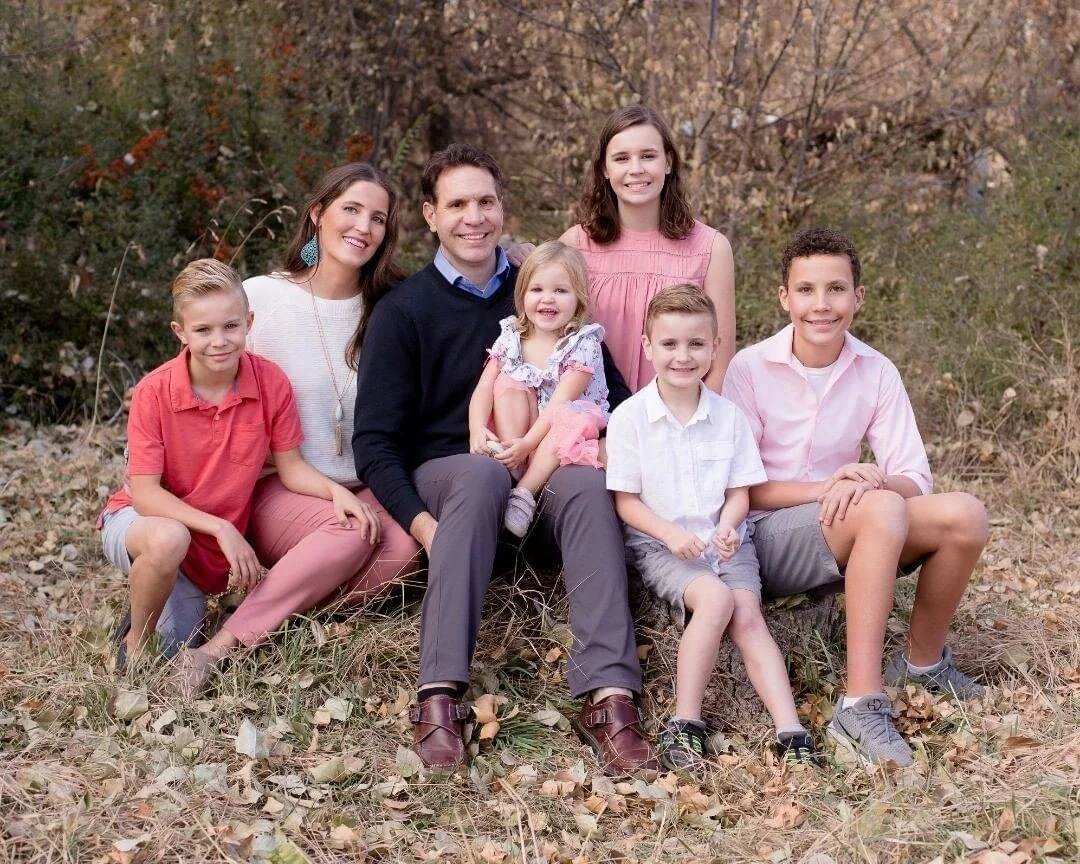
THE FOGG FAMILY
Shortly after Michelle Fogg turned 20, she became active in the LDS church and received her patriarchal blessing. In it, she was blessed she’d have children “who will be special to the Lord” -- verbiage she found odd at the time, as she presumed all children fit that category. She wondered what might lie in store; and indeed, many unique experiences have come as Michelle and her husband, Steven, have expanded their family to include five children currently between the ages of 4 and 17. The Fogg children have a range of severe food allergies, rare medical disorders, mental health diagnoses, and giftedness. Emalee, now 17, was born with an array of medical problems that launched science-minded Michelle on a 10-year journey into the food allergy world.
Michelle started a non-profit and advocated for kids like hers in front of legislatures, created trainings for school nurses, served on national boards, and promoted education and safety for kids with life-threatening allergies on a local level. A decade of advocacy took its toll, and Michelle ultimately felt prompted to step back and center her care efforts in the home. It was soon after this time that her oldest daughter, Emalee, then 15, invited her mom to dinner to tell her, “I like girls, instead of boys.”…Saying these words brought Emalee tremendous relief. While this news rocked Michelle’s world, there was some relief that she was now in a place in which she could pivot to a whole new category of parental love, support, and understanding.
Michelle shared their daughter’s news with Steven, and together, they agreed to make it a top priority to continue to love and support Emalee, while pursuing further education and understanding. This time, however, Steven begged Michelle to not make their family a poster family for LGBTQ advocacy – not because they didn’t support their daughter, but because of the lingering PTSD from allergy-world exhaustion. Almost three years later, crediting the crucial connection and perspective she gained from listening to other people’s stories (mostly via Ostler’s Listen, Learn, and Love podcast), Michelle trusts it is the right time to share the signs and preparation she received along her daughter’s special journey. Because there were plenty.
Shortly after Michelle Fogg turned 20, she became active in the LDS church and
received her patriarchal blessing. In it, she was blessed she’d have children “who will be
special to the Lord” -- verbiage she found odd at the time, as she presumed all children
fit that category. She wondered what might lie in store; and indeed, many unique
experiences have come as Michelle and her husband, Steven, have expanded their
family to include five children currently between the ages of 4 and 17.
The Fogg children have a range of severe food allergies, rare medical disorders, mental
health diagnoses, and giftedness. Emalee, now 17, was born with an array of medical
problems that launched science-minded Michelle on a 10-year journey into the food
allergy world. Michelle started a non-profit and advocated for kids like hers in front of
legislatures, created trainings for school nurses, served on national boards, and
promoted education and safety for kids with life-threatening allergies on a local level. A
decade of advocacy took its toll, and Michelle ultimately felt prompted to step back and
center her care efforts in the home.
It was soon after this time that her oldest daughter, Emalee, then 15, invited her mom to dinner to tell
her, “I like girls, instead of boys.” Saying these words brought Emalee tremendous relief. While this
news rocked Michelle’s world, there was some relief that she was now in a place in which she could
pivot to a whole new category of parental love, support, and understanding. Michelle shared their
daughter’s news with Steven, and together, they agreed to make it a top priority to continue to love
and support Emalee, while pursuing further education and understanding. This time, however, Steven
begged Michelle to not make their family a poster family for LGBTQ advocacy – not because they
didn’t support their daughter, but because of the lingering PTSD from allergy-world exhaustion.
Almost three years later, crediting the crucial connection and perspective she gained from listening to
other people’s stories (mostly via Ostler’s Listen, Learn, and Love podcast), Michelle trusts it is the right
time to share the signs and preparation she received along her daughter’s special journey. Because
there were plenty.
The first happened when Emalee was ten. Michelle picked up a phone her daughter had
set down to discover the search engine contained the words “Can you be Mormon and
gay?” At eleven, Michelle received a phone call from the mother of one of Emalee’s
friends at school, who shared that her daughter had received a flower from a girl
(Emalee) who she made a point to refer to as her girlfriend (not her friend who is a girl).
Michelle and Steven had a talk with their daughter at that time and made some fear-
based comments (they would later rethink), operating off the valid concern that their
daughter might become a social pariah in their conservative Salt Lake City, UT
neighborhood. On top of all the other medical issues that were already making her
daughter’s life difficult, Michelle followed a prompting to transfer Emalee to a charter
school. This fresh start ended up being a good move socially. But they also watched as
Emalee fell into a deeper depression throughout middle school – withdrawing more at
home, dealing with major anxiety, no longer wanting to go to her church classes or at
times, even leave her bedroom.
Michelle prayed about what to do to help her now 8th grade daughter, who she
assumed was suffering from years of medical challenges. That fall, she felt led to
explore some of Emalee’s school work in Google Docs, where she found a writing
assignment in which Emalee talked about being gay, being afraid to tell her parents,
and fearing they would disown her because of their religious beliefs. Michelle didn’t
confront Emalee at this time, but filed the experience away in a growing file she wasn’t
quite ready to deal with.
The next spring, while in the temple, Michelle was pleading with God about what to do.
In her dressing room after a session, she felt a strong, clear presence – as if someone
was standing there and speaking loudly, “Be still, and know that I am God.” Michelle
burst into tears and took comfort in the understanding that God was in charge, and that
He loved and could help Emalee more than her parents ever could. It was their job to
just be still and trust Him.
It would be another couple years before Emalee and Michelle’s revelatory dinner date.
Up until that point, Michelle said she had always been a box-checking member who
questioned how anyone could ever leave the church for any reason. After the November
2015 exclusion policy, Michelle remembers thinking, “I’m so sorry those poor families
have to deal with that. I’m so glad it’s not me.” But now, it is. She is grateful for the
humility and enlightenment on this new path which has given her the opportunity to rid
herself of layers of judgment and bias, which she didn’t realize existed inside of her.
Michelle says beyond looking upward, she has always been the type to turn to study
and science to understand our world and the people in it. After studying the history of
LGBTQ people, Michelle said, “My eyes were opened to one of the most brutal tales of
human experience and treatment. What they’ve been through – it’s heartbreaking.”
Yet, she says God has continued to guide her in a method that feels personal. One
night after pondering the debunking of the “choice theory” of sexual orientation, she
prayed that she would understand the biologic mechanisms involved. The next morning,
she came across an article and lecture by Dr. Gregory Prince about the role of
epigenetics. She was fascinated and fully acknowledged her answered prayer – which
kicked off an even deeper study. Michelle also shares that she was buoyed up by the
coming out story of Stacey Harkey (of the family’s favorite TV show, Studio C), who came
out just one month after Emalee had. “His story helped to validate many parts of
Emalee’s life as a young child, and opened me up to a whole new flood of stories. Every
single one was so similar. I just KNEW what my daughter was telling me was true. And I
just want to thank the individuals who did what I’m doing right now – sharing their
stories because they helped me so much! To listen, learn, and love. To lift and love. I
learned through our collective experiences that fear is replaced with love. Then you
have peace. The peace doesn’t come without love.”
Since her daughter has come out, Michelle is grateful for new impressions and
perspectives. Once in prayer, she asked God, “Do you really want me to tell my
daughter that she needs to be celibate and alone?” After which, she felt an emphatic
“No.” Perhaps the greatest thing that has happened since Emalee came out, says
Michelle, is that “it was like a light switch turned on and we got our daughter back. In the
weeks following, she was walking around the house whistling!? I said to Steven, ‘Do you
hear her? There’s happiness again!’ The weight lifted – in knowing you’re not going to
be rejected by the people who love you most. That it’s okay to be who you are.”
While Emalee still has struggles with her mental and physical health, she is doing great.
She recently received an excellent score on her first attempt at the ACT, tested out of
high school a year early, and is now taking college courses. Michelle says, “She is so
much happier.”
While her mother says, “Emalee was always the most valiant, pure, sweet innocent
child -- she once had the strongest testimony,” Emalee has now found it in her best
interests to step away from the church as she is about to turn 18.
Another Fogg child came out to their parents earlier this year, and Michelle senses this
is a road that several in her family will walk or otherwise come to understand on a
personal level. The Fogg family savored the quiet peace of the pandemic, and are
currently figuring out their future relationship with the religion in which they’ve always
been affiliated. In the meantime, Michelle says she is grateful for the sacred duty she
has to share with others how special her children are to the Lord, no matter where their
paths may lead. “I’m done trying to figure it out, I’ve turned it over to Him. I don’t know
any of our destinations, but I don’t worry anymore. Emalee is in God’s hands; He’s
walking right alongside her. He’s going to take her – and all of us – wherever we need
to go.”
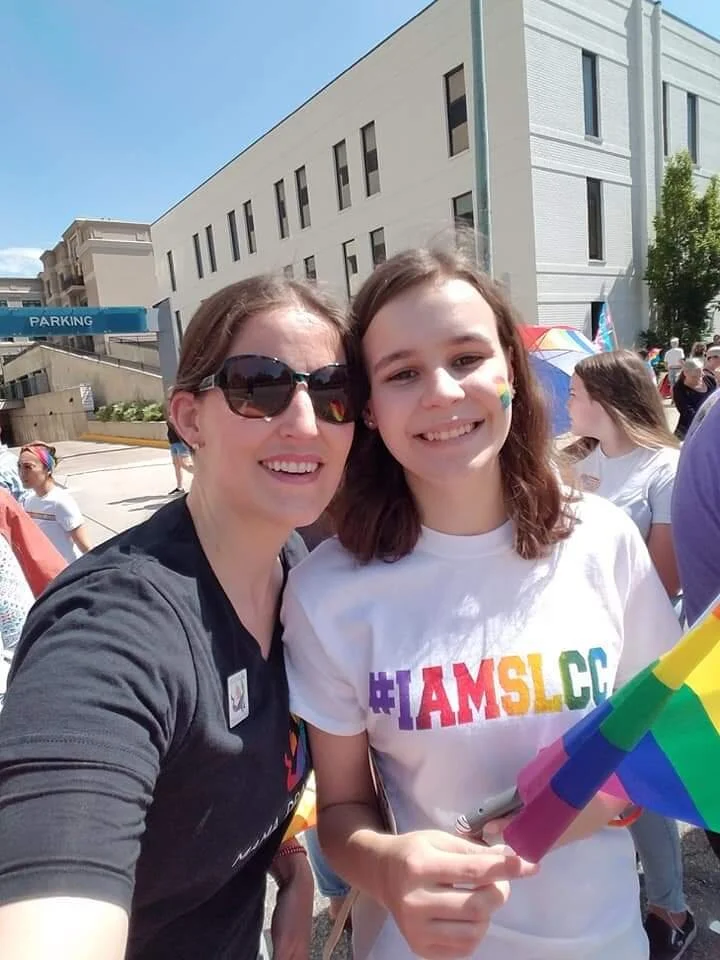
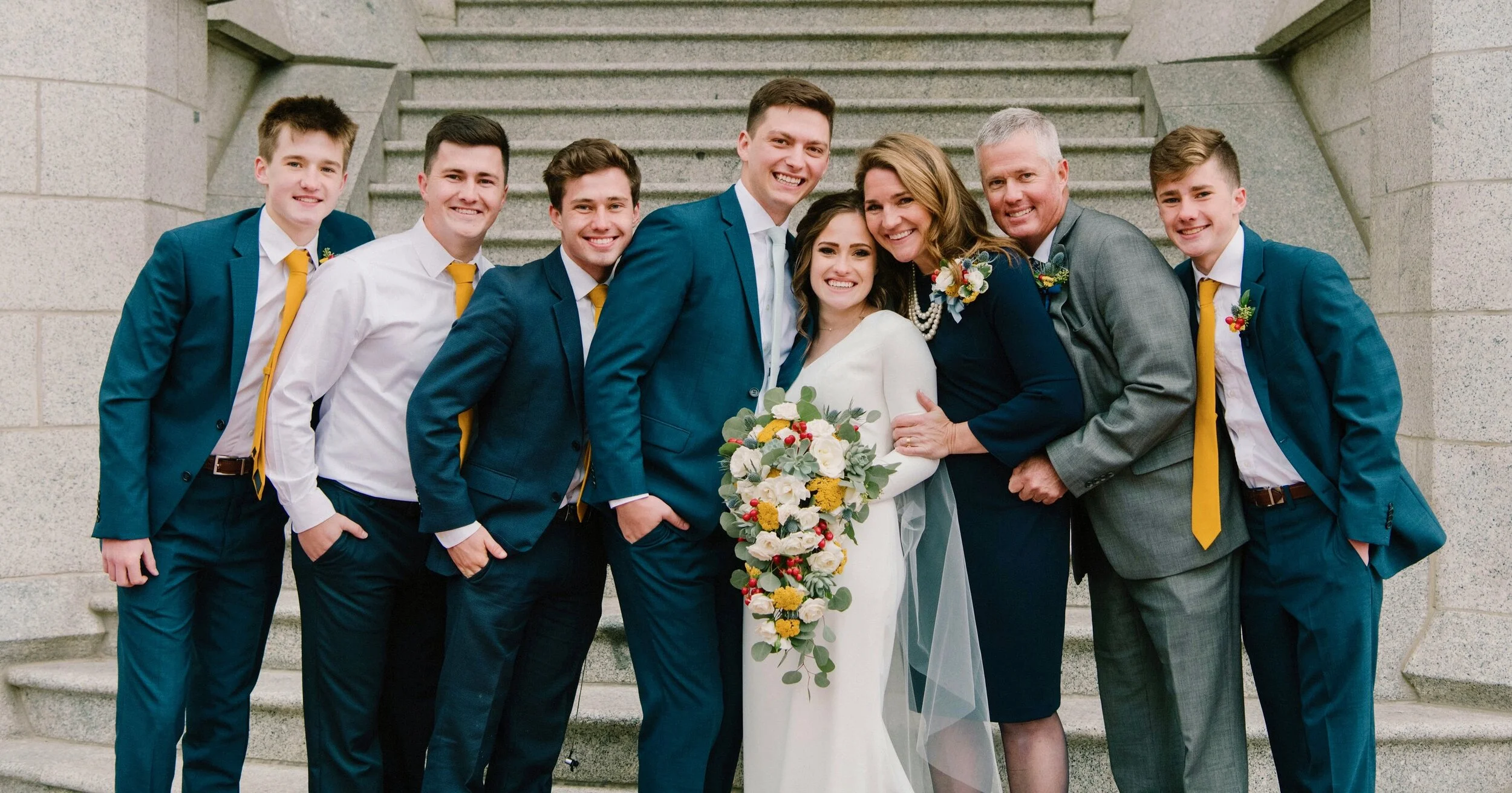
THE BURTON FAMILY
One night, when Holly Burton was tucking her 6-year-old son Sam into bed, he looked up at her with his imploring blue eyes and said, “Mom, I have a question and you have to tell me the truth. Am I adopted?” Holly responded, “No, honey. I would tell you if you were adopted; why do you ask that?” Her son replied, “I don’t know, I’m just… different.”
It turns out Sam would experience a unique path from many of his peers, in more ways than one. “He was always a very creative, gentle, inquisitive and intelligent child,” says his mom. “He tested to be in a gifted program, but he wanted to stay at his regular school and be with his friends.”
Sam is the second of five children in the Burton Family. Throughout middle and high school, Holly says Sam didn’t identify himself as being gay, but later reasons that the guys he admired back then probably were crushes. He told her, “Our culture never provided me with a healthy framework to even conceive of being gay, so it was easy to dissociate and convince myself it wasn’t so.” Sam had lots of friends who were girls, but no girlfriends. Holly now laughs, “I always just thought he was so pure, he wasn’t going to kiss anyone before his mission.” Indeed, as he prepared to serve, Sam’s stake president told his parents, “I interview a lot of missionaries before they leave and really grill them – I want to tell you that Sam is one of the purest souls I’ve ever spoken with.”
Sam loved serving in one of the New York missions, and his friends and family loved receiving his “wonderfully entertaining letters.” Halfway through his mission, Sam began having what he thought were heart problems. He was put through a series of tests, but came to realize he was experiencing severe anxiety attacks. Sam was coming to the realization that he was gay and the cognitive dissonance that it created caused his body to react. He came out to a LDS services therapist as well as his mission president.
One night, when Holly Burton was tucking her 6-year-old son Sam into bed, he looked up at her with his imploring blue eyes and said, “Mom, I have a question and you have to tell me the truth. Am I adopted?” Holly responded, “No, honey. I would tell you if you were adopted; why do you ask that?” Her son replied, “I don’t know, I’m just… different.”
It turns out Sam would experience a unique path from many of his peers, in more ways than one. “He was always a very creative, gentle, inquisitive and intelligent child,” says his mom. “He tested to be in a gifted program, but he wanted to stay at his regular school and be with his friends.”
Sam is the second of five children in the Burton Family. Throughout middle and high school, Holly says Sam didn’t identify himself as being gay, but later reasons that the guys he admired back then probably were crushes. He told her, “Our culture never provided me with a healthy framework to even conceive of being gay, so it was easy to dissociate and convince myself it wasn’t so.” Sam had lots of friends who were girls, but no girlfriends. Holly now laughs, “I always just thought he was so pure, he wasn’t going to kiss anyone before his mission.” Indeed, as he prepared to serve, Sam’s stake president told his parents, “I interview a lot of missionaries before they leave and really grill them – I want to tell you that Sam is one of the purest souls I’ve ever spoken with.”
Sam loved serving in one of the New York missions, and his friends and family loved receiving his “wonderfully entertaining letters.” Halfway through his mission, Sam began having what he thought were heart problems. He was put through a series of tests, but came to realize he was experiencing severe anxiety attacks. Sam was coming to the realization that he was gay and the cognitive dissonance that it created caused his body to react. He came out to a LDS services therapist as well as his mission president.
Unfortunately, telling his mission president is something Sam later regretted. His mission president approached Sam being gay as a problem to be fixed, a sin to be repented of, and proceeded by meeting with Sam regularly to help him determine what was preventing him from accessing the Atonement to help him be made straight. As a pretty straight-laced kid, Sam was unable to come up with answers that merited such a repentance process. Sam’s mission president advised him not to tell his family he was gay, so they remained unaware of what he was going through. After two years, Sam returned home to Holladay, UT, and began school at BYU Provo, where he found a good therapist. He found these sessions very helpful.
Soon after school started that fall, Sam met his mom for a last minute lunch at Thanksgiving Point. Over a table at Costa Vida, Sam shared a significant spiritual experience from his mission that happened during a time when he was in a particularly dark place. He was sitting outside his apartment on a fire escape feeling alone and without hope. As he prayed, he felt a great peace and these words came into his mind: “You are not broken. You are exactly who you should be. You are going to be okay.” This experience carried Sam for the rest of his mission until he returned home. On that day, after sharing this with his mom, he said, “You probably already know this, Mom, but I’m gay.” Taken back, Holly replied, “Wow. I didn’t know that. This is big… Just know I love you and that makes absolutely no difference.”
When Holly got back to her car, she had an overwhelming feeling of, “I wish it were yesterday. I wish I could go back in time.” While she was so grateful her son had shared this news with her, she says, “I was worried. I didn’t feel like this is end of the world horrible. But more like all those expectations and dreams I had for him are gone, and he’s going to have a different life, and I was mourning that. Things will be different – for this kid whose kindness, patience, and compassion are gifts. We thought he would be the best husband and father. And at that time, I thought that’s not going to happen for him. Now, my thinking has flipped – he will be the best husband and father, but it won’t be with a woman. And I’m completely okay with that.”
Sam had asked his mom to let him be the one to tell his dad, Brent, which presented a challenge for Holly who always shared her thoughts and feelings with her husband – especially big news. That night, as she was making dinner, Brent caught her in an emotional moment and asked what was wrong. She said, “I heard news about a friend who is going through some hard things. I can’t share the details, but I’m feeling sad.” Sam reached out to her that night to make sure she was alright, saying, “I’ve had a long time to process this mom…I just wanted to make sure you’re okay.” Holly says, “Sam was still Sam. His love and empathy still came through.” Over the next couple weeks, Holly found herself processing alone, with many nights spent crying in the bathroom by the kitchen -- a place no one would hear her. She urged Sam to tell his dad, completely confident Brent would respond the right way. And he did. Later, Brent said, “This is Sam we’re talking about – one of the best people we know. We know this isn’t a choice.” While Holly and Brent were united in love and support for their son, they then faced the questions that flood so many parents in this space: What does this mean? For our son, for this church, for these people? Where is their place?
Initially, Sam considered the idea of remaining celibate, or alone, and staying in the church. But his family watched as he spiraled into depression, devoid of hope. “God did not make us to be alone,” says Holly. “Especially Sam – who has so much love to offer, so much to share.” Brent initially struggled, wondering “What kind of God would do this to someone? It just seems cruel to give someone a testimony of God’s plan, only for them to realize that one of the end goals in that plan is not possible for them.” Holly ‘s first thoughts were, “Of course this is going to change! If this really is Jesus Christ’s church, it will have to. He has a plan for ALL his children. I’m just waiting for the further light and knowledge!” Though she hopes she’s not being naïve.
Sam remained at BYU, where Holly says loving, affirming professors in his undergraduate program offered Sam the support he needed. “They didn’t love Sam because he was a gay student. They saw him for who he was – this amazing, talented kid. They gave him opportunities to succeed. He won awards, he presented papers, he taught undergraduate classes. He even went to DC to help a professor present their research at a conference.” She credits one professor in particular with offering the kind of support that she feels helped save her son’s life. In light of recent events, she hopes the BYU faculty will remain a safe space for kids like her son who so desperately need them to be.
Holly will never forget when she received a call from Sam one late night. She could hear it in his voice. He was not okay. She asked, “Are you thinking about hurting yourself, Sam?” His response quickly prompted her to drive down and take him to the ER where they met with the psych department. A nurse asked Sam to explain what was going on. “I’m a gay man; I go to BYU.” “Say no more,” the nurse replied. Together, Sam’s support team made a game plan. He started to turn to music, specifically the BYU piano practice rooms, where he’d escape whenever he needed to destress.
It was a short time later that Sam asked his parents, “What would you do if I ever married a man?” They told him, “We’d be completely supportive and love him just like we love you. He’d be a part of our family.” Once Sam realized he had his parents’ full support, Holly says they saw a weight lift from him. He felt hope. Sam is now thriving at UT Austin where he was granted a teaching fellowship and is now pursuing his masters in Media Studies. He plans on being a professor someday. Recently, out of respect to his parents, Sam told them of his intention to have his records removed from the church, feeling he can no longer “in good conscience have (his) name on the records of a church that treats people this way.” Although, he fully respects his parents’ choice to try to stay in the church, serve, and hopefully make a difference.
Holly is serving as a stake Young Women’s president. She strongly believes we should lead with love instead of fear on these issues. She says, “By listening to others -- really listening, we can build bridges and come to understand different lived experiences unlike our own.” She flies a Pride flag not as a political statement, but to show her love. She has often felt the presence of her beloved father, who passed away three years ago, and she hears his spirit reminding her to “Be fearless. Trust in the Lord and know that this is all so much bigger than we can even comprehend.” She believes we need less judgment and more love. “My job is not to judge. I believe that is the Savior’s job. Our job as members of His church is to love.” She wishes we had better training for church leaders on these issues. “Probably the best thing leaders can learn to do is to listen to LGBTQ people.” Her bishop did exactly this with Sam. Holly was so touched by how their bishop just listened to Sam and asked questions -- for hours. He was then inspired to plan a fifth Sunday meeting where he invited Samuel (as the main speaker) to share his experiences, and Holly and Brent and two other parents of an LGBTQ child, to share theirs as well.
What Holly hopes for most right now in this space is that we can shift the narrative so that when a LDS parent’s child comes out, the parents don’t see this as devastating, but see their child as a gift. She says, “The LGBTQ people I know are incredible. They are amazing! I know we say we have a place for them, but our doctrine is not so clear about that place. At least not a place or space that many can live with. By not having or creating that space, we’re losing out. We’ve lost so many people – not just those who have stepped away, but literal lives have been lost over this. It is heartbreaking to me! These are people who have so much to offer. Sometimes we have to ask hard questions – and more importantly listen to the answers. When we really listen to LGBTQ people, we see them, we understand them, and it is then that we are better able to fully love them.”
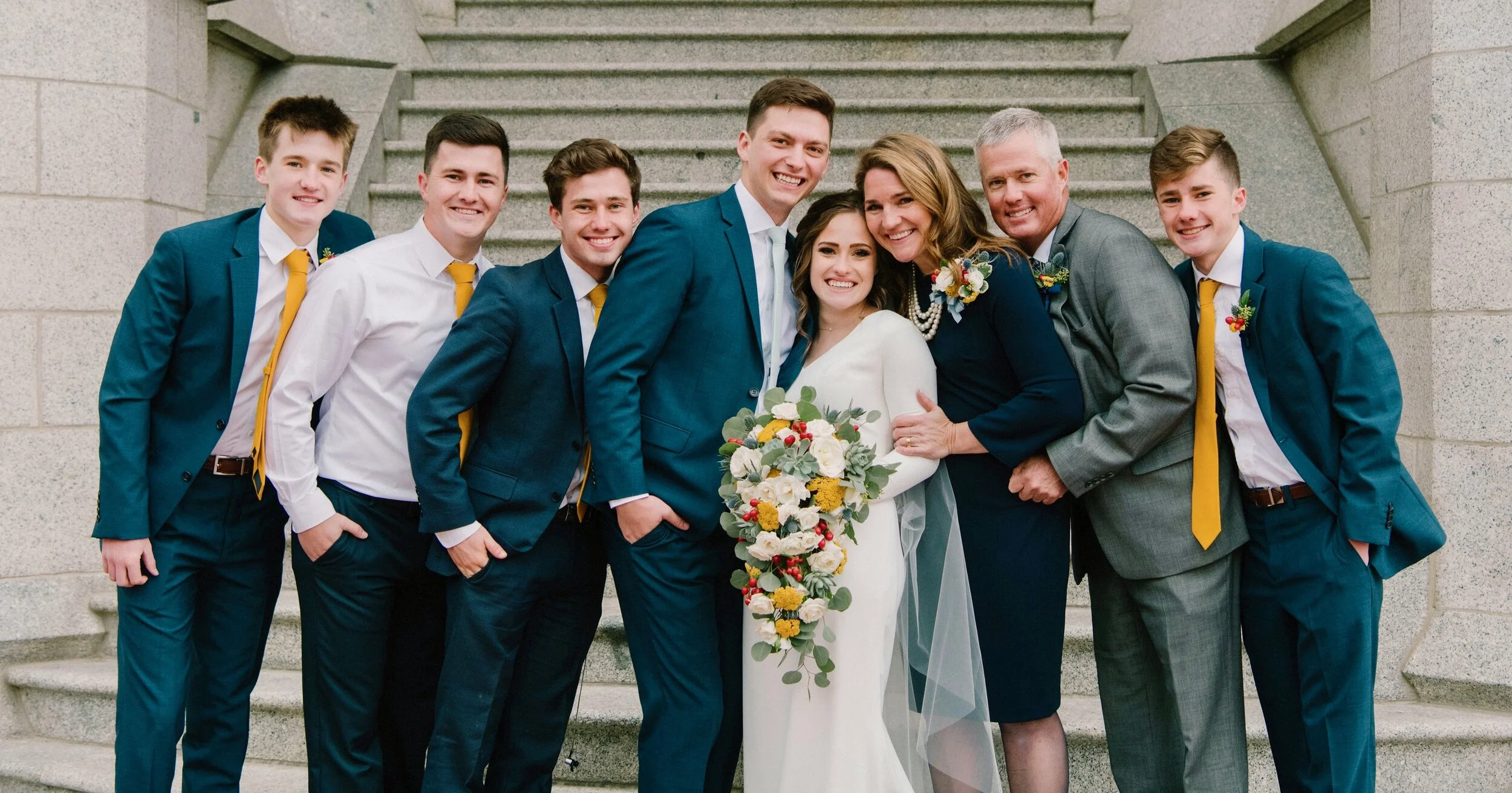




THE KENNEDY FAMILY
This week's Lift+Love At Home story features the Kennedy family: "On paper, everything seemed ideal: top of his class, National Merit Scholar, Eagle Scout, Order of the Arrow member, returned missionary and recipient of a full scholarship to Utah State University. But for years, Jeffrey Kennedy’s parents had suspected something was troubling their son. “He was very closed off growing up; he didn’t want to talk about anything emotional. But as a middle child and someone who was so scholastic, he could get away with it – hiding up in his room to do homework. ‘That’s just the type of student he is,” thought his parents. But neither Pam nor Darin Kennedy was aware of the silent struggle their son was enduring, unable to acknowledge and accept a part of himself that he was battling to keep hidden…
On paper, everything seemed ideal: top of his class, National Merit Scholar, Eagle Scout, Order of the Arrow member, returned missionary and recipient of a full scholarship to Utah State University. But for years, Jeffrey Kennedy’s parents had suspected something was troubling their son. “He was very closed off growing up; he didn’t want to talk about anything emotional. But as a middle child and someone who was so scholastic, he could get away with it – hiding up in his room to do homework. ‘That’s just the type of student he is,” thought his parents. But neither Pam nor Darin Kennedy was aware of the silent struggle their son was enduring, unable to acknowledge and accept a part of himself that he was battling to keep hidden.
On his mission to Vanuatu in the South Pacific, Jeffrey started having anxiety at a worrisome enough level that he spoke to his parents about it. While his mission president said he’d be fine, Pam sensed something else was going on. She encouraged Jeffrey to be tested for dengue or the West Nile virus. (Pam and Darin later discovered the mission president knew all along that Jeffrey was gay but did not disclose that information to his parents.) Had they known, so much surrounding his decision to serve a mission and his state of mind right afterwards would have made sense. Jeffrey served his two years, but was very emotional, anxious, and raw when he came home. Pam remembers Darin staying up all night long with him that first night in an attempt to comfort him. Several months later, after Jeffrey had left their Boise, ID home for school in Logan, UT, Darin was searching around the house for an SD drive. Figuring their techie son might be the most likely owner, Darin opened Jeffrey’s desk and within found a “To Mom and Dad” letter. Shortly after, Darin left his son’s room in tears and handed Pam the letter. She likewise read how Jeffrey had always tried to be the best son, how he was so sorry to disappoint his parents, but he couldn’t live up to their expectations. “We thought it was a suicide note,” Pam says, “But at the bottom, he finally said, ‘I need to tell you, I’m gay’.”
“It threw us for such a loop,” says Pam. “We didn’t see it coming. But in that moment, my husband did a complete 180.” Darin told her, “I need to be the one to talk to our son. I need to tell him I found his letter, that I love him, and I’m so sorry for everything hurtful I’ve ever said,” referencing the homophobic comments he’d made over the years about gay people and couples they saw on TV and around town. While Darin knew his son didn’t choose his orientation and couldn’t change it, he initially figured that as an RM, perhaps he’d choose to lead a celibate life. In contrast, Pam says she instantly thought, “Screw that, I want him to have a life.” While Pam wanted nothing but happiness for Jeffrey, she still cried for six months. Church was especially hard. She never saw her son’s orientation as a burden, but had a difficult time seeing it as a blessing.
A few months later Pam and Jeffrey attended a third temple session together in which the mother-son duo had been asked to be the witness couple. They both chuckled, thinking “If they only knew…” And then she realized, “The Lord does know.” During that last session together, Pam received a distinct prompting: “Your son’s going to leave the church, and it’s going to be okay.” After the temple, while sitting in the car in a Shopko parking lot, Jeffrey asked his mother, “Do you think it’d be okay if I start dating?”
With his parents’ blessing, Jeffrey began dating. While Boise is generally more liberal and accepting than other nearby towns (when Jeffrey told his younger brother he’s gay, Braedon barely looked up from his video game and said, “Okay, my friends are gay, no big deal”), Pam laments that gay children in conservative religious communities do not yet have acceptable offerings for safe dating. “Kids like my son don’t want the one-night stands, or get drunk and party, or date older men in secret type of scene. Jeffrey just wanted to date normally like everyone else did.” Jeffrey also hadn’t wanted to pursue dating guys with LDS backgrounds, figuring he wouldn’t find it helpful to have two partners in one relationship dealing with the kind of religious trauma he had experienced, but he met a great guy with a Christian background, who Pam says is “perfect for him. We couldn’t have asked for a better son-in-law.” Two years later, in May of this year, they were married in his older brother’s backyard and the entire family was there to support. When Jeffrey was engaged, he teared up talking to Pam about his love for his soon-to-be husband and said he couldn’t imagine spending eternity with anyone other than Cory. Pam reasons, “That says it right there. That’s all I needed to know.”
Pam’s kids have nicknamed her the “Gay Warrior.” She is a visible ally at the Boise-based high school where she works, wearing her rainbow gear every day to let the students know she’s a safe space. Her son Jeffrey is more subdued about his personal life. He and Cory live a simple, happy life, and enjoy cooking together, Star Wars,musical theatre (Cory knows every word to Hamilton), and trips in the camper they bought together, complete with twinkly lights, their dog, James, and two cats, Rhubarb and Whiskey. Like the rest of the Kennedy family, they are huge Disney fans, and they recently honeymooned at Disneyworld. Cory and Jeff both work and support each other as Jeffrey pursues his masters degree in Environmental Engineering. Cory will then complete his education. It means a lot to Pam that Cory took Jeffrey’s last name, and she’s excited that the two plan to adopt children down the road. “My son’s a good person. He’s done everything he could do within the church – he graduated from seminary, served a mission, worked in the temple; what more did he have to do?” Pam says, “The biggest thing I’ve learned on this journey is that God is bigger than the church portrays and our earth-bound perceptions. We say God’s love is infinite and eternal, but we also talk a lot about earthly requirements that we must follow. While these requirements are great and can be a strength for most families, they can be painful for members who don’t fit the mold. If we believe that God is in charge and understands our eternal situation, then we can put our trust in Him to sort out these complicated situations. All I know is that God loves my son even more than I do and created him exactly how he is. We have to expand our belief in what God is capable of doing and take away the fear in our teaching.” While Pam and Darin have raised all their kids in the church and know the Plan of Salvation well, Pam has never felt the fear of having family excluded from Heaven. “I have too many wonderful friends and family outside the church to believe that there isn’t a wonderful place for them.”
Pam and Darin try to visibly be a safe place for those who may need them to be. Pam says, “I wish the church would use us as a resource more often. When people are in crisis, they should send in someone who understands. My husband and I have been there, we know what these families are going through. It can really shake your faith.“ Although Pam and Darin have strong testimonies of Jesus Christ and the Atonement, there are times when church is difficult. Pam and Darin no longer feel compelled to force their youngest son, now 16, to attend seminary. They don’t want him to have to listen to any non-affirming lessons on marriage. Yet each week, Pam, Darin, and Braedon attend church to partake of the sacrament and hopefully receive just one tender mercy -- one golden message of Christlike goodness. They are never disappointed. They have seen Christlike blessings in the details of their lives, including unconditional support from family members.
During Covid, they have spent more time as a family and have had plenty of opportunity to bond. Through the experiences of these past few years, Pam and Darin have grown closer together and Pam has finally come to see that having a gay child truly is a blessing. “When what you thought you knew is stripped away, you are left with nothing but Christ and the Atonement to fall back on.” While their relationship with the church is strained, Pam and Darin feel that they are in a good place and that God will work it all out. They feel very blessed to have had the opportunity to raise one of God’s gay children.


THE BARTH FAMILY
Angie Barth is often asked what it’s like to raise identical twins. “It’s like having a lesson on love every single day,” she says. “The connection between Gavin and Garrett is palpable. When they were toddlers, if I gave one of them a cookie, he would immediately run off and give it to his brother.” At the same time, the two kept parents Angie and Scott on their toes, earning the nicknames “Seek” and “Destroy” because of the crazy capers they would concoct, including the time when, at two-years-old, they redecorated every surface of the kitchen in their new house with a rainbow-colored assortment of Sharpie markers they had accessed by strategically climbing onto each other’s backs.
While the brothers were the best of friends and begged to be in the same class at school, they also were quite independent and pursued different interests. Angie recalls, “Growing up, Garrett loved to talk about his dreams for his future family. For years, he’d share his hopes of having 15 children who he’d drive around in a school bus. He’d rattle off the most ridiculous names for all of these poor kids,” she laughs. “But suddenly, one day, he didn’t want to talk about those plans anymore.”…
Angie Barth is often asked what it’s like to raise identical twins. “It’s like having a lesson on love every single day,” she says. “The connection between Gavin and Garrett is palpable. When they were toddlers, if I gave one of them a cookie, he would immediately run off and give it to his brother.” At the same time, the two kept parents Angie and Scott on their toes, earning the nicknames “Seek” and “Destroy” because of the crazy capers they would concoct, including the time when, at two years old, they redecorated every surface of the kitchen in their new house with a rainbow-colored assortment of Sharpie markers they had accessed by strategically climbing onto each other’s backs.
While the brothers were the best of friends and begged to be in the same class at school, they also were quite independent and pursued different interests. Angie recalls, “Growing up, Garrett loved to talk about his dreams for his future family. For years, he’d share his hopes of having 15 children who he’d drive around in a school bus. He’d rattle off the most ridiculous names for all of these poor kids,” she laughs. “But suddenly, one day, he didn’t want to talk about those plans anymore.”
Around 14 years old, Gavin and Garrett started to grow apart. As he became increasingly withdrawn, a lot of Garrett’s anger was directed toward his brother. This wasn’t true to the typically kind, content character of the Garrett Angie had watched grow up, but she was at a loss for what to do, as he wouldn’t let anyone in.
Finally, one night, Garrett confirmed to his mother that he is gay. She had experienced impressions since he was three years old that this might be the case, so it wasn’t too shocking. Yet, she still felt heartbroken that night in his room, looking over at the two pictures of LDS temples Garrett had always displayed on his desk. In that moment, she realized that realistically, a temple marriage would not likely be a part of his future. When Angie asked why he had withheld telling them sooner, Garrett confessed it was because his dad, Scott, was enduring a stressful job hunt, and Garrett didn’t want to add to the family’s burdens.
Angie says, “After Garrett came out, we learned that he had really come to resent Gavin because he knew that Gavin would be able to have all of the things that Garrett had always hoped and dreamed for himself—a happy marriage with someone to build and share a life with, complete with children, home, family—but he had come to the realization that he would never have these things, simply because he was born gay and his brother was not.”
Garrett has had to distance himself from the church to continue to heal from religious trauma. It’s pained Angie to see how hard he’s had to work to untangle his relationship with God and Jesus Christ from the church teachings that have caused him trauma as he has sought to maintain his mental health.
Like many parents in her situation, Angie now also questions her own place in the church. She says, “As parents we know, or very quickly come to know through personal revelation, that our child was intentionally, purposefully created this way. We know of their absolute goodness and of their divine nature. However, church teachings have mischaracterized gay people for decades, so it’s difficult to reconcile all of that with what we know to be true about our own child. With identical twins, the differences between how they are treated and the blessings that are or are not available to them in the church feel especially poignant and so completely arbitrary now. Both boys are equally righteous and worthy young men, but because one of them happened to be born gay, the church doesn’t make the blessings and ordinances of salvation available to him in a way that’s sustainable and congruent with the way that God created him. It feels every bit as arbitrary as having these blessings withheld from your child just because God created them left-handed. These days, there are many days I question where, how, and if I have a place in the church. Where is the space for the eternal family that my husband and I have created and have been working so hard for? But I’m trusting that God loves me and loves my family, so I’m just taking it one day, one step, at a time.”
Crediting books like Evan Smith’s “Gay LDS Crossroads: A Scripture-Based Path Forward,” Angie knows that Garrett’s orientation was not a mistake, nor a choice. Rather, “he is loved and whole in God’s sight, and it is my job to simply love and support my son on his life’s path.” She has felt the impression from above, “Angie, you need to trust me. I’ve got you. I am with your family, and I have always been with you. You need to tell Garrett that you will support whatever path he chooses.” Once she did that, Angie says Garrett began tearing down his protective walls and rebuilding the relationship with his twin brother. At that point, Garrett told his mom that, “For the first time in such a long time, I feel hope again. I forgot what it feels like to have hope and to look forward to my future.”
This, after a soul-crushing post Garrett had written when he publicly came out. In it, he says, “I prayed to God, every night, wishing I would wake up as something else. Everywhere I searched, answers taught me that God would ‘make it up to me in the end,’ or that I was damaged and would eventually be fixed. Online searches led me to harmful quotes by real-life prophets and apostles, which I’ve decided not to include.
I’ve spent a lifetime convincing myself I’m attracted to women. I’ve spent a lifetime blowing out my own birthday candles wishing I was straight. I’ve come close to booking myself into a conversion therapy. I’ve spent a lifetime being told I was not eligible to receive the same blessings as my twin brother because of something I never chose. I’ve spent a lifetime in a religion that is fundamentally incompatible with my hopes and dreams for the future, which I believe to be good and right.
I am not a ‘bitter fruit.’
I am worthy. I am beloved. I am beautiful. All members of the LGBTQIA+ community are worthy, beloved, and beautiful, and all members of all marginalized communities deserve to be respected, cherished, and unconditionally loved by ALL of us. It may have taken 19 years to believe it, but I’m proud to be gay. I’m proud of all my family members and friends that have helped me come this far. And most importantly, I’m proud of all those still in the closet / dealing with religious trauma. You are so strong, and I am SO proud of you. Better days are coming.”
After taking a gap year to work and save money for college, Garrett has now begun studying English teaching at the University of Utah. A talented creative writer, he is also working on a fantasy book series. His brother Gavin recently started home MTC training for his dream call: the Czech/Slovak mission (which happens to be the place from where Angie’s family originates). Angie loves that both her boys have supported each other’s unique paths in meaningful ways. Recently, Garrett happily performed Gavin’s favorite piano hymn medley at Gavin’s farewell; and both brothers remain close with their sister, Cassia.
What Angie wishes most now is for “leadership to understand that our LGBTQ children and peers are not some obscure, outside threat bent on destroying the gospel of Jesus Christ, the church, and the traditional family. These are children born in the covenant, who grew up loving the gospel, believing it, and embracing it with all their hearts. These are some of our Heavenly Parents’ choicest spirits with amazing spiritual gifts to offer in the service of Jesus Christ. It is such a shame seeing how the church doesn’t really provide a safe environment or framework in which these amazing children of God can thrive. We need them! If we endeavor to amputate them from the Body of Christ by providing no real sustainable place for them to thrive and worship among us, we all lose.”
Angie would also love to see church communities work to remove the stigma often connected to people (like her son) who need to step away in order to maintain their mental health. “It’s difficult for those of us who naturally fit the church’s mold so perfectly to comprehend the intense turmoil and anguish experienced in the church by those who are born in a way that can’t fit that mold. I would love if we could embrace them instead and extend nothing but kindness, understanding, and love, trusting that God still is very much directing their personal paths as each seeks the healing and wholeness they need to thrive.”
Throughout her journey, Angie feels she’s been blessed to sit with parents of these precious kids and celebrate them together, as they grapple with pain over these issues and questions that don’t really have any answers. She says, “What sacred ground this has been. Because I have a gay son, I have been able to learn more about what it truly means to love as Jesus loves than I likely ever could have in an entire lifetime otherwise. Given the choice, I would change nothing.”


THE JACKIE SMITH FAMILY
There are some advantages to not growing up in the LDS faith. For Jackie Smith, joining the church as a college student from a socially liberal family background has always allowed her to approach church culture from a different angle -- one that as an author and mother of seven, she now uses to help herself and others navigate through certain social ideologies, especially when it comes to facing essential parenting pivots and difficult pulpit pronouncements.
As an LDS-outsider (who’s now been baptized in for the past few decades), Jackie observes that, “There appears to be a pride that develops sometimes in the church based on a checklist of our children’s behavior – mission, BYU, marriage, etc. These are things that I don’t think matter as much as we think they do to God. And when we get our self-esteem by our kids checking these boxes, it can become difficult. Because if a kid makes a different choice, it feels like a personal threat.”
There are some advantages to not growing up in the LDS faith. For Jackie Smith, joining the church as a college student from a socially liberal family background has always allowed her to approach church culture from a different angle -- one that as an author and mother of seven, she now uses to help herself and others navigate through certain social ideologies, especially when it comes to facing essential parenting pivots and difficult pulpit pronouncements. As an LDS-outsider (who’s now been baptized in for the past few decades), Jackie observes that, “There appears to be a pride that develops sometimes in the church based on a checklist of our children’s behavior – mission, BYU, marriage, etc. These are things that I don’t think matter as much as we think they do to God. And when we get our self-esteem by our kids checking these boxes, it can become difficult. Because if a kid makes a different choice, it feels like a personal threat.”
Through her books, Jackie hopes to help people step back and see a different approach – whether they have a gay kid or not. Her children’s series, Open Minds, Open Hearts, (available on Amazon) aims to help parents raise children with the emotional strength to confidently choose to be Christlike. It was always important to Jackie that her own children not judge others who, say, drink coffee or smoke, but rather that they recognize that all humans hold and offer light and truth. Jackie’s memoir, Pass It On: A Perspective Offering Insight to All Faiths About Raising a Gay Child in a Religious Home, (also on Amazon), chronicles her journey when her youngest child Spencer, who now goes by Dudley, came out during his junior year of high school. From a young age, Jackie suspected something was different about Dudley. While he says he didn’t know he was gay until the 7th grade, Jackie said she had impressions much earlier that caused her to watch her words and create a safe space for him. “I was always a little overprotective, I think.”
And then, she remembers the doozy of Prop 8. At the time, her husband Kent was a bishop, and she recalls both of them supporting the admonition to “follow the prophet” with the political issue, but behind their bedroom door, Kent comforted her as she mourned, saying, “I can’t do this.” Jackie remembers standing on a street corner behind a sea of Yes on 8 signs, which she refused to pick up herself, but she still feels sick that a young man from her daughter’s high school, carrying a “No H8” sign, approached and saw her standing there. It felt like a punch to the gut. She went into the bushes and cried.
For Jackie, the hardest part about Dudley coming out, even all these years later, is that he initially believed his parents would never speak to him again once he did. This heart-breaking confession has since propelled Jackie to write, to speak up, to speak out and let others know how we can preventatively do better. “I’m trying to scrape off all that Mormon guck – all the judgment – and remind people how our job is to just teach our kids about Christ.” The Smith family is large, diverse, and very close. All of Kent and Jackie’s children are now married, and the line-up pictured above includes Jessica and Steve Hennings, Andrew and Karisa Smith, Matt and Lizzie Smith, Makenna and Mike Myler, CJ and Spencer Taylor, Sam and Megan Smith, Dudley and Trevor Brown, and grandchildren Moses, Ray, Ocean, Ezra, Smith, Stevie, Etta, Lou, Hal, and a baby girl on the way.
At Christmas time during his junior year of high school, after Dudley first revealed he’s gay to Jackie, he gave each of his siblings a similarly wrapped package. As they each opened up a rainbow-colored pin and put it on, Jackie smiles at the memory of the instant sibling huddle of loving support.
After her son came out, Jackie says her priority was that Dudley still felt like a beloved child of God, even though he felt a need to pull away completely from church teachings. As he was the only child still at home, Jackie and Kent adapted. At the time, they thought it was best for Dudley to still attend church and finish seminary, but Family Home Evening turned into a weekly 30-second inspirational quote (that sometimes led to hours of discussion). They tried to work around his feelings, rather than plow through them.
After high school, Jackie says Dudley experienced some wild days and nights as a student at Santa Monica College studying film. She believes this was due to Dudley’s lack of self-love due to the experiences he faced that sprouted from church teachings that need to change. One day, he came home to his parents and bawled on their bed at the spiral his life had taken. Together, they discussed self care and a path that would help Dudley overcome the damage to his emotional health. This bumpy journey would lead to a really good life and partner who would support and love him. Dudley decided to transfer to UVU, where he could study geology and be closer to his siblings, with whom he remained close. He met Trevor, a BYU graduate, and together, they lifted and loved one another on their mutually healing journey. The family laughs that it was Dudley and Trevor’s relationship that advanced the quickest of all their long-haul dater siblings, and the two were married in a beautiful ceremony just two years later.
The entire Smith family remains close, and true to form, last week, they met in clusters (in California and Utah) after Elder Holland’s infamous delivery at that BYU podium so that they could process together. Jackie shared that she spoke to a faculty member at BYU who sat through the talk and described it as a bit of whiplash after listening to BYU President Worthen’s prior talk the same day on the importance of inclusion. Jackie feels that every talk opens up room for more thought and discussion. To her, this wasn’t a step backwards, but a catalyst for changing mindsets, building progress, and ultimately leading to light and truth. Jackie believes we should be proud of the students and faculty who are striving to be like Christ. “The church has created a university of earth-shattering people who seek God’s will, love God’s children, and care about their future. Let’s be grateful for their voices and their vision. I, too, believe BYU should continue to be unique, but there is a difference between uniqueness and isolation. If you isolate, you won’t be unique because no one will notice you. When you’re unique, you stand out. When you isolate, you are forgotten.”
Regarding the reception of such an address in the LGBTQ+ community, Jackie offers a broader perspective on grace: “We cannot raise our kids to worship our prophets and apostles. There is a fine line between worshipping and revering – they are imperfect men; they know it, and they want us to know it. They ask God for revelation, too. I can completely disagree with someone but know they’re still a child of God trying to do their best. I love Elder Holland – he has inspired me throughout my life. I’m not thinking he’s a horrible person because of one mistake. For all I know, he may have cried himself to sleep that night. Or he may have thought all that needed to be said. I don’t know. Let us not forget he is a child of God, too. He’s reading his scriptures, praying, uncovering light and truth, too, just like me. He’s on a journey; I’m on a journey – and our journeys need to collide so we can learn from each other. And when we both face God, He will let each of us know what he wanted each of us to learn from this experience.”
Jackie believes the general authorities when they say they’ve been on their knees praying about people like her son and her family. As for what she’d say directly, if given audience: “I’d invite them to come meet our kids, come meet my son, and admit to themselves these are children of God and they have a place in God’s kingdom and heart. We know that. We are looking forward to seeing how they fit into God’s plan. Everyone needs to continue to seek the answers; please, please don’t close any doors.” #liftandloveathome


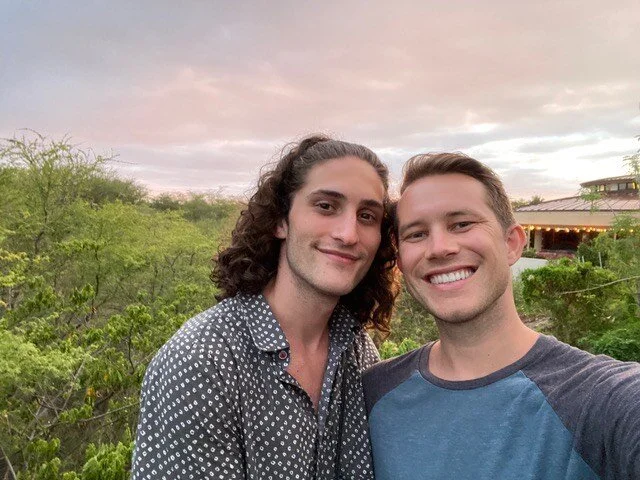
THE WELCH FAMILY
“We’ve always been all in,” says Melinda Welch, speaking of her and husband Wayne’s affinity for both their marriage and the LDS church. “And we used to be a check all the boxes type of family. Family prayer, family scripture study, church attendance, church service and missions equals all of our children have solid testimonies and stay in the church and we live happily ever after.” Several decades later, while high school sweethearts Melinda and Wayne are still very much “all in” with their family and the church (Wayne is currently serving as a YSA Bishop in a Bountiful, UT ward), the Welch’s black-and-white thinking has been replaced with a sea of rainbows since two of their five kids have come out as gay.
Now, the large and loving family has grown in both size and support. Oldest son Addison – 35, is married to Bre – 30, and they are the parents of Alfie – 7 and Poppy – 3, with one more on the way. Landon – 33, married Alex – 38, who came with two kids (Andrew – 14 and Sophia – 12) from his previous marriage. Truman is 30. Monson – 28, married Lexi - 26, and they are the parents of Tayla – 5, Lady – 3, and Elsie – 1. And Laila is 19.
The Welch family shows up for each other – whether it be for Melinda, Addison, and Bre’s theatrical performances or for Truman’s drag shows in Salt Lake. Though the Welch’s posterity are varied in their church affiliation and activity, all showed up in rainbow attire for their recent Pride-themed family party in June. Themed monthly gatherings are just one of Melinda’s traditions to keep her family close. This month, their theme is “Anchor,” and they will meet at their cabin, go boating, and discuss their respective anchors in life. “We want our grandkids to get it. We talk about inclusion, compassion, not judging. Love. Love better. Love more. We want our legacy to be that. You have to walk that, too; you can’t just talk that. So many of the things we do at this stage are for our grandkids – they’re the ones who will change the culture of the church, and the world,” says Melinda.
“We’ve always been all in,” says Melinda Welch, speaking of her and husband Wayne’s affinity for both their marriage and the LDS church. “And we used to be a check all the boxes type of family. Family prayer, family scripture study, church attendance, church service and missions equals all of our children have solid testimonies and stay in the church and we live happily ever after.” Several decades later, while high school sweethearts Melinda and Wayne are still very much “all in” with their family and the church (Wayne is currently serving as a YSA Bishop in a Bountiful, UT ward), the Welch’s black-and-white thinking has been replaced with a sea of rainbows since two of their five kids have come out as gay.
Now, the large and loving family has grown in both size and support. Oldest son Addison – 35, is married to Bre – 30, and they are the parents of Alfie – 7 and Poppy – 3, with one more on the way. Landon – 33, married Alex – 38, who came with two kids (Andrew – 14 and Sophia – 12) from his previous marriage. Truman is 30. Monson – 28, married Lexi - 26, and they are the parents of Tayla – 5, Lady – 3, and Elsie – 1. And Laila is 19.
The Welch family shows up for each other – whether it be for Melinda, Addison, and Bre’s theatrical performances or for Truman’s drag shows in Salt Lake. Though the Welch’s posterity are varied in their church affiliation and activity, all showed up in rainbow attire for their recent Pride-themed family party in June. Themed monthly gatherings are just one of Melinda’s traditions to keep her family close. This month, their theme is “Anchor,” and they will meet at their cabin, go boating, and discuss their respective anchors in life. “We want our grandkids to get it. We talk about inclusion, compassion, not judging. Love. Love better. Love more. We want our legacy to be that. You have to walk that, too; you can’t just talk that. So many of the things we do at this stage are for our grandkids – they’re the ones who will change the culture of the church, and the world,” says Melinda.
The Welch family’s rainbow journey first started when second oldest son Landon was born. From the start, Melinda describes him as “not your stereotypical boy. He’d tie blankets onto his body to make dresses and wrap them around his head like hair.” His parents just let him go for it. “It was just Landon.” Every Halloween, he’d choose to be a princess or long-lashed Tweety Bird or the Little Mermaid, and Melinda often overheard the “Why do you let him do that’s?” One year, she devised a fool-proof plan (“like Satan,” she laughs), to do a 101 Dalmations family costume. Melinda was Cruella, Wayne was Jasper, and each of the kids would be a puppy. “Of course, Landon claimed Perdita - the girl dog.”
Junior high was rough. Landon would come home sobbing, “All these people keep making fun of me and calling me gay.” “Well, are you?” Melinda would ask. “No, mom, no!” he’d cry. “This was my kid who sat right up in front of the TV for LDS general conference, taking notes, desperate for a nugget telling him he was okay. I was so proud of him, but really, he was dying inside,” Melinda recalls.
During his high school years, she was a teacher at Bountiful High School where he attended, and his refuge became her classroom, where he’d show up during lunch. As his peers matured a little, Landon found his crowd with the theatre and music kids. He was also a student body officer. After graduation, he went to UVU on a leadership scholarship and still hadn’t officially come out, though his parents anticipated it’d be soon. But things took a turn for the worse. They’d get notices he was failing school and holing himself up in his room. “We’d get desperate phone calls and try to talk him off a cliff, begging him to come home.”
At the end of the year in May, when he should have been receiving a mission call, instead Landon attempted suicide. “We tried our best to help and put him in a mental health facility. Finally, he was able to say, ‘I’m gay; this is who I am.’ ‘Yes son, we get that. We know it’s a choice and we’ll support whatever your choice is’.”
Therein lies language Melinda says she is proud they have evolved past, recognizing this was far from a choice. It took a second unexpected confession to help get her and Wayne there. Two years after Landon was born came Truman, and the two were total opposites in childhood. “He was a typical boy. In fact, Truman would make fun of gay people. We had no idea he was on the struggle bus himself.” Truman was also a student body officer at Bountiful High, and loved serving a mission to Manchester, England. He also ended up at UVU, where he also struggled. Right before Christmas 2013, Truman asked for a conversation with his parents in which he told them he was gay. “It came out of nowhere; it was like an out of body experience,” says Melinda. “The good news is for five years, we’d been educating ourselves and now we no longer said dumb things. We just replied, ‘Truman, we’re here for you’.”
Both sons have since left the church, and at times struggle to understand their parents’ allegiance to a faith that makes little room for them. Melinda and Wayne try to show through their love and example that it is partly for their gay sons and others like them that they stay – to make more room. As they’ve served in their YSA bishopric calling for going on five years, they’ve helped numerous LGBTQ young adults and their families come to terms with who they are. Melinda recalls feeling deep comfort after Landon’s suicide attempt when he met with family friend Elder Holland, who assured them all that God loves Landon and is totally aware of him and his path. Melinda decided, “If he isn’t worried about you, then I’m not going to worry about you. I know God loves my gay sons as much as He loves you and me and anyone else.”
Melinda says she prefers to go through this process with God on her side. She has loved learning to release her presuppositions of how her kids should “turn out” in lieu of letting them “just be.” She says, “I get so tired of people calling kids ‘wayward.’ It’s called ‘agency.’ We don’t use words that sound like something’s gone wrong with our children. Nothing’s gone wrong in our family. Families can become so divided. That’s Satan’s goal: division. If we buy into that with our attitudes and opinions, Satan wins. What if instead, we could say, ‘That’s okay, I don’t understand, and I’ll just love anyway’.”
The Welches celebrated “so hard” when marriage equality passed in Utah. They had prayed for Landon to find someone to marry – knowing all the while it would be a man. When returned missionary Alex from Brazil entered their world, they were all so happy he brought two kids from his first marriage with him. Landon had always wanted a family of his own. They married in 2015. Alex’s daughters’ ability to be baptized was compromised by the 2015 LGBTQ policy, and this officially soured Landon’s family’s opinion of the church. “It’s heartbreaking for me,” says Melinda. “These are my people. And also, church people are my people – I want everyone to belong.” She hopes that leaders will use the LGBTQ training resources provided them, which encourage love and compassion. “It feels often like two steps forward, one step back. But at least it’s not two steps forward, three steps back. At least we’re moving in the right direction.”
At the same time, Melinda teaches her kids and grandkids who still attend church to think differently. “We ask them – why do you want to be there? Do you want to just sit and get mad all the time? Or do you want to speak up and help people see it’s not so black-and-white; there are lots of different viewpoints. I’m all about grace – even for those with strong anti-LGBTQ opinions. I have to believe they just don’t know yet. Giving grace to others helps me take back my power and not give my emotional life over to others – instead, I can stay in a loving place filled with compassion and curiosity.”
“I wanted that happily ever after family, and I’ve got it, and I’ve realized it’s not about checking boxes. We’re taught if you do certain things, these will be your blessings, but it seldom adds up. Now I do certain things because I want to, not in an effort to control my children. I do it to grow me, to change me. Growth doesn’t happen in the comfort zone. It happens when you’re crying on your bathroom floor. That’s where you meet Jesus. I’m so thankful for all of this. It never feels like a burden, like why me? It’s why not me? Of course, it’s me. Thanks to God, I can totally do this.” #liftandloveathome
@melindawelchcoaching
@waywel


THE NIELSON FAMILY
Hadley Nielson stands out in a crowd – literally. At 6’4, the former UVU basketball star has dominated the court for most of her life; and since early childhood, she has been loved by all who know her in her hometown of Gilbert, AZ. “She’s confident in her own skin, unique, magnetic. She is the funniest person I know,” says Jennifer Nielson when describing Hadley, 23, the second oldest of her and husband Talan’s five kids. (Also pictured is Hayden – 25, his wife Casie, Griffin - 20, Lincoln – 16, Clover – 8, and Hadley’s fiancée, Rachel.)
Indeed, Hadley’s life was unique from the start. She grew tall quickly, and at a young age, was diagnosed with a connective tissue disease called Marfan Syndrome. Hadley also experiences double vision and ongoing back and joint pain. At the time of her diagnosis, Jennifer experienced a “disillusionment as to what you think your child’s life will be like.” Then at the age of five, Hadley was run over by a car, which redirected Jennifer to realize, “I don’t really care what she can or can’t do as long as she’s here with us.” The mother-daughter duo has been extremely close all of Hadley’s life, having spent much time together attending doctors’ appointments. Jennifer laughs that she assumed that the reason high schooler Hadley (who had plenty of friends) preferred staying home with her mom on weekends over pursuing dating or hanging out with “boy-crazy girls” was just “because I was such a cool mom.” Jennifer was always protective of her daughter, and scoffed when a stake leader once told her, “You should really be cautious letting Hadley play basketball, because lots of lesbians play basketball.” Jennifer thought, “My daughter’s a 6’4 high school girl; this has given her purpose and confidence. Why would this woman think she knows what’s better for my daughter than me?”
In her sophomore year of college, Hadley became very sick and struggled keeping food down. This time, their diagnostic journey took them to the Mayo clinic where they were told Hadley had Rumination Syndrome. She was put on feeding tubes for five months. Hadley went from playing ball on scholarship back to living at home with her parents.
Hadley Nielson stands out in a crowd – literally. At 6’4, the former UVU basketball star has dominated the court for most of her life; and since early childhood, she has been loved by all who know her in her hometown of Gilbert, AZ. “She’s confident in her own skin, unique, magnetic. She is the funniest person I know,” says Jennifer Nielson when describing Hadley, 23, the second oldest of her and husband Talan’s five kids. (Also pictured is Hayden – 25, his wife Casie, Griffin - 20, Lincoln – 16, Clover – 8, and Hadley’s fiancée, Rachel.)
Indeed, Hadley’s life was unique from the start. She grew tall quickly, and at a young age, was diagnosed with a connective tissue disease called Marfan Syndrome. Hadley also experiences double vision and ongoing back and joint pain. At the time of her diagnosis, Jennifer experienced a “disillusionment as to what you think your child’s life will be like.” Then at the age of five, Hadley was run over by a car, which redirected Jennifer to realize, “I don’t really care what she can or can’t do as long as she’s here with us.” The mother-daughter duo has been extremely close all of Hadley’s life, having spent much time together attending doctors’ appointments. Jennifer laughs that she assumed that the reason high schooler Hadley (who had plenty of friends) preferred staying home with her mom on weekends over pursuing dating or hanging out with “boy-crazy girls” was just “because I was such a cool mom.” Jennifer was always protective of her daughter, and scoffed when a stake leader once told her, “You should really be cautious letting Hadley play basketball, because lots of lesbians play basketball.” Jennifer thought, “My daughter’s a 6’4 high school girl; this has given her purpose and confidence. Why would this woman think she knows what’s better for my daughter than me?”
In her sophomore year of college, Hadley became very sick and struggled keeping food down. This time, their diagnostic journey took them to the Mayo clinic where they were told Hadley had Rumination Syndrome. She was put on feeding tubes for five months. Hadley went from playing ball on scholarship back to living at home with her parents.
It was during this time that Jennifer overheard a phone conversation in which she heard a flirtatious lilt in Hadley’s voice followed by an “I love you” to the person on the other line. That’s when Jennifer knew. Hadley had resisted coming out to her parents, not because she feared they wouldn’t still love her, but because she knew that once she came out, she couldn’t go back, and she didn’t want it to affect their close relationship in any way. Even as close as they are, she still feared they might disown her.
Jennifer immediately called her husband who was at Lake Powell, and he thought there had been a death in the family based on her crying on the other end of the line. Jennifer explains, “I was in the depths of mourning, not because I was angry with her, but because this daughter of mine had endured so much throughout her life and I thought, ‘Why this, too?’ Hadley told me, ‘I used to pray the Second Coming wouldn’t come because I’d in hell and you’d all be in the Celestial Kingdom without me.’ That was her belief system for so many years; and I had no idea. And based on her patriarchal blessing, I thought she’d be marrying a super tall Polynesian guy and I’d have these cute half-Poly grandbabies; it just never occurred to me that she might be gay. I was shaken, but I learned an important lesson that is now advice I share with others: when your child comes out to you, you need to give yourself the opportunity to mourn what you thought their life would be, and space to process as these are life-altering circumstances, but don’t make it about you – it’s about them.”
After Hadley had fully come out to her family and introduced them to her girlfriend, Jennifer says her health improved dramatically, leading her to believe that perhaps many of Hadley’s symptoms were stress-induced. Hadley had once surmised she’d probably just end up “a Mormon nun,” but she is thrilled to be engaged to her now-fiancée Rachel. Jennifer was delighted by the support of their extended family who had all planned to travel to Hawaii for their wedding last year before COVID altered the couple’s plans. They now plan to tie the knot next year.
A parenting payday for Jennifer occurred when Hadley told her, “Mom, you don’t know how much this means to me – your acceptance and love for Rachel.” Jennifer describes the couple as “very Christ-centered; they read their Bible together. Hadley’s never been bitter - she’s always loved Christ. She will attend her sister’s baptism or primary program, but she doesn’t want to be a part of an organization that doesn’t have a place for her. She has no agenda, she doesn’t need to prove anything. She just wants a great life, job, companion, family. The first time I called her a lesbian, she said, ‘No, mom, I’m just Hadley’.” Hadley graduated from college and now works at a financial firm where she is the youngest employee and has mastered seven requisite tests to be at the top of her game as financial advisor. “She is beloved by her superiors – she’s just a good, solid person who makes everyone feel loved and comfortable,” says her mom.
Clover’s first primary program after Hadley came out was a difficult experience for Jennifer. “While sitting there, I just realized how Hadley had invested so much time into this organization, but there’s no place for her in this space. I get frustrated because there’s a lot of ignorance, and I realize I was in the same place ten years ago, comparing being gay to alcoholism – calling it a ‘tendency’.”
These realizations pain Jennifer, as does the truth that, “The authorities and members of the church who speak out on this have had the luxury of both their church community and companionship. Until you’ve had to choose between the two, you don’t know what that’s like. You don’t have any expertise on that. To ask a human being to live their whole life without a companion? That’s just cruel.” And as close as Jennifer and Hadley are, another important discovery Jennifer’s made is that we are not meant to be our children’s companions. “We all need our person. I can be one of her people – but she needs her person. There are many paths to pursue, and many different perspectives, but everyone should have the opportunity to decide how they live their own life.”
Nowadays, encouraging resilience and authenticity are both a passion and a business for Jen, who as a humanitarian and Emotional Resilience Expert, is the founder of The Dig and Let It Glow -- programs that support people in removing blocks in order to seek peace and self-love along their journeys, wherever they may lead. An advocate for the underdog who has had to overcome much adversity herself, Jennifer has had to pivot along her own path frequently.
“I’m not angry, I don’t want to divide myself from my religious community. I realize most people fall in the middle place -- they want to love, accept, understand. Two polarizing communities have represented these groups for so long, so I’m grateful for groups like this (Lift & Love) that work to build bridges of understanding.” For Jennifer, it’s so easy to lift and love her daughter, Hadley. “I will always choose my daughter; she comes first. People often say how lucky Hadley is to have such loving and supportive parents, but they have it backwards. We’re the lucky ones. It’s a privilege to be her parent. I thought I was evolved and understood unconditional love before, but I didn’t know what I didn’t know. I have learned so much through her and this experience. Hadley emanates true Christlike qualities without ever wanting or needing recognition. Hadley is love. I want to love like her. She is an example to me. If I want to look to someone who is a special, unique person – she is without guile. I don’t pretend to have all the answers, but I do know that love always wins.” #liftandloveathome
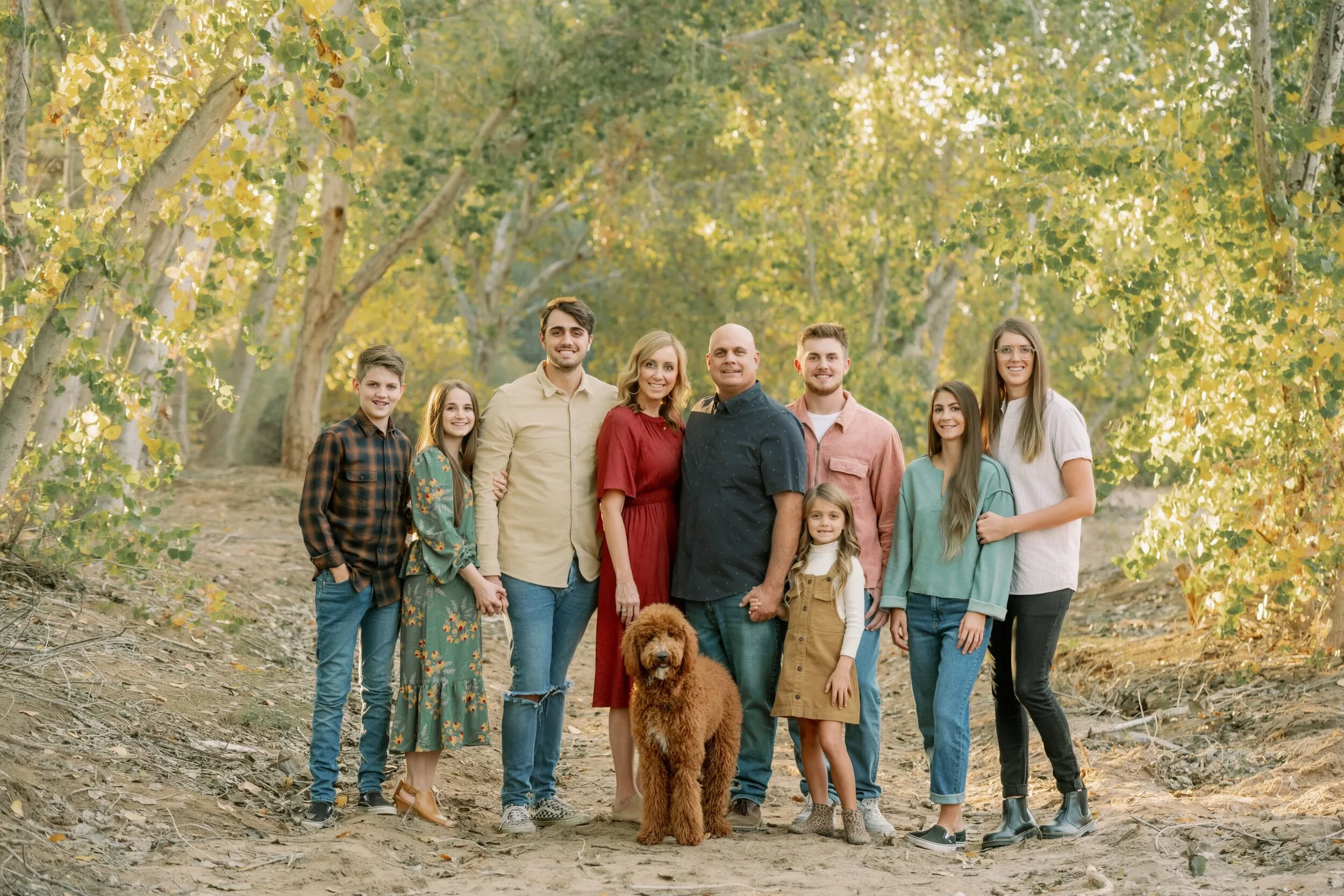

THE EVAN AND CHERYL SMITH FAMILY
Many LDS parents of LGBTQ+ kids find themselves at a crossroads when their kid comes out. There, they might just encounter Evan Smith and his book, aptly titled, Gay Latter-Day Saint Crossroads. As a former bishop and counselor in a stake presidency who changed his own mind on things after ministering to those he served -- and even more so when his own son later came out, Evan knows quite a bit about this intersection. He has now written the resource he wished his family had been given many years ago, with hopes his family’s experience might help others.
Evan and his wife Cheryl reside in a town south of Boston, where Evan is an attorney and Cheryl runs a business that purchases, sells, and cares for competitive show horses. They are the parents of Wes (22), Owen (20), Laurel (18), and Karissa (14), who are each “wonderful and kind, and we couldn’t be prouder of who they are as people.” Wes shares his father’s love for the written word, and is an English major now finishing his first fantasy novel. (He also excels at e-sports.) And it is Wes’ story that planted the Smith family at this crossroads back in 2015, when at 16 years old, Wes told his parents he is gay.
At the time, Evan was serving as bishop of their ward. He recalls Wes had been depressed (and suicidal, his parents later learned) for over a year before then. “We knew something wasn’t right, but didn’t know how to help him because he wasn’t very clear with us about what was wrong. Due to some homophobic comments I had made while he was growing up, based mostly on my flawed understanding of how I thought God viewed gay people, he was scared to come out. Fortunately, I had another youth in our ward come out to me as bishop before this time, which softened my heart and inspired me to learn more about LGBTQ issues.”
Many LDS parents of LGBTQ+ kids find themselves at a crossroads when their kid comes out. There, they might just encounter Evan Smith and his book, aptly titled, Gay Latter-Day Saint Crossroads. As a former bishop and counselor in a stake presidency who changed his own mind on things after ministering to those he served -- and even more so when his own son later came out, Evan knows quite a bit about this intersection. He has now written the resource he wished his family had been given many years ago, with hopes his family’s experience might help others.
Evan and his wife Cheryl reside in a town south of Boston, where Evan is an attorney and Cheryl runs a business that purchases, sells, and cares for competitive show horses. They are the parents of Wes (22), Owen (20), Laurel (18), and Karissa (14), who are each “wonderful and kind, and we couldn’t be prouder of who they are as people.” Wes shares his father’s love for the written word, and is an English major now finishing his first fantasy novel. (He also excels at e-sports.) And it is Wes’ story that planted the Smith family at this crossroads back in 2015, when at 16 years old, Wes told his parents he is gay.
At the time, Evan was serving as bishop of their ward. He recalls Wes had been depressed (and suicidal, his parents later learned) for over a year before then. “We knew something wasn’t right, but didn’t know how to help him because he wasn’t very clear with us about what was wrong. Due to some homophobic comments I had made while he was growing up, based mostly on my flawed understanding of how I thought God viewed gay people, he was scared to come out. Fortunately, I had another youth in our ward come out to me as bishop before this time, which softened my heart and inspired me to learn more about LGBTQ issues.”
After Wes saw his dad become more open-minded and lead ward discussions on LGBTQ issues, Wes finally felt comfortable confiding in his parents (and in his siblings). But it would be four more years before he came out publicly. After high school, Wes deferred his plans to attend BYU in order to serve an LDS mission. His mother Cheryl recalls, “I pleaded with him not to go. I knew it would be difficult for him to be submersed 24/7 in the church culture. I knew many would say hurtful things. I was worried about his mental health. I was worried about a lot of things. But to his credit, he loves Jesus Christ. He wanted to go to show his devotion.”
His family was thrilled Wes was assigned to the Brazil Curitiba mission, and Wes, who had always been especially bright and exceptional with language mastery (he speaks four), quickly stood out to his mission president for both his mastery of Portuguese and his adept administrative skills. But it only took two weeks for another missionary to find out Wes was gay, and that’s when the name-calling and chastising began. Wes stuck it out for another 18 months, serving with purpose and success under a leadership he loved, while battling insensitive and at times “ludicrous” commentary from many on the side. After years of praying about what path to take in life, he felt prompted one day on his mission to change his approach and instead just tell God that he was completely willing to live a celibate life if that’s what God wanted for him. The clear answer he got to that special prayer was to “go home, be happy, find a husband, and have a family” – the opposite of what he’d presumed, based on church teachings.
Upon his homecoming, Wes’ parents did worry how their son’s news would hit their area and the congregations in which he’d been raised, but Cheryl said, “We experienced an outpouring of love like I have never seen in my whole life.” However, shortly after that, Evan and Cheryl had a painful encounter with a General Authority. Evan says that unfortunately, “He made us feel like we had to choose between continuing to serve in the church versus openly supporting Wes. But we couldn’t feel sad about Wes’ choice to leave the church because we knew that decision was necessary for him to maintain good mental and emotional health and that he had received powerful personal revelation indicating he should leave.”
Since this meeting, everyone in the Smith family but Evan has stopped attending church. He explains, “Wes’ siblings don’t feel like they can stay, knowing they’re allowed to marry whomever they fall in love with, but Wes is not. And Cheryl has experienced real trauma from church leaders and from teachings that say some family relationships won’t endure after this life -- like the loving marriage between her non-member father and her LDS mother, or the eventual marriage relationship between Wes and his future husband.” Evan believes more members of his family might have avoided being as hurt by the church if the leaders would acknowledge in General Conference the plethora of changes in teachings that have already occurred in these arenas, and allow some ambiguity regarding the possibilities of future inclusivity in sealings and the afterlife as they await further understanding. Ultimately, he and Cheryl hope Wes finds love and happiness, just like they wish for all their kids.
In Gay Latter-Day Saint Crossroads, Evan presents his progressive stance, based on scientific findings, studies about the psychological harm caused by certain teachings, and quotes from church leaders that suggest future change is possible. “I hope my book functions as a handy resource for quick arguments that show how the church’s current position on gay sexual behavior may be more reflective of human prejudice than divine truth. While waiting for doctrinal change, we hope more church members continue to learn to be more loving toward LGBTQ people and that the stigma that often is attributed to LGBTQ church members who leave the church goes away. We hope more people learn to recognize that until the doctrine changes, God may actually desire that some (if not most) LGBTQ church members leave the church for their own mental health and well-being.” Evan has been pleased to see many bishops refer his book to families seeking resources as they embark on similar journeys. “Parents have told me it helped them see how they could celebrate their child being LGBTQ, regardless of whether they stay in or leave the church.”
Through all they’ve been through, the Smith family has grown closer than ever, and Evan clings to the principle “exemplified in Jesus’ ministry to the marginalized that it is more important to avoid breaking a person than it is to avoid breaking a rule. If we have to choose between the two, always choose to break the rule, not the person.”
“I have learned more about Christlike love by having a gay child than from anything else in my life. That has made the love I feel for everyone else so much richer, too. I have stronger motivation to love people for who they are, regardless of what they believe, than I ever did before. And I think that’s how our Heavenly Parents love us.” #liftandloveathome
Evan Smith’s book is available online (free download) and in paperback at gayldscrossroads.org. All proceeds received by the author will be donated to LGBTQ charities.


THE SMITH FAMILY
If the Bishop would have asked me to speak on this topic even just five years ago, I would have jumped at the chance. 25 years ago, I would have been on my mission in Mexico, and I would have been begging to share my thoughts on what I believed with anyone who would listen. This, however, is not the case today. I come to you with much tenderness in my heart, and a prayer that my message will be received with love and an open heart.
Belief had always come easy for me. The church and all that it entailed was my bread and butter. It all made sense. It all fit. Any questions that I might have struggled with were often answered by a conference talk or a quick search in the scriptures or placed on the proverbial shelf. Of course, we had trials… big and painful trials. But in these trials, I found comfort and peace in places like the temple and the simple routine of attending my meetings and serving in my callings. But something happened to us a little over four years ago that forever changed my faith. My faith is no longer wide and all encompassing. It is narrow. It is nuanced. It is much more personal, and much more sacred to me. It is no longer the mountain I had once thought it to be. It is back to its seed like innocence and requires much tending and care.
With permission from my son, I’d like to share with you where my new faith journey began. A little over four years ago, I was in the Primary Presidency and was placed in charge of the Primary Program. On the morning of, we were home and I was going over all of the possible mishaps that might occur. I had a backup plan if someone didn’t show up. I had a backup plan if someone got stage fright and clammed up at the mic. I had a backup plan for my back up plans. I was ready. In the craziness of that morning, I noticed my son Deacon, who was 13 at the time, sitting outside by himself on the porch. I could sense a heaviness about him. He had not been himself as of late. He was more quiet, withdrawn, and had a sadness about him. I pulled him into my room and asked him what was wrong. He looked at me for a long time, not saying anything, tears welling in his eyes, a pained look on his face, afraid to speak. Afraid to voice his truth. It was as if time slowed. I knew what he wanted to tell me. I knew what he was going to say. And tears pricked at my eyes too. And I whispered. “You can just say it. Just say it.” And he sobbed. “Mom, I’m gay.”
If the Bishop would have asked me to speak on this topic even just five years ago, I would have jumped at the chance. 25 years ago, I would have been on my mission in Mexico, and I would have been begging to share my thoughts on what I believed with anyone who would listen. This, however, is not the case today. I come to you with much tenderness in my heart, and a prayer that my message will be received with love and an open heart.
Belief had always come easy for me. The church and all that it entailed was my bread and butter. It all made sense. It all fit. Any questions that I might have struggled with were often answered by a conference talk or a quick search in the scriptures or placed on the proverbial shelf. Of course, we had trials… big and painful trials. But in these trials, I found comfort and peace in places like the temple and the simple routine of attending my meetings and serving in my callings. But something happened to us a little over four years ago that forever changed my faith. My faith is no longer wide and all encompassing. It is narrow. It is nuanced. It is much more personal, and much more sacred to me. It is no longer the mountain I had once thought it to be. It is back to its seed like innocence and requires much tending and care.
With permission from my son, I’d like to share with you where my new faith journey began. A little over four years ago, I was in the Primary Presidency and was placed in charge of the Primary Program. On the morning of, we were home and I was going over all of the possible mishaps that might occur. I had a backup plan if someone didn’t show up. I had a backup plan if someone got stage fright and clammed up at the mic. I had a backup plan for my back up plans. I was ready. In the craziness of that morning, I noticed my son Deacon, who was 13 at the time, sitting outside by himself on the porch. I could sense a heaviness about him. He had not been himself as of late. He was more quiet, withdrawn, and had a sadness about him. I pulled him into my room and asked him what was wrong. He looked at me for a long time, not saying anything, tears welling in his eyes, a pained look on his face, afraid to speak. Afraid to voice his truth. It was as if time slowed. I knew what he wanted to tell me. I knew what he was going to say. And tears pricked at my eyes too. And I whispered. “You can just say it. Just say it.” And he sobbed. “Mom, I’m gay.”
What followed was a whirlwind of emotion. I hugged him. I kissed him. I told him I loved him always. We called Todd in and hugged together, and reassured him that our love was not conditional. We briefly touched on what would be required of him if he chose to stay in the church, and his response was heartbreaking: “Mom, I don’t want to be alone.” We only had a moment to digest this new reality and then we were off to church, off to the primary program. I was a zombie that day. I went through the motions robotically, pasted on a smile, and led the children through their songs about families and temples and their talks on Jesus and baptism. It was all a blur, and then we were back home.
The months that followed were filled with long heartfelt conversations and hours of study and time spent praying. I was overwhelmed with the statistics I found for LGBTQ youth: 84% report verbal harassment at school. LGBTQ kids are 8 times more likely to attempt suicide, and they make up 40% of homeless youth today.
I was saddened to hear the stories of LDS kids being kicked out of their homes, or rejected by family members claiming their “sin” would not be tolerated. How could this be? How could the teachings of the church I love be causing these kids so much pain? My foundation was cracked... and I was stumbling along looking for answers.
Todd and I signed up for a weekend getaway with a group called Mormons Building Bridges. This group was founded with the intent to create bridges between the LDS faith and the LGBTQ community. About 14 of us met together in a beautiful home in Salt Lake City. I was hoping to be taught, to have someone answer all my questions. I was ready for someone else to tell me what to do. Instead, I was given 48 hours to think. There were no lectures, no easy answers. No one there to tell me that everything would be ok. Just a moderator who led a few open discussions on faith, the church and LGBTQ issues. In fact, much of the time was spent alone, pondering, searching, and asking ourselves the questions that needed to be answered. The most important one for me was will I stay in the church?
I had never had to answer that question before. I have never had a reason to leave.
And now, my new reality that my son would not likely ever be in the celestial room with me had shattered one of my greatest hopes and I did not know how to pick up the pieces. The past several months spent researching the history of the church and LGBTQ issues had left me with some pretty deep wounds. There was no great path for my son in the church, and week after week I saw the pain it was causing him. Eventually he asked to stop coming, and the sorrow of having him missing from my bench every week was unbearable. I think I spent six months crying every sacrament meeting.
And so I sat there that night in Salt Lake asking the question over and over, why will I stay? How can I stay? I have two very conflicting beliefs that have no resolution. And the answer finally came from within ... because of Christ. Christ the great Healer. Christ who sat and taught the woman at the well. Christ who spent his time with the marginalized and taught us not to judge. Christ who taught a radical message of love for all, both Jew and gentile, bond and free, black and white, and I would add gay and straight. It is for Him that I stay.
My experience with Deacon has brought me closer to Christ and his love than any other. It has opened my eyes to many other areas of conflict and pain within these walls, quiet heartaches that often go unspoken.
On Tuesdays, I spend my time at the proverbial waters of Mormon hosting a program for parents, grandparents, and other allies of LGBTQ kids at the Encircle home in St. George. The motto is simple — “No sides, only love.” Many of these faithful people are at the painful intersection of the church and LGBTQ issues. I am in awe of their strength and resilience and their desire to choose love. It helps to nurture my seed of faith, to see God’s love in action.
And so we come back to where I started. What do I believe? I believe that God lives. That he loves us dearly. That he sent his son to be the greatest example of love. That he has a purpose for each of his children, and that purpose is not for me to decide. I believe that there is more good than bad. I believe that when we know better, we do better. I believe our LGBTQ children are a light in our world teaching us how to love unconditionally. I believe that we can approach what we don’t understand with Christlike curiosity and he will give us direction. Incidentally, David Archuleta, who sings one of my favorite songs, “Peace in Christ,” came out yesterday on social media. I’ll share a snippet of his words:
“I plead that you be more understanding to people who experience and struggle with things that you may not experience and understand for yourself… If other people choose to live differently than what you’ve been raised to believe is right, please have compassion because it’s most likely been an exhausting journey for them to be ok with the feelings they have and never have been able to change.” I love that. And to those of you in the audience who may need to hear this, happy Pride month. If the Church has hurt you, Christ himself won’t. If the Church has made you feel lonely, Christ himself won’t. If you feel like there is not room for you at church, there is room for you at my pew. #liftandloveathome
Sherine and Todd also welcome to their family pew Beck (9), Cale (11), Finley (13), Tagin (14), Paisley (16), Deacon (17), and Tobin (22), who is married to Ruth, and Cooper (24), from Todd’s first marriage. Triple threat (singer, dancer, actor) Deacon recently finished his training at Diamond Talent Studio in St. George, UT, and this fall will attend the Manhattan School of Music in NYC to study Musical Theatre.
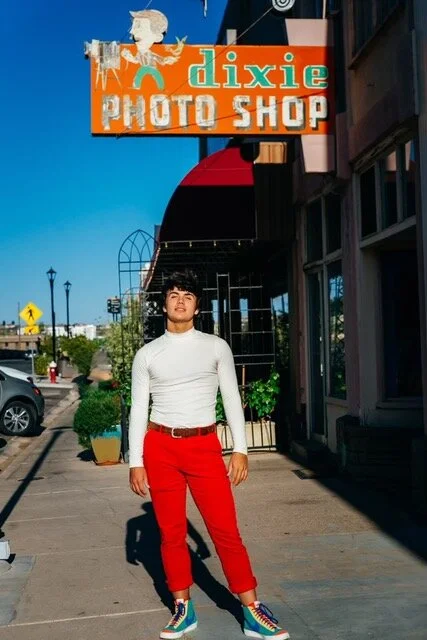
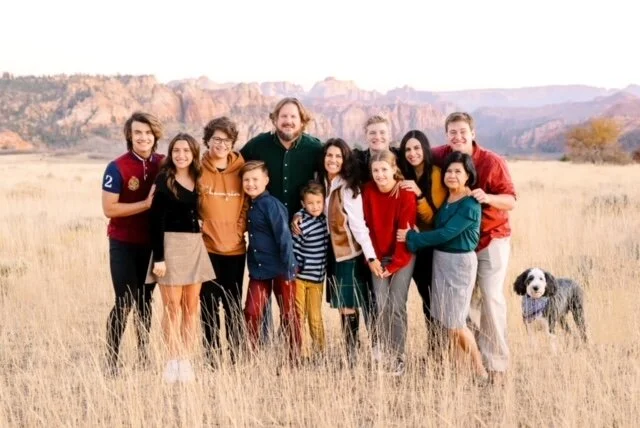

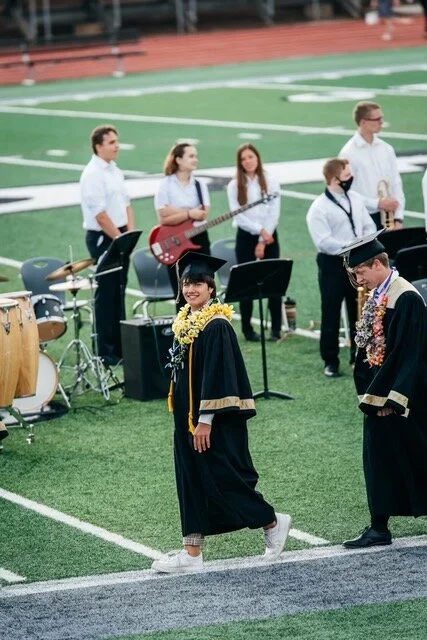

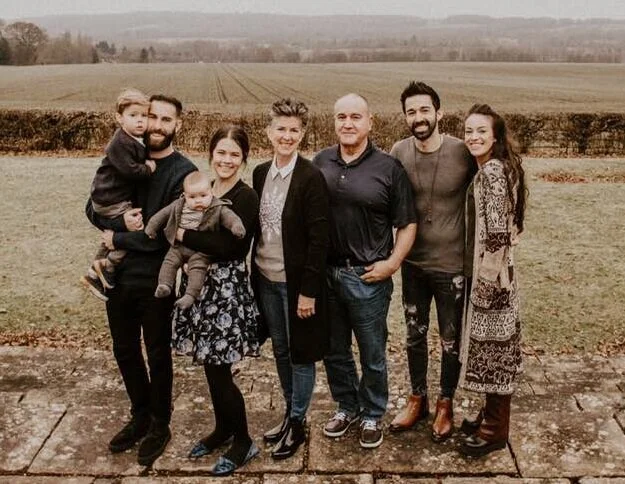
THE COLVIN FAMILY
Carol Colvin grew up a straight-A student, a “Molly Mormon who knew all the answers” – or who could quickly turn to a conference talk or scripture to find them. Now 58 years old, she feels like she’s spent the last 14 years putting together a puzzle without a box or a picture to guide her, “and when you think you have it all figured out, you realize a few of the pieces still don’t fit.”
The Colvins raised their three kids during the decades when the church still taught that being gay was ”a choice one could overcome, something caused by pornography use, sexual abuse, or a dysfunctional parent-child relationship.” Even in the secular world, she says, supporting gay marriage was not endorsed by presidential candidates on either side. So she didn’t have all the answers when her oldest son Jonathan came out. Carol says she isn’t proud of the way she and her husband responded for the first few years: “We said stuff like ‘We love you but don’t really agree with your choice to be in a same-sex relationship.’ Or, after he brought home his first boyfriend, ‘I can handle this in theory, but I don’t want to see it’.” In 2009, when Jonathan asked her to join PFLAG, Carol’s now ashamed to say she said no. But in 2014, the two attended Affirmation together. This was a life-changing moment in which Carol saw, “The spirit of God is with these people. It opened my heart and showed me God loves them.” It was at this point that Carol acknowledged, “When you know better, you do better.” Ever since, Carol has been making up for lost time.
Nowadays, Carol can be found decked out in rainbow gear, staffing hugging booths at Pride events in Seattle and Utah. “I used to always wish somehow he’d find a girl, but now when we’re out, I’m the one saying ‘Ooh, that guy’s cute, and trying to play matchmaker.” Carol now reiterates the importance of listening to and believing the experiences of the LGBTQ people in her life.
Carol and Gary Colvin have been married for 37 years. Puyallup, WA is home, and where they’ve raised Natalie (31), Spencer (34), who now lives in the UK with his wife and two boys, and Jonathan (36), who worked in the restaurant industry while going to school in NYC until COVID hit.
Jonathan has always displayed business and math prowess, and is now developing an app while working toward his dream of owning his own restaurant/bar. Carol admires his intellect and generous spirit. “He was the kid who’d share all his Halloween candy, and now, every time he comes into extra money through day trading, he gifts money to family members to help pay their debts. He has this way of making everyone feel like they’re the coolest person in the world.”
Jonathan always knew he was gay, but first tested the waters with his parents by telling them he was bisexual. This was after he graduated top of his class as an air traffic controller in the Air Force. After being bullied by coworkers for almost two years, he was honorably discharged when a fellow serviceman reported he had posted something online indicating he was gay. (This was prior to the repeal of “Don’t ask, don’t tell.”)
When Carol immersed herself in prayer as how best to mother Jonathan, she received three guideposts: first, to always seek the spirit. Second, to collaborate with others in this space. And third, to get comfortable “being in the middle. I try to be there for people still using church vocabulary like ‘same sex attraction’ while also being the type of person who can talk to drag queens at a PRIDE festival.”
Carol has taken all she’s learned and now feels value in being a resource for others – especially as resources are so few in the church. She believes, “As parents, our first job is to be there for our children with 100% support for who they are – so we can keep them alive. Secondly, we have to maintain a strong family unit. We have to direct only hugs, support, and celebration toward our children.
I made mistakes early on; fortunately, my child survived all the stupid things I said. But now I tell others as they’re mourning their lost expectations for their child’s future, they need to direct any of that turmoil and loss elsewhere. Your child is where you dump all your love. Anything else – grief, anger, sadness, cognitive dissonance – you’ve got to dump all that somewhere else.”
Carol wishes her local leaders would employ her services more and allow her to start a sanctioned support group like the one she wishes she had had when her son first came out. But Carol has largely faced brick walls with local authorities still hesitant to openly affirm the LGBTQ families in their midst. She likens this resistance with how she used to feel about fire drills as a child.
“They’re scary. Even if you know there’s no fire, you don’t want to imagine even the possibility of a fire; but it’s always best to be prepared.” Carol now independently mentors many families, and has had four parents approach her in just the last month for advice. Carol knows there are queer people in every ward who haven’t come out because they don’t feel it’s safe to do so, and she’s seen the damages from leadership roulette. She’s even witnessed a bishop stop a lesbian sister from bearing her testimony.
Yet, Carol sees progress as hearts open, both in the church and in her work as both a dōTERRA Wellness Advocate and as a facilitator for Leslie Householder’s mindset mastery company, Rare Faith. “It’s nice to get the word out there and have others acknowledge, ‘Oh, Mormons can have gay kids’?” She appreciates how times have changed. The year Jonathan graduated high school (2003) in their conservative community, the only student who had come out was beaten so badly he was in a coma for six months. This climate, mixed with church teachings of the time, definitely influenced the Colvins’ mindset, including Jonathan’s reluctance to come out before graduation.
But the Colvin family got a do-over when a family friend asked them to consider hosting a foreign exchange student in 2017, after their three children had moved out of the house. Carol felt a pull to request a gay child, but it was several months in before they realized that Bruno from Brazil was indeed gay – and quite confident in his skin. At the same school Jonathan had attended 14 years earlier, he became best friends with the student body president, participated in every musical and play, and went to prom. The entire student body knew he was gay and loved him for it.
Back when Carol’s own son came out, she says she felt so lost. She wrestled with God for answers – why was he this way after how he’d been raised? But the answer she got was freeing: her job was to just love Jonathan. The rest would work itself out. This required her to deconstruct her testimony to make Christ her foundation, instead of church culture. “It was time to throw out the boards and nails that didn’t fit my new ‘house of faith’ and start over. I went from following the prophet blindly to seeking and relying more on personal revelation for myself and my family. I know that love is what makes a celestial family. If someone doesn’t make the cut in the next life, the rest of us will follow and make a heaven out of hell.”
Carol recognizes that each church community is a laboratory of unique human beings. She felt guided to take a sabbatical for a while herself to clear her head from negative triggers. But she now knows she can’t leave, for “Bloom where you’re planted” reasons. “I want to stick around and be here – the woman with the rainbow pin. The one who raises her hand and reminds people that things have changed; leaders don’t say those things anymore. The one who carries around Elder Ballard’s quote that implores, ‘I want anyone who is a member of the church who is gay or lesbian to know I believe you have a place in the kingdom’.” She wants to be one who teaches people that when their kid/niece/grandchild comes out, the proper response is, “Thank you for honoring me by sharing that information with me. I love you so much.” #liftandloveathome