lift+love family stories by autumn mcalpin
Since 2021, Lift+Love has shared hundreds of real stories from Latter-day Saint LGBTQ individuals, their families, and allies. These stories—written by Autumn McAlpin—emerged from personal interviews with each participant and were published with their express permission.

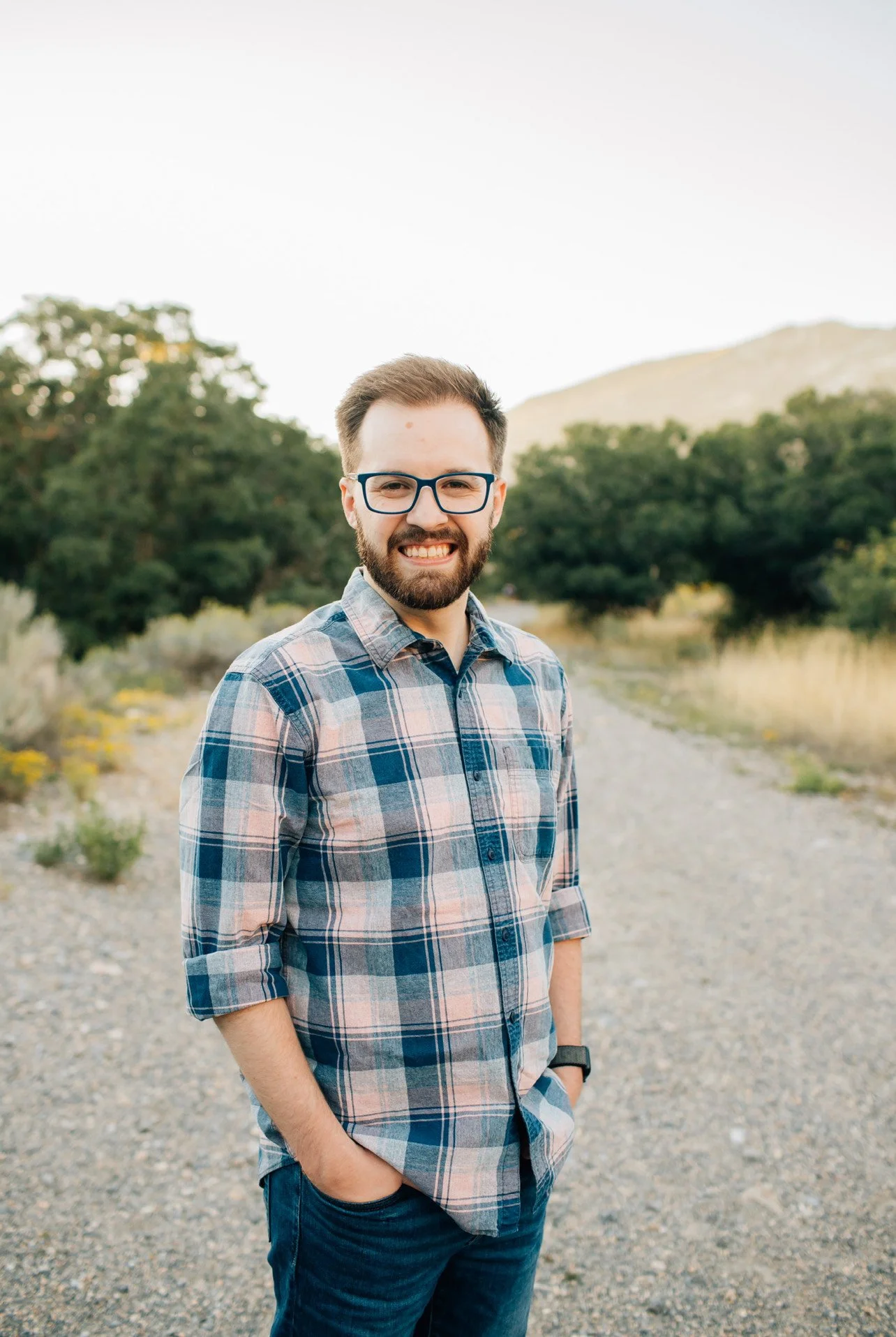
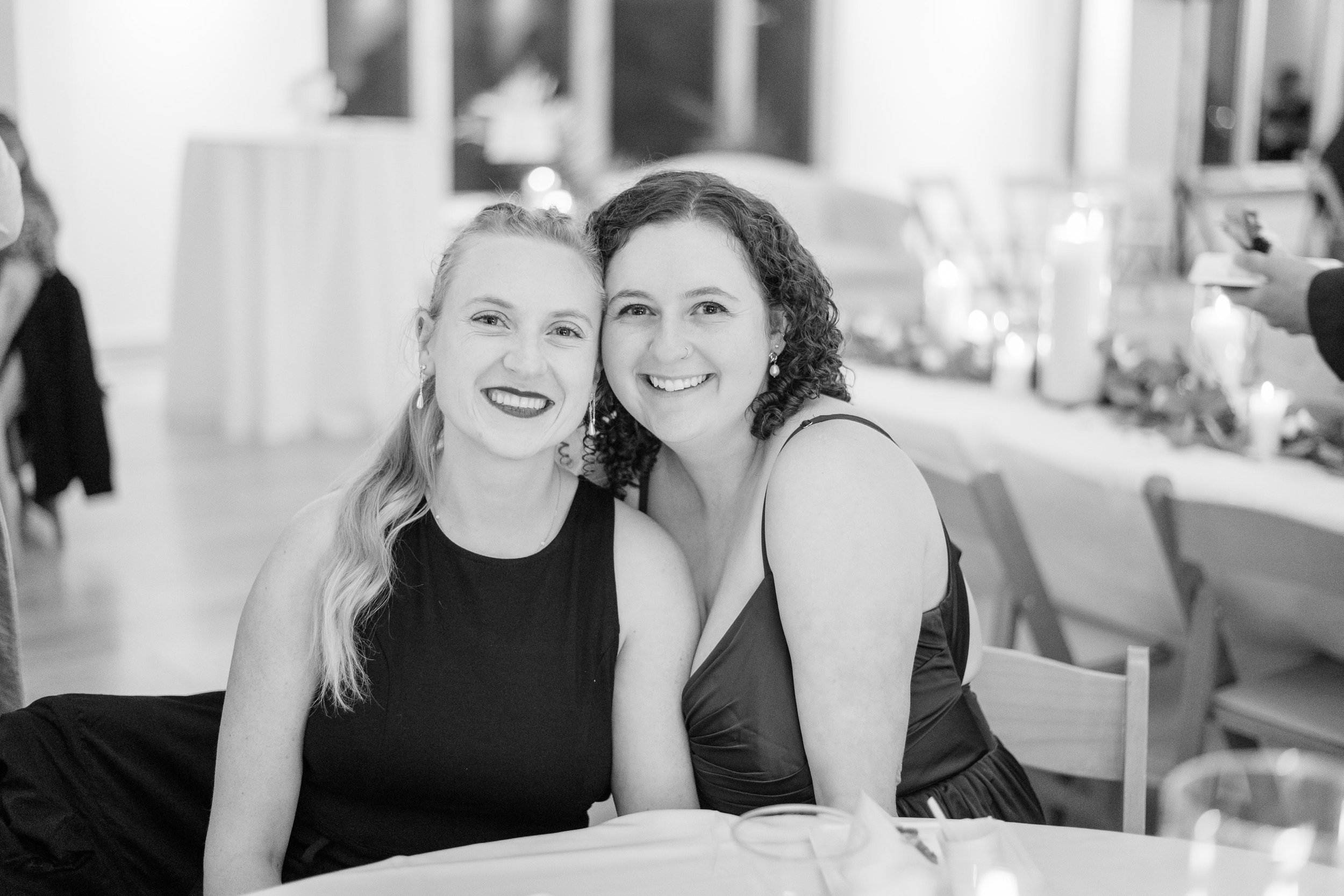
AMY GADBERRY
Amy Gadberry, 29, has spent much of her life navigating the complexities of her identity, faith, and mental health. Recently, the West Jordan, UT resident has come to fully embrace her identity as a cisgender bisexual woman, a realization that has profoundly shaped her ability to finally feel self-acceptance. Newlywed life has also brought a new form of happiness, as Amy and her wife Emily Tucker, just celebrated six months of marriage. But while her path has ultimately led her to a life she once only dreamed was possible, not much of Amy’s path to this point has been straightforward.
Amy Gadberry, 29, has spent much of her life navigating the complexities of her identity, faith, and mental health. Recently, the West Jordan, UT resident has come to fully embrace her identity as a cisgender bisexual woman, a realization that has profoundly shaped her ability to finally feel self-acceptance. Newlywed life has also brought a new form of happiness, as Amy and her wife Emily Tucker, just celebrated six months of marriage. But while her path has ultimately led her to a life she once only dreamed was possible, not much of Amy’s path to this point has been straightforward.
Though she recognized an attraction to men while growing up, Amy never had a strong desire to be with one. Even before meeting Emily, she envisioned a future married to a woman, a realization that initially caused her significant internal conflict. She grappled with whether to identify as lesbian or bisexual, feeling that the latter label carried a stigma within the LGBTQ+ community. At times, she questioned whether she was “queer enough” or had the same right to celebrate her relationship with pride. However, as she has come to embrace her marriage and the love she shares with Emily, these concerns have faded. She now feels that what matters most is the life they’re building together, and she could not be more grateful.
Having first become aware of her attraction to girls around the age of 12, Amy’s discovery came with a mix of shame and confusion. She noticed that the romantic feelings she experienced were different from those of her friends, which led her to suppress them for years. During middle and high school, she dated boys casually and occasionally even had boyfriends, but she says she never developed those deep romantic connections. College did not bring much more clarity, as Amy struggled to find a relationship that truly resonated. Eventually, she realized that her sexuality was something she needed to confront rather than continue to hide.
Raised in Maryland, Amy grew up in a deeply religious household where the church played a significant role in her life. Despite her concerns about how her faith community would respond to her coming out, she found unexpected kindness and support. At 22, after coming out to her therapist—who was the first person she ever confided in about her sexuality—Amy made the courageous decision to share her truth publicly through an Instagram post. To her surprise, she received an outpouring of love, even from those within her church.
Though they needed a little time to adjust once she started dating women, Amy’s parents have remained a steadfast source of love and encouragement since. Despite the initial acceptance she received, Amy ultimately found it difficult to reconcile her faith with her sexuality. In her early 20s, she attended church less frequently and eventually stopped going altogether at 23 or 24, except for supporting the occasional family event. Though she’s never harbored anger toward the church, Amy has experienced deep sadness over what she perceives as an impossible choice between her faith and the ability to pursue the kind of love she has since found.
A pivotal moment came when she attended a fireside where a well-known LGBTQ+ advocate within the church shared his story. His account of a beautiful life with his partner that ended when he decided to reconnect with the church struck a chord with Amy. She sat in the audience crying, and questioning why he had to choose between a life with his loving partner and a beautiful church community. She says, “It didn’t make sense to me, and ultimately was the straw that broke the camel’s back. I didn’t want to choose between the two but if I had to, I decided to choose love and companionship over the church. Since, it’s been a journey figuring out what I believe.”
Amy says she has managed to take the church teachings of her upbringing that resonated with her and keep them close to her heart. She maintains that she bears no angry feelings toward any church members, and that “a lot of people in my inner circle are still active members and good people who I know are uplifted by the church. It’s just not something I can continue forward with, and I’m ok with that.” She still maintains a strong belief in a God who loves and cares for all of us. And she genuinely believes, “God is so happy for me and all the children who are finding joy in this lifetime. That’s something the church taught me—that we are designed for joy.”
Joy has not always been easy to come by for Amy, though even her dark moments have cemented that there’s always been a higher power who cares about and speaks to her. Amy’s journey has been deeply intertwined with mental health struggles. Diagnosed with bipolar disorder and having struggled with an eating disorder, Amy has spent years navigating treatment, including multiple stays in residential centers. Her sexuality and faith crisis contributed to her struggles with suicidal ideation, leading to some of the darkest moments of her life. However, through therapy, support from loved ones, and inner resilience, Amy has persevered and found her way forward.
In February 2022, Amy entered her final residential treatment program, where she worked extensively on self-acceptance and coping strategies. She emerged from treatment in May of that year with a renewed sense of self-worth. That summer, she moved out of her BYU housing in Provo, eager for a fresh start. It was then that she met Emily. Their love story began on a dating app, where Amy was immediately struck by Emily, saying “She was one of the prettiest girls I’d ever seen.” After matching, they quickly hit it off, leading to a dinner date the next evening.
Their conversation flowed effortlessly, and Amy knew she had met someone special. Emily had never dated a woman before, and she was in the process of reconciling her lesbian identity and deciding whether she belonged in the church. Their connection deepened as they navigated their days together, making it official within just a few weeks. They dated for two years before marrying in October 2024.
Reflecting on their relationship, Amy describes it as the best two and a half years of her life. She says, “I never imagined a life for myself where I’d feel as happy and fulfilled and as good as I do now. I credit a lot of it to therapy and treatment, and also to the fact that Emily and I are a good match, which is a testament to the validity of what LGBTQ+ love and relationships can be. I felt I couldn’t ask for anything better, or imagine myself with anyone else. When you know, you know.” Amy describes the sentiment of their first weeks together, saying, “I knew she was my person and would be forever. She felt the same. It’s a reminder this love is not wrong, no matter what people say and what views they have. We know it’s the right thing for us. The life we’re creating together is the best life either of us could have ever asked for. It’s pure joy, and I’m so grateful every day for it.
Both Amy and Emily are fortunate to have families that fully embrace their relationship. Amy says her in-laws are among the most loving and accepting people she has ever met, treating her with the same warmth as they show any other family member. Though her own father initially struggled, he ultimately supported her wholeheartedly, walking her down the aisle at her her wedding, and fully embracing Emily as part of the family.
Amy attributes much of her inner strength to her mother, Tricia Gadberry. From the moment Amy first came out to her mother, while sobbing over the phone, Tricia has remained a pillar of support. Amy appreciates how she listens without judgment and provides a safe space for Amy to process her emotions. To this day, Amy considers her mother to be one of the most important people in her life, and a source of love and guidance she will always cherish.
Currently pursuing a graduate degree in school counseling, Amy plans to graduate in August and is actively searching for a job. She appreciates how her mother-in-law is helping the process by leveraging her connections in the education system. Emily also works with kids as a behavior analyst. Amy’s ultimate goal as a counselor is to be a safe and supportive figure for LGBTQ+ students, particularly those who may feel isolated or unaccepted. She is especially passionate about advocating for transgender students, and ensuring they receive respect and validation despite discriminatory policies that may exist within school systems. She says, “My heart goes out to all trans students now navigating this legislation and the hatred they’re experiencing… I want them to feel like they can talk to me about anything that goes on and that their existence is valid.”
Beyond their activism and careers, Amy and Emily lead a fulfilling life filled with travel, outdoor adventures, and quality time with their beloved pets, Bella (a dog) and Leo (a cat). While they love their roles as aunts to nieces and a nephew, they feel their fur babies may be the only babies they raise. At home, they love to watch reality TV and when the weather cooperates outside, Amy enjoys teaching Emily tennis. In turn, Emily has been teaching Amy canyoneering and water sports.
This October, the couple plans to celebrate their one-year anniversary with a trip to the Netherlands, the first country to legalize same-sex marriage. They are currently feeling out the possibility of living abroad in the future. In the meantime, during what has felt like dark days for many in Utah, Amy is buoyed in knowing that so many allies are out alongside them there fighting and wanting the best for their LGBTQ+ loved ones and others. Amy says, “The only way I can get through it is to find the parts of hope that come with it. Seeing others fight gives me hope. There will always be people who care, even if you don’t know them personally.”
MADDIE FOX
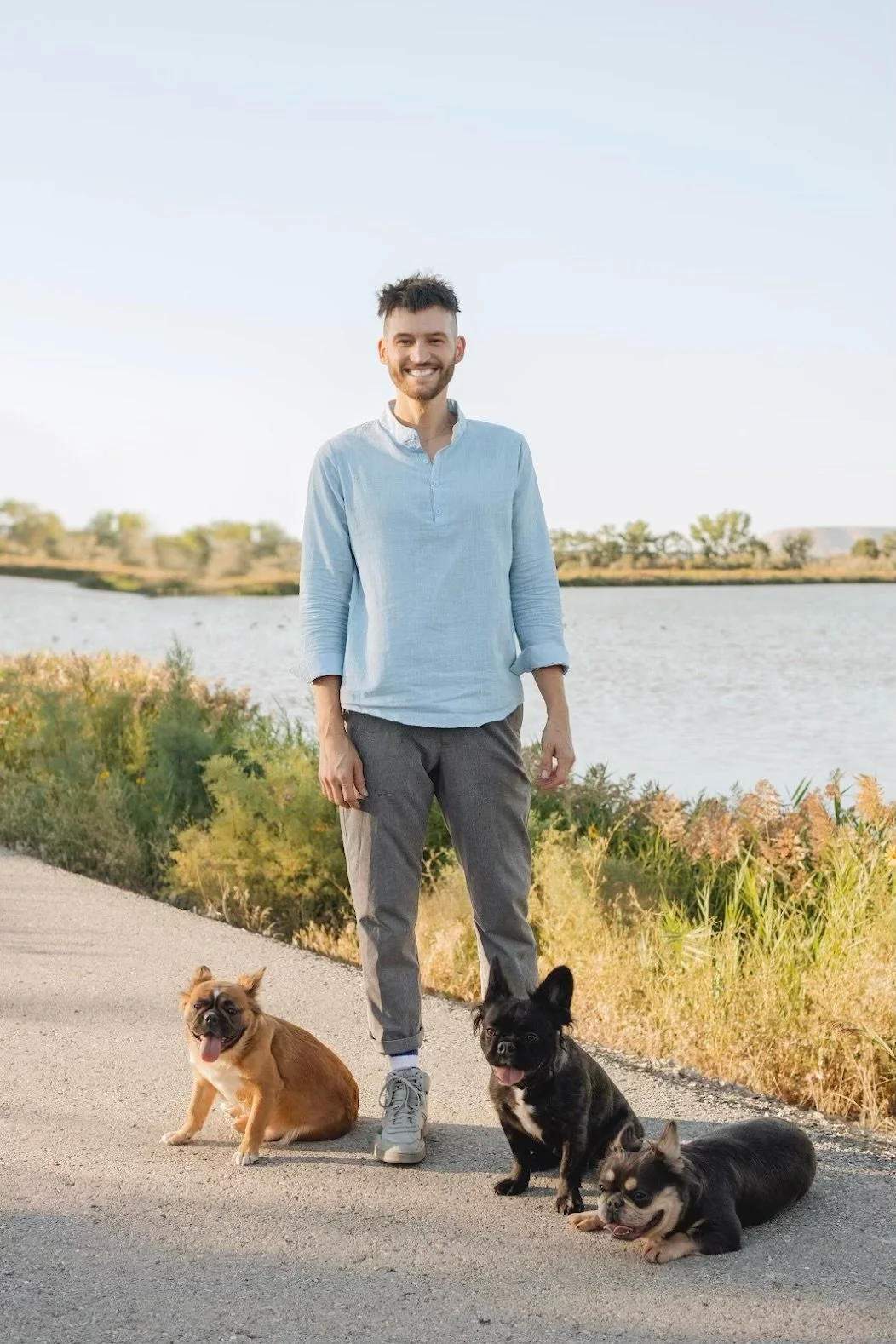
Every February is Bald Eagle Month in Utah, and Maddie Fox (she/her), takes full advantage of the season. A self-described amateur wildlife photographer, Maddie, 35, sets out early on one February Saturday a year to photograph her favorite creature. While she’s also garnered a frame-worthy collection of bison, elk, wild horses, and black bears, there’s something about the way the bald eagles soar overhead as they migrate south looking for food—so free and unencumbered—that captivates her…
Every February is Bald Eagle Month in Utah, and Maddie Fox (she/her), takes full advantage of the season. A self-described amateur wildlife photographer, Maddie, 35, sets out early on one February Saturday a year to photograph her favorite creature. While she’s also garnered a frame-worthy collection of bison, elk, wild horses, and black bears, there’s something about the way the bald eagles soar overhead as they migrate south looking for food—so free and unencumbered—that captivates her.
The proximity of her West Jordan home to the mountains affords Maddie opportunities to enjoy other outdoor activities like hiking and rock hounding for minerals and gems in the state in which she was born and raised. But as of late, she has been less than enthralled with recent Utah legislation that affects the trans community she is a part of. She says, “Transgender people just want to go about living our lives. We are who we are, the same people we always were—we’re just trying to match our external to who our internal selves tell us we are.” In a state that has now passed some hostile policies including the recent bathroom bills and legislation preventing PRIDE flags from schools and public buildings, Maddie continues, “I wish people knew that I am not the threat politicians say I am. I’m kind, loving, and just want to have the best quality of life I can being my true authentic self.”
For Maddie, her authentic self has felt “different” for as long as she can remember. Growing up, she didn’t know what it all necessarily meant, but she always felt something was unique about her. While she was assigned male at birth and grew up playing sports like basketball and baseball alongside her two younger brothers, Maddie typically felt more drawn to feminine things until a sense of shame would inevitably set in. Maddie grew up in the church, and later loved serving a mission to Ireland, but saw when she returned home after two years, her feminine feelings had not gone away as she’d presumed they would. This time, she got into a therapist who helped her work through various thoughts. After some time spent building up trust, based on all Maddie shared, she was diagnosed with gender dysphoria.
While Maddie had experimented with wearing women’s clothing intermittently throughout her life, she started officially socially transitioning about a decade ago, at age 25. Six months ago, she began hormone replacement therapy, which she says has greatly helped with her gender dysphoria and increased her ability to feel authentic and “much more happy.”
With the recent shift in transgender policies instituted by the LDS faith, “and even before then,” Maddie says she has experienced a faith awakening. Last August’s policy shift has made activities and second hour meetings too difficult for her to attend. Now, she says, “With the policies, I just kind of go for a sense of community, but I don’t know where my faith journey will lead. I am still blessed to have a knowledge of my Heavenly Parents and their love for me.” Maddie says her family is coming to terms with her transition and she is grateful to feel their unconditional love.
Besides working at a university as a testing proctor and enjoying outdoor activities, Maddie stays busy watching college sports – with football being a favorite. She also belongs to a few support groups for trans individuals that she attends as her work schedule allows. Maddie takes comfort in hearing others’ similar stories and seeing how they live her lives. “I see what I can take from them and apply it to my own.” Maddie also identifies as lesbian ad has dated a little. She says, “Being trans and lesbian can be difficult here in Utah. I hope one day I can find someone I can date and settle down with and have a relationship.”
As the temperature rises nationwide when it comes to LGBTQ+ issues, Maddie says, “I wish that whether it’s church or state or federal that they would get input from transgender individuals who have lived experience instead of listening to the fearmongers.” Maddie prefers a gentler way, much like the nature of Jesus as portrayed in her favorite TV show, “The Chosen.” She says, “How Jesus is portrayed in The Chosen is how I see my Savior. That’s how I imagine He would be.”
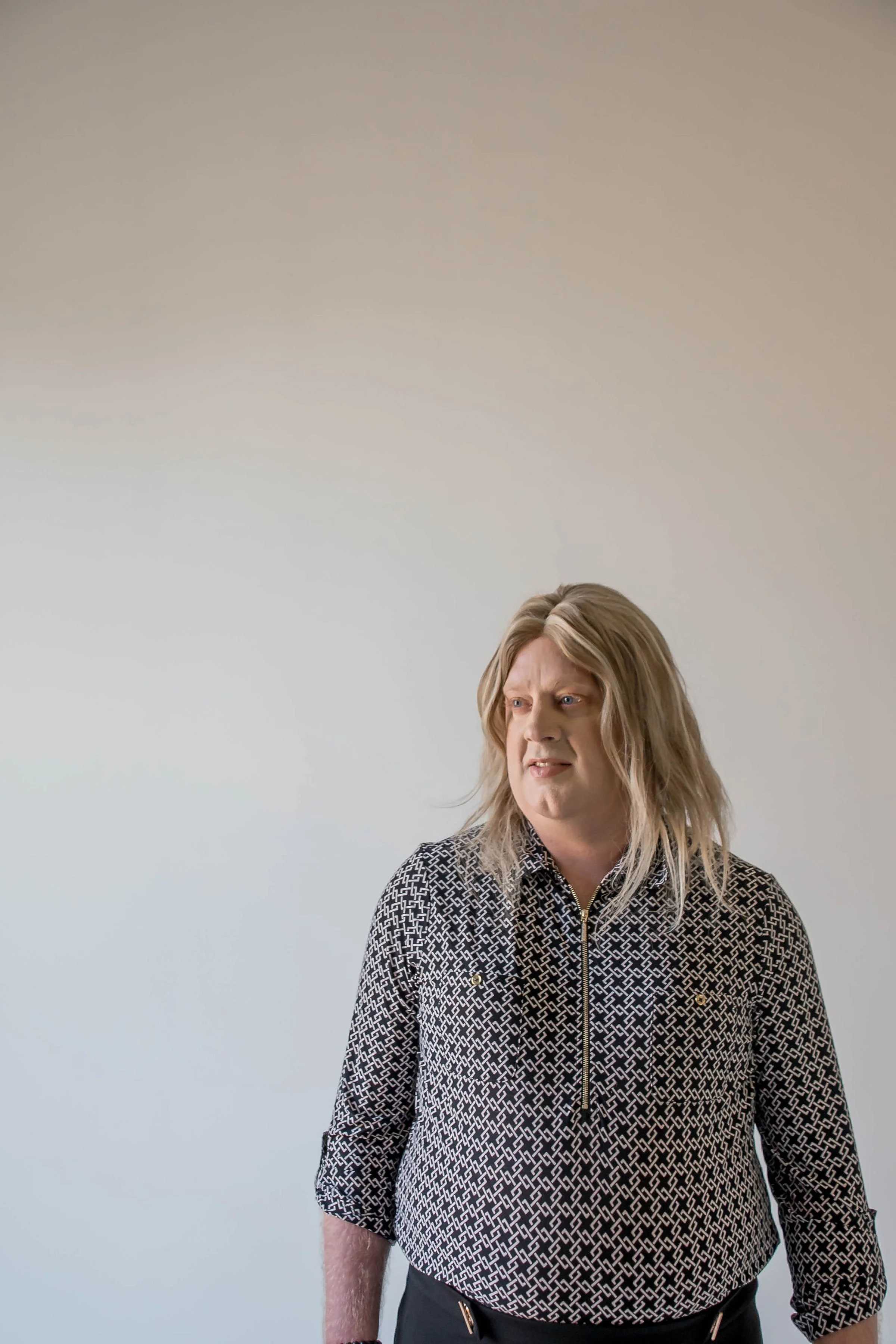


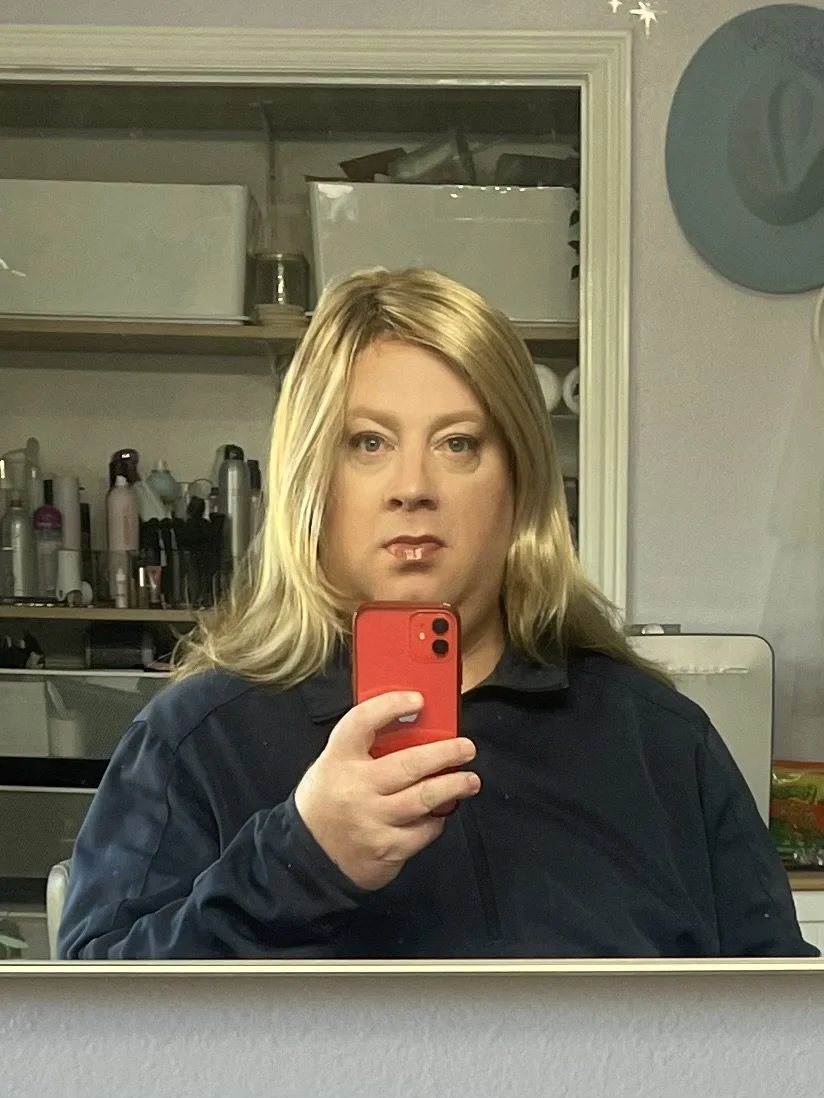
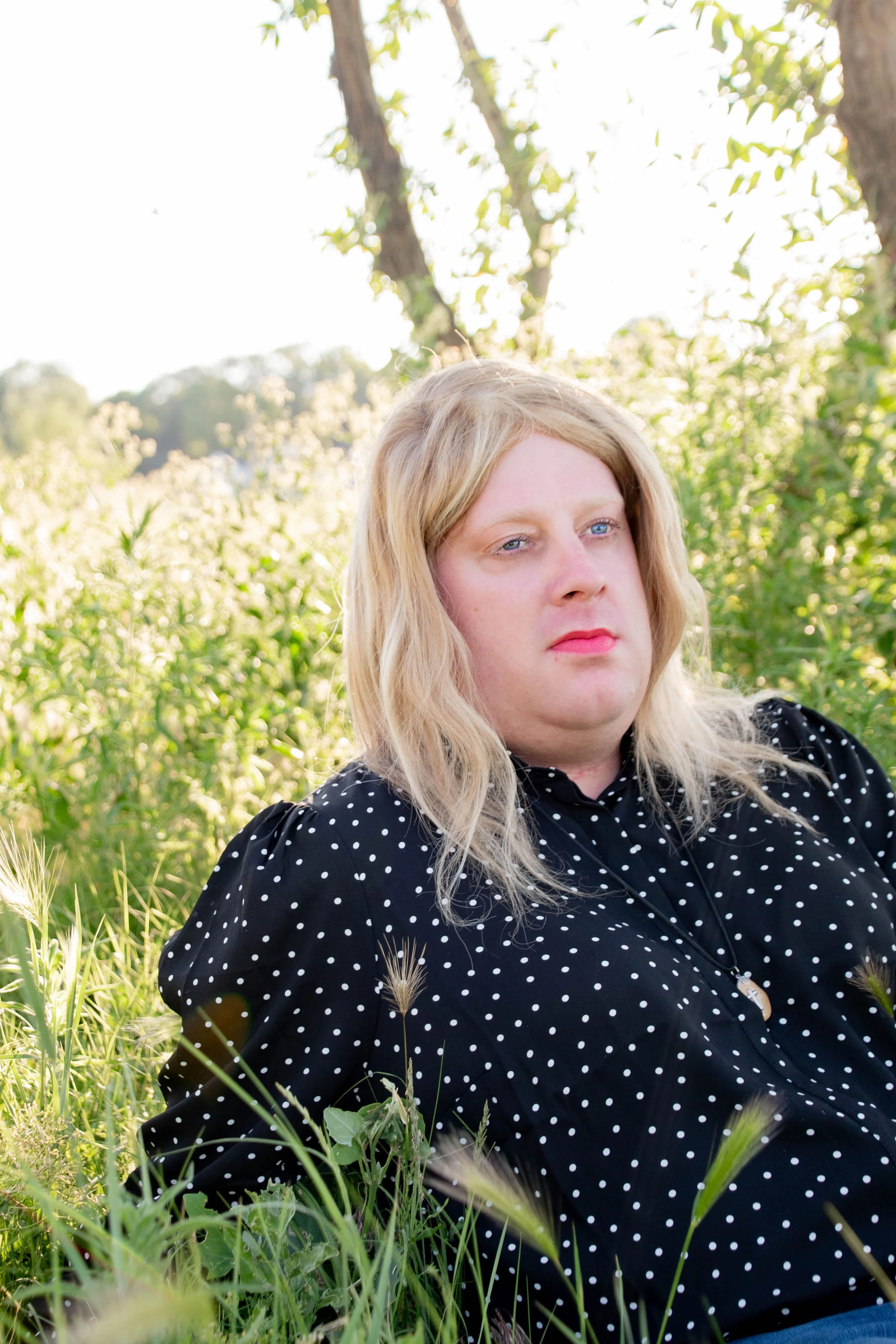

JOSH HADDEN
Josh grew up feeling a bit different. He loved playing with girls' toys and even asked for a My Little Pony Dream Castle when he was four-years-old. His favorite colors were pink and purple, and he tended to get along better with girls than the other boys his age. This went on until around seven-years-old when Josh started to learn what the word “gay” meant, and then subsequently started to try and hide those parts of himself. He spent years trying to convince himself that he was not gay and that if he tried hard enough, he could hide this part of himself from everyone. In fact, Josh decided being gay would be something he would need to spend his life hiding, managing and changing. The frustration of that journey has only been alleviated in the past few years as finally, at age 26, Josh has come to trust that he was intentionally created as he is by loving Heavenly Parents.
content warning - suicide ideation and the death of a parent are mentioned
Josh grew up feeling a bit different. He loved playing with girls' toys and even asked for a My Little Pony Dream Castle when he was four-years-old. His favorite colors were pink and purple, and he tended to get along better with girls than the other boys his age. This went on until around seven-years-old when Josh started to learn what the word “gay” meant, and then subsequently started to try and hide those parts of himself. He spent years trying to convince himself that he was not gay and that if he tried hard enough, he could hide this part of himself from everyone. In fact, Josh decided being gay would be something he would need to spend his life hiding, managing and changing. The frustration of that journey has only been alleviated in the past few years as finally, at age 26, Josh has come to trust that he was intentionally created as he is by loving Heavenly Parents.
Throughout high school, Josh tried to ignore his feelings and pray for his orientation to change. In college at BYU-Idaho where he studied communications, he knew he was gay but continued in his efforts to find that one special woman who would magically capture his eye and his heart--the woman with whom he could make everything work. He recalls, “Over years of dating, I managed to get a fair amount of girls to like me, but after never being able to like them back, I just felt like I was toying with people’s emotions and hurting people.” Josh decided it was time for dating to take a backseat.
The following years, Josh experienced extreme loneliness. It’s an uncomfortable thing for him to acknowledge now, but he remembers praying he could just disappear. “Some might call it being passively suicidal, but for me, I just didn’t want to exist. I didn’t have a lot of hope for my future as I had no intention to date or marry a man and forfeit the covenant path for myself. But dating women felt so uncomfortable and I just felt so alone,” Josh reflects.
He continued in this tumultuous pattern of managing his conflicting desires to not be alone and to stay active in his faith while ignoring his strong desires to be with a man. “It was a life in conflict,” Josh says. In 2021, he realized he was in really bad shape when his father passed away from Covid. Josh had learned in marriage and family classes about the emotional process of grief and that studies had shown that the most intense pain people typically experience in life is the death of a child, parent or spouse, followed by divorce. Josh says, “I realized at that time that I was experiencing more emotional pain everyday as a gay member of the Church than what I felt in the peak of my grief over my dad’s passing. There’s a note in my phone where I journaled my thoughts on how everyone was being so kind and supportive, yet I was wrestling something so much bigger and more long term--something I had so many more questions about. And I was fighting that silent battle with no support.” Josh recounts how he’d been raised to understand that doctrinally, he knew how he could fit into the kingdom as a son who’d lost his father, but he had huge questions about whether his Heavenly Father could love him and have a place for him as a gay man. At this point, Josh realized something was seriously wrong and it was time for him to start opening up to others.
At the time, he had only told a few close friends on a case-by-case basis about his attractions. He never discussed it with his dad before his passing, but had one conversation in high school with his mom about it. He recalls there was a “silent acknowledgement, but it died there and was not discussed again.” However, after Josh’s dad passed away, he says his family “got more real” about things and he was able to revisit the conversation with his mom, who he says has since proved to be “a rockstar.”
Over the years, being gay became the subject for many of Josh’s prayers. For years, he prayed that it would be taken away and that he could be happily straight and fit into God’s kingdom the way he had been taught. After some time and realizing that his orientation would not change, he changed his prayer to ask God to just find one woman that he could be attracted to and be happy with. Then again, after many seasons of prayers unanswered, Josh decided that maybe he was praying for the wrong thing and changed direction. He started praying that if he would never successfully date or marry, that he could just have a best-friend. Someone to rely on and be close with in life. This prayer also proved unsuccessful, so he made another pivot. Josh changed his prayer to accept that he may be alone in this life, and his prayer was that in his life of solitude, that God would help him feel peace, contentment, and happiness where he was. Yet, Josh still felt painfully lonely.
After finishing school in Idaho, Josh did what many LDS singles do and moved to Utah. There, he hit a low point, and his years of unanswered prayers seemed to pile up. He experienced more intense loneliness after his move to Utah and nothing seemed to change. For a long time, Josh had dealt with his loneliness in dating by keeping close friendships, but during this new chapter of his life in Utah, that support wasn’t coming. He did everything he could think to do in making new friends and made it a serious matter of prayer, yet nothing seemed to change. After months of that intensified loneliness, Josh came to remember that old saying that the definition of insanity is doing the same thing over and over again, but expecting different results. It was at this time that Josh identified that the one thing he had not yet tried was dating a guy.
Deciding to dip his toes in, just to see how it felt, Josh offered up a prayer, “Stop me, God, if this is wrong.” But Josh quickly found a guy he liked, went out a few times, had a good time, and felt utter confusion because nothing about dating this guy felt wrong to his spirit. His excitement over these new possibilities weighed against a lingering sense of despair for his future. After one of his dates, Josh prayed, “God, how did I get here? You know that for so long I prayed for Plan A, B, C… to happen and now I’m on Plan F.” But now, Josh also felt ready to listen. After pouring out his heart in prayer,the answer he received was, “Josh, I know. I know your heart and your mind. And I have been there every step of the way, yet this is where I have allowed you to be. And this is ok.” Josh says his mind at the time added a “for now” to the end of that prayer, rationalizing that all this was still to prepare him for marrying a woman. That was a year ago, in March of 2024, and the messages Josh has received since have been consistently the same. Every time he starts to feel unsure about his future, he feels God reassuring him, “You’re so afraid about leaving me, but I’m not worried about that. I have other children who don’t want to be with me,and I know how that feels. But Josh, you are not one of them. This will be ok in ways you may not yet understand.”
With that assurance, Josh proceeded in dating guys. He ended up moving from Orem to Lehi last summer, where he said his social life really changed for the better. He moved closer to some old friends he’d met while serving as an FSY counselor, and has been able to make many more friends since. Surrounded by friends, he’s been able to stay active in his ward where he serves as executive secretary alongside a friendly bishop who’s aware of his situation. After a few months of improved peace both in friendships, and in this new chapter of dating men, Josh decided it was time to prioritize coming out to his family. The youngest of seven kids, Josh remains close to his siblings and mom, most of whom live in Arizona. When he finally felt it was time to come out to his siblings, he realized that might be tough to do in person at a big family event, so he opted to share his news via text:
I’m sorry if this text message is a little uncomfortable or badly timed but I wanted to take a step towards living more honestly and let you know that I’m gay. I’ve kind of always known and I’ve been talking to Mom about it for years and just figured I should probably let my family know.
In no way am I planning on changing my relationship with God or the church but I just wanted to let you know. I’m the same old Josh I’ve always been.
I would totally love to talk about this with you some time either on the phone or in person! I would’ve told you sooner if we lived closer or had more time to talk privately. I’m always happy to talk about it and answer any questions you might have.
And this doesn’t need to be a secret either, feel free to talk about it openly with anyone you’d like. I’m telling the other siblings, too.
Anyways, I love you, and I hope you can still love me.
Josh received all positive responses, with his brothers acknowledging that his road must have been tough, while assuring him they were proud of him. He laughs that his sisters are supportive as well and like to keep in touch and ask for dating updates.
Recently, as another step towards peace for himself, Josh decided to come out publicly in a post on social media. He says the responses were overwhelmingly positive and that he feels much more at peace in his life now, having nothing to hide.
That increased peace has led him to try online dating and join Hinge. He’s enjoyed Hinge with its increased specifics on profiles as he’s remained selective in trying to find a man who is friendly toward the church (which is admittedly hard to do). Josh recognizes he’s experienced a lot less antagonism than some do, as his family, friends, and leaders have allowed him to be true to himself. He can see how things might be different if this hadn’t been his experience.
Josh recently returned from a night out and was telling his mom how his date was newer in his coming out journey and that his family had not responded well. Josh asked his mom what contributed to her having been so kind and supportive. She responded that it just took time. By the time he was ready to fully come out, she’d spent lots of time reading the stories of people who knew they were gay and their journeys. She felt she saw patterns of people who tried to pray it away, then tried to plead and bargain with God, and then tried to date members of the opposite sex with hopes of getting married in the temple. She’d read how these people tried every avenue but were met with defeat after defeat. And eventually, she’d seen how they typically did best when they came to the point where there was nothing left to do but be themselves. She observed that sometimes, your entire life as a gay person is a secret until you’re out, with those around you never seeing your silent struggles for years. Because of these witnesses,
and the very lived experience of her son, Josh, she says, “I feel more at peace just accepting people where they are.”
As for Josh, he currently loves his hybrid remote job and coworkers, working for an elementary education company in Orem. An avid outdoorsman, he enjoys adventurous hobbies like hiking, swimming, running, cliff jumping, backpacking and camping. For Josh, a perfect date might include a short nature walk around the pond and getting ice cream. He is looking forward to a summer full of adventures and hopefully some fun dates in the future.


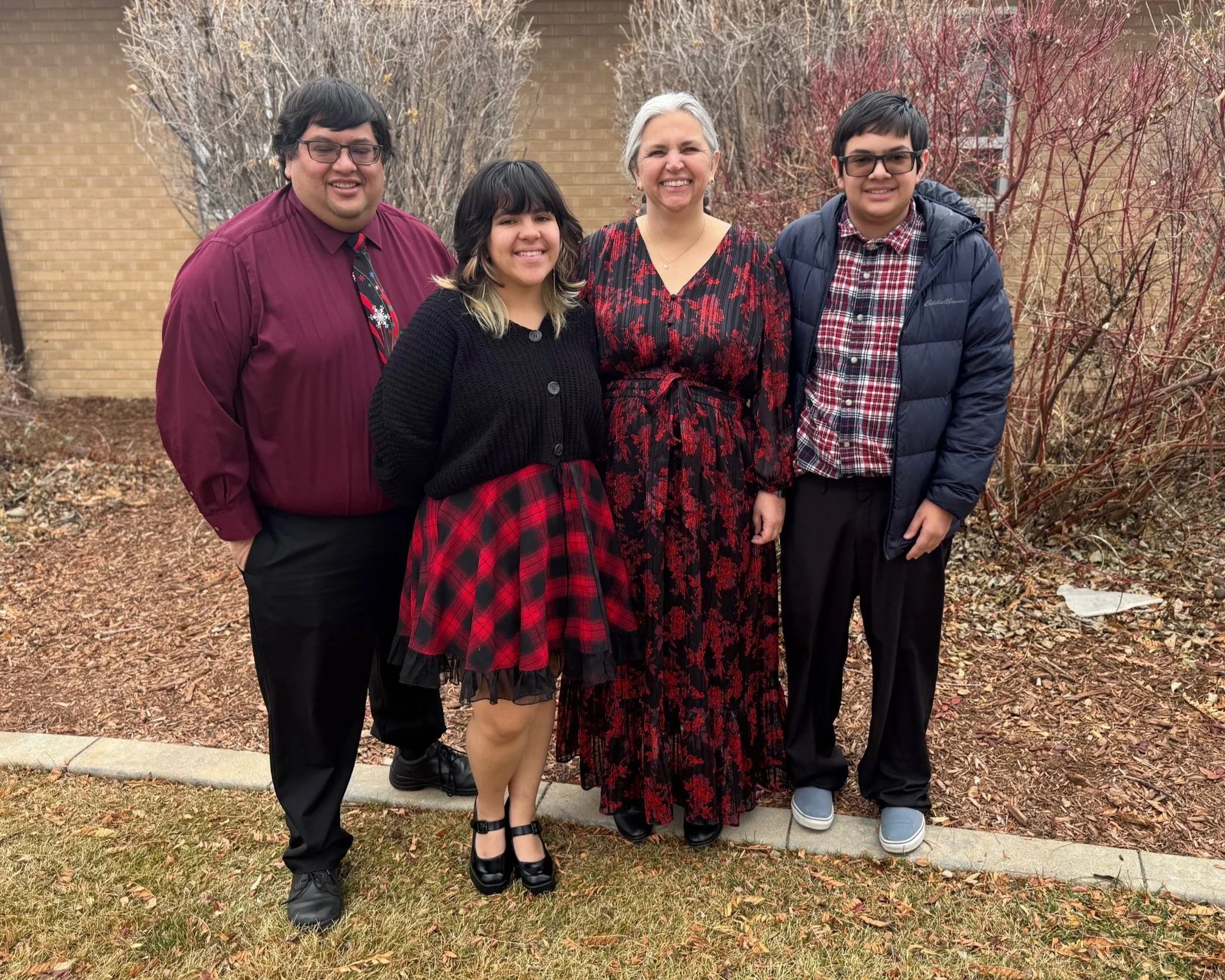
MONICA, HORACIO, & CAYLIN
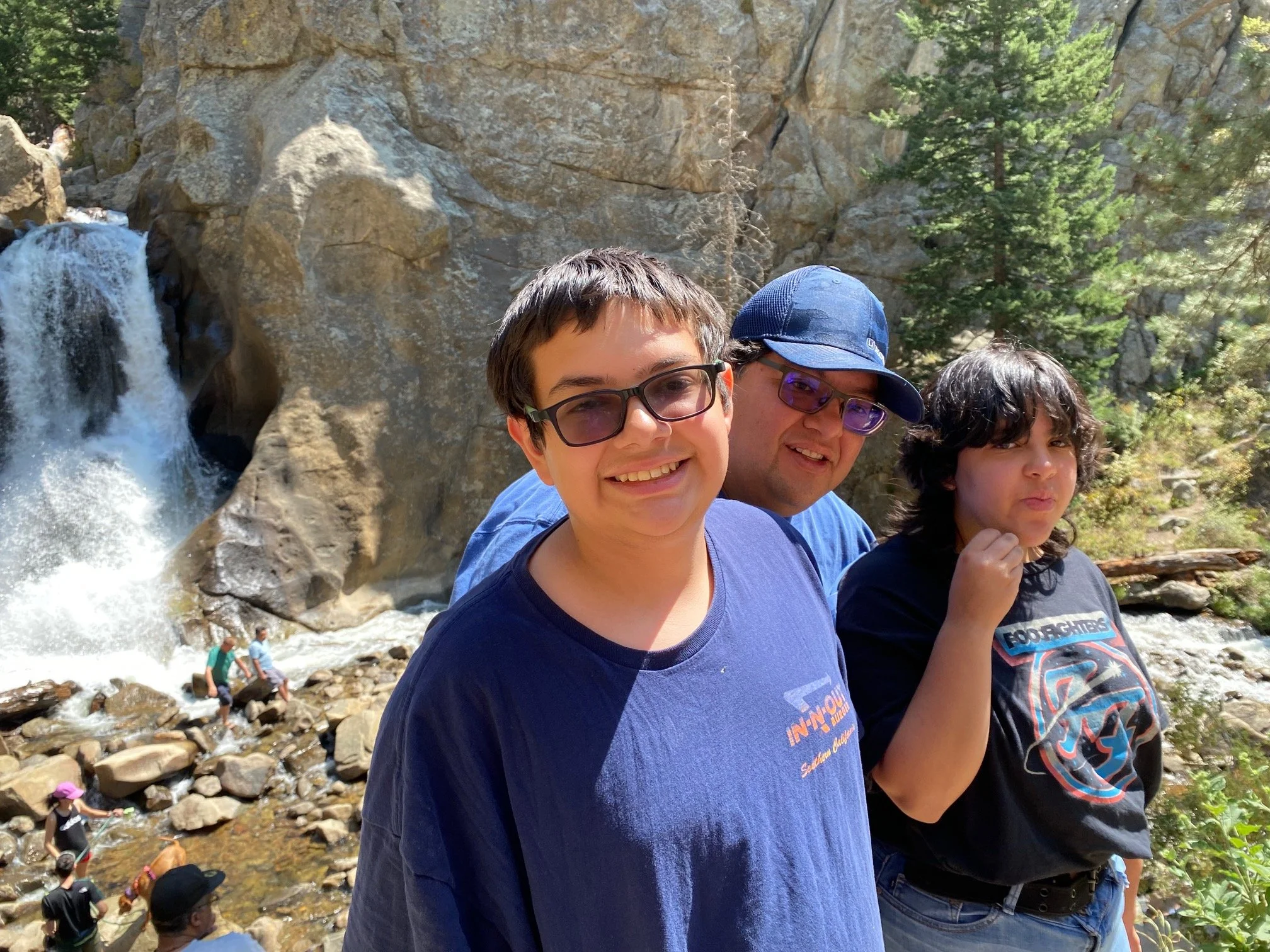
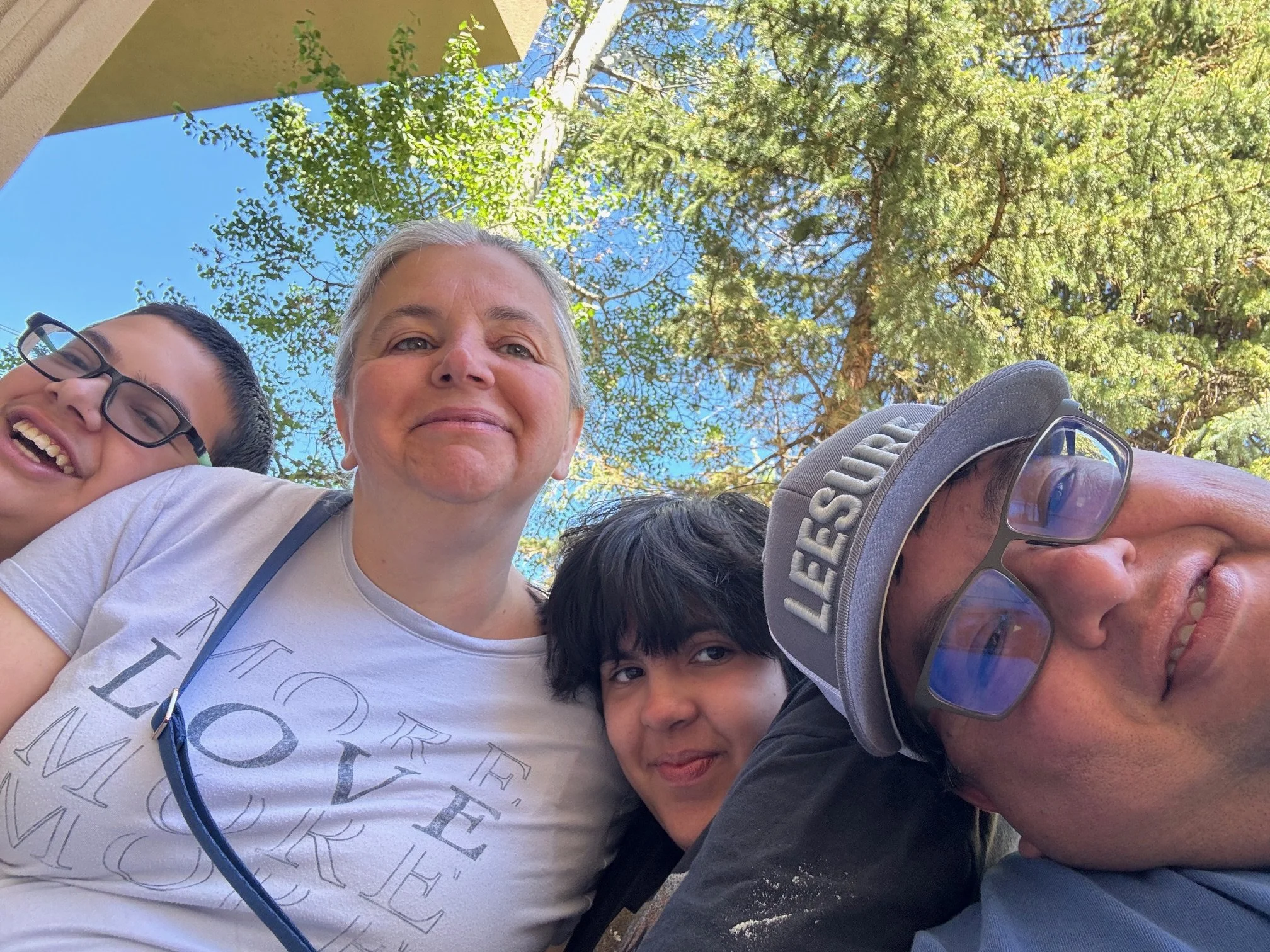
Monica Bousfield met her husband Horacio Frey in the fortuitous aisles of Babies R Us, where they both worked in the early 2000s. At first, they were just friends. Then best friends. Then after about a year of hanging out constantly, they surmised they must be dating. A year later, Monica nudged Horacio that it was probably time for them to go ahead and get married. After an eight-month engagement, they did, and while they eventually both left Babies R Us, their commitment to each other later resulted in two babies they would together raise. Through all this, Monica kept her maiden name—primarily because she’d never known of another couple like her and Horacio to last, and she didn’t want to complicate legal paperwork around having to undergo name changes twice. Monica had never heard of a woman marrying a gay man and having it not end in divorce. While she’d known Horacio was gay from their early days of hanging out, there were two other things she knew about Horacio: he was her best friend, and she wanted to marry him. Over two decades later, the couple is still making it work in Westminster, Colorado, where they have two children—Caylin, who is 17 and also identifies as queer, and Dominic—13.
Monica Bousfield met her husband Horacio Frey in the fortuitous aisles of Babies R Us, where they both worked in the early 2000s. At first, they were just friends. Then best friends. Then after about a year of hanging out constantly, they surmised they must be dating. A year later, Monica nudged Horacio that it was probably time for them to go ahead and get married. After an eight-month engagement, they did, and while they eventually both left Babies R Us, their commitment to each other later resulted in two babies they would together raise. Through all this, Monica kept her maiden name—primarily because she’d never known of another couple like her and Horacio to last, and she didn’t want to complicate legal paperwork around having to undergo name changes twice. Monica had never heard of a woman marrying a gay man and having it not end in divorce. While she’d known Horacio was gay from their early days of hanging out, there were two other things she knew about Horacio: he was her best friend, and she wanted to marry him. Over two decades later, the couple is still making it work in Westminster, Colorado, where they have two children—Caylin, who is 17 and also identifies as queer, and Dominic—13.
While Horacio has known he’s gay since a young age, this is the first time he has come out publicly. His childhood was marked with hardships, having suffered abuse and being adopted at age eight, which created abandonment issues. He came out to a few friends and his parents in high school, but very few people knew he was gay when he married Monica. He had been raised in a Christian church community in Santa Fe, New Mexico. While it was an open affirming congregation, Horacio opted for the white picket fence and kids route that was so highly encouraged. When he met Monica, she was not active in the LDS faith of her family of origin, but after their daughter was born, Monica says, “I realized I had this amazing, super special kid, and started going back to church gradually and then more actively.” After about five or six years of attending by herself with Caylin, Horacio converted. Monica laughs that she has the kind of mom who, every time they went to her house for dinner, would make sure the missionaries just happened to be there. Finally, Monica says, “She had a set there with the right personality at the right time.”
Horacio’s bachelor’s degree in Information Systems Security brought him to Colorado. After receiving her bachelor’s at what is now UVU, Monica started a graduate school program in counseling at CU Denver. But three years into the program and then married, she found while she loved learning about counseling, she had no desire to go into the practice. Instead, Monica went into management at Babies R Us, and then got her masters in HR. Now she works for a local municipality in compensation and benefits, a job she loves. Horacio works as a tech manager for a solar company.
Monica says, “if you’re going to marry someone who’s gay and you’re not, you need to be pretty confident, but we figured we’d never know if our marriage would work out unless we got married.” The beginning of their union felt lonely for Monica, having no one she could talk to who could relate to her variety of issues. “I internalized a lot, which is probably not healthy. But I didn’t want to out him. When others would talk about how great their marriage was, I was like, ‘Um, yeah…’” Monica didn’t actualize that hers was not the only mixed orientation marriage in existence until a few years ago. But of her almost-exclusive status, she says, “It doesn’t go away and it’s not easy. I’m not going to say it’s not worth it, but it’s not easy.” Horacio agrees it’s been difficult as well from his perspective with the couple talking about it, then not talking about it, when perhaps they should have more often. But after lots of counseling, he says, “We’re committed to making it work and have no interested in getting divorced or not making it work.” Monica appreciates how Horacio is still her best friend, despite the complexity of their issues.
Five years ago, new information about their children brought the two even closer together. Around the same time that Dominic (at age 8) was identified as being on the autism spectrum, Caylin revealed that she’s queer. Of their kids, Monica says, “She’s very creative, and he’s very, very logical. It’s two extremes, and definitely makes things interesting.”
While Monica was shocked about Caylin’s admission, Horacio was not as surprised, after Caylin had recently played Christina Aguilera’s “You are Beautiful” at the dining room table and asked her dad if he’d still love her if she came out. It was 2020 during the pandemic, and the family had spent much of their time together in quarantine. One afternoon, while on her way to her first outing to a friend’s house in a long while, Caylin sat in the back of her parent’s car, quietly drafting a text. She didn’t hit send until she’d safely entered her friend’s front door, and Monica and Horacio drove home in shock, processing. Besides the blindsiding of the information itself, they were now also apparently “old” because they had no idea what Caylin meant by: “I’m coming out as pansexual.” Monica googled it on their drive, while her heart stung with the second half of Caylin’s text: “I hope you still love me after this is over and done with.” Of course they did, she says.
However, needing more time to process as she hadn’t heard of a 12-year-old coming out that young before, Monica sent Horacio to pick up their daughter. When he pulled up to the house in a slight rainfall, he saw a rainbow in the sky behind Caylin’s friend’s roof. A scene that felt “picture perfect.” Caylin got in the car and Horacio abruptly revealed he was mad at his daughter--only because she had told him in a text and not in person. The two went and got ice cream at Chic-fil-A (Monica now laughs at the irony of that), and Horacio explained to his daughter that he was in a position to understand what Caylin was feeling. He revealed, “Not that I want to steal your story, but I understand because I identify as gay.” Horacio went on to explain how Caylin could still have church values, even though there is a lot of stigma in church communities about how to act. Horacio clarified, “You don’t have to do anything you don’t want to. Your mother and I still love you and will navigate with you, and you’ll get through it.”
Caylin says she’d known she “was some flavor of gay” since age nine, just growing up in the internet age, though she didn’t always have words for what she felt. She now prefers to identify as queer instead of pansexual, and says it has been hard to “figure out what I actually am and to surround myself with people who would accept me, especially in the church where a lot of people don’t necessarily agree with all of that.” Now a senior in high school, the church is still a part of Caylin’s life as she attends sacrament meetings on Sundays, but she prefers to go to Relief Society with her mom over Young Women’s. She also prefers to avoid seminary and youth activities, and keeps quiet about how she identifies at church. The family’s ward is small and skews a bit older and more conservative. With few youth, there are fewer opportunities for friendships. Caylin says her school has its ups and downs, but she has a good friend group and likes to do art and read fiction and romance books--the Caraval book series being a favorite. She also participates in theater, and is on the costume crew for the school’s current production of Chicago. While dating has been a part of her teen years, she’s not currently seeing anyone.
Shortly after Caylin came out to her parents at age 13, she was sitting at a stoplight with her mom. Monica remembers her saying, “Mom, I don’t know why God hates gay people.” Monica asked what she meant by that, reiterating that God loves everybody. Caylin replied, “I don’t know why gay people can’t get married in the temple, have kids, and do all the things.” Monica feels this messaging kids receive while sitting in the pews is important to share, as the words hit hard and create more harm than some may intend. While it took Monica herself time to process the news Caylin shared via text that day, she now feels protective “like a mama bear” and wears a rainbow pin and speaks up when it feels appropriate, which can be hard to gage in their ward. Horacio also wears some sort of rainbow every Sunday.
The family has attended some of the events sponsored by their local ally group Rainbow COnnection, which was started by members of their stake. While Monica’s an introvert, she values the gatherings. In her extended family circle, people tend to more quietly share big news to avoid big reactions. Monica has appreciated how talking with her relatives about Caylin has strengthened her relationship with her family members who were raised in a world where their family “looked good on the outside but weren’t that close.” Nowadays, they’re working on being closer at home.
Caylin says sharing a unique identifier alongside her dad has helped her to feel less alone. She now focuses on not letting others’ opinions bother her. One Sunday, after a lesson in which someone expressed how they had a kid “struggling with LGBTQ issues,” Caylin walked out into the hall and toward their car, confidently telling her mom, “I’m not struggling with LGBTQ issues. I’m quite good with them.”
For Monica, who has kept much close to her heart over the 20+ years of her marriage, she longs for a day when it feels more comfortable for people to share what they’re experiencing at church in a real way, instead of trying to present the image of “being perfect.” She says, “Wouldn’t it be wonderful if people could say, ‘I’m really struggling with this,’ instead of ‘Life is great’! I’ve dealt with a lot on my own, which is probably not the best way to handle things.” She continues, “It’s good more people have been talking about this in the last few years. It’s important to get out there and hear about it and share, so you don’t feel so alone.”


MARY ANN ANDERSEN
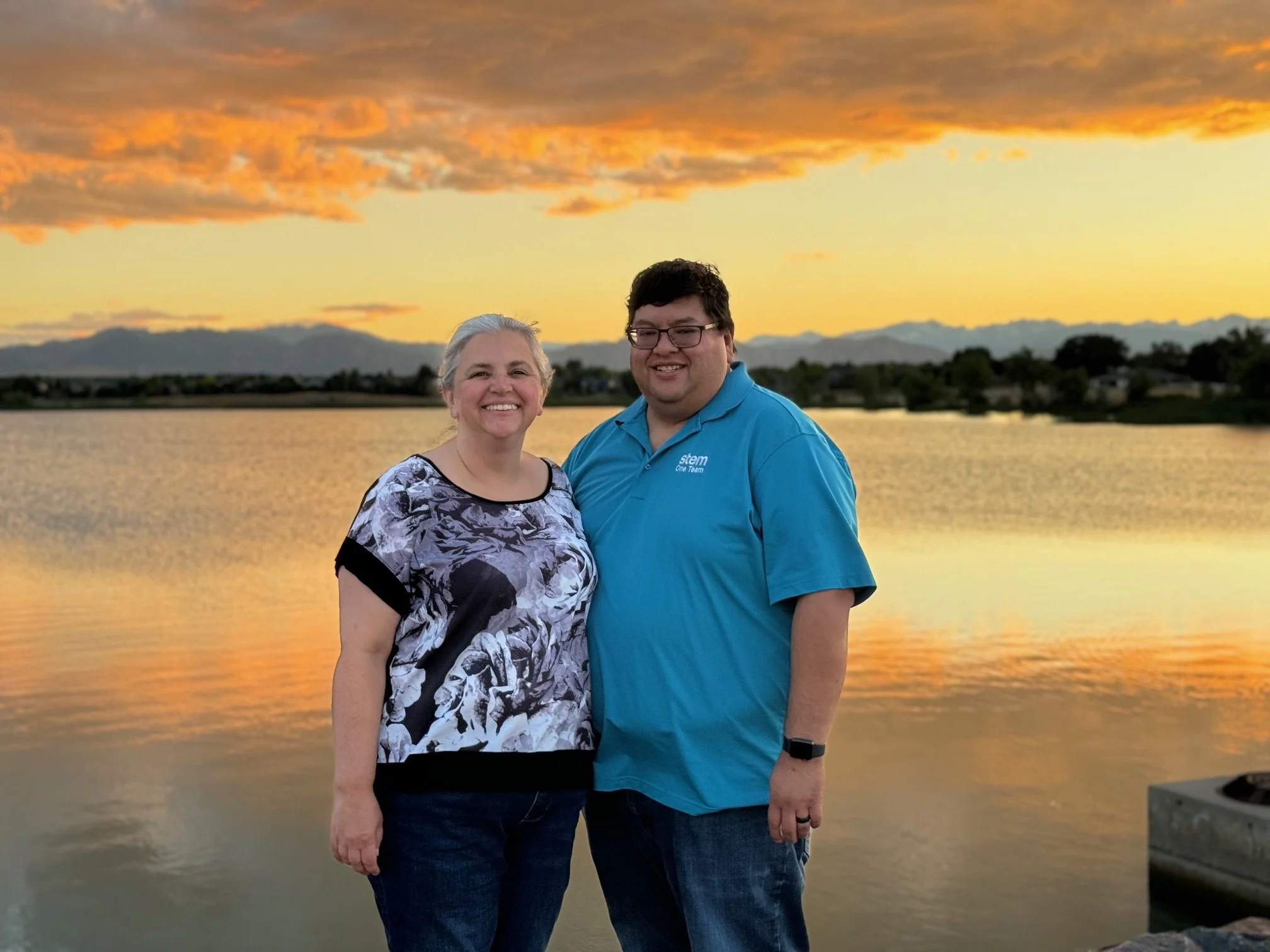
Mary Ann Andersen had always believed that love was unconditional, yet nothing could have prepared her for the totally unexpected revelation that would reshape her life and her marriage. For years she had built a life with Dave, a man she knew as a devoted husband, caring father of four, and committed member of the Church of Jesus Christ of Latter-Day Saints. Their days were marked by shared routines: family dinners filled with laughter, lively discussions, the typical demands of raising kids, and the steady pressure of church and community service. Yet, beneath this familiar rhythm lay a secret that would eventually alter the contour of their relationship…
Mary Ann Andersen had always believed that love was unconditional, yet nothing could have prepared her for the totally unexpected revelation that would reshape her life and her marriage. For years she had built a life with Dave, a man she knew as a devoted husband, caring father of four, and committed member of the Church of Jesus Christ of Latter-Day Saints. Their days were marked by shared routines: family dinners filled with laughter, lively discussions, the typical demands of raising kids, and the steady pressure of church and community service. Yet, beneath this familiar rhythm lay a secret that would eventually alter the contour of their relationship.
It began 14 years into their marriage in 1993, when Dave confided in Mary Ann about the inner conflict he had carried since youth—a dissonance born of a desire to express a feminine side he had long kept hidden. At the time, Mary Ann was busy raising four kids and managing a farm and bed and breakfast while Dave worked full-time and served as the bishop of their ward. Dave had always gone to great lengths to keep his feminine interests and clothing hidden, though Mary Ann had observed how complementary Dave was about how she did her own hair and makeup. “It didn’t make a lot of sense back then, but I just thought what a goldmine of a husband I had that he even noticed. But really Jennifer was living her life through me.” While some wives might have loved having their husbands encourage more facials and makeovers, Mary Ann started to resent this, wondering if she wasn’t attractive enough for her husband.
Back then the term “transgender” was nearly unknown, and the idea that the man she loved might also be the woman he felt inside was as bewildering as it was painful for Mary Ann. She remembers that Dave’s first hesitant admission was filled with both fear and hope for understanding. As Dave revealed that he carried within him a longing to be seen as female, Mary Ann felt shock, confusion, and an aching vulnerability. She wondered if her husband was gay and wouldn’t admit the truth to her. “And why didn’t he tell me this before we got married?” Back then, they both didn’t fully understand the difference between sexual orientation, gender identity, and gender dysphoria. After a difficult month of trying to process this news and wandering the aisles of local bookstores and libraries to pour over whatever literature she could find in search of answers, Mary Ann informed Dave, “I can’t change who I am, and I’m not attracted to women. This isn’t going to work for our marriage.” She figured he would do the “right thing” because he had always done so in the past. Being raised in the church, and being a teenager during the 70’s, it was taught that being gay was a choice, it was so black and white. This is something you can choose not to do. So the two shelved the topic for over two decades, never bringing it up or discussing Dave’s confession. She figured he had control over it.
Yet over the last ten years, as Mary Ann began meeting people from the LGBTQ+ community and hearing their lived experiences, her perspective began to shift. She learned that transgender identity was not a flaw or a choice, but an aspect of human diversity. Slowly, her heart softened. The realization eventually came that the hidden part of Dave’s soul—Jennifer—was not a betrayal of their love but a long-suppressed truth that needed to be acknowledged. It was in 2018 that Dave came forward a second time, revealing his authentic self as Jennifer. This time, the revelation carried with it both shock and sorrow—as Mary Ann recognized the pain Dave had suffered suppressing this side of him for so many years. It also caught her by surprise and many conversations ensued. She did a lot of soul searching to understand her own feelings and how to make things work in her marriage.
In 2020, when they felt it was time to tell their children and their spouses, Mary Ann was concerned how they would receive the news. She knew they would be surprised and shocked because she remembered feeling that way the first time she found out about Jennifer. It took time for their children to process the news and to their credit they led with love, acceptance, and curiosity. Each child was concerned with how their mom was coping with this change. Mary Ann appreciated their checking in with her. The Andersen grandchildren, accustomed to the familiar image of their granddad gradually were introduced to Jennifer and soon began to accept this new reality.
Their oldest son, Blaine, shares this insight about his journey. “Prior to my father revealing to me that he was part of the transgender community, I had recently chosen to leave the comfort and security of my Mormon-influenced worldview. Part of this process involved the painful re-evaluation of what I once believed to be etched in stone. My soul dragged my mind to a state of intrepid curiosity. This beautiful ‘hell’ I found myself in was the ideal climate for learning that my parent had far more dimension than what was previously known. Knee jerk, black and white thinking had been replaced with an ability to see nuance and adjust focus, which I had control over. I was able to give myself permission to explore the world through his/her eyes without the crippling fear that I was on the wrong side.” Knowing that her family continued to love and support them lifted a huge burden from Mary Ann’s soul.
Blaine continued, “When a person comes out as trans, it’s important for all affected parties to have compassion. My initial reaction was that of acceptance, love and curiosity. But to be sure, I have dealt with feelings of loss and second guessing along the way. I admittedly have many more miles to cover on this journey and I have made peace with the idea that it's okay to feel a range of emotions. Patience, humility, love, and curiosity have been effective checks and balances for me. My father and Jennifer are both amazing. They are incredibly courageous and loving. Members of the LGBTQ+ community add a depth and spirit that is badly needed in our world.”
Mary Ann says that, “Now that Jennifer is out, we laugh more. We can be ourselves, and are more relaxed. We definitely communicate better.” Mary Ann laughs at how with her spouse alternating throughout the week between presenting as Dave and Jennifer, she avoids name confusion by calling her spouse “Babe.”
Mary Ann has found that the outside world, particularly the church and some segments of their broader community, have been slow to offer support. In church circles, Mary Ann was often asked hurtful questions like, “Why do you stay in your marriage?” Or “What’s wrong with you?” instead of questions she’d prefer like, “How do you make it work?” She does appreciate some LDS friends and others who have remained loyal and caring, and who often open conversations with her and others by modeling the welcoming words, “Tell me more.”
In their former stake, where news of Jennifer’s emergence spread like wildfire, some of those who the Andersens once considered friends began to distance themselves, and invitations to gatherings dwindled. For a variety of reasons, Mary Ann stopped attending church services altogether. This happened well before Dave began attending church as Jennifer in 2022. Now, neither attend LDS services, instead preferring to attend another more welcoming congregation in town.
Mary Ann’s decision to step away from the church, largely due to their LGBTQ+ policies, was met with a reticence from many who remained. She says, “I’ve noticed when I let people know I no longer attend, they’re almost a little fearful of me. They don’t want to engage with me. I don’t hold any weight anymore; when you leave, you’re no longer believable nor credible.”
As Mary Ann has listened to the stories of other spouses of trans individuals and engaged with the broader LGBTQ+ community, she’s come to understand Dave’s struggle was never a denial of her worth, but rather a reflection of the rigid expectations imposed upon them by doctrine and culture. She says, “I now understand that this isn’t a choice, this is who these people are and they’re not broken. It’s made me open my arms to humanity and not just our little church world.” This realization has been liberating for Mary Ann, paving the way for a profound redefinition of what it means to love and be loved.
A voracious reader and talented seamstress, and as one who genuinely enjoys learning from and listening to others’ stories, Mary Ann loves to engage with those around her, and has always pursued her own passions and interests. Her organic skincare business, formed due to her own experiences having sensitive skin, flourished for a decade as an online business. In sharing her creative pursuits with Jennifer—offering alterations, fashion advice, and collaborating on projects—their lives have become interwoven in new, dynamic ways.
The evolution of their marriage also brought changes in how Mary Ann and Jennifer spend their time together. While Mary Ann doesn’t like to shop as much as Jennifer does, she loves to go out to dinner and to the beach with their friends. Mary Ann cherishes any time spent with their four children, their spouses, and their 11 grandkids, 5 of whom live nearby in their Oregon community. And Mary Ann has observed how Jennifer, now free to be her authentic self, has become much more social. They both enjoy attending dinners with their friends in the Rose City transgender group (including spouses), and participating in Affirmation, Gather, and other trans-affirming conferences where they both feel well understood.
While Mary Ann did not know this part of her spouse before they married, she understands Dave’s former presumption that it would all go away if he just “married a good wife.” She recognizes now that Dave didn’t have the words for what he was experiencing. Mary Ann has always appreciated how her spouse has been “such a wonderful, kind, thoughtful person and very much a team member with raising our kids, and still is.” As Jennifer emerged, their relationship was tested and ultimately transformed but Mary Ann embraces the belief that no marriage remains static.
“Having always enjoyed people and hearing their stories, I like this version of me so much better. It’s so much healthier. There’s a whole new world out there, with amazing, wonderful people. This has all made me more friendly, and more able to depart from my comfort zone.” Mary Ann acknowledges, “I didn’t sign up for this, and it’s not what I agreed to. But on the other hand, if you thought your spouse would never change and will always be the same person you married, that’s a grave misconception. The key is to grow and change together—to support each other, give each other space, and let them be who they are.”
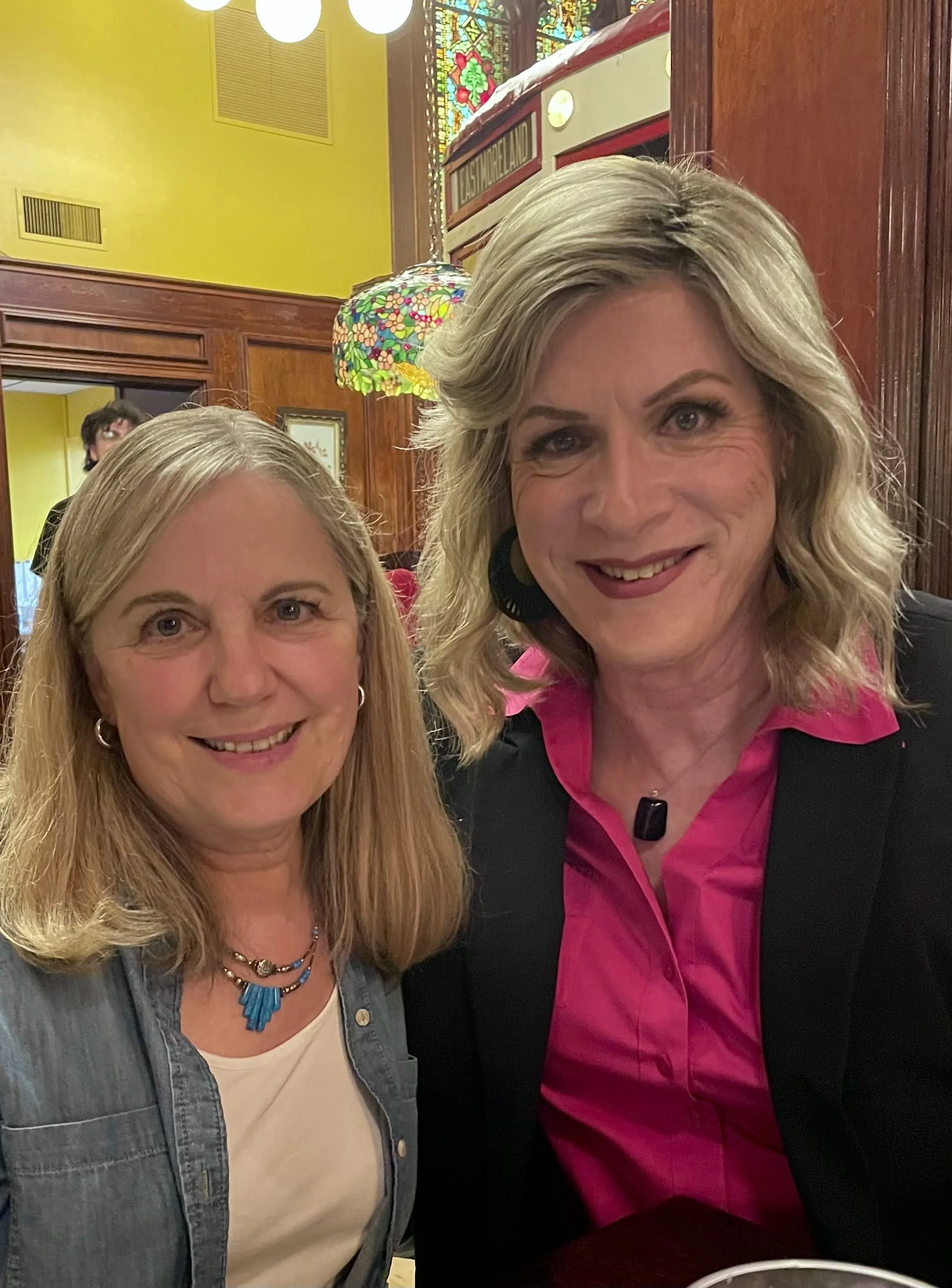
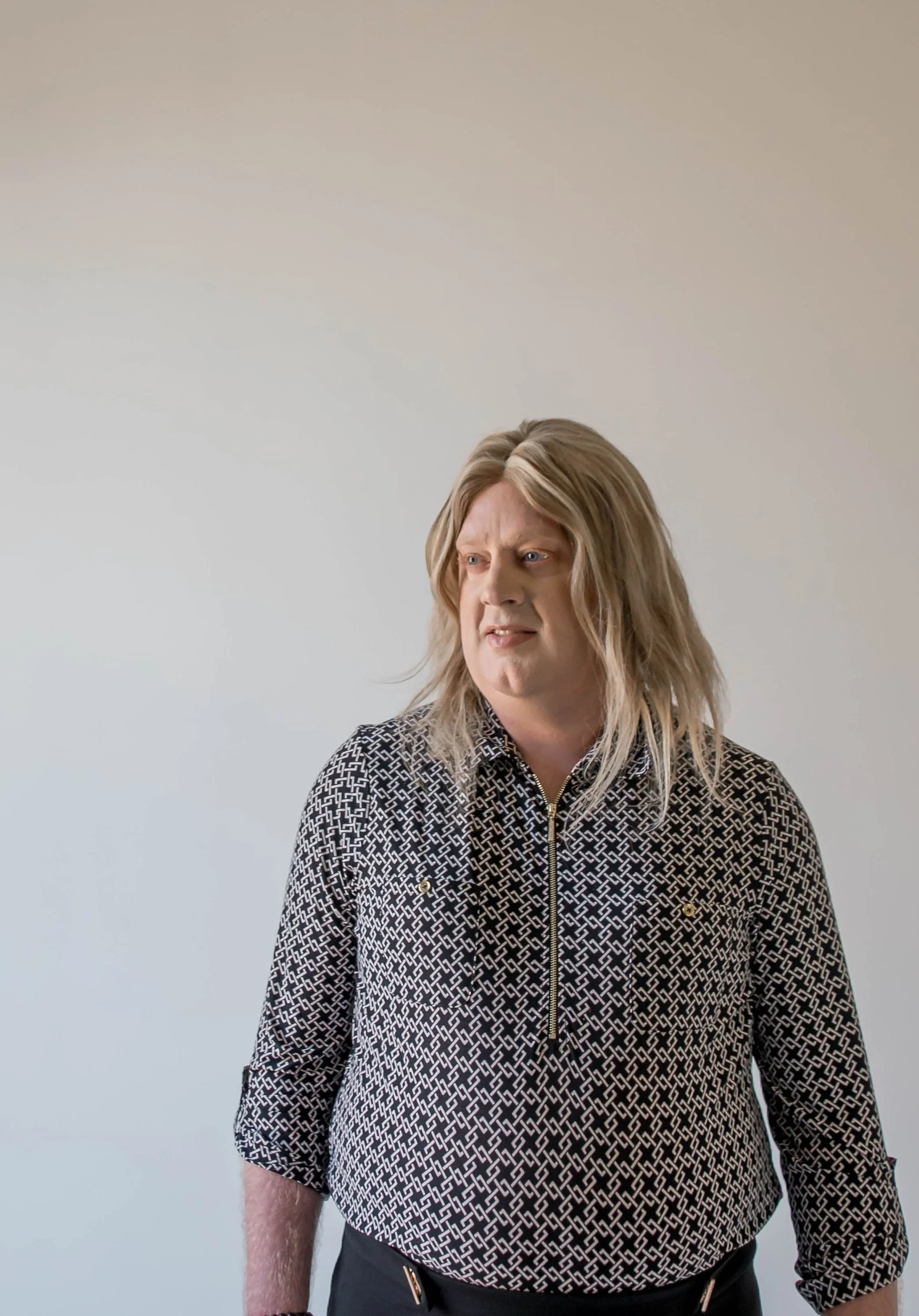
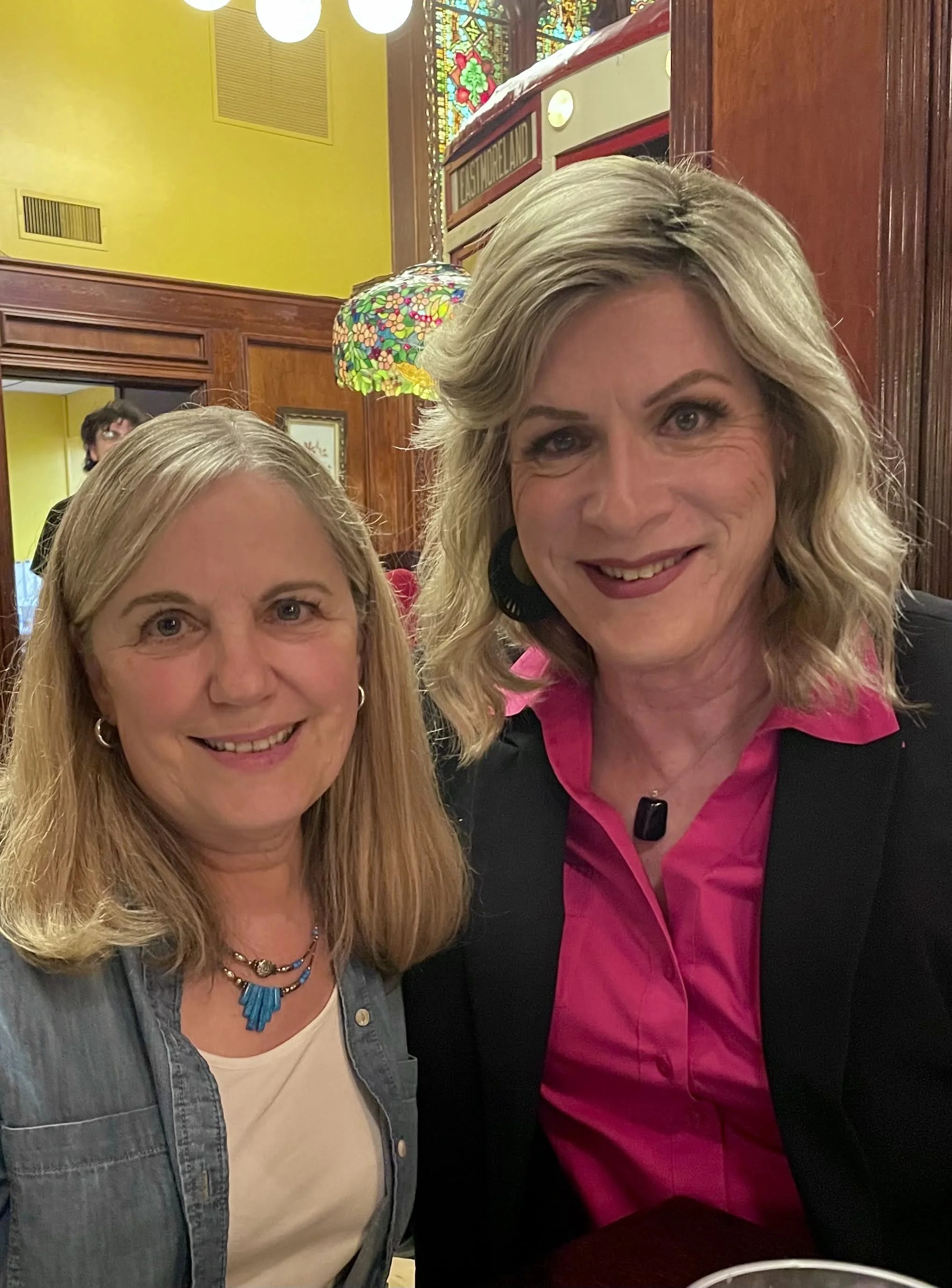
Jennifer Thomas
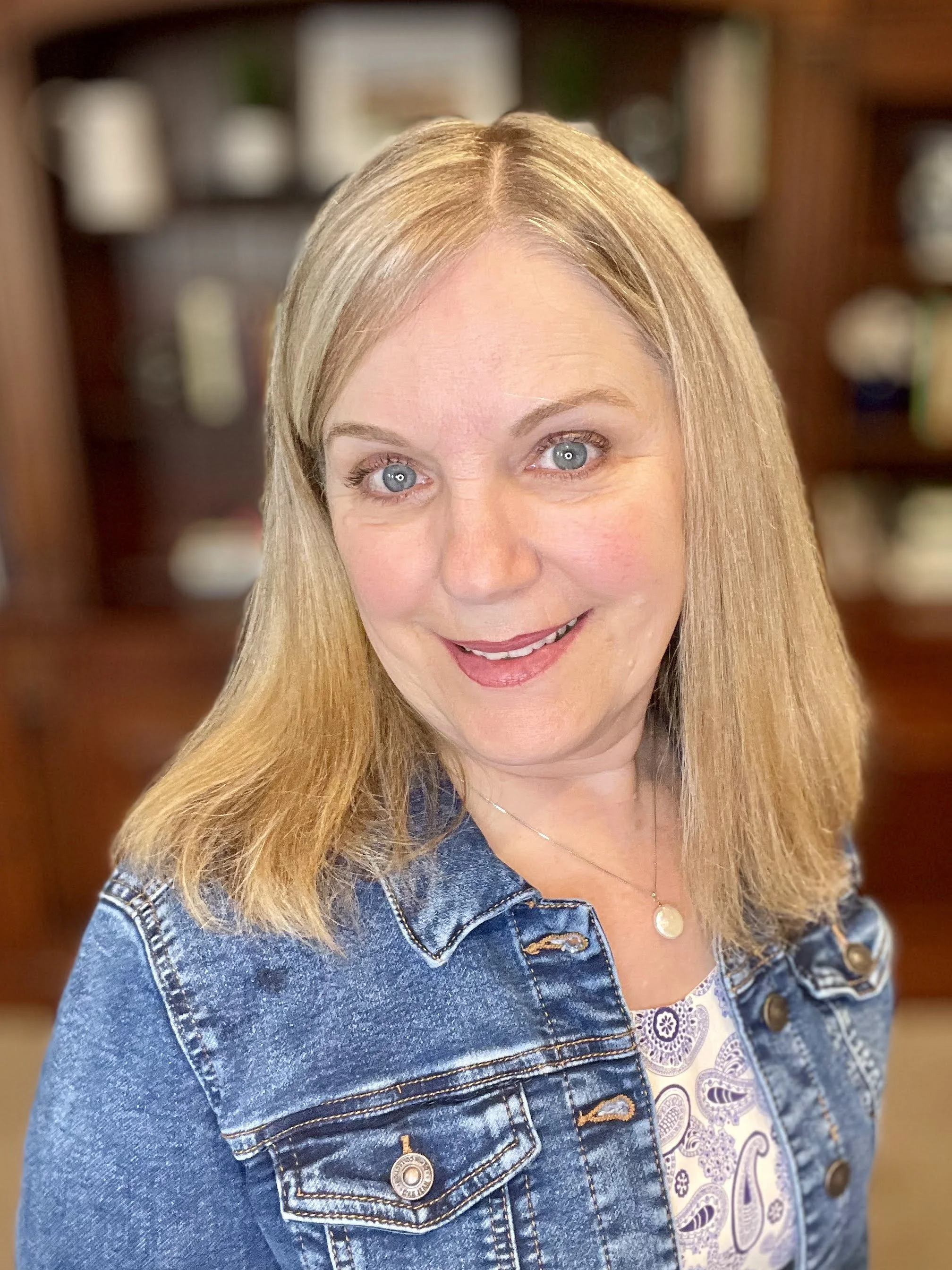
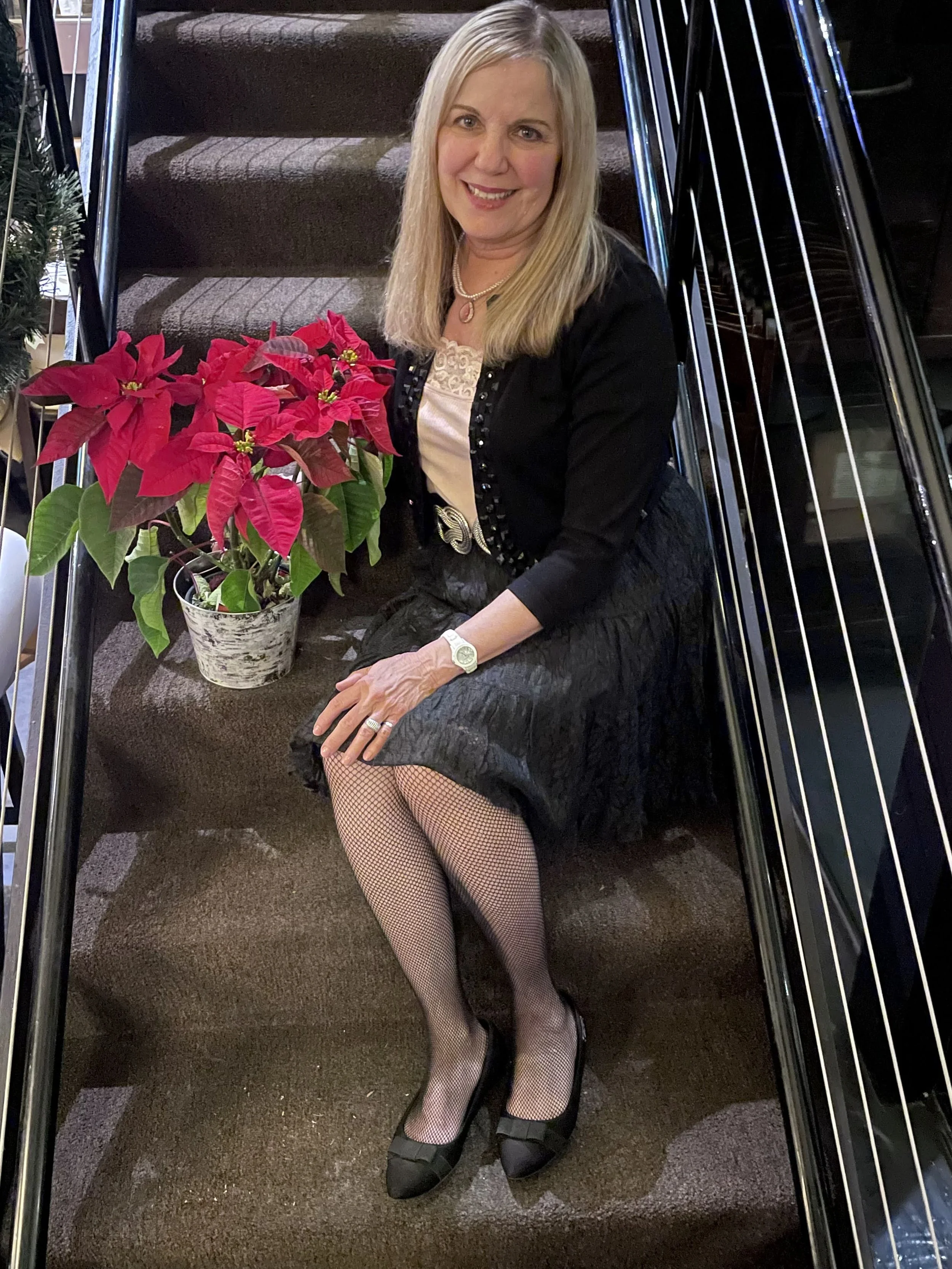
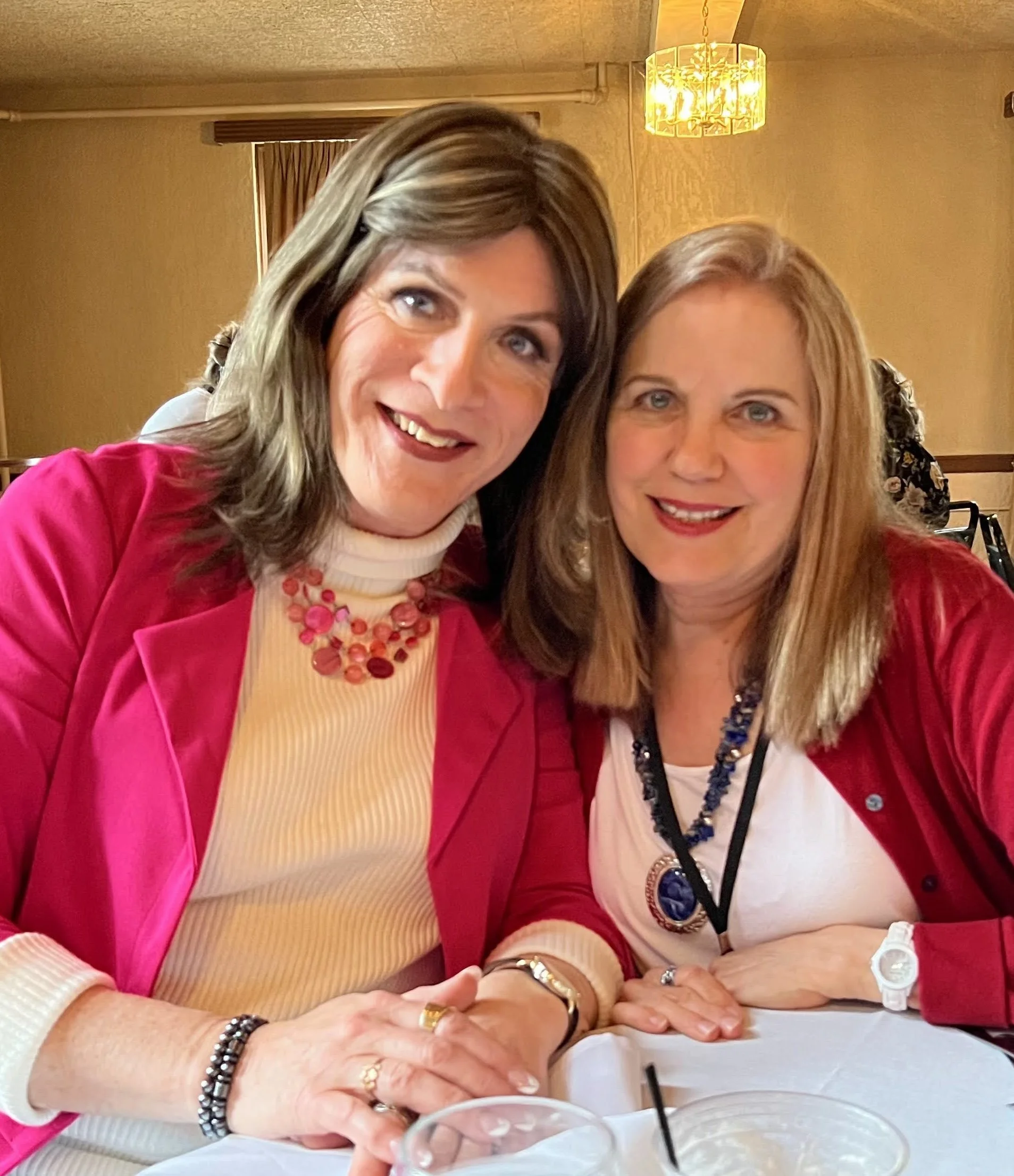
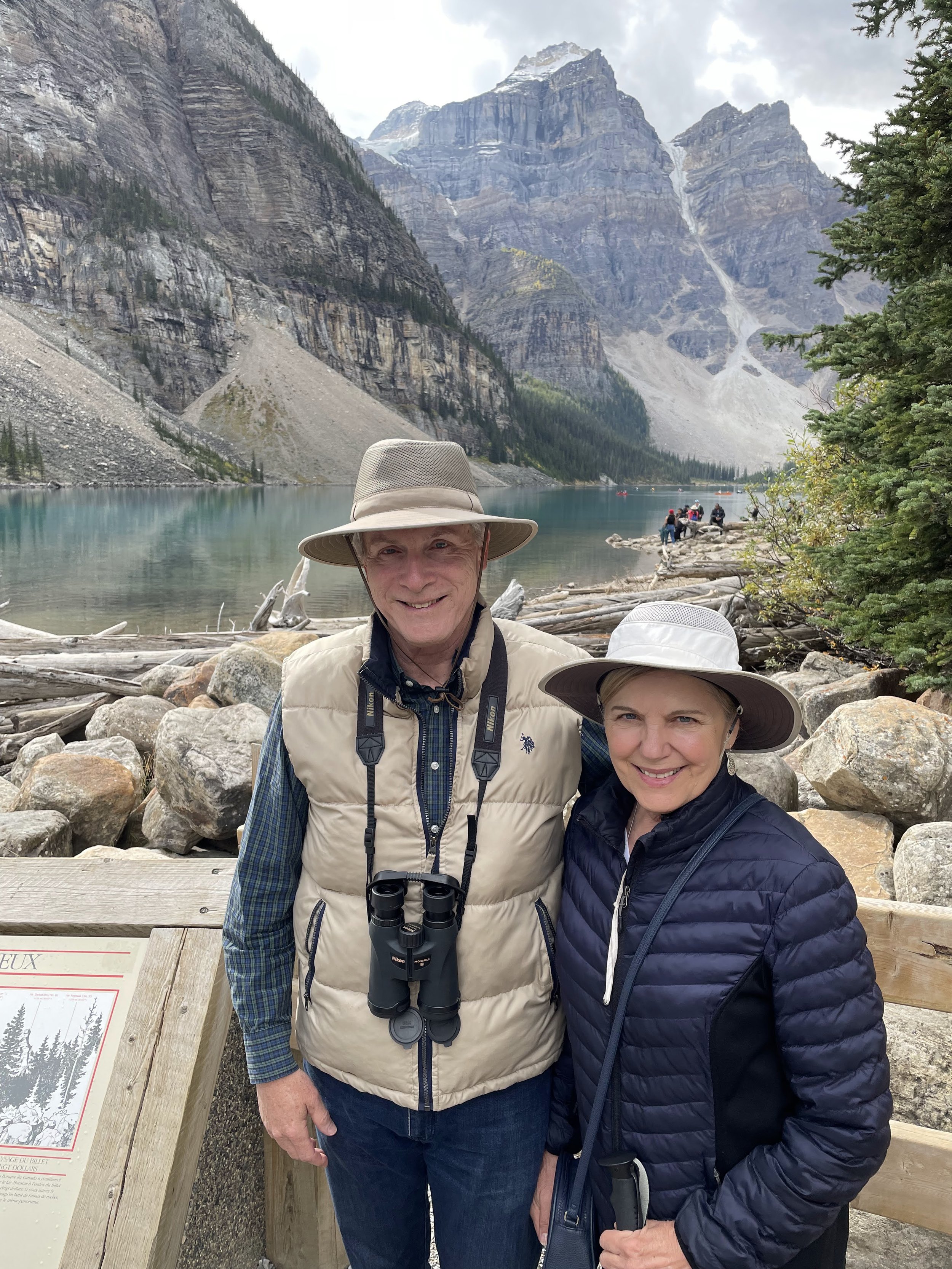
Born as a biological male and raised in the conservative milieu of the Church of Jesus Christ of Latter-Day Saints, Jennifer Thomas spent much of her early life navigating a path dictated by strict cultural and religious expectations. In her late 60s now, and having been married for over 45 years to Mary Ann Andersen with whom she’s raised four children, Jennifer’s life has been predicated with duty, love, and a quiet yearning for authenticity. But behind the familiar roles of husband, father, and devoted church member lingered a deeply personal struggle—a battle to reconcile the masculine identity imposed by society with a more gentle, unacknowledged feminine soul.
Born as a biological male and raised in the conservative milieu of the Church of Jesus Christ of Latter-Day Saints, Jennifer Thomas spent much of her early life navigating a path dictated by strict cultural and religious expectations. In her late 60s now, and having been married for over 45 years to Mary Ann Andersen with whom she’s raised four children, Jennifer’s life has been predicated with duty, love, and a quiet yearning for authenticity. But behind the familiar roles of husband, father, and devoted church member lingered a deeply personal struggle—a battle to reconcile the masculine identity imposed by society with a more gentle, unacknowledged feminine soul.
From an early age, Jennifer was drawn to what many would label as “feminine.” In a world where boys were not expected to be curious about the styles and hobbies reserved for girls, she found herself captivated by women’s fashion magazines and the allure of makeup and hairstyles. Yet in an environment where exploration of one’s gender identity was discouraged, if not outright condemned, she learned quickly that expressing even a hint of her proclivities was equivalent to admitting to a profound brokenness. For years, she suppressed this part of herself. But as she grew into the expected roles of dutiful spouse, father, and eventually as a respected leader serving as bishop and later in a stake presidency—Jennifer’s dissonance persisted. The man known as Dave Andersen carried a secret internal world, where the desire to express a feminine identity was a source of intense guilt.
It was during a period of solo travel that Jennifer (as Dave) wandered into a second-hand store and purchased a pair of high heels and a few pieces of women’s clothing—a small act of defiance. In the seclusion of a hotel room, Dave (who interchanges names and pronouns) dressed as a woman. But the exhilaration was short-lived, replaced swiftly by a torrent of guilt and shame. Soon after, he revealed his secret to his wife Mary Ann, a revelation that pre-internet, took her by complete surprise. She assumed the revelation indicated that he was gay—and also made it very clear she was not attracted to women. Dave conceded and discarded his hidden stash of feminine clothing. For over 20 years, the conversation was shelved.
Throughout the intervening decades, Dave’s internal struggle deepened. Despite outward success in his software career and the accolades of leadership within the church, the man behind the title wrestled continuously with the guilt of having surrendered to the feminine inclinations he could no longer silence completely. He sought therapy from a psychologist who specialized in gender issues, and who explained that his experiences were not a pathology but rather a natural variation of human identity—a perspective that, though liberating in theory, was too difficult for Dave to accept at the time so he quit therapy. As bishop, he confided his grappling with gender dysphoria to his stake president, who assured him all bishops have something with which they struggle.
Over time, however, the framework of Dave’s early, more rigid beliefs began to crumble under the weight of new insights as he and Mary Ann encountered a stage of reflective, critical engagement with their faith and its teachings. They began to explore church history through gospel topic essays that revealed a more complex and sometimes contradictory narrative than the one they had previously been taught. This awakening paved the way for Dave to confront many other longstanding positions. He says, “Though I had spent my entire adult life believing and teaching that homosexuality was ultimately a sinful choice and that it was contagious (as the Church had forcefully taught in earlier times), my wife and I felt a need to reexamine those beliefs.” In his discovery, the realization that the feminine aspects of his identity were not a flaw to be cured but an essential part of his human experience began to take root.
More than two decades after that initial, painful confession, Dave once again opened up about his transgender feelings to Mary Ann. He explained that his inner experience had never truly dissipated, and recounted the recurring cycle of secret dressing, the inevitable purges, and the intense internal battles waged between the desire for authenticity and the fear of societal and ecclesiastical rejection. Though taken aback by the revelation, this time Mary Ann, who had evolved in her own beliefs about the LGBTQ+ community and come to understand that gender identity is separate from sexual orientation, was more open to her husband’s revelation. Though it was still not an easy thing for her. But her reassurance that she still loved him and valued the qualities that made him who he was became a turning point in their marriage and in his journey toward self-acceptance.
Mary Ann wondered if Dave might approach a time in which he’d fully transition. Of that reasonable fear, Dave said, “While nobody can know for sure that feelings will never change, the passage of time has led to both of us being more confident that, in my particular case, full-time transition is neither needed nor desired. Even so, we understand that for many transgender individuals, full-time transition appears as the only viable path for relief from debilitating gender dysphoria.” The couple extends compassion to all who “travel this often-challenging path.”
Emboldened by Mary Ann’s support, Dave began to more fully embrace the identity of Jennifer. But at first, her reticence to be seen as Jennifer in town included well-plotted escapades. For instance, Mary Ann would sometimes drive Jennifer (hunkered down in the backseat of the car under a blanket) past their adult son’s family’s house a mile away, whereafter Mary Ann would get out of the car at a secluded park and run home, while Jennifer continued into town to run errands. Nowadays, both Dave and Jennifer are roles their family embraces openly. In 2020, when Dave and Mary Ann individually met face-to-face with each of their adult children to share some important news, the kids anticipated they might hear of a divorce or cancer diagnosis. But of being introduced to Jennifer, their daughter said, “You couldn’t have picked a better year to tell us this, because nothing surprises us anymore.” The kids were all very loving in their responses, though it’s certainly been a process as some have expressed they were worried about losing the dad they once knew. There have been a lot of questions, including curious ones asked by the grandkids who have met Jennifer. Some even eagerly anticipate Jennifer being the one they will see when visiting.
Of her dad’s revelation, daughter Aubrey says, “It was a very big shock for sure. Wrapping my head around it was difficult; it was an emotional roller coaster. But in that moment, I knew that I still loved my dad very much… I was not going to disown him for being his true self. I couldn’t imagine what he had been through, with all the years of torment and feeling broken because he couldn’t be his authentic self. I could sense the relief and freedom he felt once he told me about his journey and how he’s been able to accept himself.” Another daughter, Melinda, credits her parents’ own example throughout life of leading with curiosity and love rather than with fear and defensiveness as instrumental to their acceptance of their dad’s news. She says, “It was so meaningful to witness all of us prioritize that when learning about my dad's journey - that you don't have to fully relate to or understand someone's own journey to love and support them; that maintaining safety and support among family members matters more than a perfect comprehension of someone's life path.”
In the equally supportive environment of local transgender groups, such as the Rose City group, Jennifer has found a community of kindred spirits who understand her experience. She recalls with vivid clarity the first time she walked into a restaurant dressed as a woman—nervous, yet buoyed by the welcoming smiles and greetings of others there facing similar struggles. Mary Ann often accompanies her to these dinners, where she enjoys meeting the other spouses and partners and “has no qualms about being out in public with me when I’m presenting as Jennifer.”
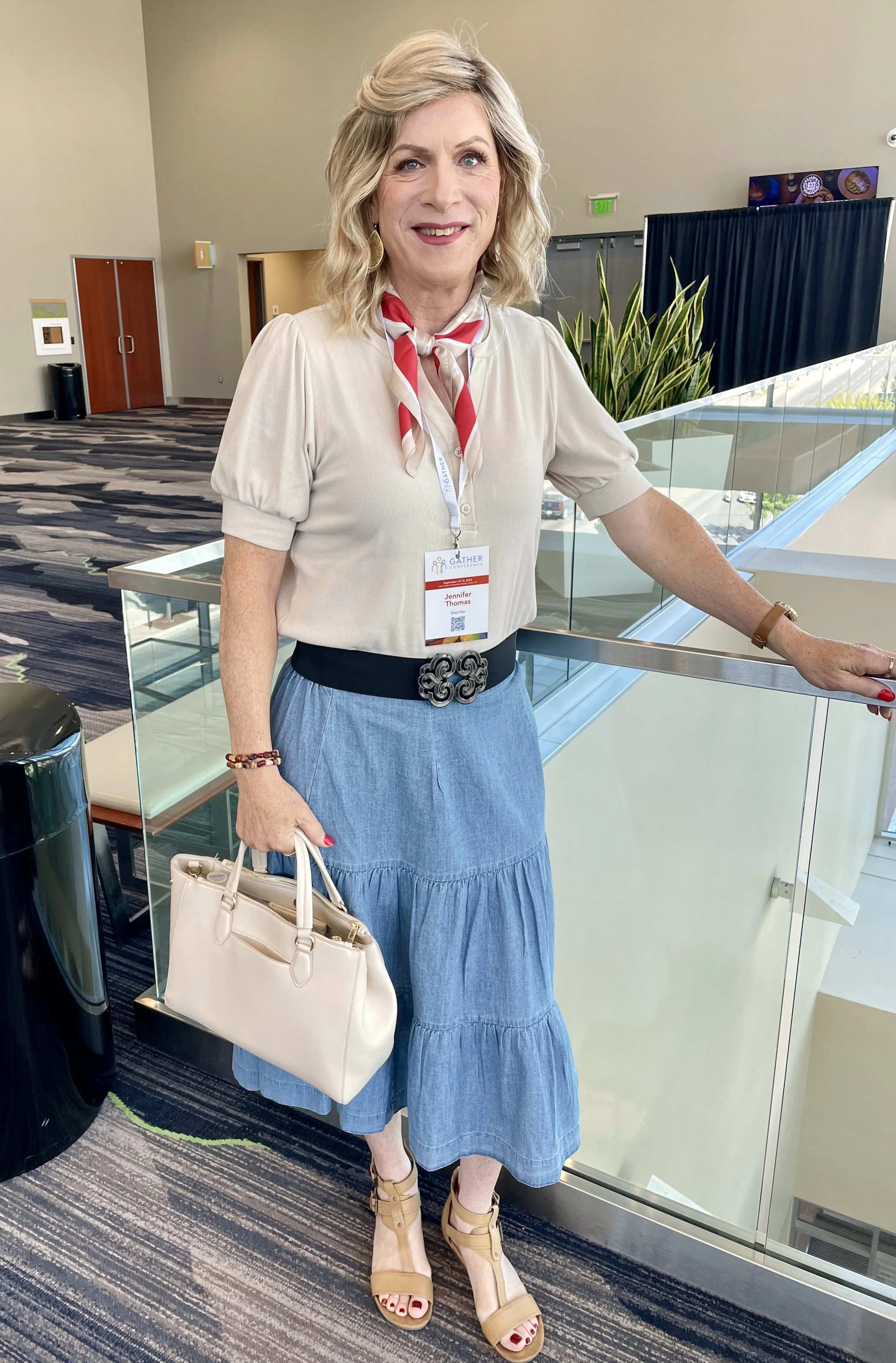
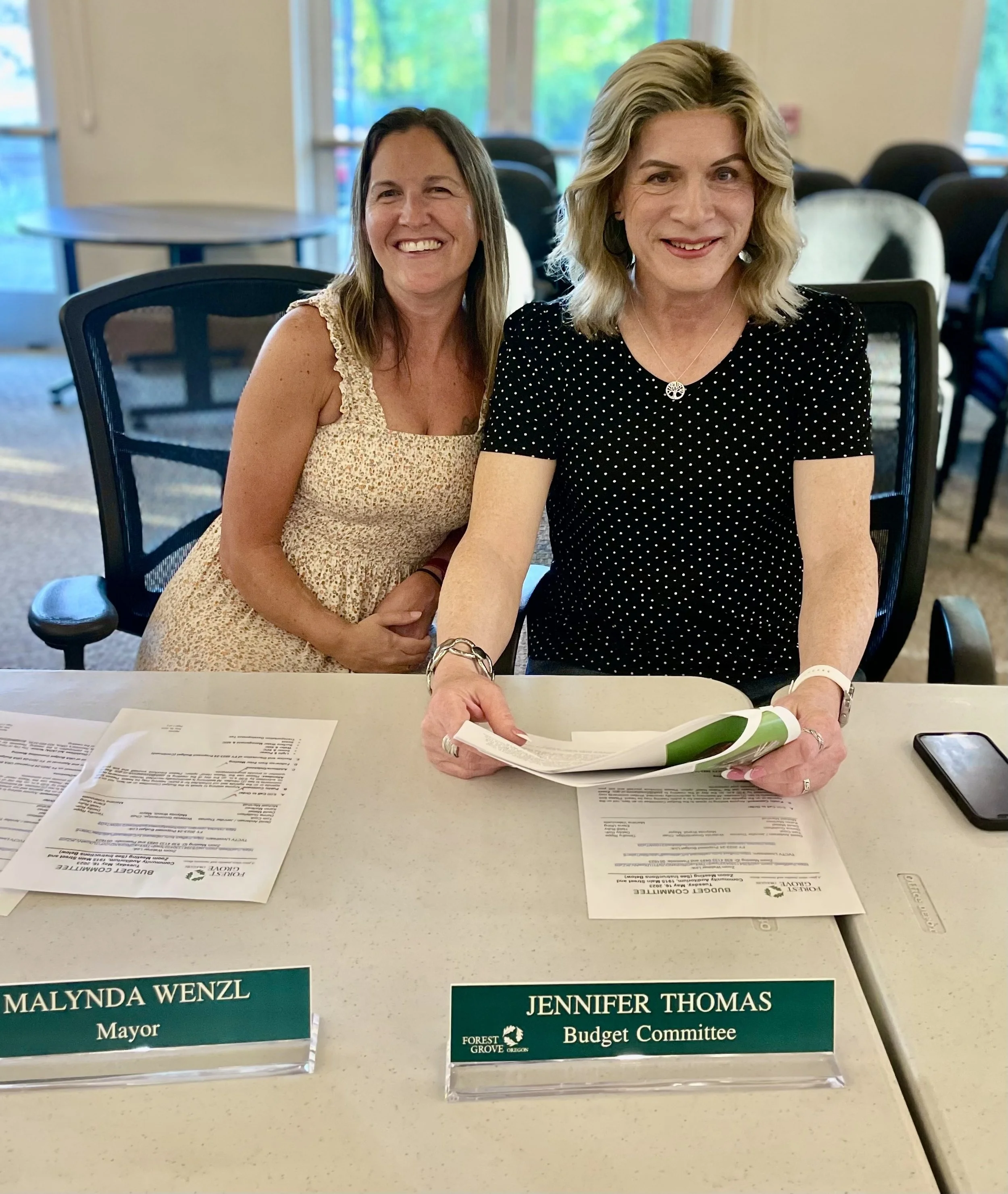
Living in Forest Grove, Oregon—a place celebrated for its open, accepting community—Jennifer has also become an active participant in local civic life. Serving on several boards and commissions, she’s open about her dual presentation, sometimes appearing as Dave and at other times as Jennifer. She says the response from the community has been overwhelmingly positive. In a gesture of recognition of her unique identity, the mayor even presented her with two separate name placards in acknowledgment of her contributions and affirmed her authenticity. A school board member, impressed by her forthrightness, invited her to join a budget committee. Such affirmations contrast starkly with some of the institutional barriers Jennifer has encountered within the church space.
Determined to foster a greater understanding of transgender realities among church leaders, Jennifer eventually began the delicate process of coming out within her local congregation. Initially, she met with the bishop and the stake president to explain her experience—not as an act of repentance, but as a candid disclosure of her truth. In August 2021, with cautious support, she addressed her ward during a sacrament meeting, affirming her identity as part of the LGBTQ+ community. The response was mixed; some members expressed gratitude for her vulnerability, while others remained silent or visibly uncomfortable. For nearly a year thereafter, she continued to attend church services in “male mode” as Dave, until the growing dissonance between her internal self and her public persona became unbearable. In July 2022, after much prayer and reflection, she made the courageous decision to attend church services as Jennifer, explaining that worshiping in her authentic self allowed her to experience a deeper, more complete connection with God. That first Sunday as Jennifer came with a blend of hope and trepidation—while the bishop greeted her with warmth and several sisters offered genuine support, many in the congregation were hesitant, unsure how to reconcile this new facet of the person they thought they knew.
Soon after, however, institutional boundaries reasserted themselves. The stake president and bishop, who had initially shown support, determined that presenting as Jennifer at church was crossing handbook-stipulated lines. Membership restrictions were imposed, including the cancellation of her temple recommend and she was barred from holding certain callings and participation in priesthood ordinances. These limitations were a difficult reminder of the church’s ongoing struggle to accommodate transgender members. Despite these setbacks, Jennifer’s local congregation continued to offer small gestures of acceptance—occasional invitations to offer prayers in sacrament meeting, with her female name announced as a subtle nod of respect. After the policies announced in August 2024 banning transgender individuals from attending second hour meetings if presenting contrary to their gender assigned at birth, Jennifer and Mary Ann have decided to attend church elsewhere at a more welcoming church in their town where Jennifer is welcomed and has been invited to share her story.
Outside of church, Jennifer’s life has flourished in unexpected ways. In her community in Forest Grove, she maintains a balanced schedule that honors both sides of her identity. Typically, Sundays and Wednesdays are dedicated to living as Jennifer—on Sundays, she attends church in her true form, and on Wednesdays, she and Mary Ann often go out to dinner with friends. She says, “For most of my adult life at church, I would contemplate, ‘Am I being a good person or not?’ One way I would determine that is if I had caved into feminine inclinations. But now, to show up as, ‘Here I am, God – it’s me, Jennifer. I‘m not hiding anything anymore…’ I feel amazing, whole, complete, and the closest to God than I’ve ever felt before. So I don’t like to worship as Dave anymore. I prefer worshipping as Jennifer now.” But on other days, she presents as Dave, a nod to the past that still informs her understanding of herself. Even in retirement, after a long career as a software engineer at Intel—a role in which she was known as much for her innovative spirit as for her playful, entrepreneurial flair—Jennifer continues to seek out new spaces for self-expression.
Through thoughtful posts on social media where she contributes to Facebook groups (as Dave in Richard Ostler’s Ministering Resources group and as Jennifer in the Transactive LDS Support group), and in writing reflective articles—such as the one she published in Exponent 2 recounting her transformative experience of worshiping as Jennifer, she invites others to reconsider their own assumptions about gender, authenticity, and the nature of spiritual connection. She also reflects how recent policies have pushed so many friends in the transgender space out of the LDS faith.
With the recent administration coming into power, Jennifer recounts how the trans community is largely reeling from multiple shocks in quick succession. She says, “It’s more important than ever to maintain a sense of community. These are very difficult, tumultuous, trying times. It’s been even more than we anticipated and worse than we imagined, and it’s happening so fast.” Jennifer also reflects, “As horrible as what’s happening right now at a national level, sadly, there’s a case that the Mormon church got there first and did it worse, with the August 18, 2024 trans policy. While the government won’t let us serve in the military or acknowledge we exist, the church essentially declared us a danger and threat to youth and children. I can’t even be in a Relief Society classroom with cisgender women.” Jennifer is confident a lot of members still don’t even know about the recent LDS church policy affecting the trans community.
In sharing her journey, Jennifer hopes to show that there is beauty in the fluidity of identity—that the interplay between the masculine and the feminine need not be a source of shame, but rather a celebration of the full spectrum of the human experience. Whether known as Dave or recognized as Jennifer, she hopes the essence of who she is remains unchanged: a person of depth, courage, and grace committed to living truthfully in a world that often demands conformity. She hopes her lived experience serves as a quiet revolution—a daily act of defiance against a legacy of repression, and a hopeful step toward a future where every individual is free to be their authentic self.


ELDER STEVEN E. SNOW
“He’s a Democrat and an environmentalist. How did he end up an LDS general authority?” teased the headline of a September 30, 2024 Salt Lake Tribune feature story about Elder Steven E. Snow, an emeritus Seventy and former historian for the LDS church. The header left out an additional, unique identifier for a General Authority, but one that Elder Snow also considers important: ally. After dedicating much of his life to a church service wherein he was assigned to study and present some of the thornier topics that have been known to make or break testimonies, Elder Snow says, “There are a lot of personal stories of grief and heartache we could eliminate if we could find a way to be more inclusive.”
“He’s a Democrat and an environmentalist. How did he end up an LDS general authority?” teased the headline of a September 30, 2024 Salt Lake Tribune feature story about Elder Steven E. Snow, an emeritus Seventy and former historian for the LDS church. The header left out an additional, unique identifier for a General Authority, but one that Elder Snow also considers important: ally. After dedicating much of his life to a church service wherein he was assigned to study and present some of the thornier topics that have been known to make or break testimonies, Elder Snow says, “There are a lot of personal stories of grief and heartache we could eliminate if we could find a way to be more inclusive.”
The grandfather to two granddaughters and a granddaughter-in-law who identify as LGBTQ+, Elder Snow says he has always been hopeful that “the church would be more receptive to those who experience same gender attraction and provide opportunities for full engagement so they can one day make all the covenants in the temple.” While he’s always been a devout believer who “loves the church,” Elder Snow sees and appreciates the parallels in its history leading up to the June 6, 1978 priesthood ban reversal and the efforts now being made by many members to treat LGBTQ+ people more inclusively. He remembers exactly where he was, who he was with, and what he was wearing when it was announced the policy many deemed racist was reversed, saying it was as landmark a day for him as JFK’s assassination and America putting a man on the moon. Elder Snow recalls, “Even though I hadn’t been exposed to discrimination personally growing up in St. George, Utah, the priesthood ban really troubled me.”
Much like last August’s new guidelines for transgender individuals in the church, the November 2015 policy preventing the children of same sex couples from getting baptized also deeply troubled Elder Snow, as did President Nelson’s doubling down on it in a speech at BYU Hawaii two weeks later. At the time, Elder Snow was friends with a gentleman who had married in the temple and had kids before later coming out as gay and divorcing his wife. The policy directly affected the man’s family, and at the time Elder Snow promised him it would be corrected, while internally feeling surprised he’d said something so bold that he had no real control over. When the policy was reversed in 2019, Elder Snow rejoiced and was pleased when that friend called him up and said, “You were right!” He’s hoping one day his hopeful words will prove fortuitous again, if and when the church someday allows full temple privileges to all faithful members, including those in the LGBTQ+ community, like his granddaughters.
At a family reunion in Newport Beach, CA a few years back, Elder Snow’s granddaughter Katie approached him and asked if she could share some news with everyone. She detailed a familiar story for many in this forum—that she had struggled through childhood feeling “different,” which led to significant mental health challenges, and that she was ready to share with the family she was gay. Elder Snow appreciates how all at that gathering received the news well, assuring Katie they loved her and that they supported her. Katie graduated in anthropology and now works at a museum in Oregon. Elder Snow says, “She’s such a great soul, everyone loves her – and her sister, Vanessa. I’m partial, I know, but they’re great.” Elder Snow’s oldest granddaughter chose Instagram as the forum to share that she was queer, and later that she was marrying her nonbinary partner, Grey. Elder Snow and his wife attended Vanessa’s and Grey’s wedding in Logan, and admits, “For a former General Authority of 18 years and Mission President, it was a little different and surprising in some aspects, but we were happy to be there and support them. We just love them.” Vanessa received her doctorate from Utah State and now works as an audiologist in the Northwest.
Elder Snow understands why, after so many devout years of trying to make it work, Katie and Vanessa both felt the need to leave the church. He says, “My hope and prayer for the future is we can be more inclusive and find a way to somehow maneuver through this difficult issue and yet keep people together and love them and make them feel they can take part in all the blessings the gospel of Jesus Christ offers everyone.”
Elder Snow and his beloved wife Phyllis (who passed away last year from COVID-related issues) raised their four boys in St. George. Elder Snow very much misses Phyllis, and now tries to focus his time with his many grandchildren, one of whom helps care for him after he suffered a disastrous fall down a flight of stairs a few months ago. “Getting ice cream downstairs at 4am sounded like a good idea, but…” he now chuckles. When he is in optimal health, Elder Snow enjoys golfing with friends and restoring classic cars. A retired attorney and self-proclaimed “news junkie,” Elder Snow has had to turn it all off lately as the nation’s political leadership has proven disappointing to him.
While serving in the church office buildings, Elder Snow was certainly a political minority among his mostly Republican colleagues, some of whom would tease they could convert him. But he says that as a whole, they collectively tried to keep the focus on being an international church, and made efforts to invite both Harry and Landra Reid as well as Mitt and Ann Romney in for conversations about the national and global landscape.
As the LDS church’s historian from 2012 to 2019, Elder Snow’s keynote projects included continuing to oversee the publication of the Joseph Smith Papers as well as supervising the launch of the Saints four book series which chronicles some of the tougher topics in church history. He was also tasked with overseeing the release of the gospel topic essays. Having full access to all of the church vaults, it remained important to the researchers and scholars assigned to this project to bring more transparency to the church history department. The discovery process included many meetings with the First Presidency and Quorum of the Twelve to determine which 13 topics would be addressed more openly by the CES so that seminary and institute teachers might provide more forthright answers to questions that many members had ultimately left the church over in the past. Elder Snow says they found the project ultimately helped many millennials establish more trust in a living church, although there proved quite a population of older members who were unaware and who have found particular aspects of church history jarring. Elder Snow remains optimistic that “This will one day be a church for everyone,” but also that, “It’s going to take some bold leadership, and it might take awhile.”
As for his own relationship with the LDS faith, Elder Snow says, “I love going to church and being in a ward and worshipping with my friends and neighbors. I’m grateful for the good the church does as an organization around the world. I love being a part of it. There are so many good things; those types of blessings should be available to everyone.” He continues, “I also understand the concerns and difficulties, and that it’s not a perfect church. None of us are perfect. We are led by people with challenges and difficulties just like everyone else in the world. But it’s the best place to be I know of. That’s why I feel badly that not everyone can enjoy the same blessings.”
Ever mindful of establishing safe spaces for LGBTQ+ loved ones in the church, Elder Snow surmises, “We’ve done this before with race; we can do it again. Will it be soon? Probably not in my lifetime – it might take a while. But my hope is we can find a way for it to happen.”


KATELYN OLIVER
Growing up in Washington State, Katelyn Oliver enjoyed a childhood filled with adventure and exploration. Her hometown of Snohomish is bigger now than it used to be, and Katelyn loved living so close to the beach mountains, desert, and Canada. Youth trips often involved hiking and camping, and weekend family time included jaunts to the San Juan Islands off the Washington peninsula. While there was always a lot to see and do near home, Katelyn’s parents’ Christmas gifts to their four kids were often travel experiences. These trips included visits to Europe, Washington D.C., Arkansas, Utah and Hawaii, and fostered an openness to different cultures and perspectives. “I never felt like I was living in a bubble. For us, it was important to meet different people and have that exposure.” Katelyn says she was “a double minority in Washington – gay and a member of the church.”
Growing up in Washington State, Katelyn Oliver enjoyed a childhood filled with adventure and exploration. Her hometown of Snohomish is bigger now than it used to be, and Katelyn loved living so close to the beach mountains, desert, and Canada. Youth trips often involved hiking and camping, and weekend family time included jaunts to the San Juan Islands off the Washington peninsula. While there was always a lot to see and do near home, Katelyn’s parents’ Christmas gifts to their four kids were often travel experiences. These trips included visits to Europe, Washington D.C., Arkansas, Utah and Hawaii, and fostered an openness to different cultures and perspectives. “I never felt like I was living in a bubble. For us, it was important to meet different people and have that exposure.” Katelyn says she was “a double minority in Washington – gay and a member of the church.” But growing up in a diverse community with friends of all denominations and persuasions, Katelyn never felt the need to tell others they needed to join her church. “We all thought of each other as good people, and had a lot of fun together.”
Now a 23-year-old student at Utah Valley University studying social work and minoring in Brazilian Portuguese, Katelyn says she realized she had crushes on girls from a young age but lacked the vocabulary to express it. A moment of clarity came when she visited her uncle in California and met his partner. Around the age of 10 at the time, she recalls, "I saw them give a kiss goodbye and was like, ‘Oh my gosh, that’s crazy’!" Her father later pulled her into the subway and explained, "So, your uncle is gay…" At that moment, Katelyn had the thought, "Oh, that’s me!" This was a conversation she now understands her parents had been prepared for, suspecting that she might eventually reveal something to them about her own gender or orientation.
As she navigated middle school, Katelyn struggled with the gender binaries that seemed to divide the boys from girls when it came to hanging out, and she always preferred to cut her hair short as a kid. She often expressed disdain at home for losing friends over these things. Navigating her identity within the church she loved could also be complicated, although church was still her favorite place, with most of her closest friends being members of her ward and stake. Katelyn frequently felt a sense of anxiety when approaching her bishop interviews, particularly when asked about supporting any groups or ideologies contrary to church doctrine, because of her strong desire to be honest, which has remained an important value of hers. When she was 15, she brought up a hypothetical, “What if someone was having these kinds of feelings…” to her bishop, a close family friend. He reassured her that, "If you don’t act on it, you’re okay – it’s not a sin. Just having an attraction is okay." This validation lifted a weight off Katelyn’s shoulders, but she continued to keep her feelings private for some time.
The challenges of being openly queer in a church setting quickly became evident at a youth girls’camp when a friend confided with others that she was questioning her sexuality. Another camper overheard and reported it to a leader, leading to the girl being sent home early. Katelyn was deeply upset, and expressed to her mom when she went home from camp that this was why people left the church—that leaders had been so unkind, they basically sent the girl away. "I was so mad because of course, I’m gay and had known." Katelyn’s mom responded, "If it was you, Katelyn, how would you want us to react?" Katelyn replied that she wouldn’t want her parents to change a thing because she was still the same person she’d always been. Later that night, Katelyn texted her mother, asking her to come into her room. "I told her first. I just said, 'I like girls’.” Katelyn’s dad then came in and they both reacted well, having had experience with her uncle. While supportive, the Olivers initially assumed Katelyn was bisexual. It wasn’t until later that she clarified, "No, I’m not bi. It’s 100%." This revelation to her parents and siblings led to months of conversations within her family, with periods of talking about it and then not so much until Katelyn turned 18 and started to tell her close friends. It became refreshing when she finally reached out to a few queer teens from her stake with whom she could really open up. “I started hanging out with queer people for the first time, and got my first playlist of queer music. They were like, ‘You haven’t listened to Girl in Red or Fletcher?’ It was so fun to be around people like me in this one area and be able to talk without a filter.” Katelyn also was able to get together with Ben Schilaty who was from her same stake, and she appreciated the seasoned advice from someone who had been on a mission and experienced similar things.
Deciding to serve a mission herself was one thing Katelyn had always wanted to do, though the reality of it was fraught with anxiety as she wasn’t exactly sure how she would navigate her feelings and be herself. A missionary during COVID, Katelyn was called to the Brazil Brasilia mission but began her service in the Fort Collins, CO mission (serving in Nebraska for six months) due to visa delays. Adjusting to missionary life while grappling with her identity was challenging. "I felt so disconnected and alone," she admits. With encouragement, she confided in her sister training leader (who told her she had never met a gay person before) and later her companion, who responded with tears and unconditional support. "I’m here to take care of you, on your side, here to protect you," her companion replied. Katelyn learned that companion’s best friend back home was also gay, and she had sensed Katelyn had something to share. That reassurance changed everything, and gave Katelyn an easier workaround when there were parts of lessons she didn’t feel comfortable teaching. "It made being able to teach people so much easier – to have someone on my side willing to adjust things with me." After opening up to her companion and making adjustments with how they shared their messages, Katelyn felt she could really feel the spirit when she talked about the Savior.
When she finally arrived in Brazil, Katelyn’s transition proved difficult. Isolated as one of only five American missionaries at the time, she struggled with the language barrier. "For four months, I couldn’t understand them, and they couldn’t understand me." Once she became fluent, things improved, but her relationship with her third mission president became strained. Unlike her two previous mission leaders who she describes as “wonderfully loving” and who had felt prompted about Katelyn’s need to be paired up with someone who would be friendly to a queer person, the new leader had a rigid, numbers-driven approach and a general resistance to anyone nonconforming. In their final interview, he questioned her about cutting her hair and then told her, "I know you’re gay, but if you don’t go home and marry a man in the next six months, you will lose your inheritance in the kingdom of God and destroy your family." He then handed her a certificate and sent her home. Returning from her mission left Katelyn with conflicting emotions. "The mission played a part in where I’m currently at – it showed me what I truly believe. I believe in Jesus Christ. We can never be Him, but He can make us the best version of us we can be. That doesn’t mean I have to deny myself or every part of me that makes me me.” Katelyn also says, “I believe that families are together forever, not that they 'can be’." However, she describes her relationship with the church as iffy. "For me, the LDS church isn’t the biggest focus when it comes to my relationship with God. I’m open to seeing where the future takes me."
Now at UVU, Katelyn is building a life in a way that aligns with her authentic self. She works at the university’s outdoor adventure center, leading camping and skiing trips, and enjoys spending time with her girlfriend. Twice a month, they attend gatherings with other queer Latter-day Saints. "They’re not 100% church-centered, but a good 'how are you doing' check-in. We are there to support each other," she says. Katelyn continues to reflect on her experiences and what they mean for her personal and spiritual development. "There’s a lot of fear in the community about stepping away or questioning," she says. "But I’ve learned that it’s okay to change your path. It’s okay to take breaks and explore what truly brings you peace." Her advice for others navigating similar experiences is simple: "Don’t be so hard on yourself. Regardless of what happens, you’re always capable of changing your course. If you feel you want to try something new, or step away, it doesn’t mean you’ll never come back. You can always change your life. There doesn’t have to be this weight of 'Oh no, if I do this, the consequences if I’m wrong are too grave.' Just be willing to go after the things you want and be kinder to yourself."
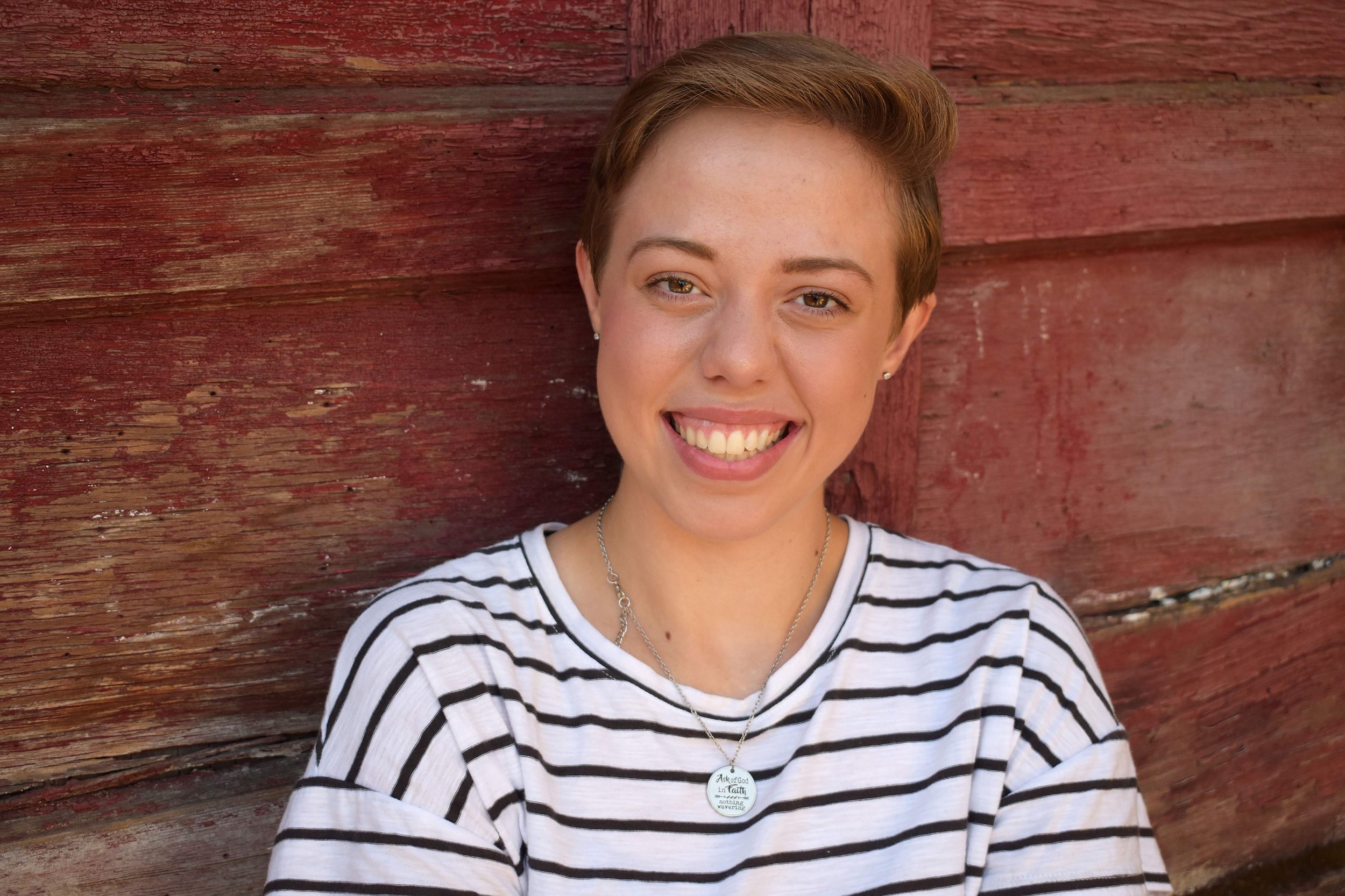

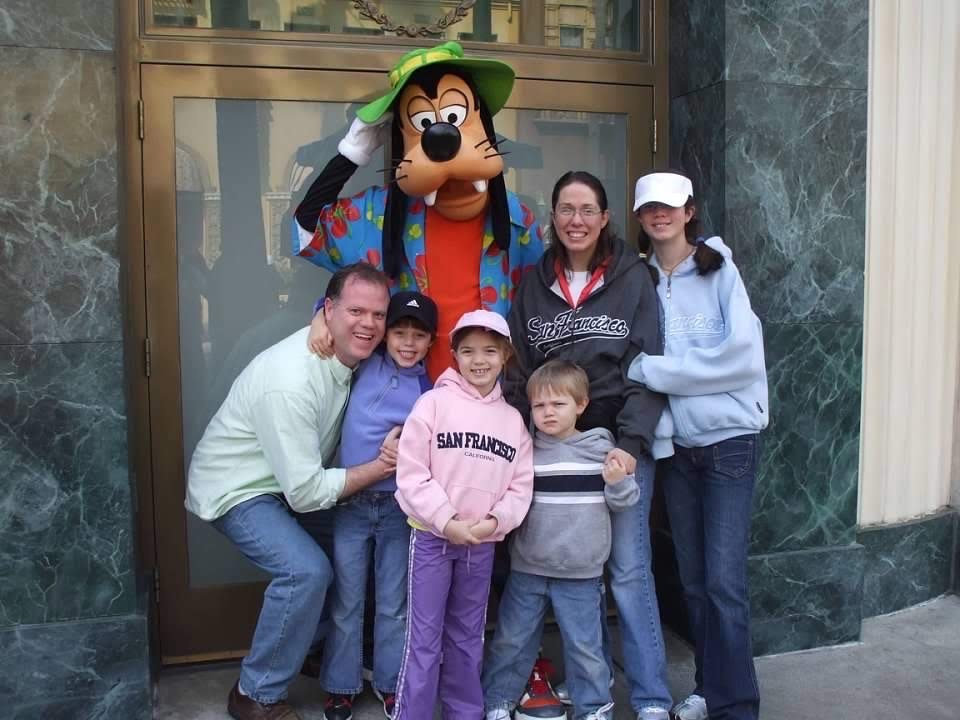


VIENNA BOYES
23-year-old artist, musician, and filmmaker Vienna Boyes grew up in a Southern California home most would call a breeding ground for creativity. Every corner of her childhood was infused with art, music, and the permission to dream. “That was how we were taught to cope, express ourselves, aspire,” she says of her family’s ethos… Vienna realized she was gay at 12 years old. Looking back, she remembers experiences as young as first grade where she was drawn to girls and developed early crushes. From a young age, Vienna also observed an older brother experiencing extreme anxiety, mental health problems, and seizures so intense he had to start online school. This brother soon after came out as gay. When young Vienna heard his story, she quietly realized that was her story, too.
23-year-old artist, musician, and filmmaker Vienna Boyes grew up in a Southern California home most would call a breeding ground for creativity. Every corner of her childhood was infused with art, music, and the permission to dream. “That was how we were taught to cope, express ourselves, aspire,” she says of her family’s ethos. Creativity wasn’t just encouraged—it was the language her family used to make sense of the world.
Each now an artist of their own variety, Vienna and her four older brothers were also brought up in a “super religious” household. Her dad (who works in fashion) has been in a bishopric much of Vienna’s life; and since the family’s move almost a decade ago to Provo, UT, now serves as bishop of a BYU student ward. Vienna’s mother (a painter) was her Young Women’s president both in San Clemente, CA and then again in Provo as soon as they moved during Vienna’s high school years. Vienna says she’s “always felt very sensitive to energy, divinity, and the presence of love in the world. Growing up in a religious family, that aligned well with me and was easy to take in.”
At the same time, Vienna realized she was gay at 12 years old. Looking back, she remembers experiences as young as first grade where she was drawn to girls and developed early crushes. From a young age, Vienna also observed an older brother experiencing extreme anxiety, mental health problems, and seizures so intense he had to start online school. This brother soon after came out as gay. When young Vienna heard his story, she quietly realized that was her story, too.
“Watching my family navigate that was fascinating, because there hadn’t been anyone else in our family to come out as gay,” says Vienna. Witnessing the difficulties her brother encountered with his mental health and eventually leaving the church also terrified Vienna as to what might happen if she eventually came out, as the only daughter in the family and caboose to a tribe of brothers who “adored me and put me on a pedestal like this life was made for me.” Vienna told her mom about her attractions at age 13, but then dropped it, unsure of what life would look like if she didn’t fulfill expectations or have a husband.
Throughout middle and high school, Vienna knew being gay “was part of my life but I also ran from it so much. I dated a boy for a year, because I was so in love with my best (girl) friend.”
Vienna decided to go on a mission after high school. Prior, she had watched her mother become a huge ally for her brother, and loved how she spoke of the queer community. At the same time, internally, Vienna was experiencing anxiety, stress, and panic attacks almost weekly, realizing there was a significant something going on she couldn’t run from anymore. She started going to therapy, hoping to avoid going down a path of extreme mental health duress. Quietly, she navigated the juxtaposition of her identity with her religious upbringing in emotional prayers in which she realized she never felt her orientation was a sin or evil part of her; but she carried so much confusion as to whether the shame she felt was doctrine or society-induced. “I felt so broken at the time.”
Once Vienna realized it was physically damaging her body to not be authentic, she decided to come out to her older brother, and then to a few of her closest friends. She says, “Once I started coming out to people, I felt this thing I’m experiencing and person I am is light and goodness, and my intentions are pure. The way it feels in my soul is beautiful and true to myself.”
Then, Vienna went on a mission. Houston, Texas showed her a whole new world, and an unexpected part of the journey was how many openly gay people she’d encounter. While door knocking one day, one woman said she’d “never convert,” but invited Vienna and her companion over for dinner out of kindness, saying all people deserved to be treated like humans. At that dinner, Vienna got to know someone who’d become very important in her life. K* was queer, married to an ex-Mormon, seemed to already know everything about the church, and taught Vienna lessons she deeply valued, one being, “It’s more important to be honest than kind. Being honest is being kind.” During one interaction, K spoke about being gay, and seeing Vienna’s reaction, pointedly told her how there’s a beauty and joy in humanity in being yourself, and that you can find true joy even outside a religion. This was a new concept for Vienna, but one that allowed a mind shift that would later prove important.
Vienna also experienced some difficult moments in relation to the LGBTQ+ experience on her mission. One of the friends she’d made in the ward (who was gay) tragically died by suicide. In mourning, Vienna told her mission president about it. His offhand reply, “Oh, that’s too bad” felt eye-opening to Vienna, especially as she knew that her mission president had heard she herself was queer. She no longer felt safe turning to him for guidance on personal matters. While Vienna learned much and especially met many people she loved on her mission, she says stepping off the plane felt like “stepping into a new life.” She felt, “I gave the God I grew up knowing everything I possibly could, and it felt like my way of showing I really did try my best to do this. But I knew now was the time to set myself free from all the expectations I realized were not for me.”
In the first six months after her mission, Vienna’s mental health became worse than it ever had before. She says, “I started going to therapy, worried about suicide and so many things… I’d never felt so hopeless or so much loathing for who I potentially was. I felt if I couldn’t live the life I was expected to live, I didn’t want to live.” But luckily, at the same time, Vienna was surrounded by the support of a group of powerful friends. “We are deeply interdependent. Being able to rely on them and witness how their responses when I came out to them were so beautiful and affirming and hopeful and loving took me out of so many difficult situations. Just being able to rely on them in that way--I am grateful.”
Returning to therapy with “some amazing therapists” helped Vienna navigate future decisions, and eventually she started feeling the right one for her mental health was to stop attending church and do a fresh restart of her life. The hopeless abyss of her past was replaced by a hopeful image of what her future could look like, as she began to see representation online and in real life of “happy beautiful lives and homes with two women.” She says, “Finding it was like breathing—I became addicted to it. THIS is what I want. I felt like the lights had been off in portions of my soul, and I got to turn on all the lights and look at myself. And I thought, ‘This resonates. This is what people are talking about when they talk about love.’ All I’d suppressed I now get to have if I claim the autonomy I deserve.”
After her mission, Vienna did date boys and girls to experiment, but she landed on girls. She says, “I dated a really rad girl for a long time who I’d met through mutual friends, and everything slowly healed for me.” In the past two years, she’s solely dated girls and has had several relationships in which each has taught her a vital something about herself or love in general. She is now dating someone special.
While navigating her own journey, Vienna has also been co-directing and editing a feature documentary film called “Sanctuary,” about creating safe spaces for the LGBTQ+ community in society and religion. Interviewing various subjects who have likewise felt alienated by institutional intolerance proved a cathartic (and at times soul-crushing) experience for Vienna who has in real time been processing everything in her own life. “While doing that project, my other work, and dating girls, it’s felt like I’ve been running. Because everything was so exposed for the first time, tasting that feeling of freedom and authenticity unapologetically right next to excruciating grief – it felt like I was grieving, processing, healing.” But seeing the humanity in those she interviewed was “proof to me that love is boundless and belongs to every human – regardless of their background or anything. Every living thing belongs to it.”
In the process of meeting so many LGBTQ+ friends through PRIDE events, Vienna has developed a new perspective on living out loud. “To me, the queer community is so unbelievable, because to be proud of something society showers shame on and tells you not to be takes so much mindfulness and intention… On the other end of that, I experienced authenticity and joy, and the amount of love I feel in my body now.”
Coming to this fulness has not been easy in all realms, as while her family loves her and remains a close unit, Vienna has had to navigate tough talks at times. “The most vulnerable of the conversations I’ve experienced are within family – because the worth and value I get is so much more tender and intimate; so if they were to say something horrible it’d be way worse.” One family member in particular said some things that devastated Vienna after she first came out to them. Thankfully, her mother entered the room shortly after and held her while she cried. But since, Vienna has had poignant sit-down conversations with the family member that have been tough, tricky and ultimately healing as Vienna has been able to finally feel she is seen for who she is and not as a broken soul. “I’ve sat and cried, begging for understanding more times than I can count. It’s part of the journey, but so worth it.” Vienna is touched that now, this individual will text Vienna’s girlfriend just to see if she needs anything, and have sit down relationship conversations with and treat them the same as anyone else. Vienna says, “All the pain, shame, hard conversations that happened with family, leaving the religion I grew up with... All of it was made worth it because of the feeling I get to experience and how I get to live now.”
Vienna’s friend group has remained “so unbelievable.” She says, “Even though most of them are in the church, they are so understanding and seek to be present with my experience even though it’s different than theirs. Maintaining relationships when you believe different things is extremely valuable and does nothing but strengthen friendships, despite the odds.”
Art remains the centerpiece of Vienna’s life. Beyond her film work, she is in a band with nine of her best girl friends and they “play music constantly.” She says, “Music is my coping mechanism; it’s how I express emotion and navigate life. It’s the greatest blessing and tool in my life.” Their band, Girl Band the Band (aka Hardly Know Her) played in the Marriott Center and won BYU’s Battle of the Bands last year, and has booked other gigs throughout Utah. Vienna sings lead and plays guitar and bass, though she can play just about any instrument. The uniquely talented videographer and filmmaker also loves drawing, sculpting, and photography.
Always finding the beauty and the beat in the pain, Vienna says these lyrics (from “Life is Hard” by Edward Sharpe and the Magnetic Zeros) best describe the soundtrack of her life right now…
Life is something to behold
But if the truth is to be told
Let us not leave out any part
Do not fear, it’s safe to say it hear…
Come celebrate, life is hard
All life is all we are

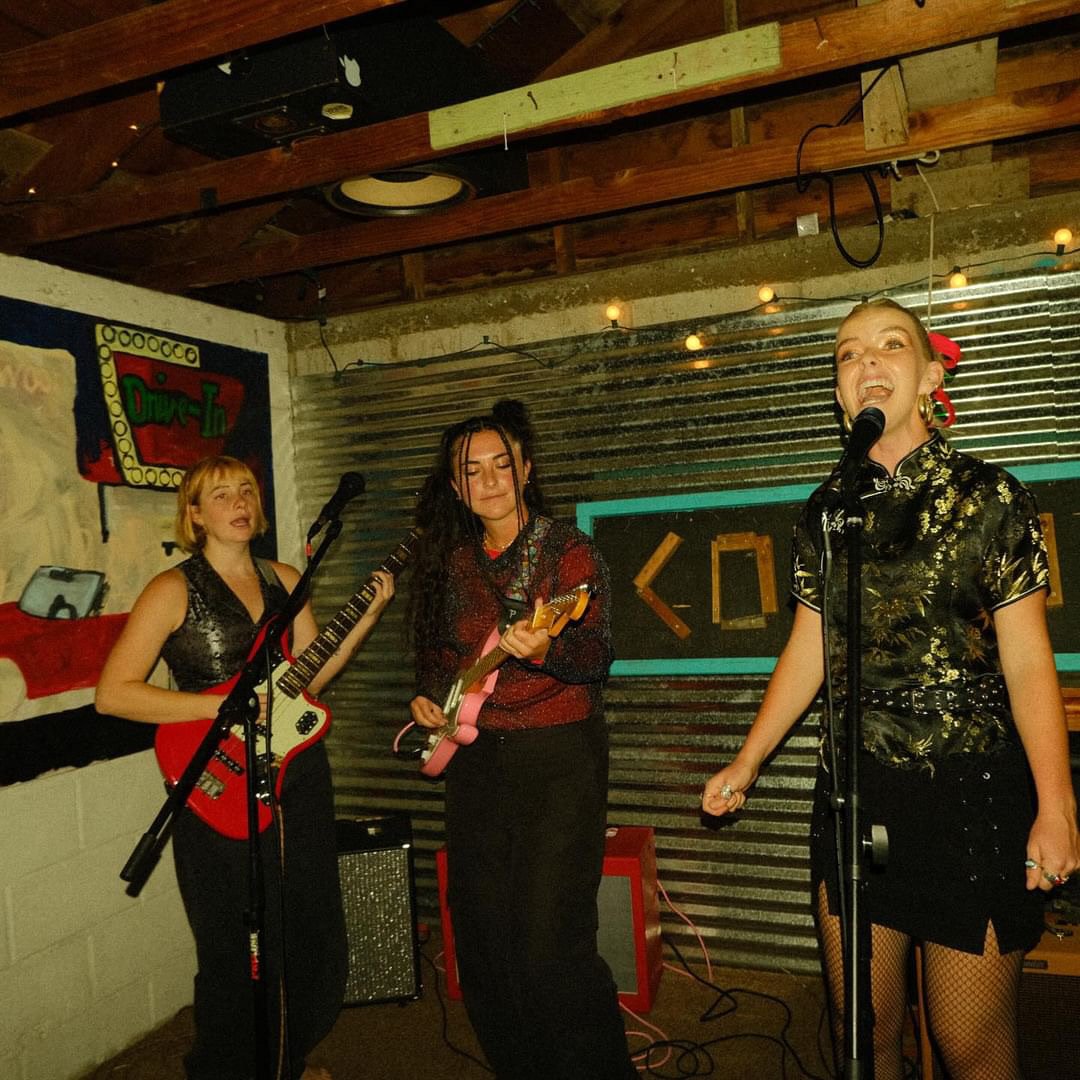
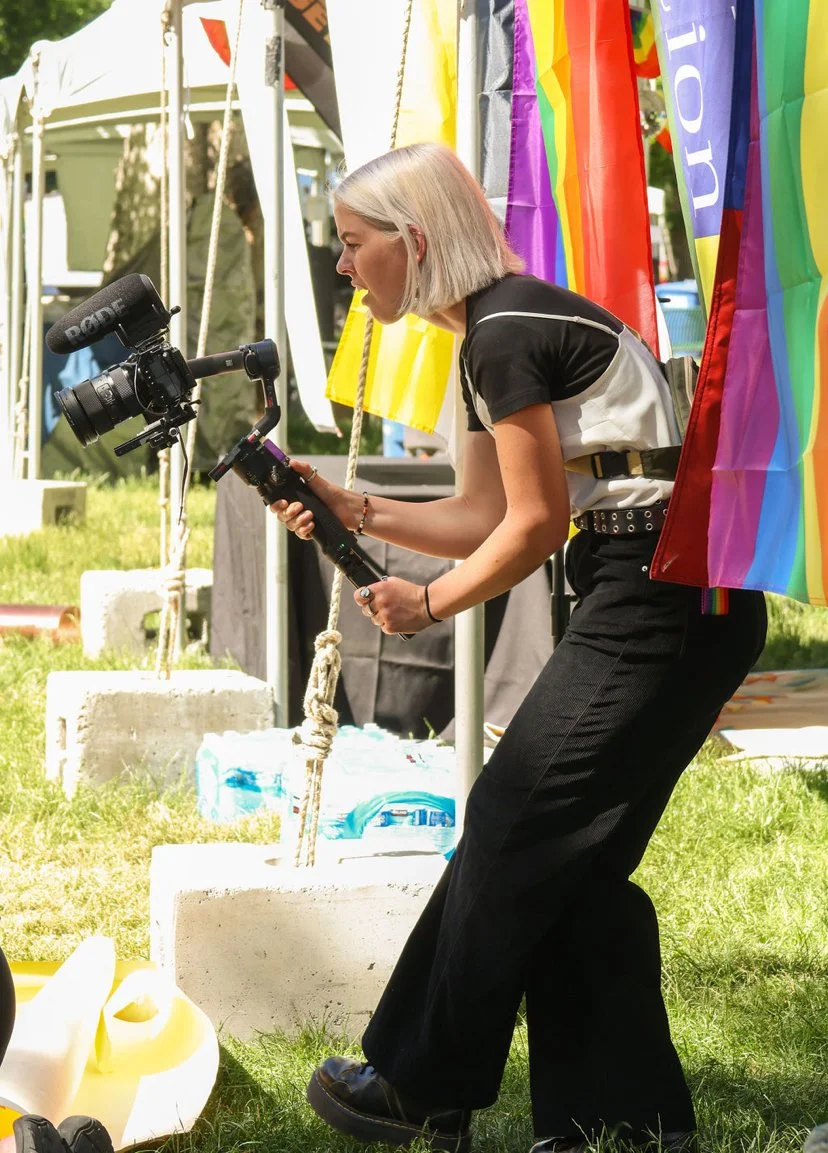
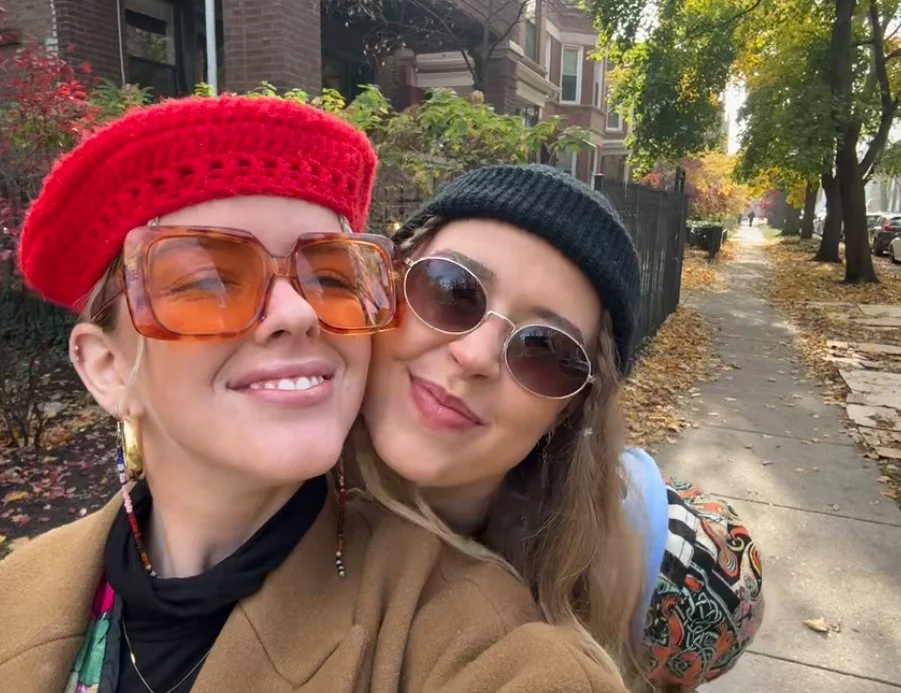

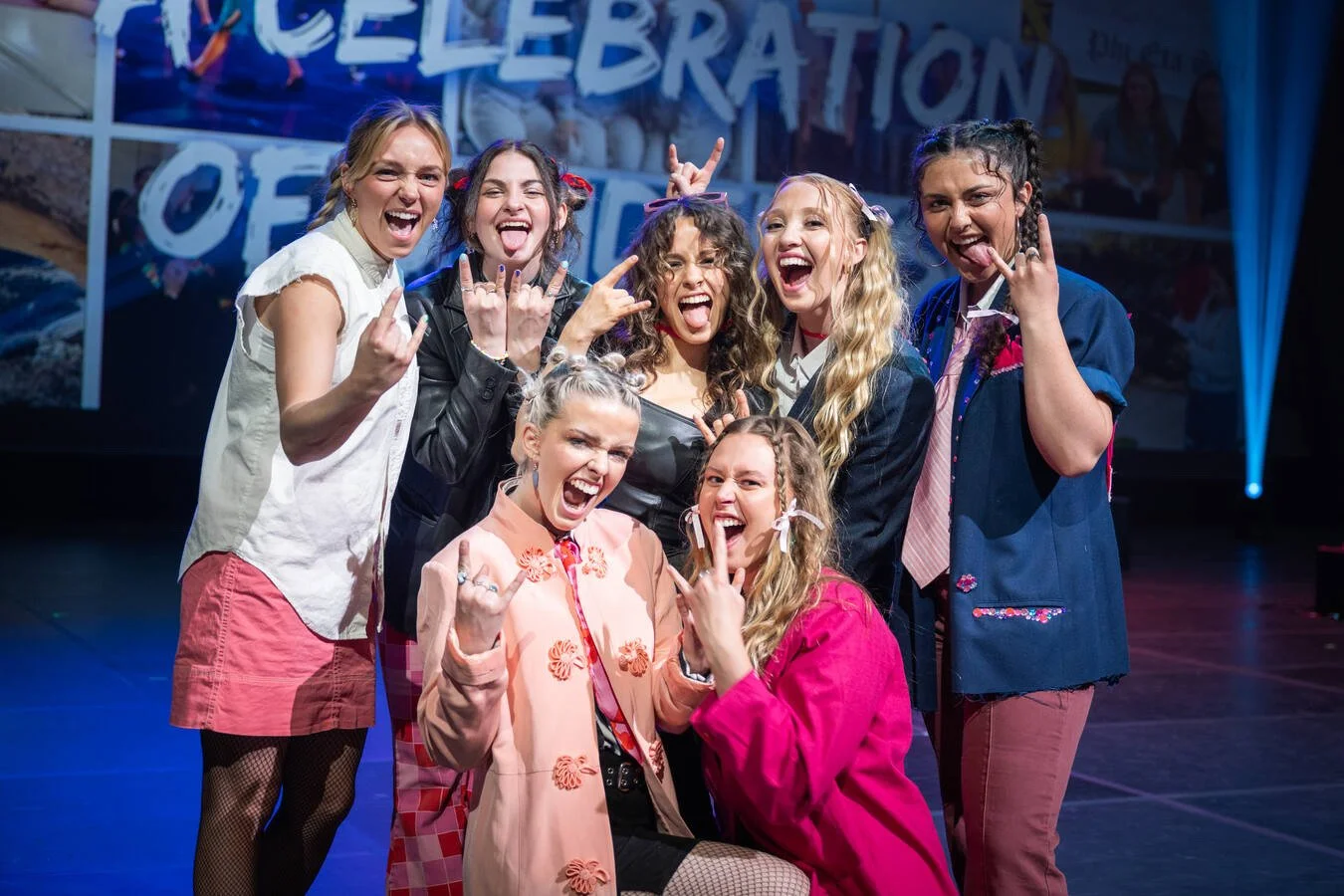
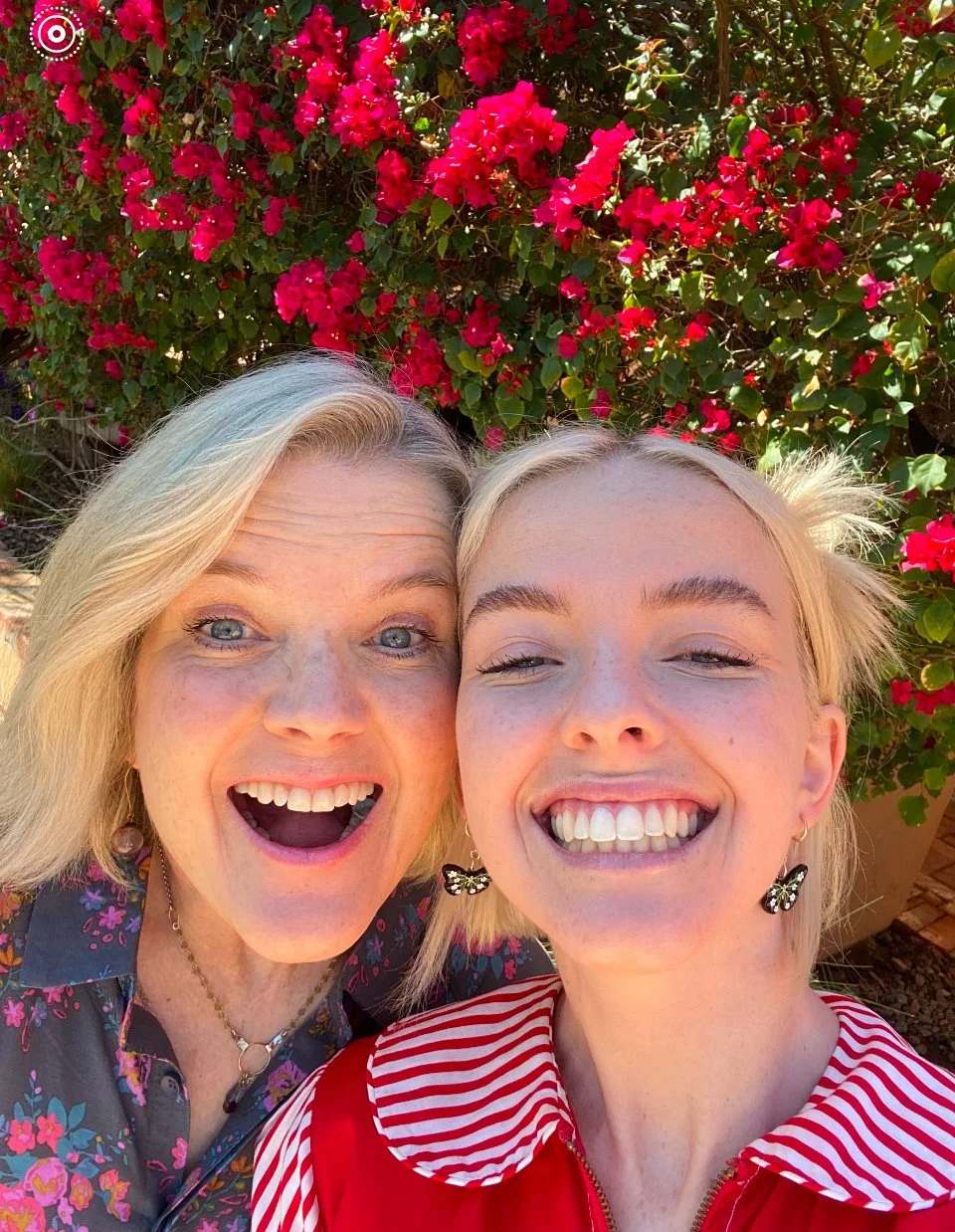
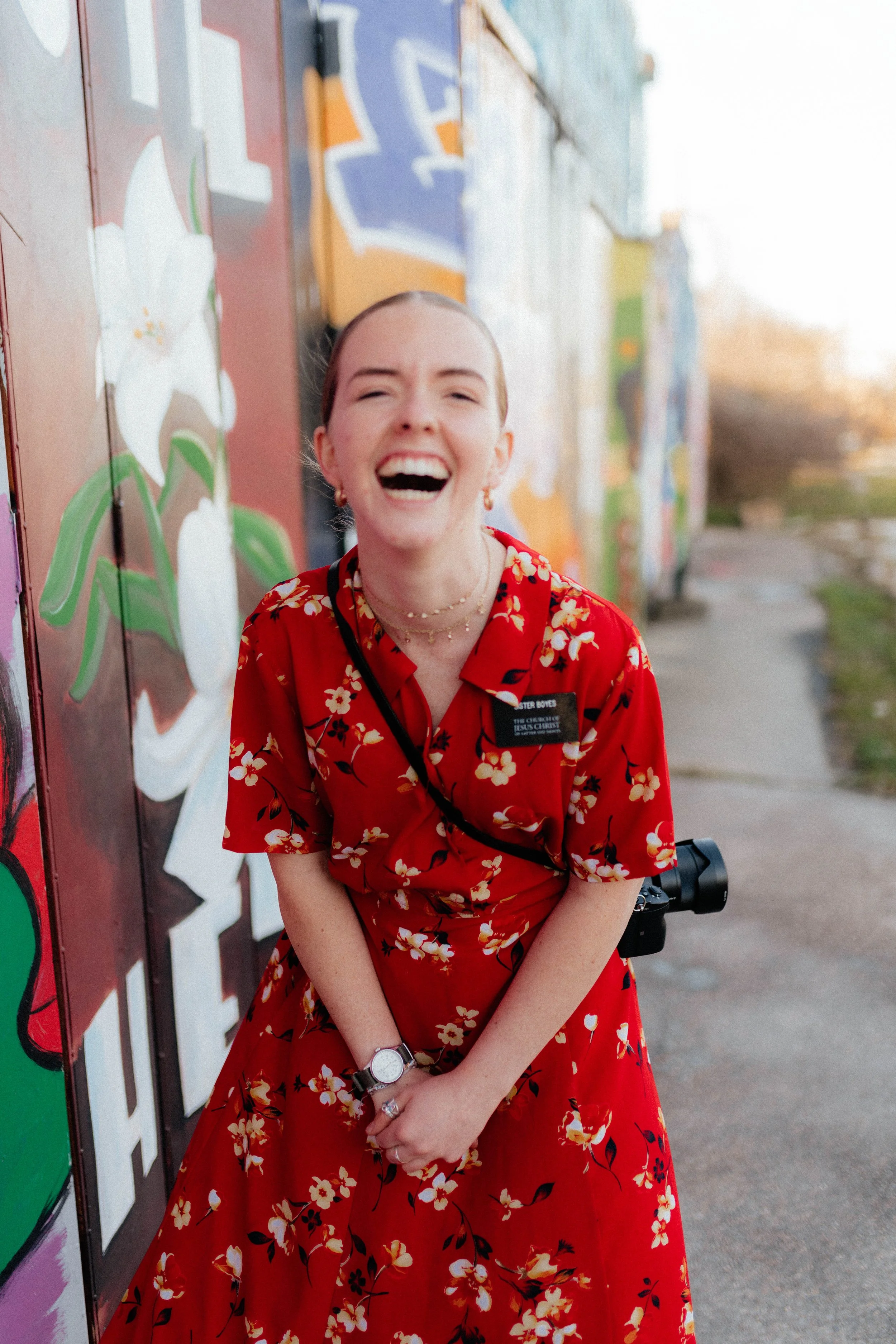

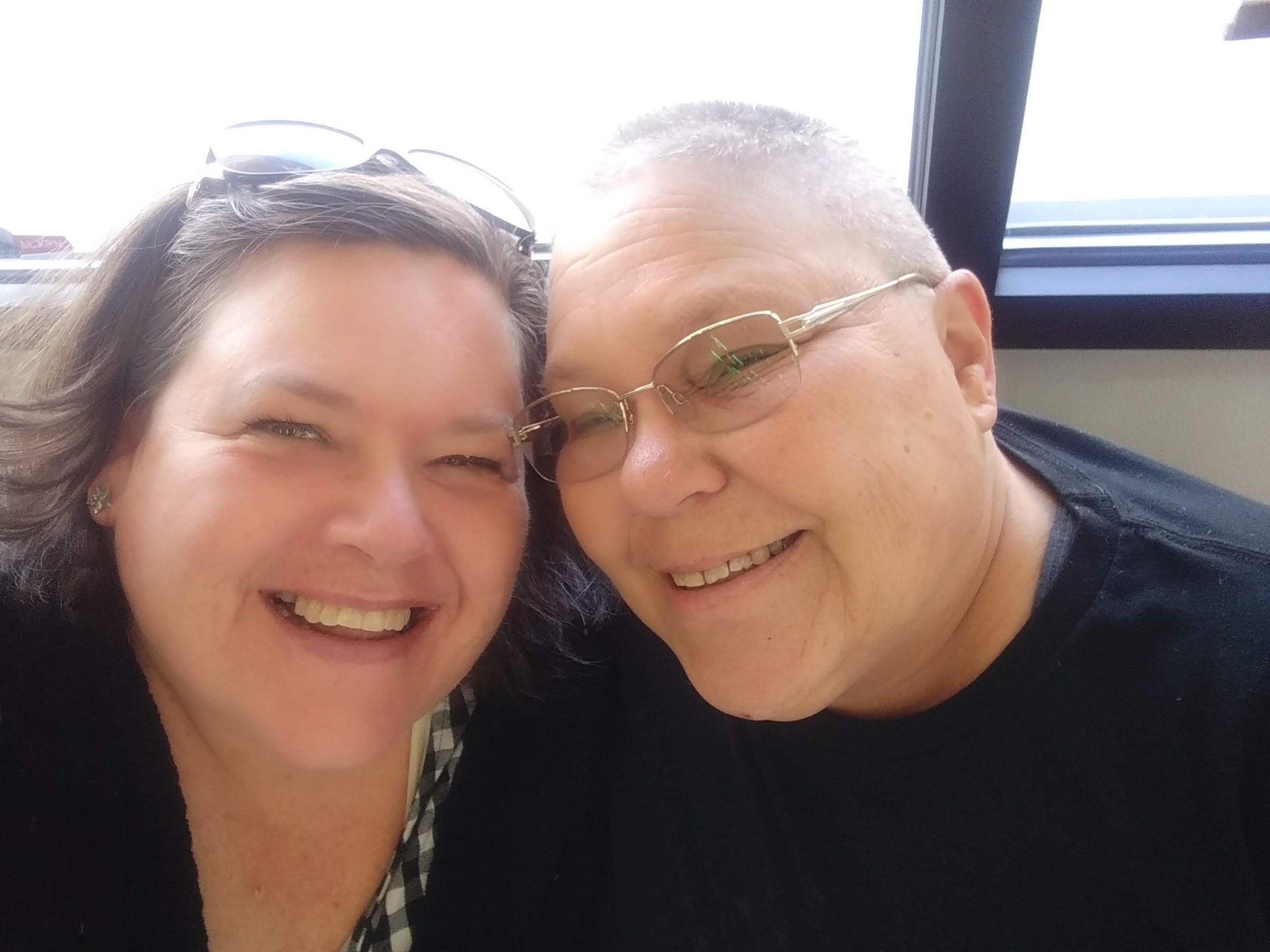
ADELLE GILES
Adelle Giles, 54, has a joyful laugh that emanates resilience. After a turbulent childhood and decades of navigating the complexities of relationships and identity within the LDS faith, only recently, she has found the peace and purpose she always felt she was lacking. She largely credits this to the guidance she felt along her journey pushing her toward her partner, Carmen. “Carmen is my true person in life… I want people to know this may not make sense to everyone, but it makes perfect sense to Heavenly Father and to us.” Adelle now identifies as bisexual and runs a Gathering group where she lives in Pocatello, Idaho. She attends church alongside Carmen in a welcoming ward. It’s a path she never allowed herself to pursue back in the 80s when she first had inklings about her attractions toward women. But she’s grateful for the bends and turns that have brought her here.
Adelle Giles, 54, has a joyful laugh that emanates resilience. After a turbulent childhood and decades of navigating the complexities of relationships and identity within the LDS faith, only recently, she has found the peace and purpose she always felt she was lacking. She largely credits this to the guidance she felt along her journey pushing her toward her partner, Carmen. “Carmen is my true person in life… I want people to know this may not make sense to everyone, but it makes perfect sense to Heavenly Father and to us.” Adelle now identifies as bisexual and runs a Gathering group where she lives in Pocatello, Idaho. She attends church alongside Carmen in a welcoming ward. It’s a path she never allowed herself to pursue back in the 80s when she first had inklings about her attractions toward women. But she’s grateful for the bends and turns that have brought her here.
Growing up in Everett, Washington, Adelle describes her upbringing as challenging. Her mother, who she refers to by her name Mary, ruled the household with a controlling, unyielding hand. “We had no room to grow or explore,” Adelle recalls. “Any thoughts that weren’t hers were unacceptable.” Her father, a firefighter who worked long hours, relied on Mary’s perspective to guide the family, leaving Adelle without the parental support she desperately craved.
The oldest of six children, Adelle bore the weight of responsibility in an often abusive home. She managed the household chores and shouldered the blame for anything left undone. While her siblings turned to her for guidance, Adelle’s own needs went largely unmet. She remembers turning to food for comfort, saying she “ate her feelings and developed a weight problem. I never felt good enough, wanted, or loved.” Despite this, Adelle found solace in her Young Women’s leaders at church, especially one who became a mother figure to her and recognized her talents and potential. “This leader was the first person to ever tell me I was pretty -- I was 16 years old.” The leader told the bishopric about the abuse going on under Mary’s rule, but Adelle says she was told, “Because it wasn’t sexual abuse, there was nothing they could do about it.”
As a teenager, Adelle excelled in leadership roles within her Young Women’s classes and cherished the four years she spent at girls’ camp. She was one of the area’s best babysitters and competed with another local sitter to see who could get the most repeat customers. Adelle loved singing, acting, and drawing, and she enjoyed her first paycheck job working at Baskin Robbins. However, these moments of independence and creativity stood in stark contrast to the challenges she continued to face at home.
Adelle was more than ready to leave the house and attend college and pursue a degree in education. It was the first time she felt free from her mother’s oppression. But her independence was short-lived. Although Adelle had graduated and was dating a boy she wanted to marry, Mary’s influence persisted, convincing Adelle to serve a mission shortly after her brother got his call, despite Adelle’s own doubts. “She wanted to be able to say two of her kids had served missions,” Adelle explains. “I wasn’t praying about it for myself—I was doing it for her.” Adelle caved to her mother’s demands to break up with her boyfriend and pack her bags for missionary service.
Her mission experience was challenging to say the least. Physical pain from back problems forced her to return home early, only to face false accusations from her mother that further isolated her. “She told the bishop I’d had sex with my boyfriend,” Adelle recalls. “The next Sunday at church, no one talked to me. It was like I had a big scarlet letter on my forehead.” Adelle’s grandmother confirmed Mary had been spreading lies about her. This betrayal marked a low point in Adelle’s life, leading to estrangement from her family and a period of homelessness. Besides her brother and father (who’ve both passed away), Adelle has maintained no contact with Mary or her four sisters.
While her childhood friends had always predicted she’d be the first one to marry and have lots of kids, things didn’t exactly go that way for Adelle, though it was her wish. In the years that followed her mission, Adelle found solace in teaching. She moved to Idaho and taught middle school science and special education, finding purpose in her work and joy in her students. She recalls often just “feeling happy to be alive,” and loved her church callings teaching gospel doctrine and playing the piano. But her personal life remained tumultuous. After years of praying for a husband, she met a man 26 years her senior, and married him after just two months of dating. One week into the marriage, she walked out of the house, disillusioned by the reality she had married a man who really just wanted a caretaker. “I remember sobbing under a tree and asking Heavenly Father, ‘Why this man’?” Adelle recalls. “And I felt the answer: ‘To teach you’.” The marriage was not the “happily ever after” Adelle had craved. Rather, it was fraught with emotional abuse similar to what she’d endured throughout her childhood, leaving Adelle with no choice but to pack up her bags after seven years and once again go out on her own and seek to rebuild.
It wasn’t until she turned 50 that Adelle began to piece together the puzzle of her identity. She moved to Twin Falls, Idaho, and after what she describes as a vision that made her future clear, she started looking into the idea of dating women—secretly at first, perusing dating sites online and unsure of how to reconcile her feelings with her faith. A turning point came in 2019 when Adelle revealed some of her own struggles with weight (at the time, she weighed 400 pounds), self-worth, and having been diagnosed with cancer in a Facebook chat for the “My 600 Lb Life” show. Producers from the Mel Robbins show saw her post and reached out and soon, she was flown out to New York by CBS to be on the show. “That trip saved my life,” she says. “I saw the sites of Manhattan, shared my story, and came back feeling like I could start again.” After she returned, Adelle finalized her divorce, lost weight, and overcame cancer, emerging with a renewed sense of purpose.
In late 2021, a spiritual prompting led her to pack her bags and move to Palmyra, New York, despite having no job or place to live. “I drove across the country and made it to New York with my last $100,” she says. “When I arrived, I woke up crying, and Heavenly Father told me everything would be alright.” Adelle encountered a woman that day who befriended her and offered her a place to stay. She soon found a job, but after six months, she felt prompted to return to Idaho. Though reluctant, she obeyed, trusting that all would work out.
Back in Idaho, Adelle’s life took another unexpected turn. She met Carmen, a woman from Texas who reached out via Facebook. Carmen asked about the “beautiful light in Adelle’s eyes.” She wanted to know how she could have what Adelle did. Adelle replied it was the gospel. Their friendship deepened, with nightly calls and messages about the church and so much more. When Adelle fell ill, Carmen packed up her life and moved to Idaho to care for her. “I knew we had feelings for each other,” Adelle says. “But I was afraid to admit it. Growing up, I’d been taught that those feelings were wrong.”
It was Adelle’s best friend Sara who gave her permission to embrace her truth. “She met Carmen and said, ‘Adelle, you can love her. She’s part of your wolfpack’.” With Sara’s encouragement, Adelle allowed herself to acknowledge she had fallen in love with Carmen. “She’s my person,” Adelle says. “I know Heavenly Father brought us together.” Adelle has also loved observing Carmen’s spiritual path, saying, “The gospel softened her, she’s the most wonderful person I’ve ever met.”
Today, Adelle and Carmen share a home and life filled with faith and love. Carmen, who was baptized in 2024, has become an integral part of Adelle’s faith practice and church community. Another gay couple (men) attend Adelle’s and Carmen’s ward and Gathering meetings, which has been helpful to building their sense of belonging.
“We always include Heavenly Father in everything we talk about. She has so much to give; people at church flock around her. I’m very lucky. Not a lot of people in life get to meet their true partner.” Adelle continues, “She’s a provider, a protector, and the best person I’ve ever met. Heavenly Father knew I couldn’t be with a man anymore. Carmen has given me a sense of stability I’ve never had before.”
Adelle’s journey has been anything but conventional, but she sees it as divinely orchestrated. “Not all of us will marry the opposite sex or have children,” she says. “But that doesn’t mean we’re not living according to Heavenly Father’s plan. He loves all of us exactly as we are.”
Moving forward, Adelle is excited to introduce Carmen to others as her partner. “We’re a team, a pair, a package deal,” she says. “Heavenly Father showed me who’s what waiting for me – whatever happens, I’m bringing Carmen along. We don’t know what will happen, but we know we’ll be together forever.”


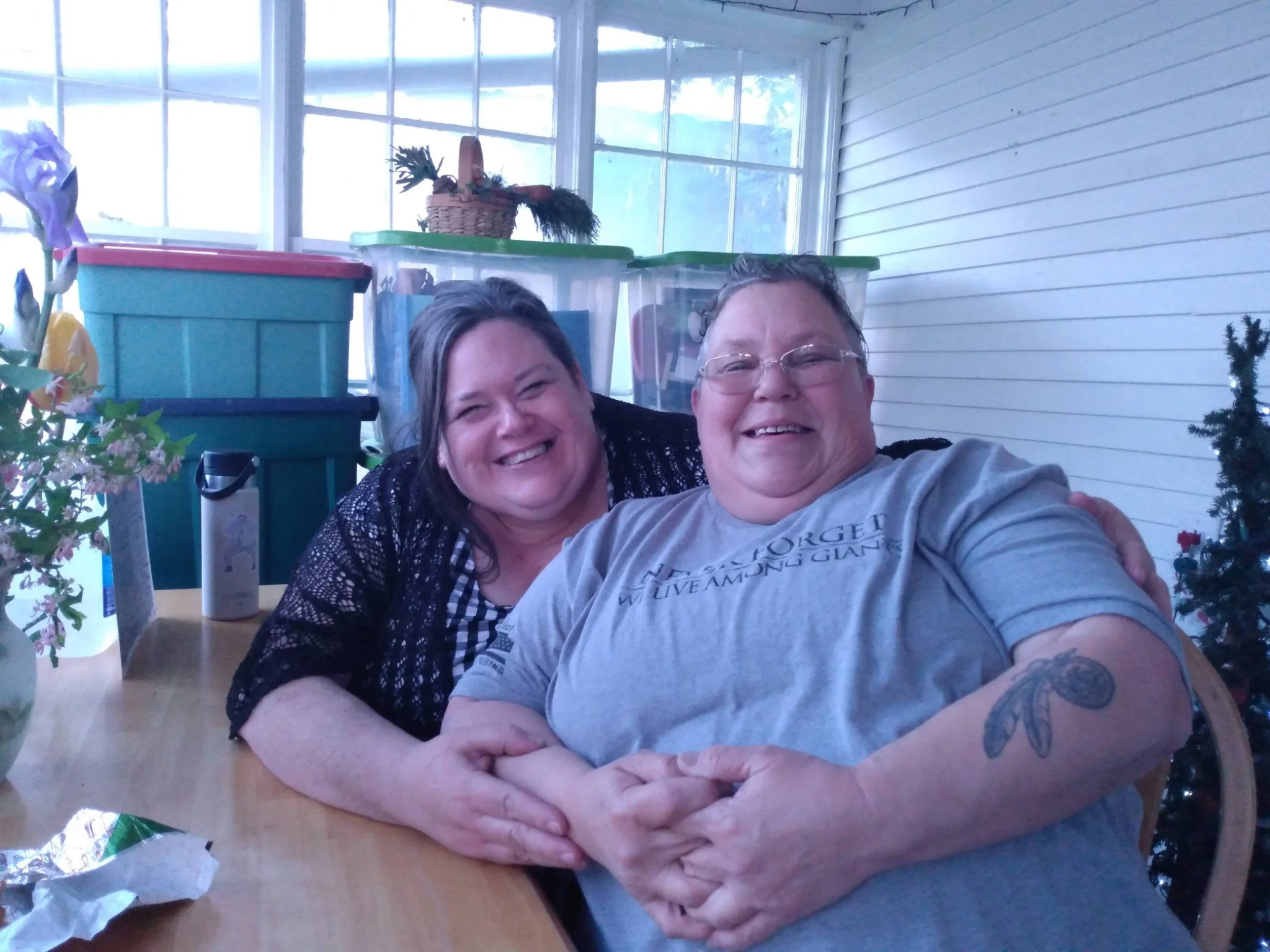
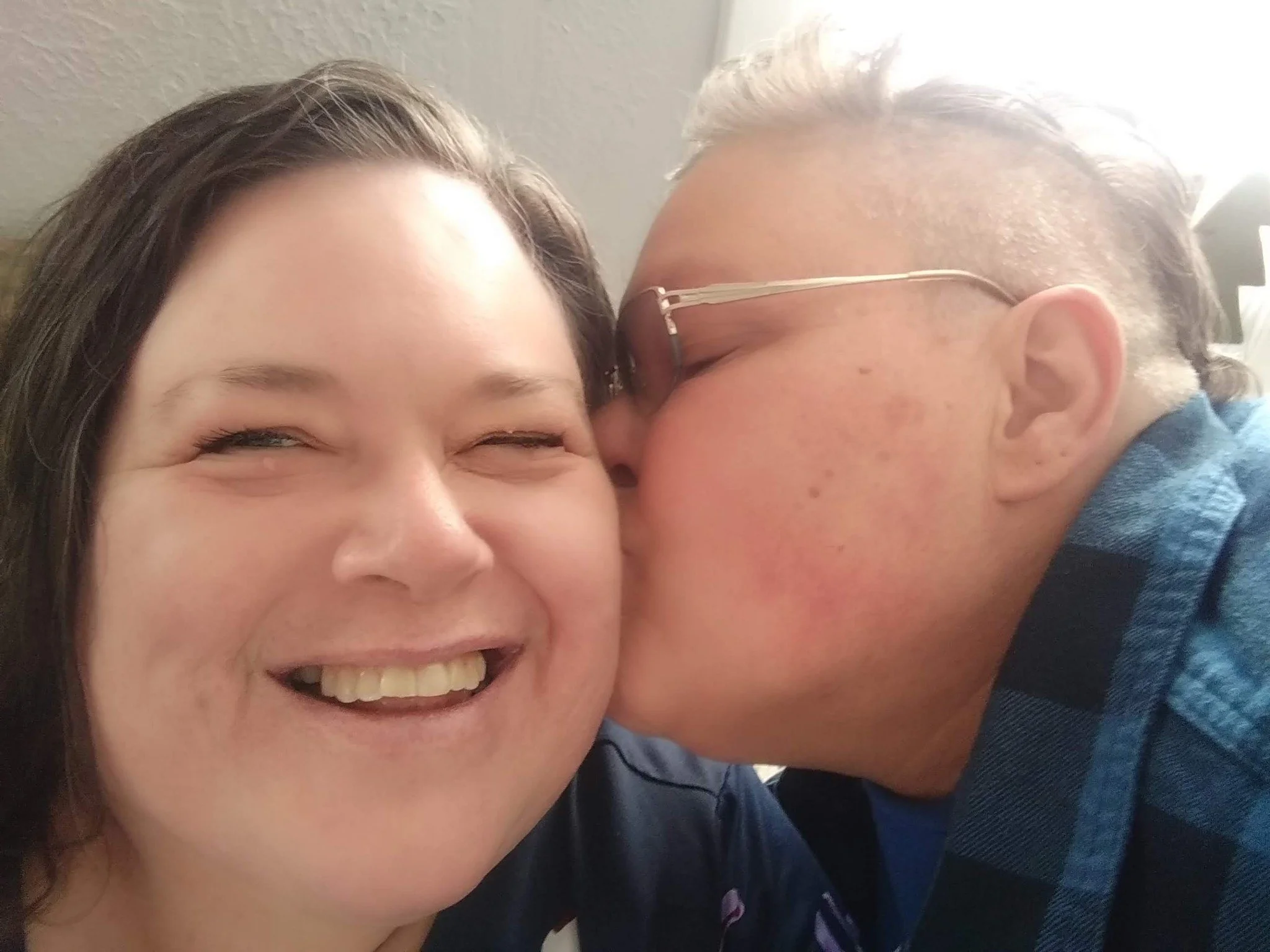
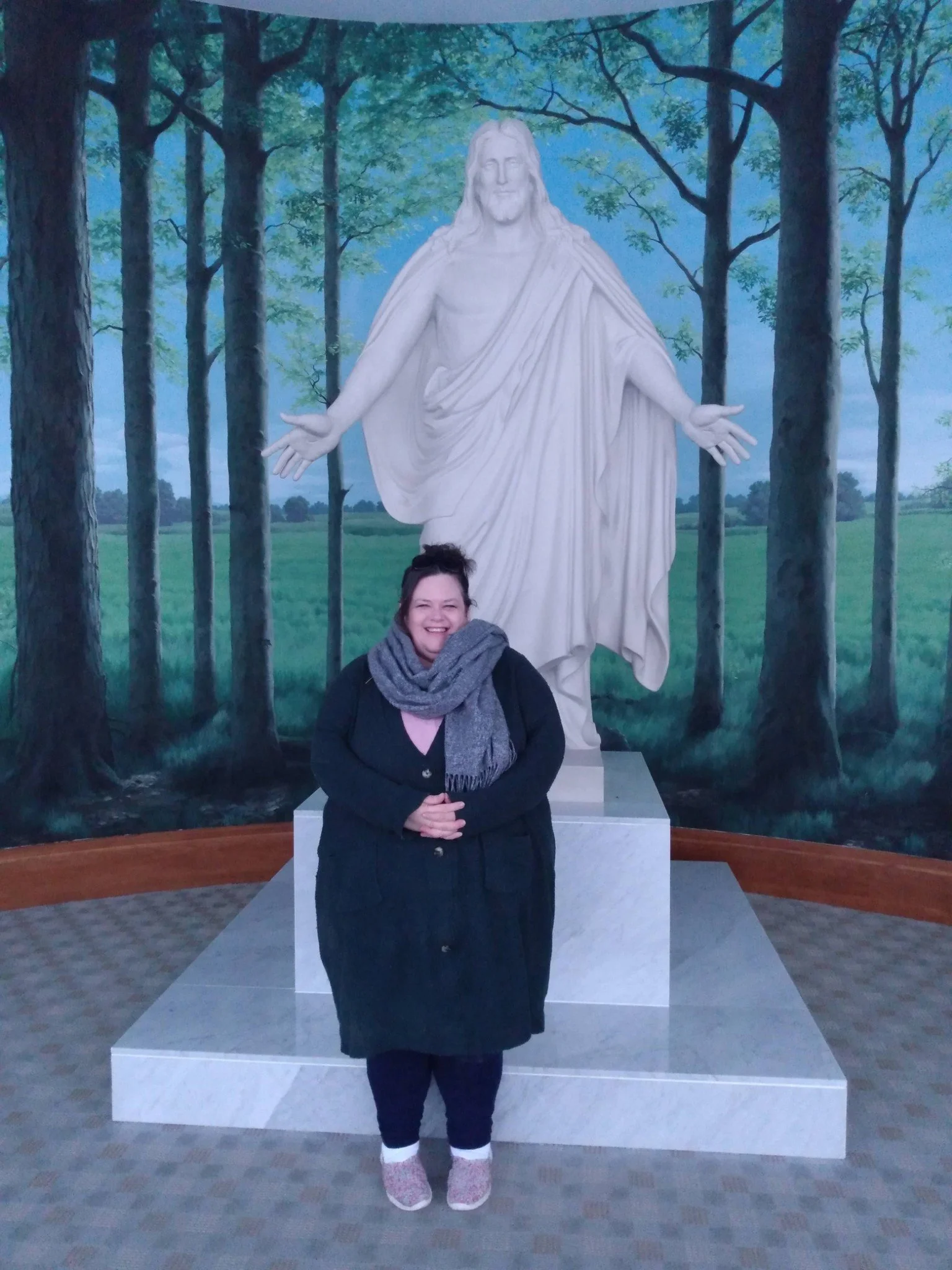
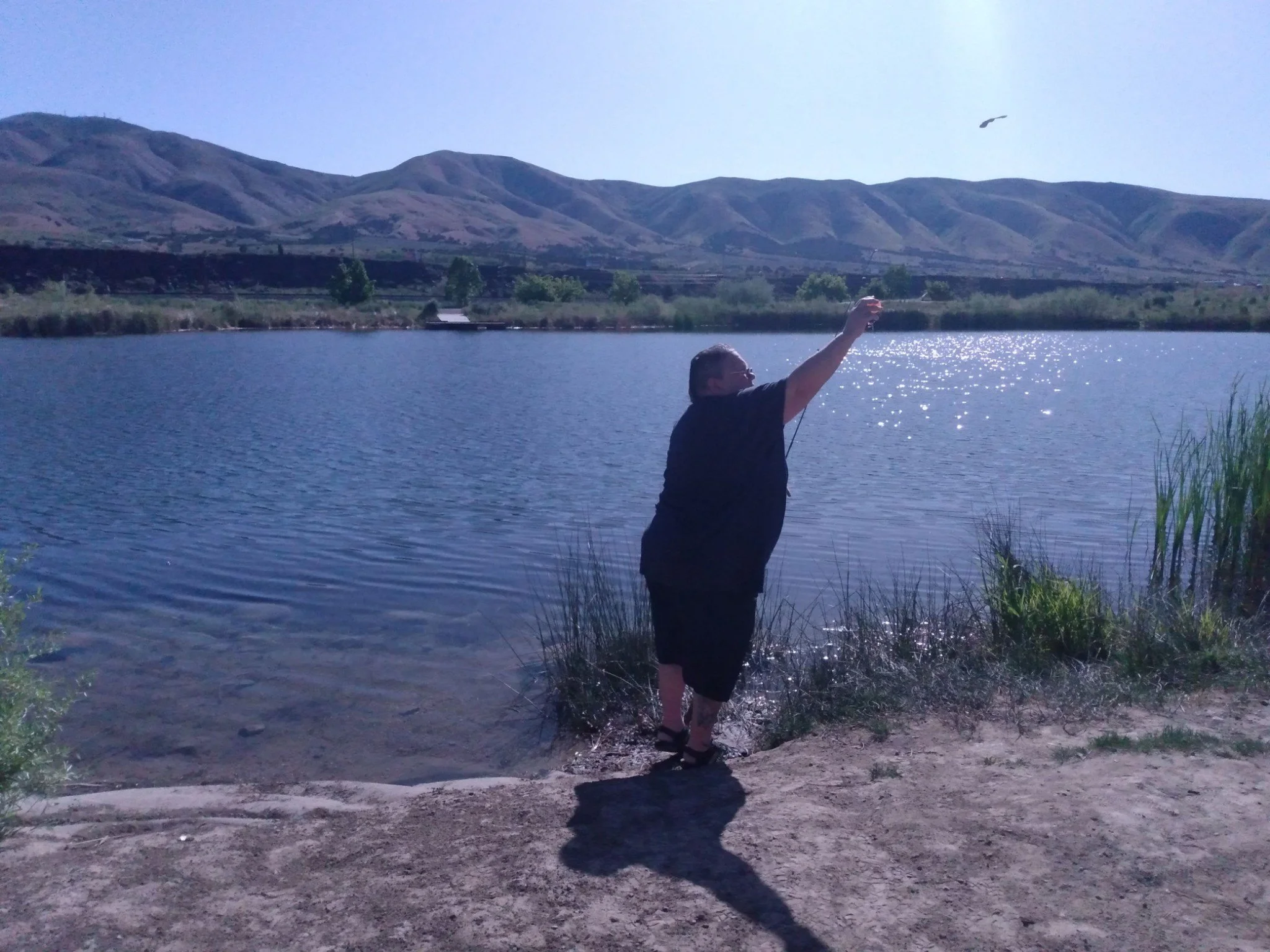
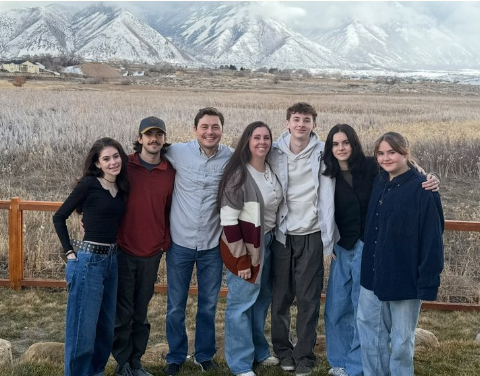
THE BALDWIN FAMILY
Natalie Baldwin has spent her life ensuring things run smoothly—whether as the administrative assistant to the Dean of UVU’s College of Health and Public Service where she currently works, or as the heart of her home in Salem, Utah, where she and her husband, Briggs, are raising five children. But her life’s journey has taught her that even the most careful planning cannot account for the unexpected. Diagnosed with Chronic Myeloid Leukemia in June 2022, Natalie’s health required her husband’s career overseas with the State Department to come to an abrupt halt; until she can hit certain markers, they cannot return to expat living. Instead, the Baldwins were forced to leave their last assignment in Turkey to move near her family in Utah where she could focus on her health. The past ten years of both adventure and change have left Natalie grappling with profound questions—about faith, culture, family, and the unique challenges of raising two LGBTQ children within the framework of her Latter-day Saint beliefs.
Natalie Baldwin has spent her life ensuring things run smoothly—whether as the administrative assistant to the Dean of UVU’s College of Health and Public Service where she currently works, or as the heart of her home in Salem, Utah, where she and her husband, Briggs, are raising five children. But her life’s journey has taught her that even the most careful planning cannot account for the unexpected. Diagnosed with Chronic Myeloid Leukemia in June 2022, Natalie’s health required her husband’s career overseas with the State Department to come to an abrupt halt; until she can hit certain markers, they cannot return to expat living. Instead, the Baldwins were forced to leave their last assignment in Turkey to move near her family in Utah where she could focus on her health. The past ten years of both adventure and change have left Natalie grappling with profound questions—about faith, culture, family, and the unique challenges of raising two LGBTQ children within the framework of her Latter-day Saint beliefs.
Natalie and Briggs’s children range in age from 13 to 22. Their eldest, Easton, is 22 and a manager at a popular chain restaurant. Emery, 20, a manager of a popular food truck, came out as bisexual at 15, but now identifies as pansexual. After exclusively dating women for a while, she now plans to one day marry her current boyfriend. Eli, 18, is a junior in high school, and Estelle, 13, is in middle school. Eloise, a 15-year-old sophomore, is in the process of exploring her identity and currently identifes as bisexual with just the “occasional” moment of attraction to boys. The Baldwin’s family dynamic has been shaped by love, questions, and a steadfast commitment to embracing their children for who they are.
For Natalie, the first major shift came when Emery came out at 15. Having always been open with her parents until then, Emery had given them a small “heads-up” about a year before her formal declaration, processing much of her identity internally. When she finally came out, Natalie’s immediate response was rooted in her conviction: “I know God doesn’t make mistakes. If you’re made that way, it’s the way you’re supposed to be. We’ll love you unconditionally regardless of any decisions you make.” Those words became a mantra, grounding Natalie through the ups and downs that followed.
Yet there were challenges. Living in Cairo at the time, Emery’s sexuality became a complicated and, at times, dangerous issue. In the predominantly Muslim country, where homophobia was rampant, Emery was outed by a peer. The news reached a church leader, who responded by incessantly preaching the Family Proclamation. Of that time, Emery says, “The year between realizing my sexuality, and finally coming out, I was battling some serious internalized homophobia. I couldn’t grasp the fact that I was queer, but I was also supposed to be a righteous daughter of God. It didn’t make sense to me that I could be both at once. I had a million questions, and so many bad days, but I was terrified to share any of these thoughts. My thought process was, ‘If I myself am having such a hard time accepting my own sexuality, how could anyone else’?” Feeling unsafe and unwelcome in a church community that for much of her childhood had taught her negative things about the LGBTQ+ community led Emery to eventually make the decision to step away from church entirely.
Though the family soon relocated back to the U.S., Emery has not returned to church, but Natalie remains proud of the strong, empathetic woman her daughter has become. Emery likewise is grateful for her family’s unconditional support, saying, “Feeling like you don’t belong, and feeling so utterly lost and helpless, is not an easy thing to come back from, especially when a lot of those feelings were created by peers and teachers from what was supposed to be my church, and my community. While I have nothing but love for the church, the hurt that I felt from individuals in the church is one I don’t think I could ever forget. Every single day of my life, I am eternally grateful for my parents who made the choice to learn more, and love more, rather than to judge and to try and teach.”
Of her eldest daughter, Natalie says, “She has a good head on her shoulders. It didn’t take her long to realize who she is doesn’t align with the church, but that doesn’t make her a bad person. The church is just not a good fit for her. Her sexuality, and Eloise’s, have given them an empathy for others we will never fully understand. They have the ability to see people in ways I never could.” The Baldwin’s oldest son has labeled himself “nonpracticing, but with a testimony.” While he occasionally attends church, Natalie points out that often young men feel out of place when, like Easton, they didn’t serve a mission. He “really doesn’t like the outspoken conservative culture in the church, but still has a love and respect for the gospel,” says Natalie who adds that Easton said he never plans on labeling himself an ex-Mormon.
For Natalie, the process of supporting her children has been deeply personal. She says, “I’m not afraid to ask questions, or of the answers that I’ll receive. I trust myself, my intuition, and my ability to hear God. I know God doesn’t make mistakes. The way these children come to us is the way they’re meant to be. Maybe sometimes it doesn’t align perfectly with gospel doctrine, but that doesn’t change the fact that they’re eternal beings with unique gifts and souls.” Briggs has had his own journey to see things through a different lens, thanks to his wife and daughters, and has grown to embrace and love the LGBTQ+ community.
Eloise, Natalie’s 15-year-old, is currently exploring her identity. Unlike Emery, who initially kept much of her early journey private, Eloise has been more open about her feelings from the beginning. She’s also benefitted from her older sister’s experiences and how they’ve prepped the family. Analytical and self-assured, Natalie says Eloise came to this earth like an adult, speaking in full sentences at age one. “Eloise has a strong sense of her worth. She knows she’s a child of loving Heavenly Parents.” That doesn’t mean her path has been without challenges. Recently, she called her mother in tears, asking to be picked up from seminary after a class discussion on good versus evil where another student included the LGBTQ community as an example of “evil.” Eloise has also been privy to conversations in which her peers have said LGBTQ people are mentally ill or just need to go to therapy. While Eloise’s seminary teacher has been a supportive ally, redirecting harmful comments and fostering a more inclusive environment, incidents like these still sting. Yet, Eloise remains resilient, determined to stay true to herself despite the occasional adversity.
Returning to Utah after years overseas presented its own set of challenges. The family had grown accustomed to the somewhat liberal and inclusive culture of the expatriate community. “Living among expats was a different world,” Natalie explains. “The schools were welcoming, the communities open. Moving back to Utah, we’ve had to face deeply rooted anti-LGBTQ sentiments and the realities of living in a predominantly conservative area. It’s made us all want to retract and keep to ourselves, not knowing who we can trust and who will be a safe space.”
For Eloise, navigating this environment in high school has been a learning experience. “She’s queer, she’s female, she’s liberal,” Natalie says. “It’s a triple whammy in this area. But she’s so bright, intelligent, and mature. She’s learning to decide when to speak up and when to let things go. That kind of wisdom is remarkable at her age.”
Natalie herself is no stranger to speaking out. Over the past two years, Natalie has become a visible advocate, not just for her children, but for all those navigating the intersection of faith and identity. Her ward itself reflects the complexities of her environment. Natalie describes her current congregation as very young and predominantly conservative. “We’re the old people here,” she jokes, noting that she and Briggs often feel out of place as what feels like the lone liberals in a sea of Trump signs and conservative culture. Yet, even in this environment, Natalie has found moments of connection. Her social media posts, particularly on Instagram, often address these themes, sparking private messages of support from some other members of her ward and broader community. “People thank me for being outspoken, but they’re afraid to say it publicly,” she shares. “They don’t want to face ostracization, but they’re grateful someone is saying what they feel. If I can make them feel less alone by being the one to speak up, it’s worth the target I’m putting on myself.”
Natalie’s hopes for the church extend beyond her immediate family. “I wish church leaders would genuinely try to get to know a variety of queer people,” she says. “Really know what they think, feel, experience, and then believe them. If they say they feel a certain way or have confirmation from God, don’t question them, just believe them.”
Through it all, Natalie’s love for her children has remained constant. She believes their unique journeys have made her a better mother and a better person. “I know without a doubt that God has guided us on this path,” she says. “Our family is exactly as it is meant to be. And I will never stop advocating for my children—because their worth is infinite, and their stories deserve to be heard.”

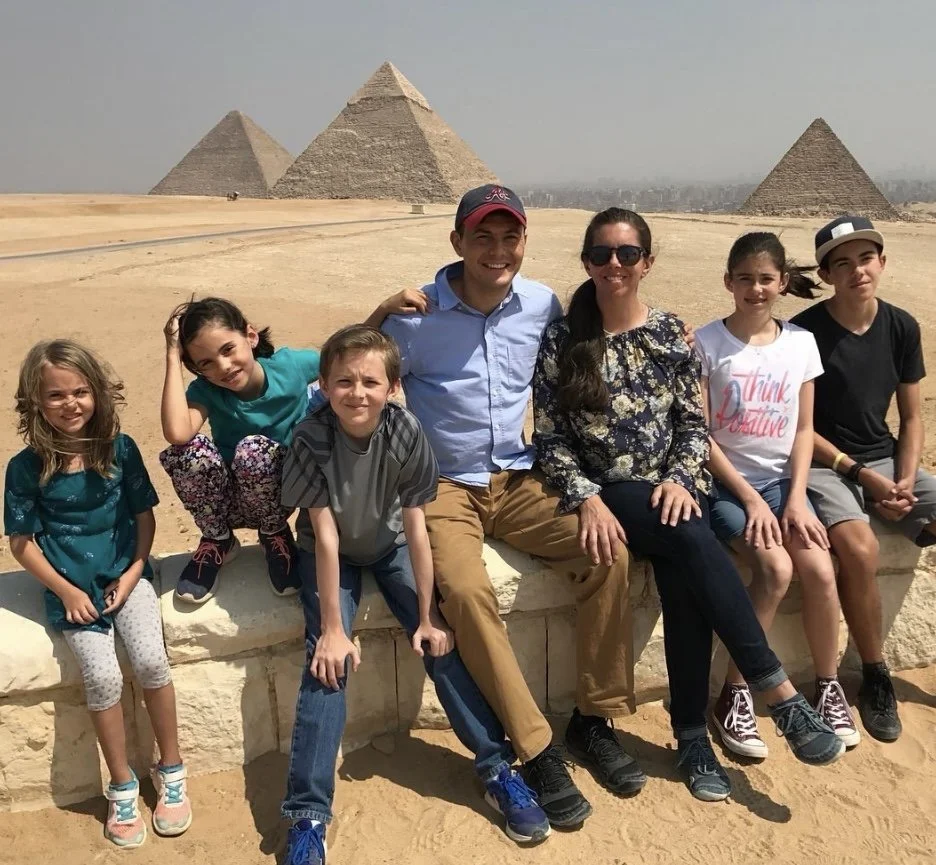
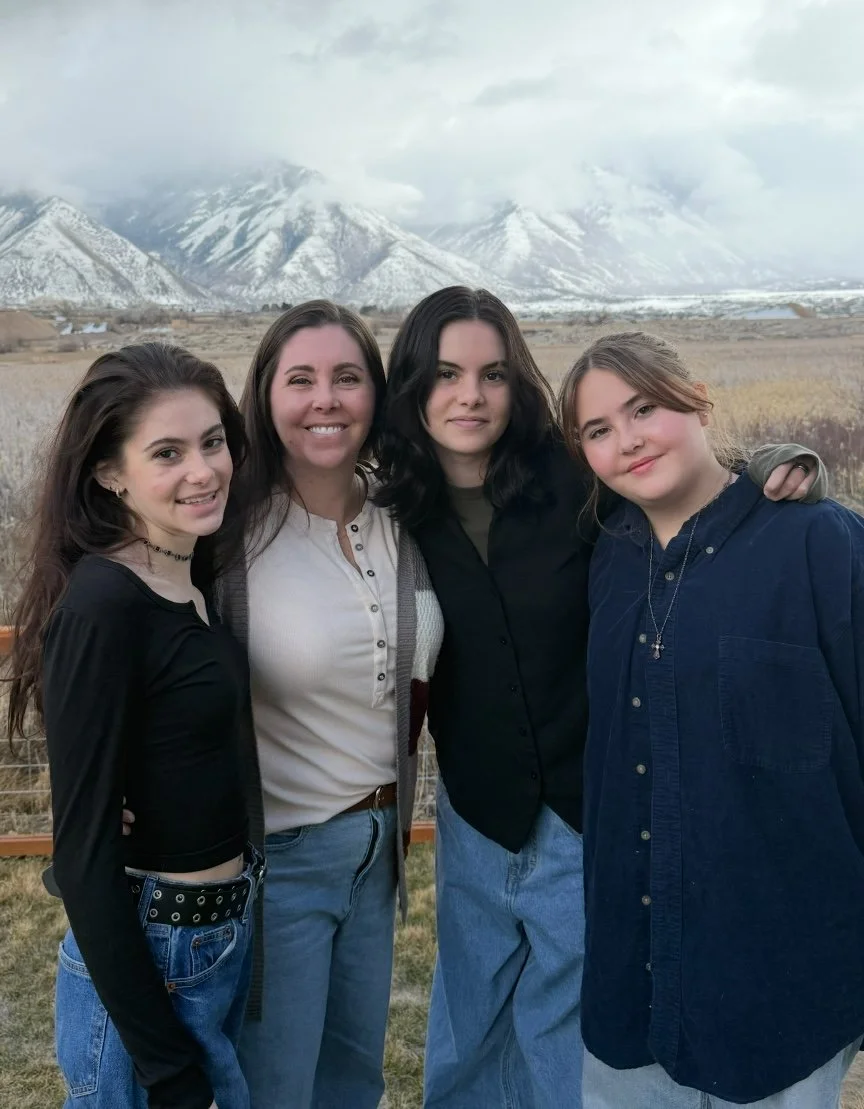
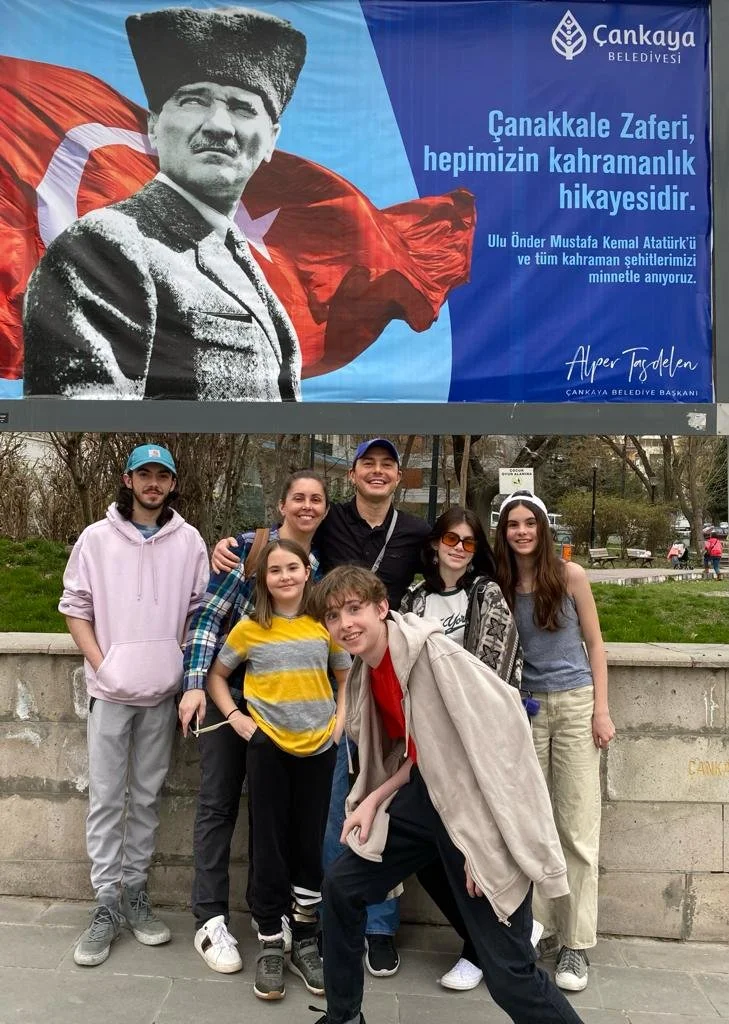

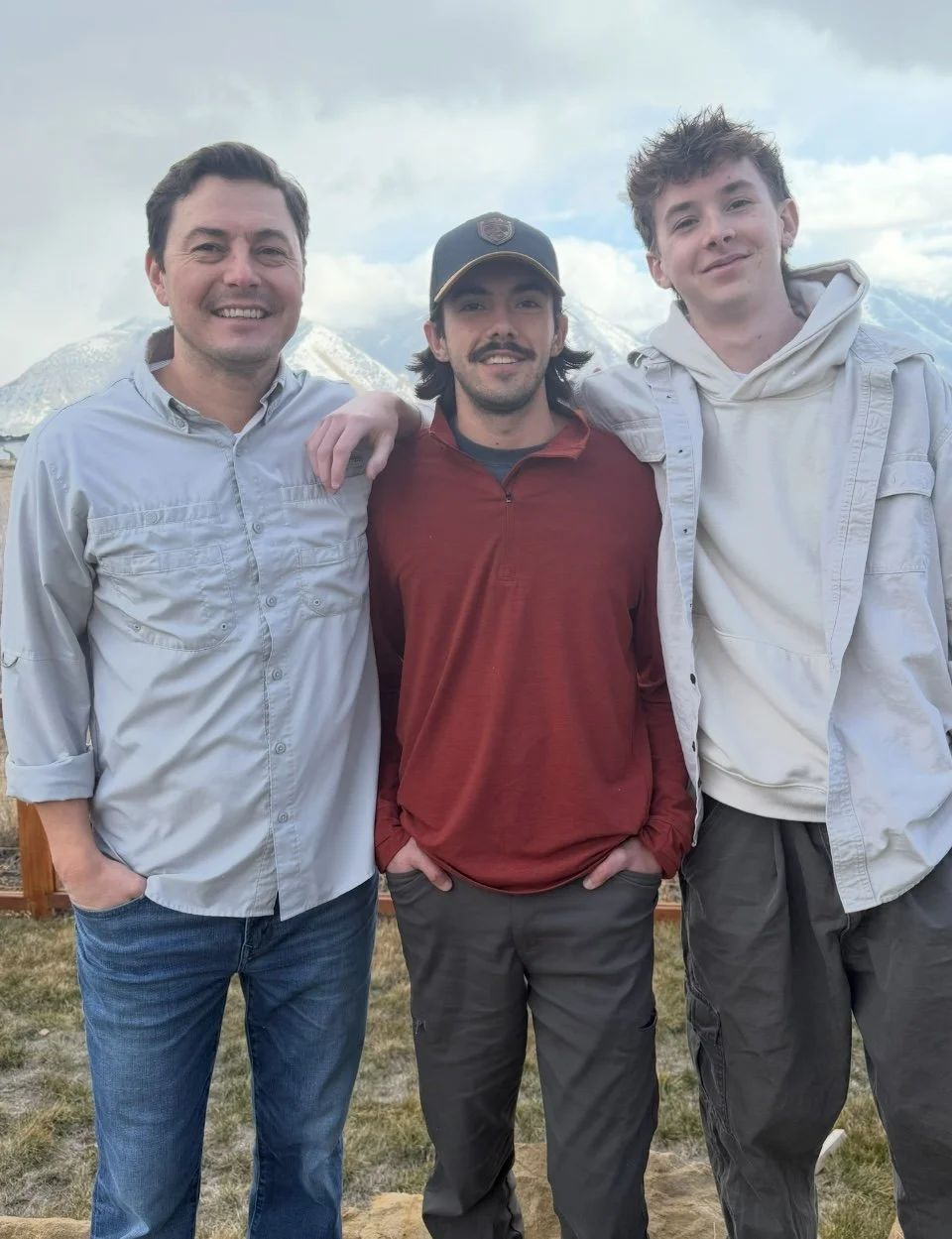
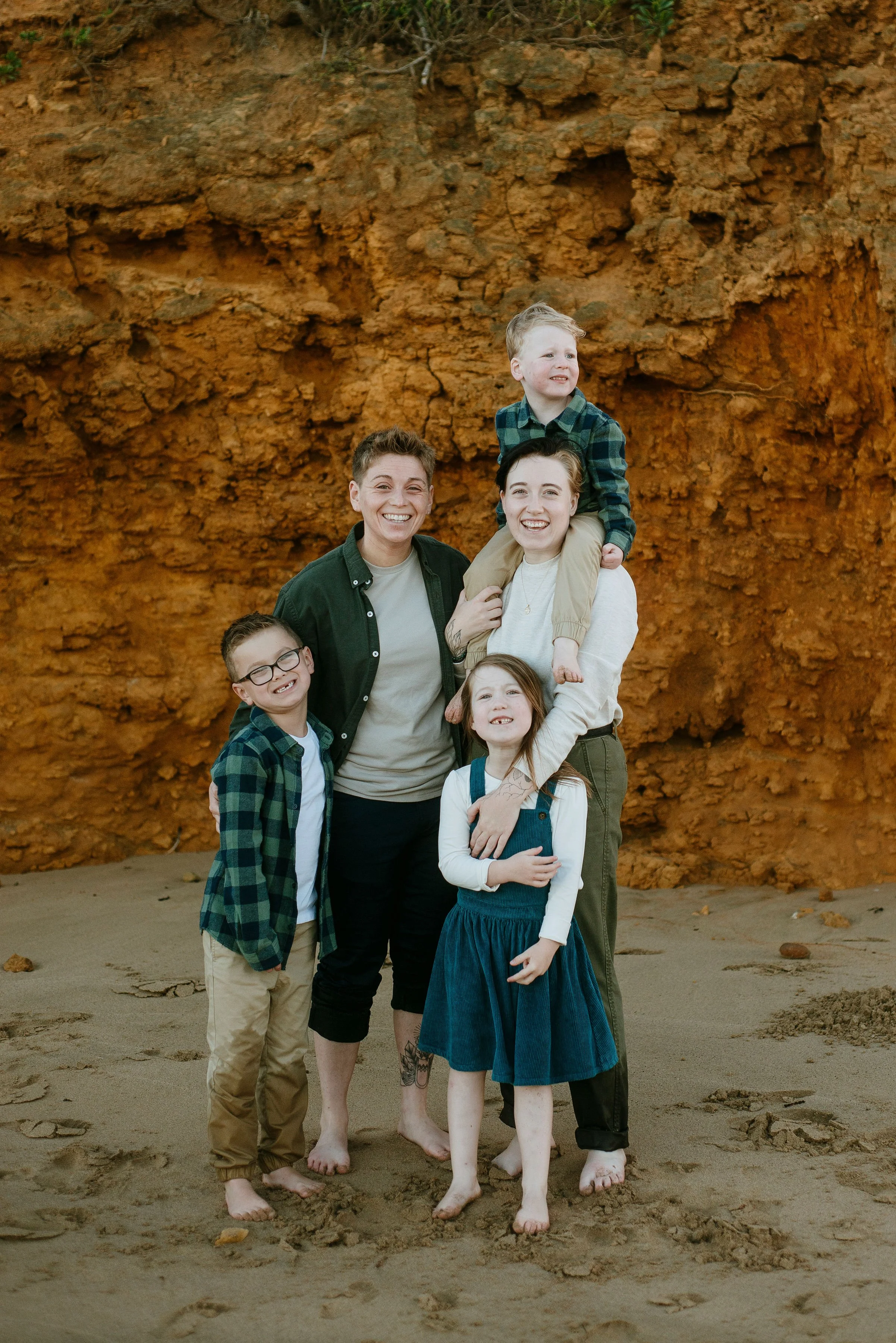
CHANTELLE RYATT
Down under in Melbourne, Australia, Chantelle Ryatt enjoyed a warm holiday season with her wife, Jennadene, and their combined three children, ages 5, 7 and 8. Last year was one to celebrate as the two were married in a beautiful, beachside ceremony on September 21. Standing on a cliff face overlooking a surf beach with massive crashing waves below, the haze of clouds offered a gentle mist as they gathered with the celebrant and the two photographers. The day prior, Chantelle had told Jennadene nothing would make her happier than to have the confirmation they were doing the right thing and to have her mother there. The latter was a difficult order as Chantelle’s mom had passed in May 2020. Yet, as the two said their “I Do’s,” it was undeniable to all present – including their atheist photographer – that there was a special presence felt that no one could deny. As the sun peeked out from behind the clouds, Chantelle felt the presence of her mom, great grandmother, both her grandads and uncle rejoicing, so happy for this union. Chantelle says, “To my mom, family was everything. Knowing she was on the other side, knowing what eternal families look like and rejoicing, was a beautiful confirmation.” She continues, “My wife is the person my mom wanted me to be with to teach me what I needed to learn. To grow, to develop, and to feel loved—it’s been a journey.”
Down under in Melbourne, Australia, Chantelle Ryatt enjoyed a warm holiday season with her wife, Jennadene, and their combined three children, ages 5, 7 and 8. Last year was one to celebrate as the two were married in a beautiful, beachside ceremony on September 21. Standing on a cliff face overlooking a surf beach with massive crashing waves below, the haze of clouds offered a gentle mist as they gathered with the celebrant and the two photographers. The day prior, Chantelle had told Jennadene nothing would make her happier than to have the confirmation they were doing the right thing and to have her mother there. The latter was a difficult order as Chantelle’s mom had passed in May 2020. Yet, as the two said their “I Do’s,” it was undeniable to all present – including their atheist photographer – that there was a special presence felt that no one could deny. As the sun peeked out from behind the clouds, Chantelle felt the presence of her mom, great grandmother, both her grandads and uncle rejoicing, so happy for this union. Chantelle says, “To my mom, family was everything. Knowing she was on the other side, knowing what eternal families look like and rejoicing, was a beautiful confirmation.” She continues, “My wife is the person my mom wanted me to be with to teach me what I needed to learn. To grow, to develop, and to feel loved—it’s been a journey.”
For both Chantelle and Jennadene, life certainly has weaved. Both experienced more traditional LDS domestic arrangements prior to meeting each other. Each grew up in the faith and Jennadene served a mission on Temple Square in SLC in 2014-2015. Each married men in the temple with whom they had children. While both her parents were converts, Chantelle’s homelife was very “church-centered,” and her father typically held leadership positions either as bishop or in stake presidencies. She says, “Our family was well known in the stake.”
From a young age, Chantelle also knew that she was different from the other kids at church and that her life wouldn’t be as simple. She recalls feeling that, “Boys were cool, but girls were awesome.” The feeling of being out of place due to her attraction to girls, which she sensed at age four, became more prominent as she grew. She became terrified people would find out and she’d be shunned. Her very intuitive mother, however, sensed something was off, but didn’t know just how much struggle the conflicts of Chantelle’s sexuality and living the gospel created internally.
As a young adult, Chantelle embraced opportunities to serve—first as a Young Women’s leader at age 18. She married at age 24 to a man she’d known since she was 14, and had further opportunities to serve in the ward Relief Society Presidency and ward Primary Presidency in her late 20s. Two years after the birth of her son, she was called to be the ward Young Women’s President. At the time, she loved her husband and was committed to him and the marriage, though she says the pairing wasn’t ideal due to factors outside of her orientation. “I thought with Heavenly Father, I could overcome my sexuality.” She had told her husband prior that she was queer, and eventually came out to her parents around age 26. True to form, her mother’s first reaction was of concern for Chantelle and included the words, “What are you doing about it?”, quickly followed by loving kindness. Chantelle explained how she had kept close to her Heavenly Father and relied on Him to guide her as to what she should do. The following Sunday, her mother told Chantelle, “I love you no matter what. Wherever you go, whatever you do, I’ll always support you.”
The year Chantelle’s son was born, motherhood, coupled with her “sexuality complications,” did not help her already troubled marriage. When she was 29, Chantelle’s mother passed away, which presented a shifting point. “My mum was my rock in a sense, who I turned to.” Chantelle experienced frequent bouts of depression about her sexuality which occurred about every three months, when fighting against who she was and what she desired became too much. She says, “My mum was so devout, her faith was so strong. She lived and breathed service and magnified all she did. I wanted to carry on her legacy, but could no longer lie to myself. I had to figure out what was going on. That year of grief on top of depression was not fun.”
Chantelle knew it was time to tell her husband she needed a separation to explore and see what her future would look like. He agreed, and what follows was, by Chantelle’s account, a very spiritual experience. Rather than setting out to date “just any woman,” she says she relied on the guidance of her Heavenly Father and her mother from beyond the veil to wait it out. After some time, she reignited her friendship with Jennadene, as the two had known each other since early YSA. Jennadene had recently come out as gay and had left her own marriage to a man.
At first, they bonded over just having someone else to talk to who had experienced such a unique path in the church. They’d converse how there was no guidance for people like them in scripture, especially in the Book of Mormon. They each spent time pondering and praying about their future, and when Chantelle finally asked if this person she’d drawn close to was the person she should pursue, she received a very definitive “Yes!”
They proceeded slowly, frequently checking in with each other to ensure they were both still feeling this was the right thing. Over their first year of dating, Chantelle says frequent spiritual experiences confirmed she was on the right path. Miracles ensued. As the financial dealings of her divorce became more complicated and it felt like she’d lost everything, she says, “Everything that was taken, Heavenly Father provided.” When she was forced to move out immediately, a family friend generously allowed Chantelle and her son to move in without paying rent until she found a job. Quickly she did, at a nearby primary school her son could attend, and she was soon able to pay rent. Money Chantelle was owed from years ago suddenly showed up and she was able to pay for food. She says blessings like these continued to appear, which she feels stemmed from continuing to pay tithing.
Every fortnight, when her son would visit his father, Chantelle would meet up with Jennadene, who’d been living in Adelaide 700 kilometers away. As the two began blending their families, they’d take their three kids to church in Chantelle’s home ward where members had watched her grow up, marry a man, experience a mental decline through her divorce and loss of her mother, and now, “To watch us two women go to church as a family unit… well, some took it well, and some not so much. But we’ve been able to weed out the people you don’t want around.”
The couple have appreciated the warm support of their bishop who meets with them often and welcomes their family unit in the ward family. He recently helped Chantelle seek the cancellation of her temple marriage to her ex, though her sealing to her son remains intact. With the help of her stake president, the cancellation was a process that only took a few weeks. All of this has occurred since Chantelle was disfellowshipped in 2022. When Chantelle was Young Women’s President in the ward and told she’d have to have a membership council for dating a woman, she expressed to the girls she served that she’d likely be released, and “lose everything she had.” She remembers telling the girls she’d loved watching grow up over the prior ten years the importance of building a relationship with their Heavenly Father so “He’s the one who’s guiding you.”
While they know there are some “fuddy duddies” who may not be comfortable with their presence at church, Chantelle and Jennadene say several more have made comments like “What a beautiful family” when they walk in. They often take opportunities to speak up in classes and share the examples of personal revelation they’ve experienced. Recently after sharing what it was like being the only queer members of the ward and the special presence of their wedding day “visitors,” they were touched when two older gentleman separately came up to them after to each offer a hug and words of gratitude that they had helped them feel the spirit and increased perspective that day.
“The understanding I have gained has led to a relationship with Heavenly Father that has never been stronger,” says Chantelle. “Whenever someone’s faced with a unique path, whether it be addiction or not being a member or being homosexual, our very different experiences in the church mean we all receive inspiration that is personal to us. But the main message should be that it doesn’t matter whether queer members come to church or not, their life experiences are personal and it’s not our place to judge.”
Chantelle credits her blended family as providing a loving environment for her son, step-son and step-daughter in which they are living the gospel, learning to pray, and to build their testimonies. “They wouldn’t have that environment if we weren’t a family unit… I know without a doubt, hand on my heart and I will swear to my grave, that I have been led on this path. I know Heavenly Father has guided me, and knowing how important eternal families are to my mom, I know she would not have guided me on this path only just to lead me astray.”

OAKLEY ROBERTS
“I have never expected God to actually answer the question I’ve been asking my whole life. I knew He could answer prayers, but this was something I thought was taboo for Him—a topic that was repulsive in the church. But He did.” These are the words that open a letter Oakley Roberts crafted to send to those who ask him about his experience as a gay member of the Church of Jesus Christ of Latter-day Saints…
“I have never expected God to actually answer the question I’ve been asking my whole life. I knew He could answer prayers, but this was something I thought was taboo for Him—a topic that was repulsive in the church. But He did.” These are the words that open a letter Oakley Roberts crafted to send to those who ask him about his experience as a gay member of the Church of Jesus Christ of Latter-day Saints.
Oakley, who is 21 and currently living in Payson, UT where he works as a caregiver, says he had sensed he was gay since 12 years old, but had spent his teen years living in denial. He grew up in a small town, going to church every week. But as each of his older three siblings drifted away from the church (with only one since returning), Oakley found it normal to ask questions and see things differently.
After his older brother moved out when he was just 10 years old, Oakley says he didn’t grow up around many men. His father was often busy with work and then moved out when his parents divorced when Oakley was 16. The guy friends he would make in school often seemed to move away or move on after a few months, so most of his friends in high school were girls. In his youth, Oakley always felt being gay was a punishment for something bad he’d done, and he hoped he’d be able to pray it away. But as he got older, he says his feelings only got stronger. He continued to try to convince himself he was bi and outwardly pass as straight; along the way, he dated a lot of girls.
Reluctant to go on a mission for any other reason than to make his parents happy, Oakley figured he’d go to school first after high school graduation. He also wondered if it was time to start dating guys. But sitting in his room one night, he had a strong impression to serve a mission as soon as possible. The next day he told his mom of the prompting, and says it strengthened his resolve thereafter to believe in Christ.
Having grown up feeling uncomfortable around men, being around a bunch of elders felt awkward. Oakley always preferred to be around the sister missionaries, but while serving, he says the strongest relationship he grew was the one with his Savior. He never told anyone on his mission he was gay. In fact, in the Liberian (African) mission where he served, it was not acceptable to be gay, and LGBTQ+ citizens often suffered discrimination and received threats. However, Oakley enjoyed his mission and recalls only hearing a few homophobic comments. He says he never wrestled with God. During those two years, Oakley continued to convince himself he was bisexual and that when he returned, he would date lots of girls and hopefully marry one. But after returning and spending four months dating many “amazing women,” Oakley felt defeated. He gave up and decided to start dating men.
Oakley says this initially felt like a wrong decision, that he’d be disappointing his family, himself and God. But then he met an amazing guy and kissed him and thought, “Holy crap.” He continued to date guys, not because he was wanting to start a relationship but because he was more curious about what it was like to be “a gay, LDS person.” But instantly, he knew his feelings for men were so much stronger than any of his attempts to feel attracted toward girls.
At this time, Oakley moved down to Southern Utah University to attend school, though reluctantly, with the distance he’d placed between himself and the one guy (he’d kissed) who seemed to understand what it felt like to be him. He says, “I struggled with the unknown. What should I do? Who am I? Why am I like this? Was it a mistake I made or a curse of sorts?” Oakley attempted to distract himself with friends, work, or school, but one night started to really worry as overwhelming thoughts took control. He says, “My mind couldn’t settle; I was feeling lost... I tried to call my friends, but they were busy and couldn’t hang out.” As Oakley started to go into a full-blown panic, he jumped into his car and drove up the canyon to distract himself. When it became hard to breathe, he pulled over. Oakley says, “I just sat there, mad at God. I yelled, ‘Why did you do this to me?! Can’t you just take this away’?!”
Suddenly, Oakley says it was as if God stopped his mind, and directed it toward his patriarchal blessing which spelled out the numerous attributes God gave him and how he was able to bless people around him by being empathetic, sensitive, and compassionate. He says, “I always felt a little different, but these feelings helped me to heal others.” Oakley says a question formed in his mind: “Do you want me to take all of these away?” Oakley thought, “My gifts? Never!” He says, “Then God connected everything. He was telling me that if I wanted Him to take away my attraction to men, I would then lose all those spiritual gifts; they were connected. These are what made me, me. I was filled with so much peace, knowing that I wasn’t a mistake; it wasn’t a sin I committed in the past or a curse. God made me in a way that I would be able to reach people around me that I wouldn’t otherwise be able to.”
Shortly after, Oakley came out for the first time to a trusted friend – a devout girl he was initially scared to confide in, unsure how she’d take it. But one day he got into the car and told her and loved how she was so affirming. Reassured that “even a religious friend would support (me),” Oakley called another close friend the next day, and that interaction also started with a buildup of stress but ended with relief. He then became comfortable telling all his friends, many of whom smoked, drank, had left the church and yet had always felt safe being around Oakley, as he tried to never exclude anyone. In return, he says it was easy for them to accept him for who he was.
Oakley then felt ready to tell his parents. Previously, whenever his mom would text asking about his dating life, he’d typically blow it off by responding, “I’d tell you if I was.” But then he went home to meet his mom and stepdad for lunch and let them know, “I’m not really interested in women.” This was the first time he fully admitted that he was gay and not bi. Oakley then learned his mom already knew. When at first, she told him she knew of gay guys who married girls, this didn’t bother Oakley because he had told her of his intent to stay in the church. Meanwhile, his siblings immediately encouraged him to date and marry a man. A few months later when Oakley clarified he’d only be dating men, his mother’s response was, “I hope you know that whatever you decide, you feel you can bring anyone home and we’ll welcome then.” She continued that she trusted Oakley in his decision-making and only hoped for his happiness. This trust helped Oakley to feel more confident in his own ability to make good decisions.
Later, Oakley told his stepmom he was gay and suggested she be the one to tell his dad. Since, he assumed his dad knows, although they have never discussed it. When Oakley came out to his ecclesiastical leader, he appreciated how the bishop expressed gratitude he’d trusted him with that information and encouraged him that wherever his path may lead, to just try to keep a close relationship with the Savior because “Christ will help you figure it out.” Oakley has since had many positive experiences coming out to straight friends before meeting up with a recently returned missionary who introduced him to Gatherings. This led Oakley to a new community of LGBTQ+ friends.
Oakley doesn’t believe that being gay is the most important thing about him, but that it is something with which God gifted him. He says, “I know that everyone has different experiences, answers, and beliefs. My answer might not be yours, but God is in control, and as we accept ourselves as His masterpieces rather than our mistakes, we can find peace and help others along their lives.” Oakley has continued to work on building his relationship with God while dating men. He says, “This might not make much sense to most people, but unless somewhere along the path I feel that this decision is distancing me from God, then I will continue.”
Oakley’s invitation to others to lean into journeys like his ends with these words he penned in his initial coming out story, “Thank you for reading. I hope this helps you get to know me a little better, and maybe it might help you find answers to your own questions. Ask God, and I know He will direct you to the truth.”

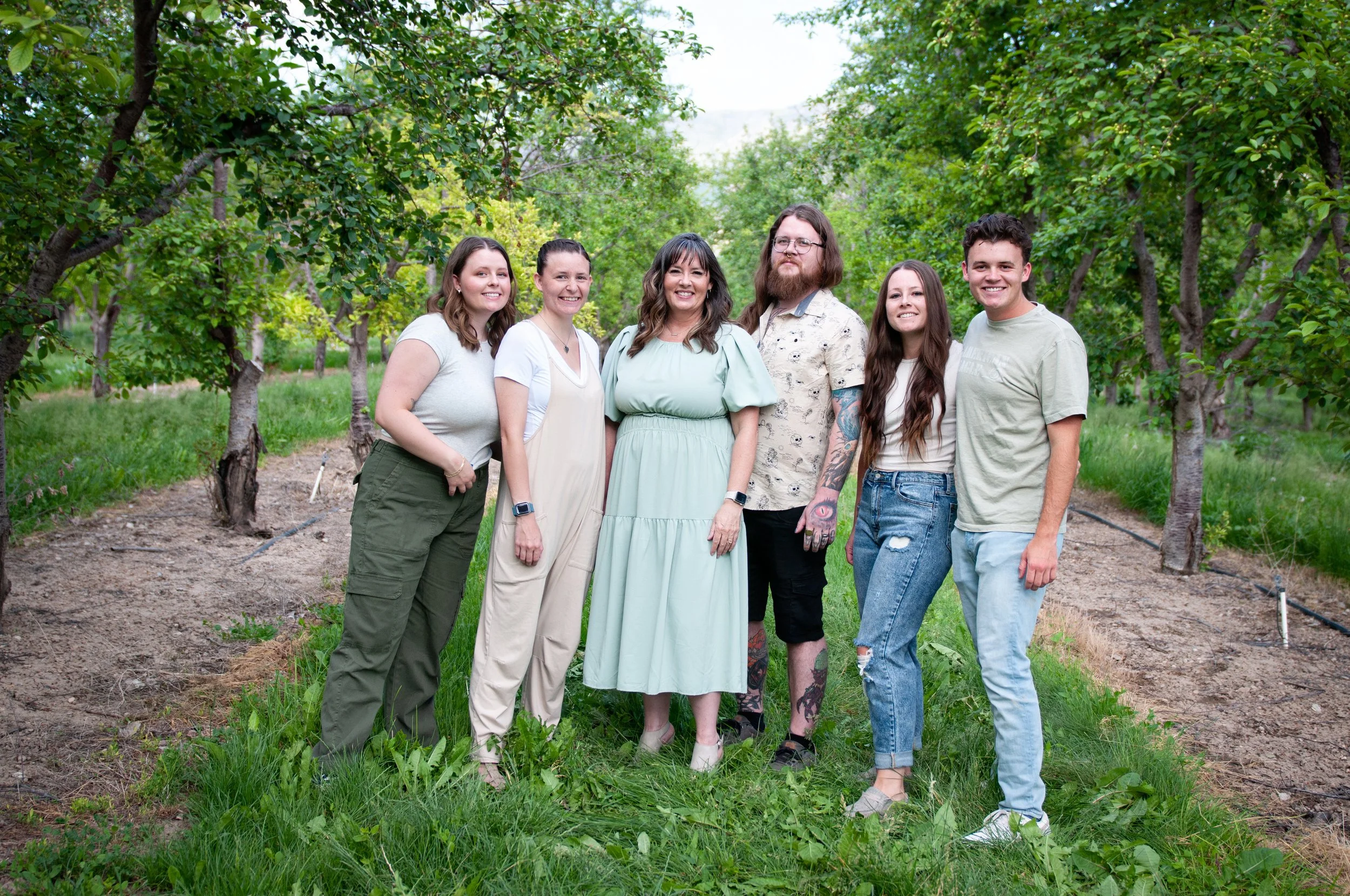

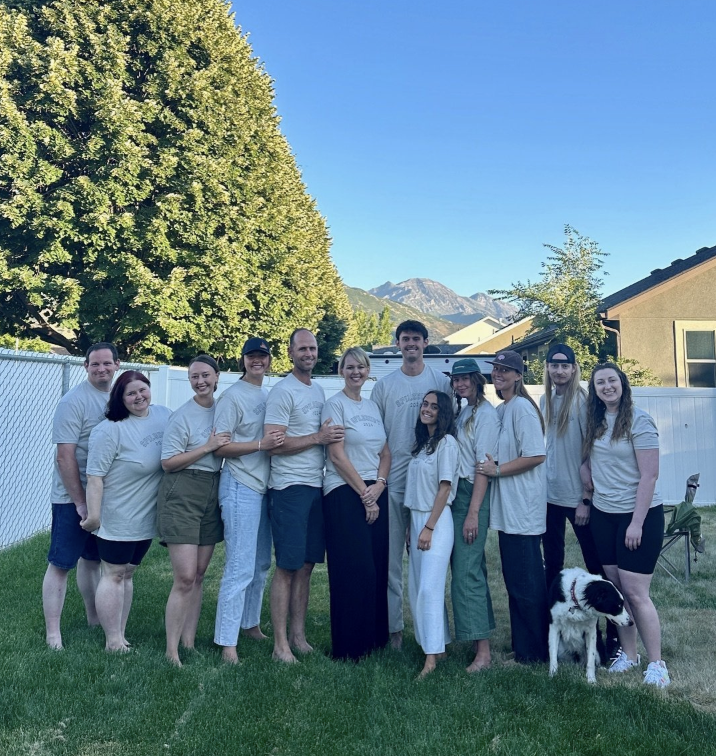
JULIE SPILSBURY
Mesa, AZ councilmember Julie Spilsbury recently endured a hostile city meeting in which she was ripped apart for supporting a necessary utility rate increase of an average of $5 a month. While some surrounding communities experienced a much more significant 30% rate increase, many in her city (including several from her church community) still took her to task, yelling and taunting until the mayor had to demand they stop. Julie came home, had a good cry, and woke up the next morning at 5:45am to regroup with a solid distraction—a live news spot at a Turkey Tuesday food distribution. It’s an event that provides turkeys to 2,000 families in need at the holidays and something Julie loves participating in every year for the United Food Bank. “I needed it that morning, to believe in humanity. In this job, I see the best and the worst of humanity.”
Mesa, AZ councilmember Julie Spilsbury recently endured a hostile city meeting in which she was ripped apart for supporting a necessary utility rate increase of an average of $5 a month. While some surrounding communities experienced a much more significant 30% rate increase, many in her city (including several from her church community) still took her to task, yelling and taunting until the mayor had to demand they stop. Julie came home, had a good cry, and woke up the next morning at 5:45am to regroup with a solid distraction—a live news spot at a Turkey Tuesday food distribution. It’s an event that provides turkeys to 2,000 families in need at the holidays and something Julie loves participating in every year for the United Food Bank. “I needed it that morning, to believe in humanity. In this job, I see the best and the worst of humanity.”
While last month’s council meeting was difficult for Julie, her most brutal public revolt took place in January of 2021, the first month of her tenure. After Julie, who identifies as a super-ally, was elected the prior August, the mayor forewarned Julie he’d be putting forth a non-discrimination ordinance. The bill would bar discrimination for the LGBTQ+ community with housing, employment and public accommodations—meaning trans individuals could use the bathroom of their choice. It was a bill that angered the far right, and even the far left was upset, claiming its “religious protections” language still allowed “plenty of opportunities to discriminate.” Julie says that was an essential inclusion to achieve concession, and that, “When you know the far right and the far left are mad, you’re in a pretty good place of compromise.”
While LDS church headquarters sent a letter of support for these AZ bills via the Area Seventy showing their support for the bill, the outcry against it among the LDS population was still significant and loud. From a city with a population of 520,000, Julie received over 900 angry emails—a far uptick from the 60 or so emails normally generated by a controversial issue. The letters quoted the Family Proclamation, scriptures, and included many accusations that various people—including Julie—would be “going to hell.” Again, Julie marveled at this result over something the LDS church specifically showed support for, much as they have more recently for the US Respect for Marriage Act. Three members of the council had already joined the mayor in supporting the bill, achieving a majority, so technically Julie’s vote wouldn’t sway things one way or another, but all eyes were on her—the religious conservative mother, new to the council. She says she has never regretted voting to support the bill, and was told her action made the most difference to the LGBTQ+ community.
Julie is a paradox to many in her community. She says her large family is ”as Mormon as it gets,” with her husband having served as bishop and five of her kids having served missions. While she comes from a traditional, conservative background, in 2019, she says God started working on her family in regards to the LGBTQ+ experience, leading Julie, her husband Jeremy, and their kids to “listen to all the podcasts, read all the books, and open up to all things LGBTQ+.” During this time, Julie says, “My heart was broken open, giving me a greater capacity to love. Having my heart exposed to the LGBTQ+ community, I have not been the same person since, in all the best ways.” She just didn’t realize how this transformation, which ultimately softened her to all marginalized groups, would result in so much negativity from her church and city community. She says, “I love having people like me, and to have all these people think I’m evil is hard. I have a huge heart and I promise I really am nice. I’m the one who brings cinnamon rolls to city meetings!”
Julie says she grew up a “choir geek” with many LGBTQ+ friends. In hindsight, she claims she still believed many of the myths about gay people back then—but her tutelage, especially courtesy of Richard Ostler’s podcast and books, showed her she perhaps held some misconceptions. She says, “The LGBTQ space is so complicated, hard, and painful, and I also think it’s where Jesus is. That’s why I choose to be in this space—where I feel the most love and the most authentic to who I want to be as a person. There are few things I feel this compelled to be a part of.”
The Spilsbury brood included Lydia—18, Lauryn—21, Brigham—23 (who is married to Tess), Cambryn—24, Miranda—26 (married to Jacob, and an adopted daughter who’s lived with the Spilsburys since age 11), Maybree—26, and their “bonus daughter,” Michelle— (married to Abe). Several of the Spilsbury kids have also chosen advocacy fields, with Lauryn, who just returned from a mission to Spokane and who speaks Swahili, now working with African refugees. Cambryn is getting a Masters in Social Work in Chicago and Maybree is completing her Masters Degree in Conflict Transformation in Virginia. Julie’s husband Jeremy is a long-time arborist and recently sold their tree company and went back to school himself to study Peace and Conflict, and now wants to create a Peace and Conflict curriculum for high schoolers.
The Spilsburys are grateful their allyship is a shared family value, with Julie saying, “It’s been fun to have all my kids be like-minded together in this space. We’re definitely not perfect, but we do have massive love. And we do struggle with things—when General Conference is hard, I love how we can talk about it. Some of my kids struggle with the church, and yet the gospel is part of our cellular structure—not just a Sunday thing. I’m grateful we can talk about all the itchy things and keep open communication.” Julie says that more than anything, she’d prefer her kids be “deep human beings who care deeply about others with true intent than to be people who go to the temple every week but don’t do that.”
After hearing so many stories of struggles faced by the LGBTQ+ community, Julie is now very intentional about her allyship. Of local friends like Michael Soto, Julie says, “They have changed my heart and soul. I have many trans friends, and it all started with this experience.” She joins an ally group on the first Sunday of every month, and has helped support a friend assemble a choir of queer participants who have left the LDS church, but who miss singing the hymns. She says, “I tend to say yes to anything I can in this space.”
Julie wears a rainbow pin to church, and has a rainbow as her screensaver on her phone, saying, “I want my Young Women I work with to know I’m a safe space. Unless you say something, people don’t know. And it’s hard to assume anyone’s safe these days—too many times, these kids get burned and can’t trust anyone.” When her husband, Jeremy, was serving as bishop and they made it clear where they stood, many youth who had left the church because they identify as LGBTQ+ started coming over and coming out. Back in 2021, as they started receiving backlash, Jeremy said to Julie, “Oh my gosh, can you imagine what we’re feeling, and we don’t even have a gay child or are gay ourselves?” A former young woman Julie had worked with who later served a mission came out to Julie and Jeremy and opened up about her struggle deciding whether she should marry her best friend (a female who was living in another country) or stay in Arizona and continue working in the temple as she loved the church. Julie says, “I just got to be there and sit with her through it. I’ve said so many times, if for no other reason did I go through this experience so that I could be there for that one person, it would be worth it. It was incredible to get to mourn with her, cry with her, and feel all the feelings.”
While the past month has been rough as Julie has joined the many struggling with very real emotions stemming from recent election results, especially amid “the bubble” where she lives and attends church, Julie is more motivated than ever to pursue and lead with goodness. She trusts, “Jesus will win in the end.” She joins a group of 20-30 Mesa-based women ready to activate and change individual lives in their community. She says, “We’re looking for ways to serve. I don’t want to be all doom and gloom, but it’s hard to feel it’s all going to be fine. But I don’t want everything to implode, because I care about our country.”
As she moves forward, serving in her various communities, Julie cleaves to a favorite quote from Sam Norton’s book, Come as You Are: “Love that doesn’t try to change you is what changes you.” Julie concurs, “If treating people with love and respect is what makes me evil, so be it. I’m not going to change. I feel all of this very deeply.”
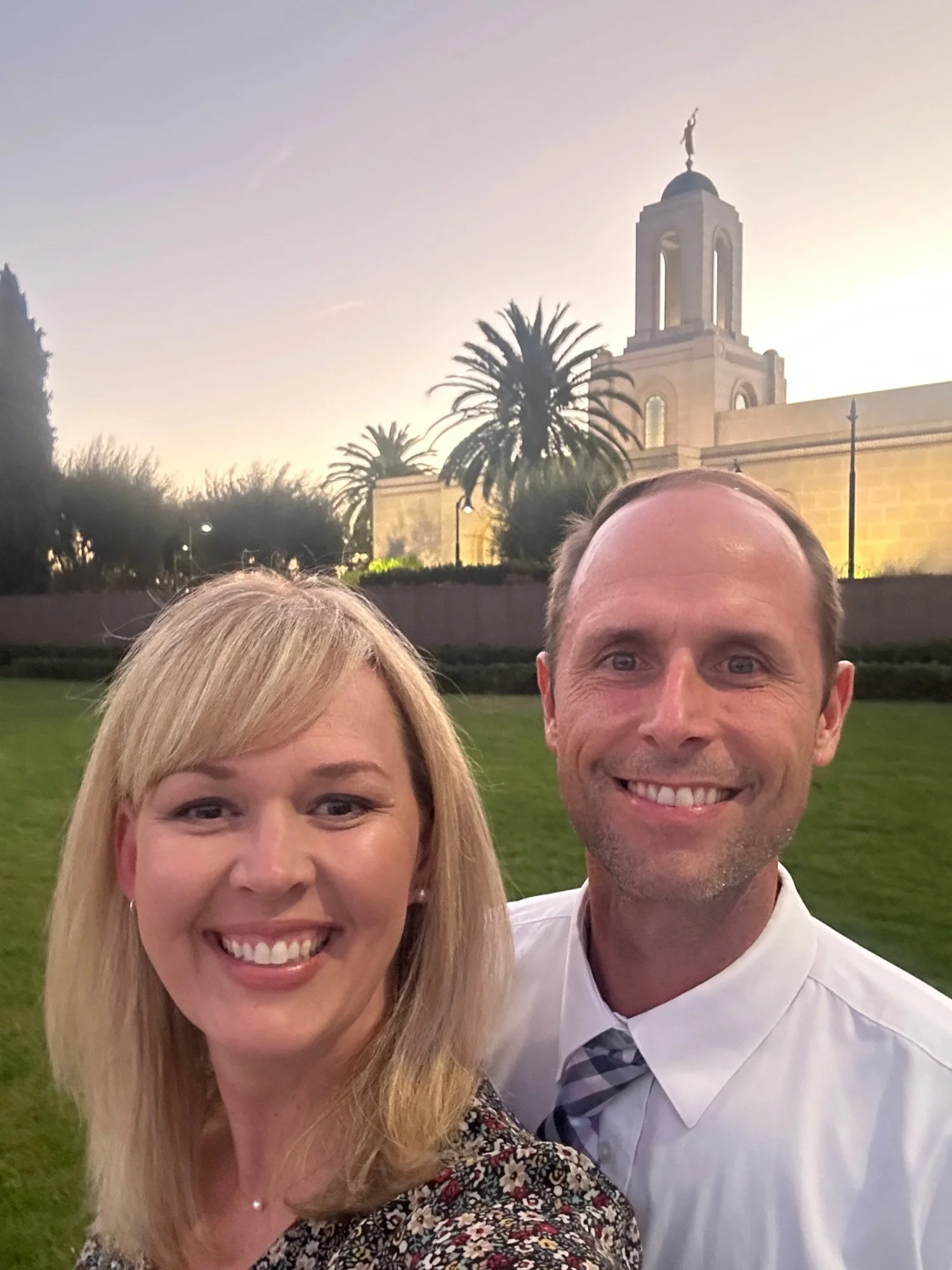
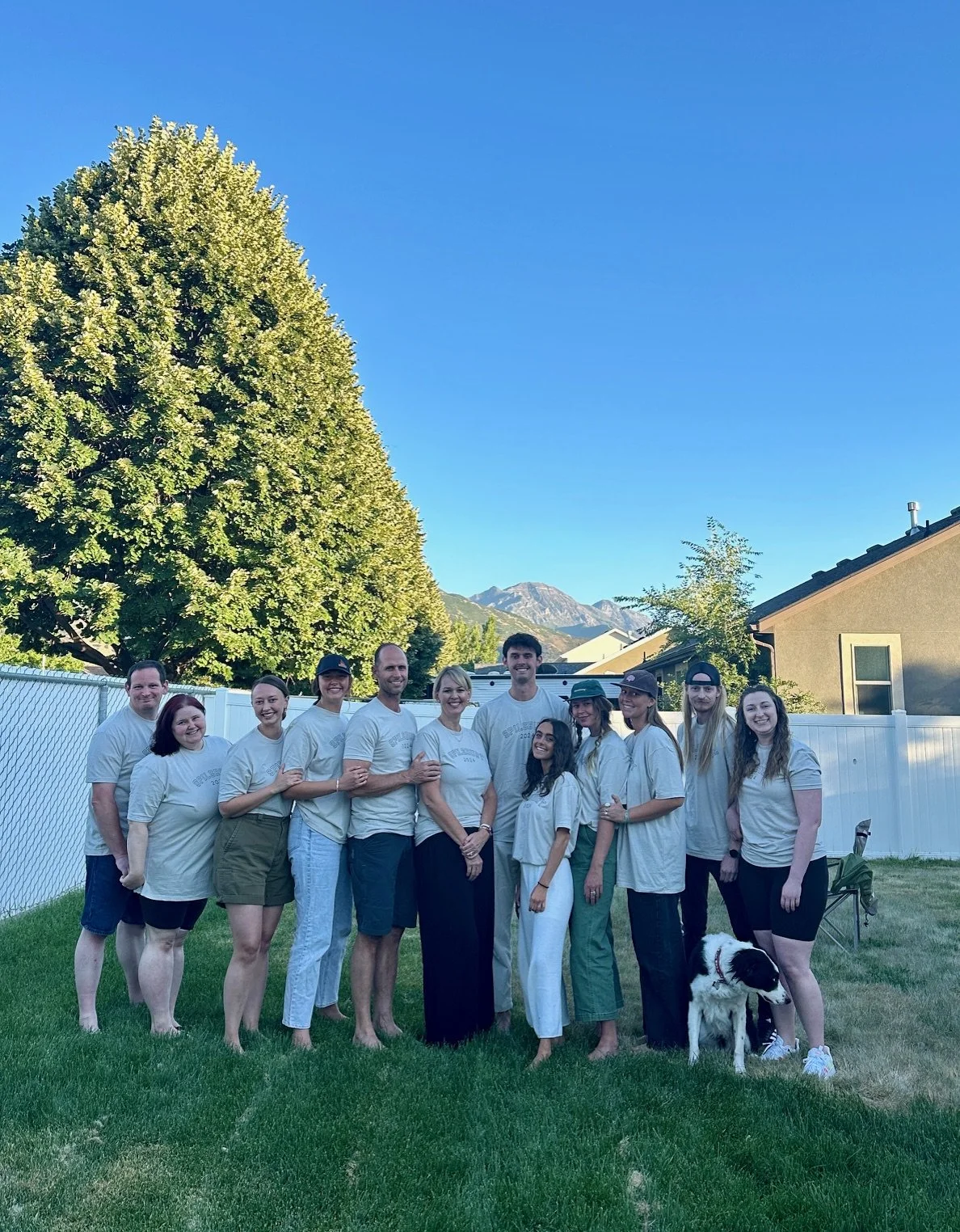


THE BARNARD-CROSLAND FAMILY
This is the story of two “Mormon” girls who were raised in “typical Mormon families.” Rachel was born the youngest of five kids and church was a constant growing up, no matter where they lived. After residing in Texas, Virginia, and Hong Kong, her family moved to Provo when Rachel was in the tenth grade. Upon finishing high school, she attended the University of Utah where she earned a communications degree, excited about the prospect of working in marketing and advertising. She got married during her junior year of college to a man. Feeling pretty clear that the gospel checklist was her road to happiness, Rachel “pursued the path she was supposed to without questioning,” and now says her mind never let her think anything else was an option…
This is the story of two “Mormon” girls who were raised in “typical Mormon families.” Rachel was born the youngest of five kids and church was a constant growing up, no matter where they lived. After residing in Texas, Virginia, and Hong Kong, her family moved to Provo when Rachel was in the tenth grade. Upon finishing high school, she attended the University of Utah where she earned a communications degree, excited about the prospect of working in marketing and advertising. She got married during her junior year of college to a man. Feeling pretty clear that the gospel checklist was her road to happiness, Rachel “pursued the path she was supposed to without questioning,” and now says her mind never let her think anything else was an option.
Rachel now reflects on how many of her experiences as a youth and adult would clearly be considered “SSA,” but as her thoughts continued, she continued to push them off as distractions from the path, or temptations happening to her and not authentic feelings within her. Rachel stayed busy with her career, often working a “ton of hours” while pursuing building a family. When her son came along, the reality of her feelings towards women became even more apparent. In her late 20s, as she began to listen to podcasts and others’ stories of navigating a similar road, Rachel says her sense of denial minimized and she could make more sense of her reality. At first, she rationalized she was bi and could continue to make her marriage work, keeping her family intact. She didn’t have plans to share this part of her with anyone but the tension of the secret she’d been keeping for a long time felt very big, too big—and her husband was the first person she pulled in to share what she was realizing. “He was thankfully receptive and helpful, kind, and gentle through the process,” she says.
As time, went on Rachel continued to wade her way out of denial, accepting that she was gay. With this understanding, she evaluated what her path would look like. She realized growth for herself, her husband, and her son was going to be severely limited and that trying to stick it out would progressively lead to an unhealthy family life for all involved. She came to the devastating realization that was not the life she wanted for herself nor those around her.
Michelle grew up in Provo, UT as the oldest of four kids. From a young age, church felt very important to her. “I took church and the gospel very seriously and had a core testimony that Heavenly Father was real, really knew me, and loved me no matter what.” Michelle went to as many as EFYs as she could, served on the seminary council, dated a lot of boys in high school, and then went to college where she fell in love with a roommate—a girl. While the crush was not reciprocated, Michelle said her feelings felt like an explosion, her past feelings for boys paling in comparison. “I felt I had been colorblind, and then put on those special glasses and could finally see the color that everyone else could see.”
Michelle also felt very confused, working overtime to process, as she’d been taught that these kinds of feelings were wrong. Yet she says her feelings for the girl felt wholesome, right and good. Contemplating her life vision to have a temple marriage and eternal family, Michelle decided to push those feelings aside and likewise pursue the prescribed path. She went on a mission to Nicaragua and came home with a goal to date and get married in the temple. That she did, meeting a man with whom she got along well, who made a lot of sense, and who wanted to marry her. Her feelings for him were nothing like the feelings she had had for her roommate, but she rationalized that there were more important things in marriage. After marrying, they quickly had four kids in five and a half years, keeping Michelle so busy she could distract herself from “the romantic and emotional lack she felt in her marriage, that had been there from the start.”
“I trudged forward with faith, trusting it would be fine. I filled my life with the next best thing—hobbies, service, staying active in the church, being the best mom I could be. It was exhausting, and wasn’t producing the fruit I was looking for or expecting, but I had faith it would come.” Michelle says it got to a point where it was seriously affecting her mental health and she knew she was not on a sustainable path. After much prayer, wrestling to know what to do, she came to know that the Heavenly Father she loved and felt close to was not only ok with who she was, but truly wanted her to be happy and fulfilled.
Rachel and Michelle first met in a Lift & Love online support group for women. Neither was there to try to meet someone romantically, but rather to process their experiences with like-minded individuals. The two discovered they’d both gone to Timpview High School (at different times, with their five-year age gap). They struck up a conversation and became friends. A couple months later, friends from the support group met up to go hiking in Utah, and Rachel happened to be in the area for a family trip, having traveled in from San Diego where she was living at the time. She was still going through the difficult path reckoning what she wanted to do with her future. Rachel says, “I was in love with Michelle as soon as I met her” and Michelle’s feelings were quick to follow. After both women were divorced, Rachel moved to Daybreak, UT and the two began dating. After eight months, they got married and blended their families. Their combined five kids now range in age from 5 to 11. Both of the children’s fathers live nearby as well, and “the moms,” as their kids dub them, share 50/50 custody and maintain a good working relationship with their co-parents/former partners.
Rachel admits there’s a lot of grief that’s come with the decisions they’ve had to navigate and live with—including letting go of the families they’d always envisioned and worked for and only having their kids half the time now, but Rachel says, “Despite all, the good overshadows the hard and we know we still made the right choice.” Michelle concurs, “We can’t really wish things were different, but if we had had the chance to date as teens and been given the opportunity to have developmentally normal experiences, there would not have been so much collateral damage. All the people who have had to go through such hard things—it sometimes feels heavy and makes us angry. But our journeys are what they are, and we are who we are for what we’ve been through. I just wish others understood better that pressuring people to choose a marriage that doesn’t fit their orientation or telling them to be single and celibate their whole life can be so damaging, and not just for the individual.”
The Barnard-Crosland household loves their puppy Jojo and loves to ski, having recently outfitted the entire household in gear for the season. They also love watching the Great British Baking Show, and enjoy music, with Michelle playing the piano, guitar, and singing, and Rachel discovering new artists whose music she introduces Michelle to. While Rachel works at Adobe, Michelle works as a health clerk at an elementary school in Provo, aligning her schedule with the kids’ school schedules. The kids each call their new mom by her first name, and Rachel and Michelle have observed how the five kids were all quick to embrace the change and love each other through it, which they surmise is likely a byproduct of blending families while they were still young.
The family takes their kids to church each Sunday, and enjoys doing “regular LDS family stuff” like reading scriptures and praying together. There are restrictions to their membership due to the nature of their relationship as they walk this tightrope. They are unable to have official callings, but they feel their ward is doing an incredible job of making them feel included. Michelle is often asked to play prelude music, and they were asked to help plan the ward Christmas party by the committee chair. Rachel says, “We feel called to be there and show up as ourselves and participate where we can. We feel we’re doing what the Lord would have us do to build the kingdom and serve God’s children wherever we can, and especially to strengthen others in the LGBTQ+ space.” Michelle adds, “By showing up, we challenge biases and perceptions that become hard to hold onto when people have to deal with the fact we’re here, our type of family exists, and we want to belong and be a part of the body of Christ. We don’t feel conflict in our family dynamic and way of living and being disciples—we are just waiting for the church to catch up.”
When Michelle was going through the heartbreaking process of deciding to get divorced, she says her bishop remained neutral. “While he wasn’t supportive, he was not condemning. Rather, he listened, which was really amazing. He encouraged me to stay close to Heavenly Father and follow His guidance.” Michelle recalls growing up and learning to discern the feelings of right and wrong and how the Spirit prompts her. She knows that “icky, dark feeling” of sin and says, “This doesn’t feel like that. It feels like light, joy, peace, and goodness.” She feels people get stuff wrong about homosexuality. “I wish people could see that we’re just like them. How fulfilling, beautiful, and normal this marriage is. How Christlike our love for each other is. Being married to Rachel, so many things make sense and work now that didn’t before. Now I have my color glasses on and can see all the beauty of a loving, fulfilling marriage, when before it was colorblindness.”
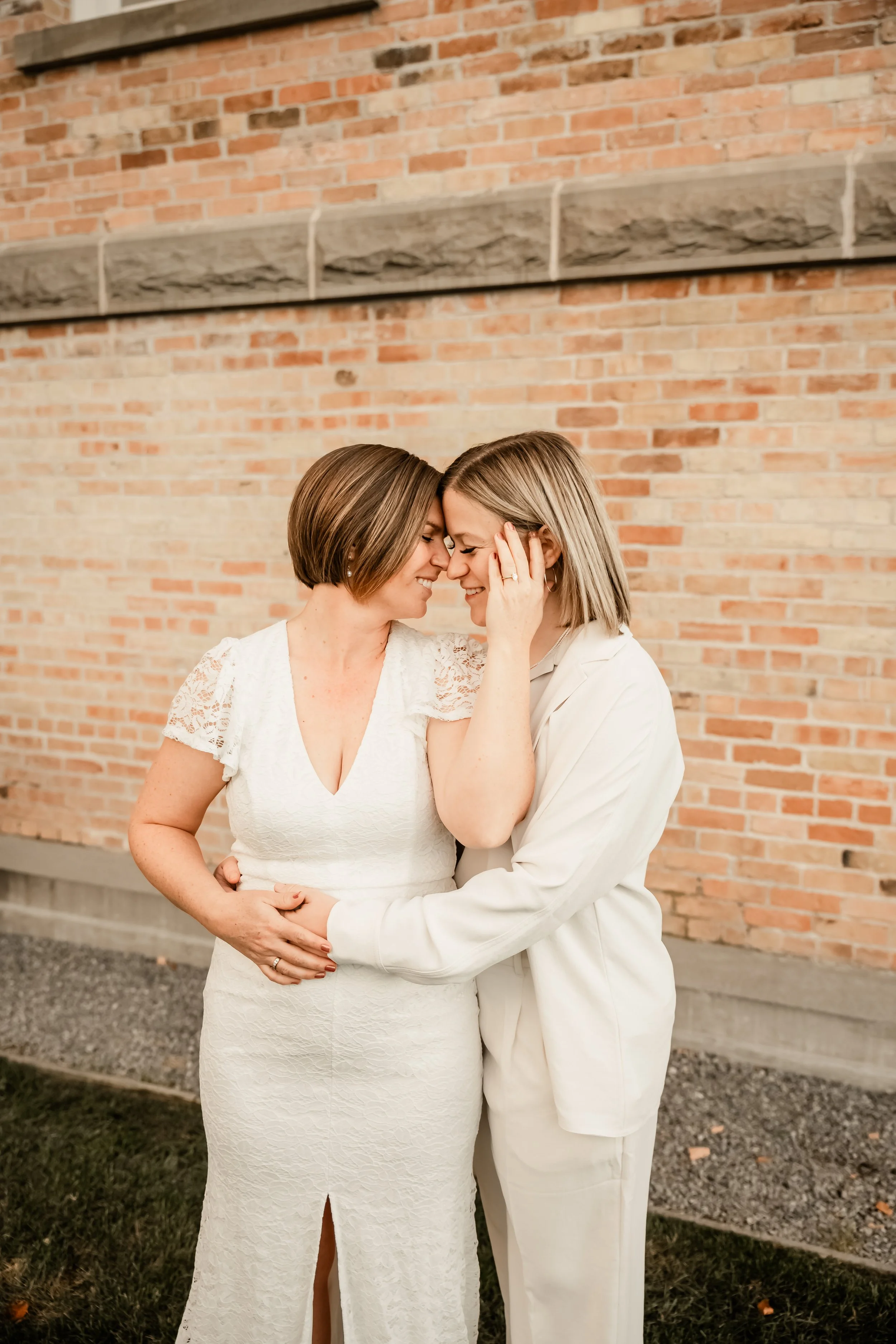



ANONYMOUS FAMILY
“Sometimes being in the ‘Top Ten’ of a ward’s hierarchy can pay dividends,” surmises Molly*, the mother of a family for whom we’ll be honoring their request for privacy by using pseudonyms in this story because frankly, it’s a tough time for families of trans kids. It’s especially tough when you have two trans kids. Such is the case for today’s family of 7, with Peter* and Molly’s children ranging in age from 15-23. Molly laughs that, “We started with four girls and one boy, and we ended up with four girls and one boy.” But a lot has changed since their first child was born, shortly after the couple met and married while at BYU…
Content warning: suicidal ideation.
“Sometimes being in the ‘Top Ten’ of a ward’s hierarchy can pay dividends,” surmises Molly*, the mother of a family for whom we’ll be honoring their request for privacy by using pseudonyms in this story because frankly, it’s a tough time for families of trans kids. It’s especially tough when you have two trans kids. Such is the case for today’s family of 7, with Peter* and Molly’s children ranging in age from 15-23. Molly laughs that, “We started with four girls and one boy, and we ended up with four girls and one boy.” But a lot has changed since their first child was born, shortly after the couple met and married while at BYU.
“I was always the perfect Molly Mormon, and he was Peter Priesthood. We were the ideal LDS unit, and we popped out cute babies like good LDS families do,” says Molly. By the time Peter graduated from law school, they already had two kids, and the family rolled straight into the Marine Corps, with Peter working as a lawyer and Molly managing the family as they moved every three years. “Every ward was excited when we moved in because we brought five kids and were active doers, solid pioneer stock. And we were super judgmental—anyone not pulling their weight? We didn’t want to deal with them. We were excited to be and work with doers.”
When their oldest was around 16, the family was stationed overseas. Molly was sitting in the pew on Mother’s Day Sunday next to Child #1 (who was AMAB), and who leaned over and said, “I don’t want to go to church anymore; I don’t have a testimony. I’m quitting.” This pronounced dissatisfaction came out of the blue; Molly was shocked. She now admits she did not handle it very well. Peter was even less sympathetic. While Molly allowed herself to become the “kind of parent I never wanted to be who let their child wear ear buds all through church, I thought, ‘Well, at least they’re here’.” Eventually Molly realized their child had been struggling with both church and depression, and acknowledged it’s hard to feel the spirit when you’re depressed. Child #1 had also discovered anti-LDS literature and felt church was “horrible, wrong, and stupid.” Molly said her initial counter-argument was along the lines of “Well, you’re dumb for reading the wrong stuff.” When their oldest turned 18, she moved across the ocean to Cedar City to attend Southern Utah University. The next summer, in the middle of Covid, the family moved from Japan to California and shortly after, child #1 sent her parents a text out of the blue saying, “I’m trans; I’m Sierra* now.”
This really threw Molly and Peter for a loop. This child had grown up “all boy, a Thomas the Tank Engine fan, a mild-mannered child which we thought was due to having four sisters. It took us a moment to realize this was not a punchline.” Yet this time, it was Peter who acted quickly, by calling Sierra just to say, “We love you. I don’t know anything about this, but I love you.” Having the physical distance was good for the family as each slowly got used to their new reality, and Molly said, “It was a time of ‘how do we deal with this?’ but admittedly, it wasn’t as hard as when she said she was vegan. That probably changed more for us. But it was that moment of ‘How does this fit into my view of the gospel and families and everything I believe?’ It also led to the realization of, 'Oh my gosh, my kids aren’t a reflection of me.’ I thought if I taught them all the right things, they’d grow into future prophets.” Molly also struggled with knowing what everyone else was probably thinking, because she owns that she was that person who formerly judged families like hers.
When Sierra came home for Christmas that year, she expressed an extreme amount of anger toward her parents for “ruining her life.” She was angry at everything from her parents staying in the church to the fact they’d had to move around so much as kids, even though Molly thought that provided cool opportunities for the kids, like getting to live in Japan for six years. While Sierra’s anger hurt Molly, she realized it was best to validate that whatever Sierra was feeling was real to her, and that she could apologize for any pain they’d caused, which eventually helped Sierra to work through her anger.
“I did not think this was how my life would turn out,” says Molly, a box checker who did all the FHE, Come Follow Me tasks she was supposed to in raising her kids, expecting certain results. “It was mind-blowing.” Molly and Peter also joke their family is the “alphabet mafia”—as most in their family have been diagnosed with either autism and/or mental health challenges, including OCD, ADHD, anxiety and depression. As things finally began to improve with Sierra, Child #4—John*, who was 13 at the time and assigned female at birth, suddenly wanted to cut their “glorious, blonde hair that fell to their waist into a short boy cut, like they had done to themselves when they were age four,” says Molly. Later, she took 15-year-old John to be tested for autism, and as they got on the elevator to the psychologist’s office, John put on a pin that said he/him. Molly says, “I was like, ‘What? We’re doing this right now’?”
After a “definite personality change” that kicked in at puberty, Molly learned from the counselor John had also suffered extreme depression, suicidal ideation, and self-harm that ultimately required stay at an outpatient program. Once John was able to overcome his fear of admitting to himself that he was trans and coming out to his parents, he immediately began to turn around and has been “awesome ever since. He’s the posterchild of the program he was in,” says Molly. Molly eventually found out at a parent’s night at school that the teachers had been honoring John’s chosen name for some time, and felt a little embarrassed thinking they probably assumed he didn’t have support at home. After finishing his treatment program, John was able to get a 504 and access to a gender-neutral bathroom. Availability was not what it should have been, and Molly had to fight with the school to keep the bathroom open, but the school was supportive, aside from that struggle”
John has always willingly attended church, and the family was touched how local leaders in California honored his wish to attend Young Men’s once he started wearing a suit. Molly says that socially, it was somewhat seamless as his best friend was a “giant, hulking kid so no one messed with him.” After being gone for summer travels, Molly had already posted on the ward Facebook page about John's transition and new name with a request to be kind, “even if you don’t support this.” She knew one of her “super homophobic friends” would see the post, but no one said anything. She found it humorous when the same woman who removed her kids from the local public school, saying “there were too many gay people there” still called to invite one of Molly’s kids over to play with her child.
Molly believes all those years of being in the “top 10” families of doers built up a currency which paid off in that most handled it well in California. John's seminary teachers and Young Women's leaders met with them and asked how they could help him feel welcome and agreed to comply with his wish not to be called on by any name in class until he was out to the ward. Their stake president even organized an LGBTQ+ fireside, inviting in a psychologist to speak alongside him. In the stake president’s talk, he shared a story about a young man he'd watched at local baseball games who would always get up and help an elderly couple with season passes up to their seats as they returned from the snack bar. The stake president commented how the (LDS) young man never chided the couple for buying and drinking beer, or refused to carry it – he just saw a need and met it. The stake president challenged his stake’s congregants to just be the person who sees the need, and meets it, despite your feelings about it.
Back when the family was stationed in Japan in 2017, Sierra was given a patriarchal blessing after which the patriarch stayed for lunch and shared an impression he’d had during the blessing that this child would have a difficult life, but didn’t know how to say it in the blessing where it wouldn’t sound bad. During this summer (2024), the two youngest kids received patriarchal blessings from a family friend in which John's name and pronouns were honored and he was called a “son of God,” and told that God “knows who you are and is proud of you.” Molly and Peter found these blessings personal and meaningful. The whole family found it funny when a young man who was new to the ward asked John to pass the sacrament, not knowing he wasn’t able to have the priesthood. A sibling teased John, “You can pass but you can’t pass.”
After Peter retired from the military earlier this year, a new job search forced the family to consider where they could safely move so their kids could maintain continuity of care. Sierra (now 23), who has been living in Utah, has plans to move somewhere safer with their (trans) partner. The rest of the family wanted to stay in California, but the promise of a job took them to another state. Because of the move, John had to fly back to California to get his Lupron shot, which is the only thing that stops his periods, and gender dysphoria. As John also has some genetic anomalies, Lupron is the only drug that works for him. He started testosterone in February. Now 17, John has also consulted with a medical team about pursuing top surgery—something his mom supports as he can only wear a binder for eight hours a day and she wants him to be able to be confident and stand up straight and tall and proud. John also struggles with extremely painful periods without the Lupron, and would like to do a hysterectomy, but is not sure they’ll find a doctor to perform it. The family’s military insurance covers gender-affirming care, but not surgery.
Now that they’ve moved away from their welcoming ward in California, things are not quite so friendly at church. With the handbook’s recent new policy that disallows trans individuals from entering bathrooms or attending gendered classes that don’t align with their gender assigned at birth, their new stake president has said John can either attend Young Women’s, or go home for second hour every other week. If he wants to attend Young Men’s classes and activities, John will have to receive a waiver from the first presidency, and was told chances are grim. This stake president followed up with the instruction that gendered meetings are for those preparing to attend the temple, and since John is not allowed to do that, those classes are not for him. Hearing this, Molly sat next to John in shock at the realization that unlike others who have tried so hard to make them feel welcome, this new climate represented a new reality--this man genuinely did not want her son at church. “In California, John made the sacrament bread every Sunday, saying, ‘I can’t pass the bread, but I can make it.’ He currently wakes up every school morning and leaves the house at 5:30am to go to seminary. He wants to go to church. Why would you say no to someone who genuinely wants to be involved?”
When Molly asked the bishop what John should do during second hour, he was much more affirming and wanted to find ways to help him stay and be involved--while walking the line of following the church’s position. While the bishop has seemed supportive, the stake president made them feel unwelcome. When Molly opened up to John’s friend’s mom about this, she replied, “I go every week and don’t feel welcome. You’re going to stop going when you feel unwelcome?” And thus, Molly says she stays because, “Someone needs to represent, and bring up the things no one wants to talk about. I don’t want to be that person with an agenda where everyone rolls their eyes when she begins to talk. I just want to offer different ways of looking at things that can be more inclusive.” She continues, “I stay because my mom taught me the gospel and the church are not the same thing—the gospel is pure, perfect. I’m all in. The church is not perfect because God has no one to call who is perfect. He's only working with imperfect people, but we also can’t get revelation for questions that haven’t been asked.”
"My trans children have been a blessing in my life. This has required me to examine my testimony and pare it down to my most basic beliefs and to build it back from there. I know absolutely that God loves me. I know absolutely that He loves my children. And I know absolutely that He wants me to help the rest of His children feel loved. I may not know much else, but I know that."
The other children in the family have varying levels of activity. Their 21-year-old is at BYU Idaho, where she hosted waffle Saturdays and games in an apartment that always displays a Pride flag. Their 19-year-old struggles with anxiety and OCD, and has just been called to a service mission near home. John still attends church, but commented after the new church policy that he could have his records removed and would have more rights to the church than if he stayed a member. Molly’s 15-year-old still attends, but Molly anticipates they may eventually feel pushed out as well.
Since the election, Molly feels some relief her trans children are both soon to be safely in their adulthood and live in states where they can continue gender-affirming care, but she feels for those in other states who are not afforded the same opportunities. “To them, I’d say get out, but sometimes you can’t.” When they moved, the family chose a home that could be a gathering space. They have a large basement and extra room, anticipating they’ll likely always house someone who needs a safe place to stay. While the election results worry them, Molly is trying to be optimistic and not live with fear. She says, “I just watched a Hallmark movie with a cute love story about a gay couple—if we are mass marketing Christmas movies like that, it must be mainstream enough where people must be ok, I hope? Although trans issues are a whole new thing.” For now, Molly is holding on to what she has, and for her, it’s, “I love my kids—they’re such neurotic little goofballs, they’re the best.”
*names have been changed for privacy
The first piece of art shown below was painted by the grandmother of the kids in today’s story in 2006 and is beloved by the family as a representation of their family in 2006. The second piece of art (by artist Erin Nimmer @erinnimmerart) was purchased by Molly*, the mother of the family, at the Gather Conference, and she says she loves how the visual reflects the idea how she’s paving her covenant path with rainbow stones.

art credit: Erin Nimmer @erinnimmerart

LIV MENDOZA HAYNES
Liv laughs that no, Matthew does not get nervous when she goes away for a weekend with her lesbian friends. “I feel that if my husband didn’t trust me to be alone with someone of the same gender, we have a bigger problem. It’s about integrity, faithfulness, and values.” Matthew was not as familiar with the LGBTQ+ community before Liv, but she laughs he now has several lesbian friends of his own. Liv does not recommend a mixed orientation marriage for everyone, and says it took her years to figure out what works for her. “We’ve both grown a lot from being together… It’s a mixed relationship in many degrees – culture, orientation, language. I’m social sciences, he's exact sciences. We have enough in common to have a path together – but enough diversity to learn from each other every day – which is key to our marriage.”
Liv Mendoza Haynes claims she fits the birth order stereotype. As the last of three kids, she was the much younger spoiled baby of the family who could convince her parents to cook an alternate meal if the initial wasn’t to her liking. But being raised in a Catholic home with high expectations, she adapted accordingly as she grew. Her mother was in and out of hospitals with illness, leaving Liv’s much older sister to care for her and her brother when they were not at Catholic school. Once Liv began to notice the family had financial struggles, she minimized her special requests.
Though Liv and her brother were born in America, they were raised in Tijuana, Mexico, where her father worked long shifts as a police officer, and her mother often left the kids to be babysat with a good friend who was a known drag queen. Liv remembers it being no big deal that the babysitter would have peers from his drag community stop by for wardrobe fittings while Liv was there. She was told it was no big deal for men to be gay, but her parents spoke negatively about women who were lesbian. Her father would also express distaste for women who joined the police force or who became “manly, lost their attractiveness, and didn’t know their place.” Liv was taught that one of the worst things she could do would be to be with a woman or to not be feminine.
This presented a problem as, while Liv was extremely close to her mom and sister, she did not share their love for makeup, high heels, and feminine things. Liv preferred her daily jeans, t-shirt, and Converse. She developed her first technical crush on a boy in the first grade, but strategically chose a boy who was mean to her, knowing it would never work out although it would help disguise the way she felt about girls from an early age. As her mother’s health declined, Liv sensed she needed to not add to the family burden by disappointing them with her attractions. She shared her mother’s and sister’s strong personality and kept her friend group small, having the same small cluster of three or four friends throughout her school years.
In high school, Liv dated an LDS young man, but was his last girlfriend, and he is now married to a man. He would often joke with her about LDS myths. Around this same time, Liv’s ex’s brother decided to go on a mission[LM8] , and told Liv to keep an eye on his parents. While he was gone, he referred the missionaries to her door while she was baking a cake. One elder mentioned it was his companion’s birthday that Thursday and Liv said, “What do you want me to do about it? You can come back for food or water, but that’s it.” The elders left, and Liv followed a prompting to run after them and offer them cake at 2pm on Thursday—assuming they wouldn’t be able to come then. But they did, and Liv began taking lessons. One day, she invited a handful of missionaries over and made popcorn so they could all watch a Joseph Smith video, per her request. After they asked if she had any questions, and she asked why they hadn’t yet challenged her to be baptized? She sidestepped telling her parents until the following May, but was baptized that December. And yes, there was cake.
Throughout her teens and young adulthood, Liv noticed her feelings for women even more, and did have a relationship with a woman. When her mother felt it was time for her to have “the talk,” she handed Liv a VHS tape and told her if she had any questions, to ask her sister. But as the tape shared no tips about orientation, rather it was a childbirth video, Liv only walked away from that experience traumatized, thinking “I’m never going to have intimacy if it leads to that.” But it cemented the expectation in her mind that the expectation was for her to have a family. While in high school, Liv’s mom teased she had a “type” of guy she’d go on dates with (those into the arts and cooking who had more androgynous, scrawny body types). Around age 17, Liv started struggling with health conditions of her own, and found out she had a higher chance of getting cancer than becoming a mom. Doctors recommended she get a hysterectomy, with her unusual gynecological issues. Liv’s self-esteem plummeted, feeling a lack of worth as if she was “defective” if unable to have children. While always expected to achieve, the messaging she received was, “It doesn’t matter if you excel. At the end of the day, your expectation is to have a family. If you’re infertile, no guy will fall in love with you.”
These insecurities possibly propelled Liv into developing an unhealthy relationship with a man in Mexico City who “looked perfect on paper,” but over time revealed himself to be controlling (even ordering for her at restaurants) and ultimately, physically abusive. When he slapped her across the face at a party in front of their friends, Liv was stunned, and even more so that none of her friends they were with did or said anything about it. A casual friend nearby noticed it, and took Liv away from the scene to recover. Liv ended up going back to the boyfriend some time later, partly because of outside pressures she was receiving, including a man at church telling her no man would want her because she was broken goods. A few months later, the relationship turned even more physical, and after an especially violent attack, a friend thankfully found Liv in her apartment and took her to a hospital where she stayed for a couple days to recover. When she was released, her first thought was to go to the temple. While she felt less than worthy to go inside, she knew just being on the grounds might bring her peace. She felt like she couldn’t tell her parents about the abuse, thinking her father would cause harm to the guy and she didn’t want to bring them shame. Liv says, “Before that, I would have said, ‘I don’t know how strong, educated women let men do this.’ But then, I became the person I’d judged.”
On the temple grounds, Liv had a breakdown that led to a security guard helping her call a local bishop who led her to talk to a counselor from back home in Tijuana. She blurted out she needed to go on a mission, which she did at age 22—partly to get away from the abusive boyfriend and partly because she felt she had to serve (having been raised under the motto, “If you’re not living to serve, you don’t deserve to live.”) Ironically, Liv was called to serve her mission in Mexico City, near the temple where she had her breakdown as well as close to her ex, but she managed to avoid running into him. While her mission was healing, it also opened her eyes to just how much emotional and psychological support missionaries need.
Liv began to feel like two people—the Tijuana Liv, who was strong and powerful, and the Mexico City Liv—who wanted to date girls and was in some ways, more submissive. After completing her mission, Liv’s commitment level to the church was high, and she struggled for a couple years with whether sharing her feelings about girls would be best for her spiritual and emotional journey.
One night, Liv decided to confide in a friend with a trans brother, which turned out to be a good instinct. The friend knocked on Liv’s door with a Little Caesar pizza. When Liv opened it, she blurted out, “I’m attracted to women. I really like women a lot!” Without missing a beat, Liv’s friend replied, “Well, I like eating my pizza hot—can I come in?” Liv now says, “I don’t think people understand how comforting her response was. It was like, ‘Oh, I learned something about you—let’s talk.’ The best kind of reaction.” The two talked all night and Liv’s friend shared many resources. Liv says she wishes she could say “it was all bliss” after, but Liv spent the next nine years rediscovering herself and toggling with her identity. She finally settled on “queer,” as she was introduced to thousands on a well-known stage she shared with Sister Sharon Eubanks who asked her questions about her reality at BYU’s Women’s Conference several years ago. It was a moment that surprised many, and made Liv feel a sense of validation and acceptance after feeling like she’d grown up at constant intersections: “You’re not American enough, not Mexican enough, not a citizen, not feminine, you don’t like makeup.”
Recognizing it’s not the preferred term of generations past, the term “queer” still works best for Liv as she says, “It helps me feel happy, and also respectful of the person I’m sharing this journey of life with.” That person happens to be her husband, Matthew, who she met six years ago while playing Two Truths and a Lie on an app. Matthew had just moved to Utah from Montana and was looking to make friends. He handled her Harry Potter banter with humor, and their first date was eating brownies together that Matthew had made. They haven’t spent a day without talking since, and Liv says Matthew is in every sense her best friend. Her prior attempt at online dating had ended quickly after she told a guy with whom she had good chemistry about her attractions and he in turn shared his wife had just left him for her ministering sister. Liv quipped, “Well, at least you have a type.” They went on a couple more dates until his demeanor started to remind her of her ex. A therapist then told Liv just to focus on making friends, which is when Matthew appeared.
When people criticize Liv for being in a relationship with a man just to comply to the church standards, Liv says, “Honestly, that hurts because that person doesn’t know my whole story. My relationship with my husband, as public as it may be, is still our relationship. It’s hard when people have preconceptions. The reality is I fell in love with Matthew. The only way our dating happened is I stopped looking at marriage as something on a checklist and more of an opportunity to be with someone who knows and loves me. We respect each other, and he met me knowing I was open to dating men, women, and anything in between. It’s my reality, my experience, and what works for us. Every day, I choose him, and he chooses me.”
Liv laughs that no, Matthew does not get nervous when she goes away for a weekend with her lesbian friends. “I feel that if my husband didn’t trust me to be alone with someone of the same gender, we have a bigger problem. It’s about integrity, faithfulness, and values.” Matthew was not as familiar with the LGBTQ+ community before Liv, but she laughs he now has several lesbian friends of his own. Liv does not recommend a mixed orientation marriage for everyone, and says it took her years to figure out what works for her. “We’ve both grown a lot from being together… It’s a mixed relationship in many degrees – culture, orientation, language. I’m social sciences, he's exact sciences. We have enough in common to have a path together – but enough diversity to learn from each other every day – which is key to our marriage. Plus, I get to learn random dinosaur names.”
After undergoing three IVF treatments, the two share their son Lucian as well as an angel baby in heaven, and are expecting a new baby they will call Elijah, due November 25th. Throughout their prenatal care, they’ve become aware this baby will be born with challenges, and being open about that has helped Liv cope and “be human.” She says, “As Christ had outbursts, I’m allowed to have moments where I say, ‘This sucks’.”
If life’s taught Liv anything, it’s that she can take moments to have her cake and eat it, too. Shortly after exiting the relationship wherein she experienced domestic violence, it was Liv’s birthday, and a friend asked what she wanted. Liv requested a certain cake from a certain bakery because it was her favorite. The friend brought the cake Liv requested to a restaurant to celebrate with friends. After the wait staff brought out the cake and everyone sang to Liv, she instructed the server to wrap up the cake. Baffled, the group questioned her decision not to share it. Liv replied, “It might sound selfish, but this gift is my cake and I’m taking it home.” She continues, “It might sound silly but it’s symbolic—we are conditioned that if you’re not constantly happy and thankful for the trials you’re going through, you’re not a good person. But the reality is you need to know your boundaries. I had to work for years to learn to find power in my voice and use it. These boundaries are the only way I’ve been able to stay alive. You can’t show gratitude if you’re not here. Where’s the progress if you’re not truly loving yourself? I’m not willing to risk not being my full self.”
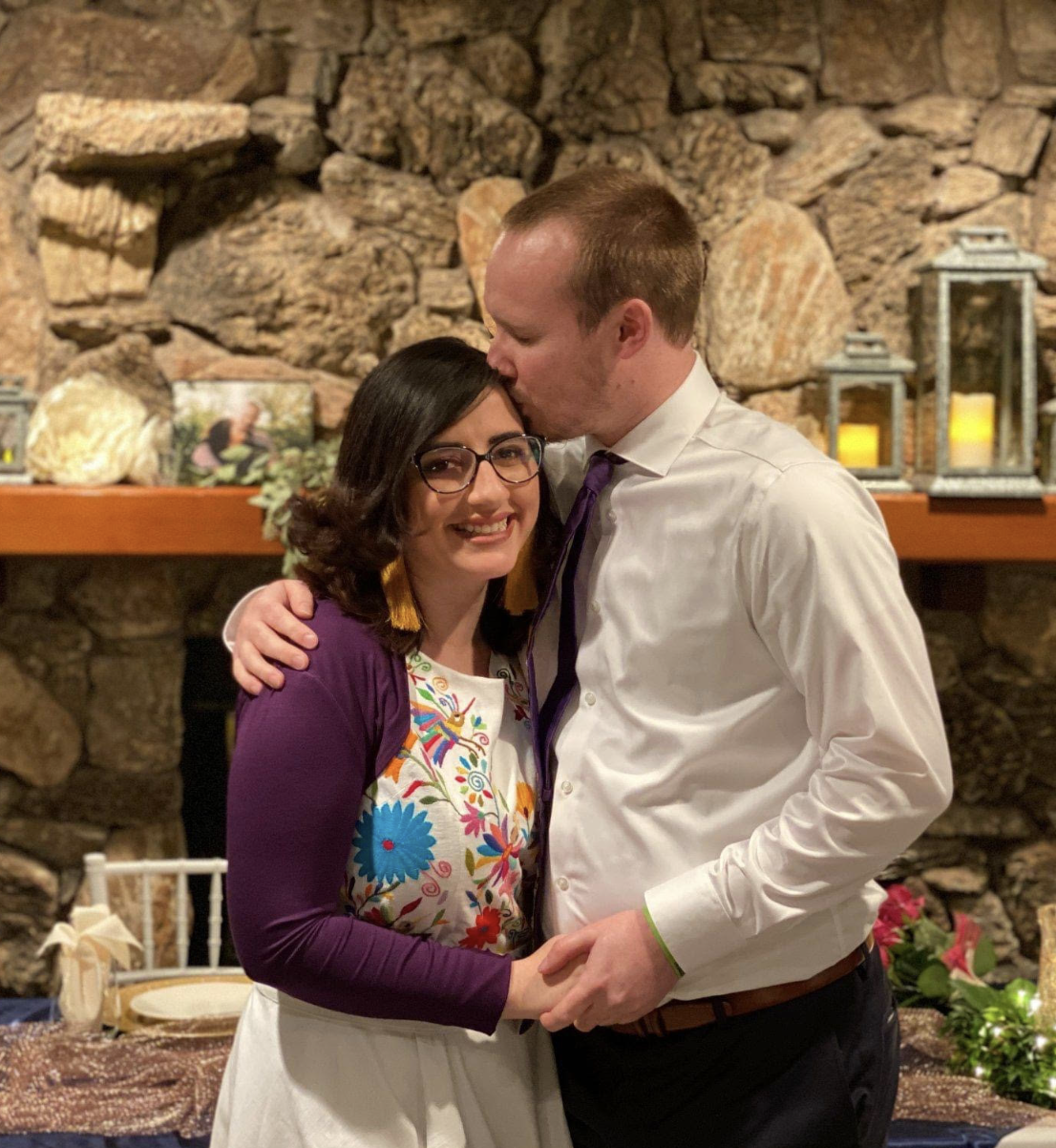
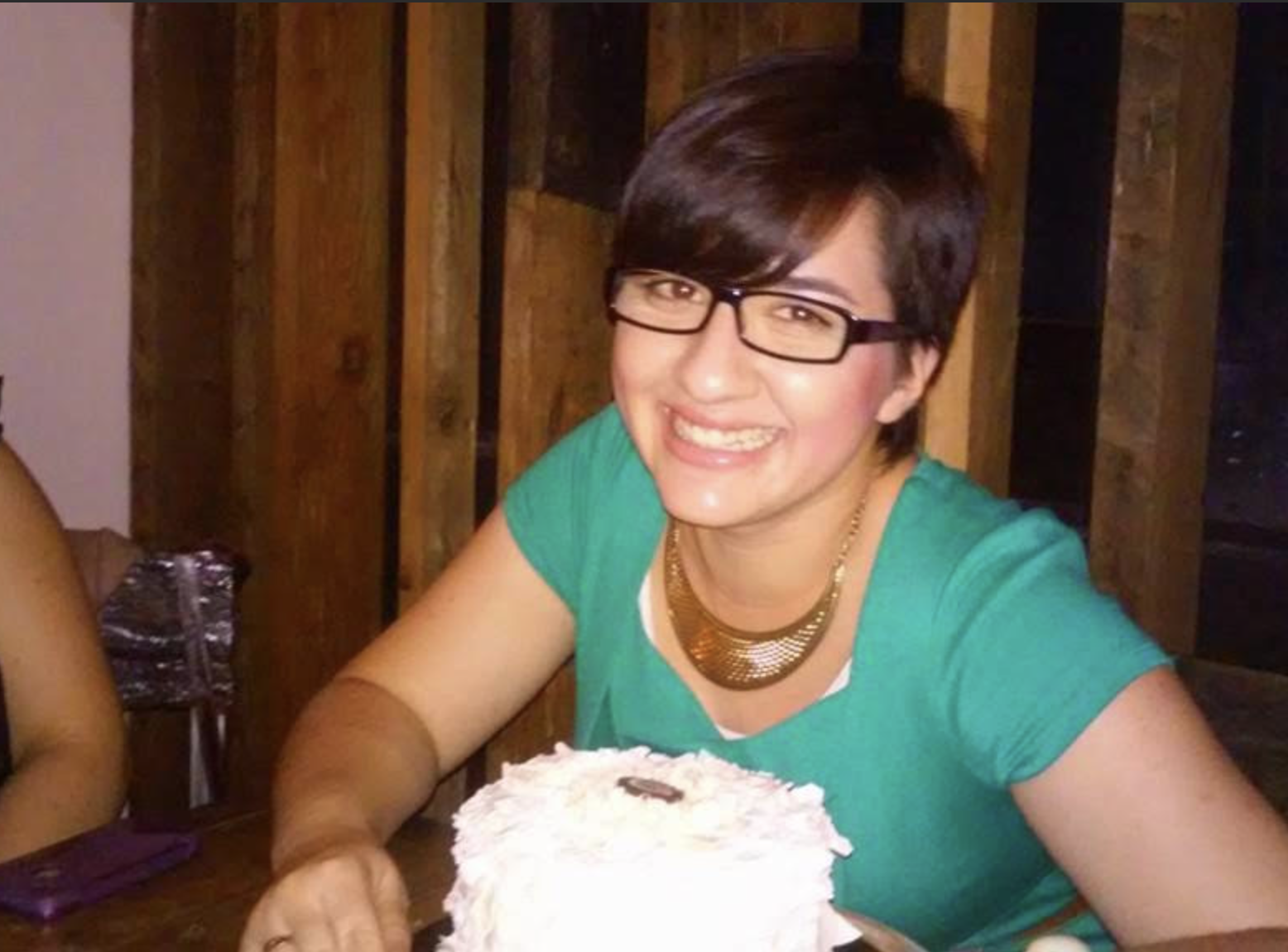
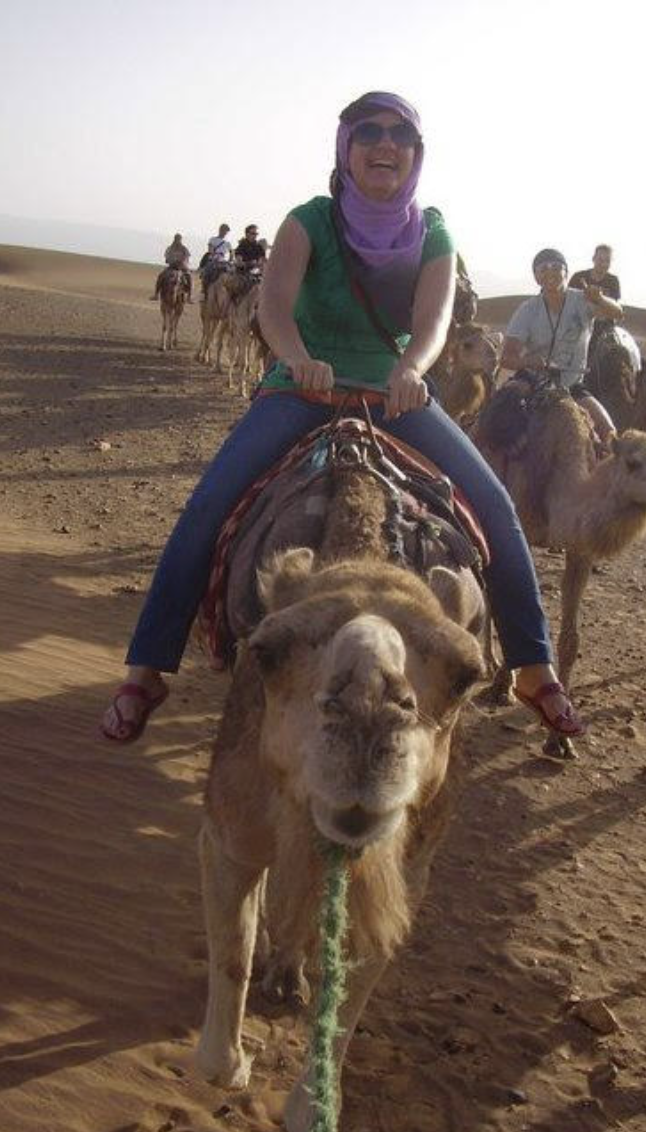

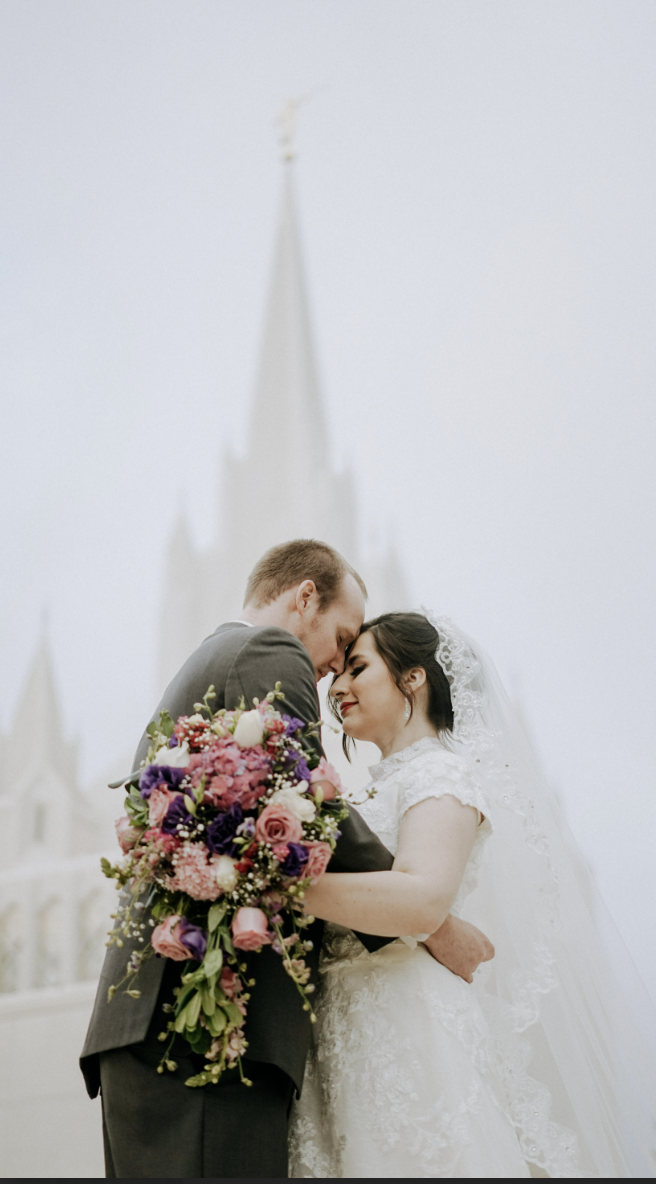
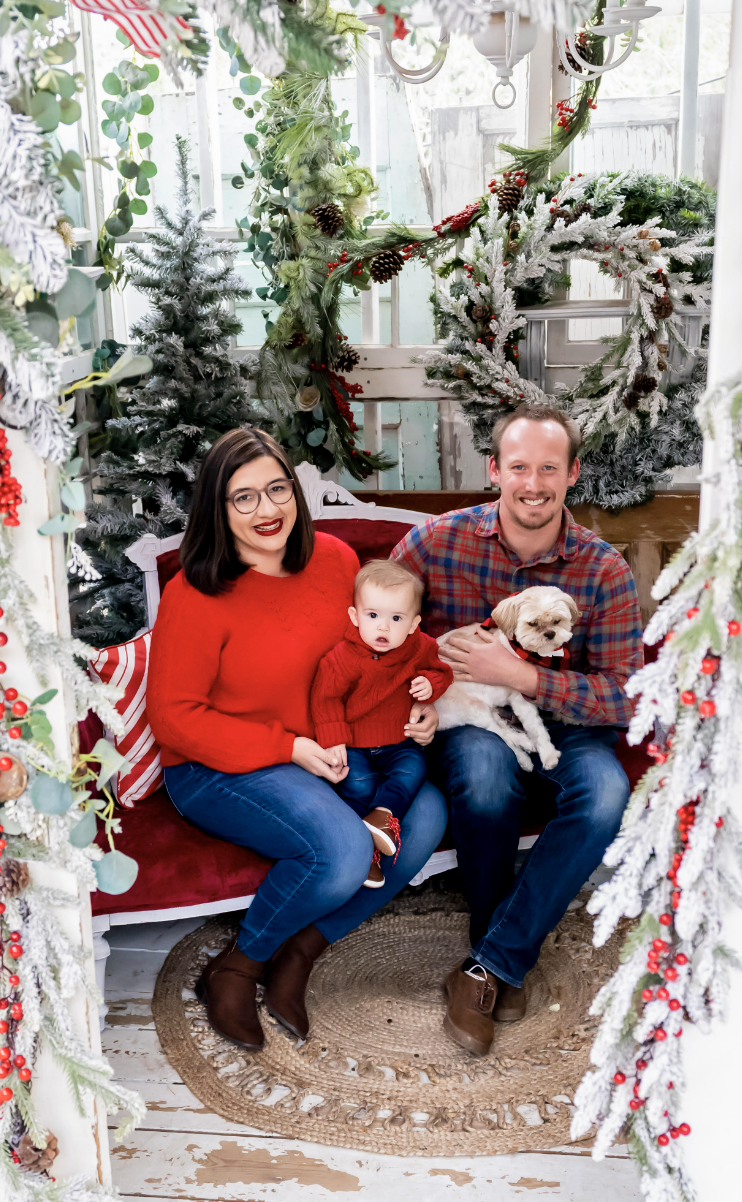
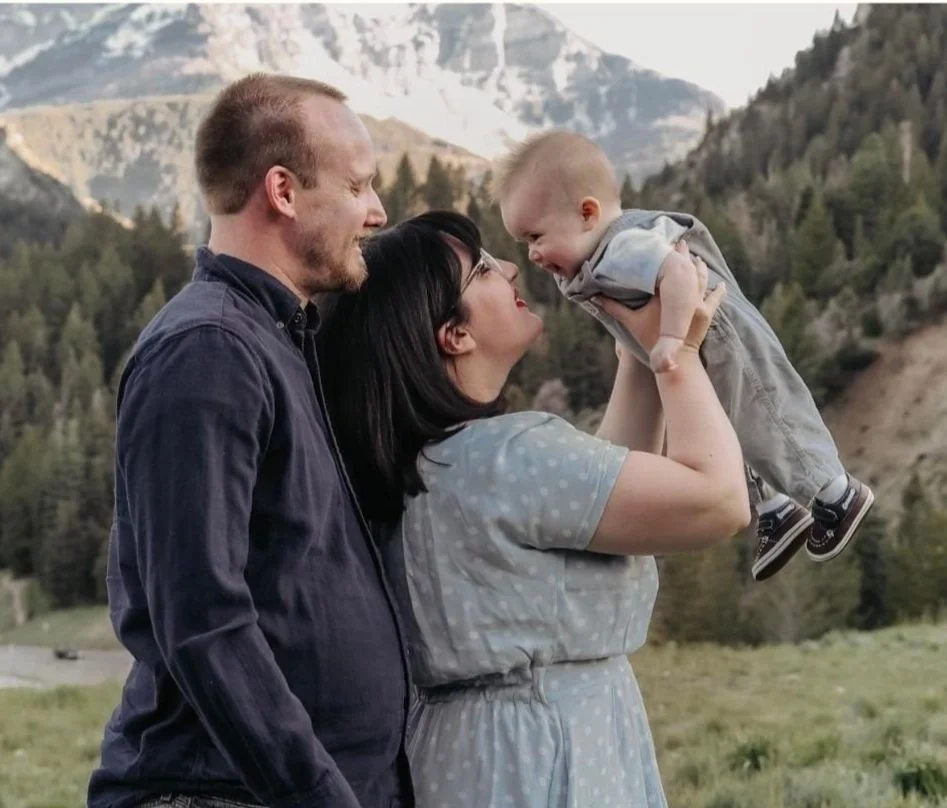
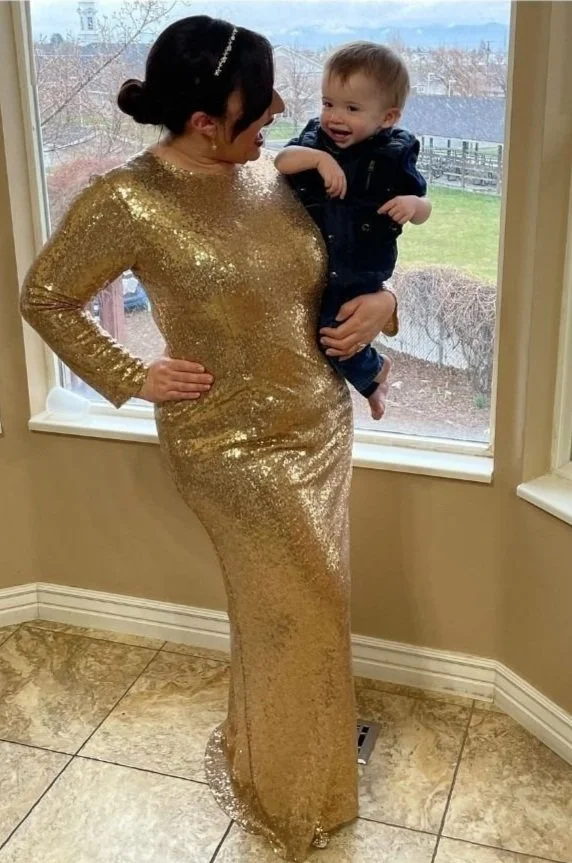

JAVIER AGUILAR
Tomorrow, Javier Aguilar turns 24. He’ll celebrate in Allen, Texas where he is currently working for a light installation company while taking a break from his studies at BYU Provo. He’s a long way from Mexico City, where he was born and raised, but not too far from his parents who moved the family to Texas while he was on a mission. While within their physical proximity, emotionally, family life is a struggle for Javier, whose parents would rather deny the fact that he identifies as bisexual, with his leanings more toward men…
Tomorrow, Javier Aguilar turns 24. He’ll celebrate in Allen, Texas where he is currently working for a light installation company while taking a break from his studies at BYU Provo. He’s a long way from Mexico City, where he was born and raised, but not too far from his parents who moved the family to Texas while he was on a mission. While within their physical proximity, emotionally, family life is a struggle for Javier, whose parents would rather deny the fact that he identifies as bisexual, with his leanings more toward men.
The oldest of five kids, Javier grew up in a well-known, “pioneer” family in the LDS faith in Mexico. His grandfather was a patriarch, sealer, and principal of the LDS church-owned school in their region. As a child, Javier often felt the spotlight on him, with other parents in their congregation saying things to their kids like, “Why can’t you be like Javier? He’s so nice, so obedient.” Overhearing this, Javier would think, “If you only knew.”
His orientation was not at the forefront of his mind quite yet, but Javier certainly knew he wasn’t perfect. He says he was on autopilot mode with church—attending every Sunday with his family, and promising he was reading his scriptures, whether he managed to or not. He tried to always do what would best please his parents and his ancestry who prioritized strict obedience, discipline, and manners—there were no elbows allowed on the table at the Aguilar house. As the oldest kid, Javier knew he was to be the example.
Music was a large part of Javier’s upbringing, and he played the piano and other instruments. He was also involved in theater and the drama club. While his parents always encourage him to play sports, he says he “sucked at basketball but liked it.” He also liked school and tried hard, but claims he wasn’t always a great student.
Javier didn’t realize he was attracted to guys until high school. Before, it was more of a curiosity in which he’d find himself paying attention to those he found attractive. But he didn’t dare talk to his parents about it, as they had once told him if he ever saw someone who was gay, to move in the opposite direction and “keep yourself as far away as possible from this.” Helping him with a Primary talk once, his father even likened homosexuality to one of Moses’ plagues. It wasn’t until he was older that he got to know people in the LGBTQ+ community. But even when he met his first bi person, he didn’t get too close.
The time came for Javier to serve a mission. In his house, his father only half-jokingly would say, “You have two options. You either go on a mission, or I send you on a mission.” So of course, Javier went. It took him a little bit to acclimate, but he did love his mission. Today, he says if he had gotten an answer whether to serve for himself, it might have gone better faster. He spent the first half in Brazil and the second half in Mexico, due to the pandemic. Like many, Javier believed if he did his best on his mission, his attraction to guys would go away. But when he returned, that wasn’t the case – in fact, he found his feelings had only increased.
A couple months after his return, Javier started a long-distance relationship with a girlfriend back in Mexico, trying to please his parents in Texas. At the same time, he started talking to a male friend from the mission and realized he was developing feelings for him. Worried he might out himself or another person, Javier tentatively got in touch with a missionary he’d heard about in Mexico City who was gay, hoping he could ask some questions somewhere, to someone who might get it. Even though they’d never met, they had a productive conversation, though that alone made Javier feel very guilty for going against his parent’s wishes to turn away from all things LGBTQ+. The missionary was helpful and happy to help and directed Javier to the Questions from the Closet podcast, which converted Javier “into becoming a podcast guy.” Javier says, “It was great to finally listen to stories of people who are part of the church but also living out their sexuality. The podcast answered some of my questions.”
Javier had made a friend on the mission who had come out for the first time ever to Javier. In turn, Javier came out to this young man while communicating online, realizing he might even have a crush on him. In response, Javier says, “He lost his mind, he was super happy and called me. This was the first time I was actually starting to accept it.” Shortly after, Javier would occasionally whisper to himself, “I’m bi; I’m part of the LGBTQ community.” His internalized homophobia caused it to take some time to get used to, but gradually he became less afraid. TV shows about LGBTQ+ characters and the movie Love Victor helped Javier feel less isolated. His plan was to only tell two friends ever, but over time he realized he wouldn’t be able to keep it a secret for the rest of his life.
Soon, Javier found himself at BYU Idaho where he found a “cool group of friends who adopted me. They were Latinos, too, so they understood. I was able to come out and they were so supportive, even with having Latino backgrounds where machismo was often still a thing.” In Rexburg, Javier says, “I didn’t break the commandments, but I took a break from church.” After two semesters, he came back home with a new sense of confidence about who he was. He sensed he should tell his parents, but wasn’t sure how. Javier consulted with a close friend in Texas named Ben who was going through similar things. Javier’s depression peaked, and even when he was hanging out with friends, he felt so alone. One night, Javier went to a park where he says he “bawled my eyes out.” He put on his Air pods and walked around, “wanting to scream, to cry; I wanted everything and nothing at the same time.” Javier texted Ben and begged him to join him, risking the embarrassment of having his friend see him in that state just so he didn’t have to be alone. After arriving, Ben convinced Javier that not coming out to people was only going to continue to hurt Javier. Javier agreed and told his friend a date he’d come out to his parents, for accountability.
Having selected a day he’d be meeting his parents at the temple, Javier listened to music to prepare. But when he arrived, there were other ward members there so Javier requested he and his parents go off alone so he could tell them something. His mom expressed excitement, thinking he might be getting engaged (even though he wasn’t dating anyone). When Javier instead told them he liked boys and girls the same way, he saw their faces contort with anger, sadness, and deception. He calls it “a face I’d never seen before. I stopped talking; they didn’t say anything. My hands were sweating, I was shaking. Fortunately, the bishop came up and said, ‘Let’s go inside’.”
For Javier, the session was a blur and when he returned home, his parents called him into their room. He shared more and invited them to read up on LGBTQ+ from the church website. They replied they would not be doing that and told him he had a disease he needed to be cured of. Javier concurred that him telling them was a way of admitting he wanted to be cured, but that he was innocent and hadn’t done anything to cause this. He says, “I couldn’t say anything; the things I said were used against me. I felt destroyed.” He went to his room and texted Ben to share how badly it had gone.
The next morning, Javier begrudgingly went to church but felt “so broken and sad.” He sat next to Ben, who gave him a side-hug that meant the world in support. He says, “I wanted to cry; I just wanted that hug so badly from someone who was supportive of me.” As time passed at home, things were not great whenever the topic of LGBTQ+ came up. Javier returned to school where he participated in a research project wherein he realized how many students in Rexburg vitally needed support after facing discrimination. Javier and his friend Emily started a support group, mostly to combat racism, but also LGBTQ+ bigotry.
The next time he went home, Javier decided to come out to one of his brothers. He was met with confusion and surprise, although his brother tried to be supportive. Javier says, “It was nice to have one more person in my family know about it, though my parents got mad when they found out, saying, ‘You told us you wouldn’t tell anyone, especially your siblings’.” Around that time, Javier’s dad suffered from facial paralysis due to stress, and his mother blamed a portion of it on Javier, claiming it was due to his father’s worry Javier would force their family to not achieve exaltation. Javier has tried not to internalize this. He says he knows his parents love him, and he loves them.
Soon after, Javier heard about the inaugural Gathering and went to Utah with his friend. There, he says he “felt amazing. It was so great to be with people who understood and shared my values, beliefs, and experiences. I came away crying with happiness because of the good experience.” After attending a couple smaller Gathering events, Javier decided to get more involved in Rexburg by helping organize support gatherings. He got to know the person who leads the PRIDE parade in Rexburg, and found himself being asked to lead the walk. He recalls, “It was my first time being out at BYU, and my first PRIDE parade. I was excited but scared.” As the day approached, his anxiety increased but listening to the song “This is Me” from The Greatest Showman, Javier harnessed the strength of the line, “I am brave, I am bruised, this is who I’m meant to be, this is me.”
Indeed, Javier felt every bit himself as he realized how many he’d helped by coming out and sharing his story as he marched in front of hundreds of people at the event. “It was a surreal moment; it felt so good.” Javier ended up transferring to BYU Provo, where he met a friend from Mexico who concurred they needed to start doing Gatherings in Spanish. “All of this journey has required me to step outside my comfort zone to do things I never expected… Now I’m trying to help others in Spanish-speaking countries.”
Javier says things are still rough with his parents, but “as long as we don’t talk about it, we’re fine.” He maintains hope things might improve after hearing Charlie Bird on share on his podcast how it took him 20ish years to understand all this, so he could give his dad some time. Javier likewise figures he can give his own parents more time. Meanwhile, he finds joy with his “chosen family,” which consists of many friends who support him where he’s at. Javier says, “Sharing in the Lift & Love family stories is very important to me even though it might not be what you’d expect. Even though my family doesn’t support or accept this part of me, my chosen family is always there for me. Through my depression, they even got me ice cream. They’re always there.”
In Mexico, Javier shares that a cultural tradition is to call good friends “cousins” once you achieve a certain level of closeness, as if you’ve become family. He says, “I now understand why we’re called an LGBTQ+ community—it’s because we’re never alone’
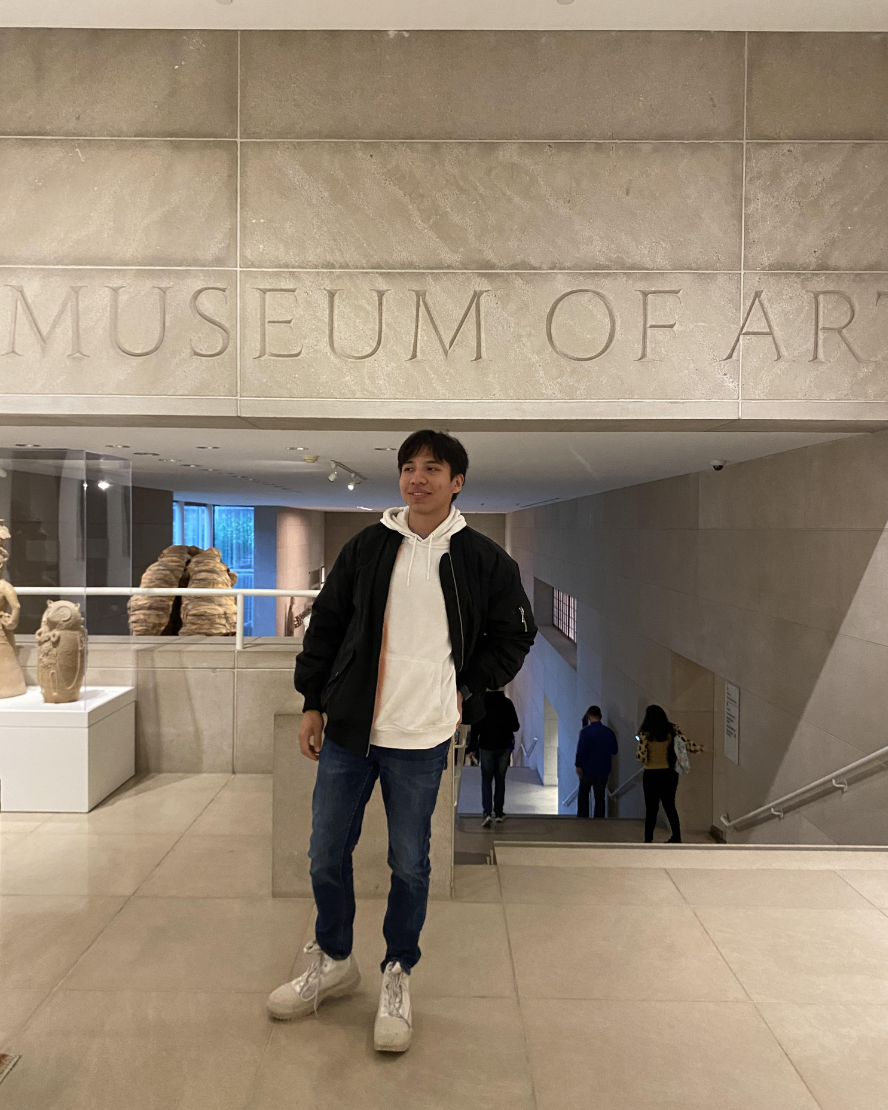
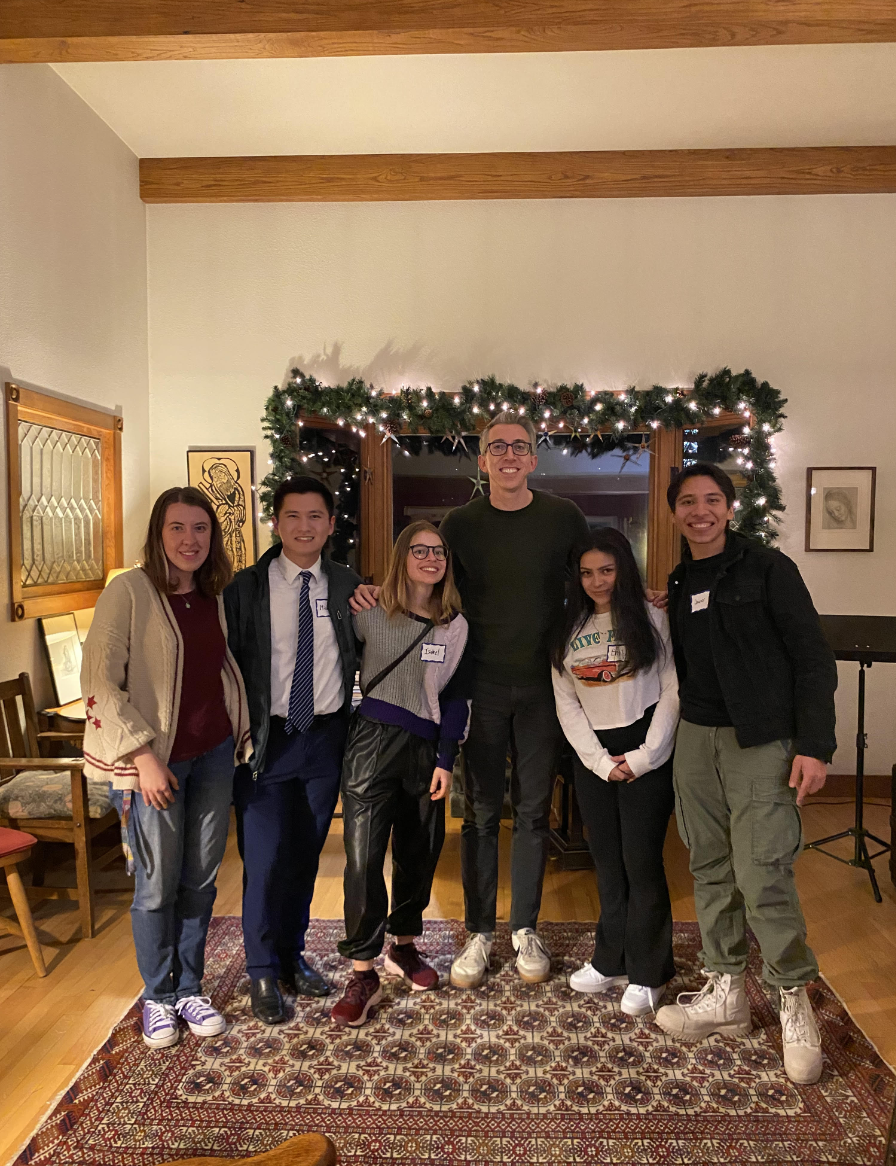
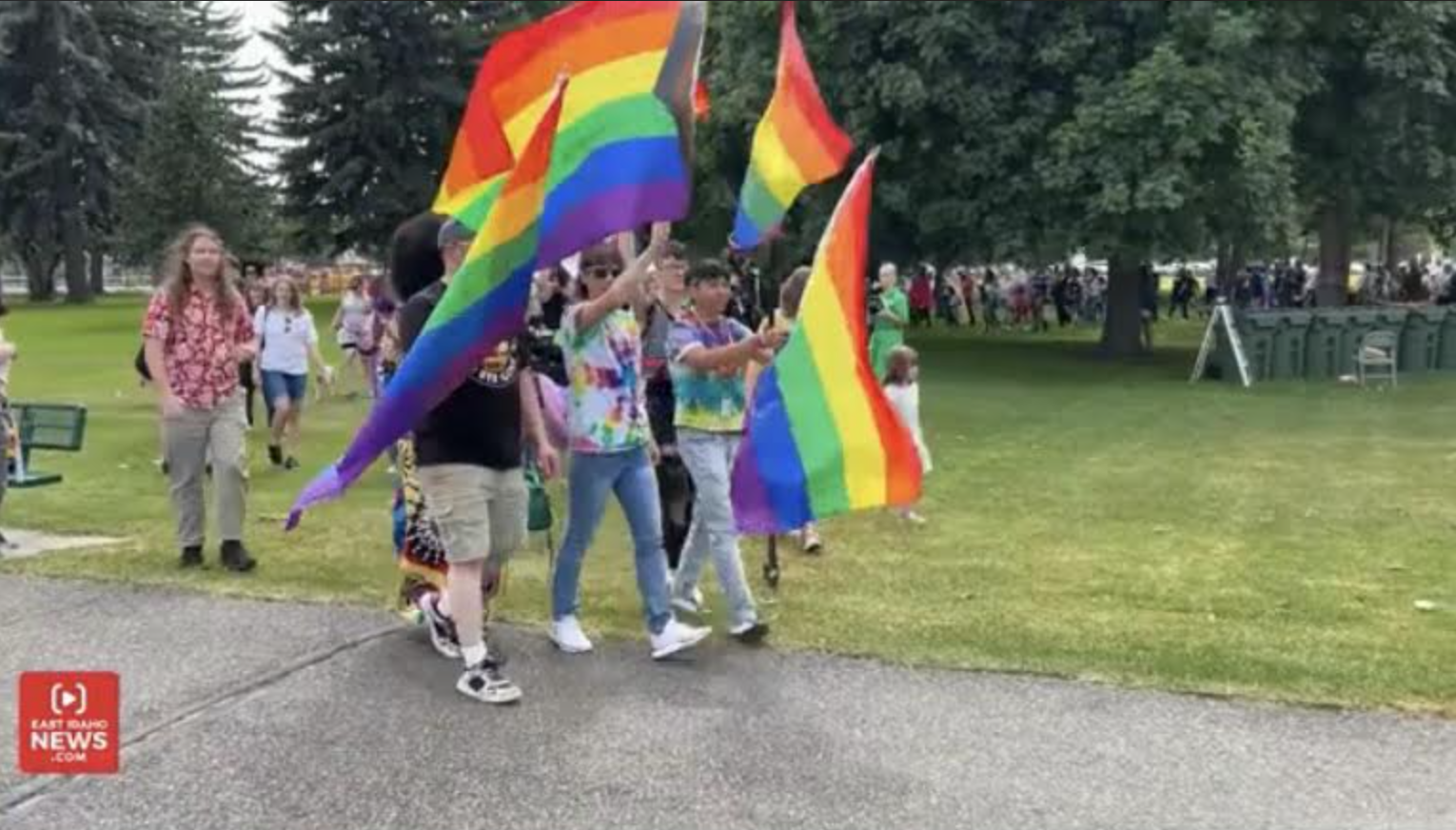

TEGAN (Z) BLANCHARD
Ever since a young age, Tegan said he felt “an inherent, extreme closeness to God in a way that isn’t entirely normal.” Now defining God as Them/his Heavenly Parents, Tegan remembers playing on his bed at age five and talking to God as if They were right there with him. He also felt very aware of himself and the way he’s built. With a high propensity to love others, Tegan always loved love—from romcom movies to having at least three different crushes on girls in elementary school, when that seemed to be the thing to do.
As puberty ensued, Tegan began to notice he felt something much more profound for people of his same sex. At age 12, he told his bishop he was attracted to boys. The bishop responded that it was probably just hormones, that things would change and he’d be fine. Tegan says, “Even though that was not a helpful response, I’m not angry at him at all. I couldn’t have expected him to react in the best of ways given the lack of experience he probably had.” Tegan felt he needed to tell his parents, who he says were not homophobic, but not necessarily educated on the topic either. He still spent about five years having moments of pacing outside their room to drum up the courage. During that process, he’d stare into their large mirror and think about how they saw some of him, but not all of him…
Tegan Zelano Blanchard has lived a lot of life in just 21 years. Tegan, or “Z” as he’s called by friends, is majoring in National Security studies with his foremost interest being in international relations. He hopes to work for the state department and go into diplomacy. But in this hot political climate, he’s quick to state, “I care much less about who’s in charge or how our national political system works, and much more about how to get clean water into under-resourced regions of South America, or how to get sex-education to rural communities that need it. I want my career to be focused on improving others’ quality of life.” He claims if he didn’t need to make money, he’d likely work for an NGO.
Tegan’s global awareness was certainly influenced by his parents, who both work in international business/relations themselves. He was raised bilingual (English and Spanish), and is the youngest of four kids–with his three older sisters all now married. Tegan spent the first nine years of his life in Utah, then moved to Costa Rica for a year, then back to Utah, then to Chula Vista, CA at age 11. When all his sisters had moved out and Tegan was a sophomore in high school, his parents felt strongly they needed to move to Ecuador for business opportunities. Despite this inspiration, it wouldn’t be until the summer before his senior year of high school that this prompting would come to fruition. His father had served a mission there, and the Blanchards started a series of businesses in Ecuador selling everything from carpet cleaning to dragon fruit, and sourcing chocolate and flowers. Their impression for the move felt divine, and after two years in Ecuador, Tegan’s parents were called to serve as bishop and still serve in that capacity.
But their kids all now live in Utah, with Tegan attending UVU with one of his sisters. He loves taking a sculpting class with her, and recently enjoyed going clubbing in Salt Lake with all his siblings. Having just returned from his mission in Argentina three months ago, Tegan is full of life and eager to enter this next chapter. While there were dark periods in his life, he now exudes optimism and purpose.
Ever since a young age, Tegan said he felt “an inherent, extreme closeness to God in a way that isn’t entirely normal.” Now defining God as Them/his Heavenly Parents, Tegan remembers playing on his bed at age five and talking to God as if They were right there with him. He also felt very aware of himself and the way he’s built. With a high propensity to love others, Tegan always loved love—from romcom movies to having at least three different crushes on girls in elementary school, when that seemed to be the thing to do.
As puberty ensued, Tegan began to notice he felt something much more profound for people of his same sex. At age 12, he told his bishop he was attracted to boys. The bishop responded that it was probably just hormones, that things would change and he’d be fine. Tegan says, “Even though that was not a helpful response, I’m not angry at him at all. I couldn’t have expected him to react in the best of ways given the lack of experience he probably had.” Tegan felt he needed to tell his parents, who he says were not homophobic, but not necessarily educated on the topic either. He still spent about five years having moments of pacing outside their room to drum up the courage. During that process, he’d stare into their large mirror and think about how they saw some of him, but not all of him.
The Blanchards lived in California in 2016, when President Obama legalized same-sex marriage. Tegan remembers that time as a hot debate in which he felt his church community was against him, while his school community was for him. “I thought, they’re debating me—I’m the topic of the debate,” he recalls. But he also tried to remain in a state of outward denial. Tegan says most of his queer friends grew up hearing hard things from relatives, and while he loves that his middle name is his great-grandfather’s and loves his extended family, he recalls a close relative telling him that gay marriage was an attack on the family. As a young child, he interpreted that to mean he was Satan’s attack on the family. But all things considered, Tegan said he had a happy, idealistic childhood with a loving family.
Having never experienced depression before, 2020 wrecked Tegan. When the pandemic hit, he was in a “difficult but growing” relationship with a girl, especially because they were both struggling deeply with their mental health. They ended up cutting it off just before his depression began to take hold. “I remember this was the first time in my life I felt absolutely no hope, no light at the end of the tunnel. I felt God less than any other part of my life. Though looking back, I can see just how intimately They were involved.” The Blanchards moved around a lot during this period—to five different homes just during the pandemic. Politically, Tegan felt an intense connection to the pains of marginalized groups he saw online. Feeling the impact of George Floyd’s death, he became involved in BLM, and he started experiencing a faith crisis, questioning the history of racist policies in the church, as well as limitations against women and LGBTQ+. “Something within me cried out so desperately for the pleas of these people. I can’t compare the experiences side by side; each is distinct with its own challenges. But my heart bled so deeply for people struggling to find a place, because I too had felt that pain of feeling like there was no place for me.”
In 2021, when he was 17, Tegan’s parents sat him down to listen to a podcast about sex “to make the topic less taboo.” At that point, Tegan finally decided five years of carrying his stress alone was too much. He’d had some practice, having come out to three or four friends prior, which helped prepare him to face his parents at the end of the podcast and say, “I’m going to throw you a curveball at you right now… I think I’m bisexual.” He says his parents replied with a huge embrace, tears, and “so much unadulterated love.” He was then able to open up and share what it had been like. His parents advised him to focus on girls, but he says moving forward, that advice didn’t prove to be helpful and the topic didn’t come up much again. Tegan’s sisters and brothers-in-law also responded with full support on video calls in which he told each of them, one by one. He’s not sure if they found it a surprise, as he says his interests had always been more artistic, and he recalls his cousin overhearing his parents talking about him at age eight and wondering if he might be gay because he was “very effeminate” as a kid—something Tegan at times was bullied for. When his cousin told him that, Tegan remembers breaking down sobbing and then trying to act more masculine from then on out. Though now, he’s comfortable saying he believes he was born gay,
The day Tegan and his parents decided to move to Ecuador was the same day his friends in California called saying school was canceled due to the global pandemic. But it wasn’t until June of 2021 that they landed in their new home country. The Blanchard’s initial residence in Ecuador was in a dangerous area and his mom was robbed at knife point while going to the gym. After so much transition, and now continued isolation with COVID-19, Tegan says this was the most overwhelming time in his life, grappling with his faith crisis, sexuality and the uncertainty of his living situation mixed with extreme limitations on his ability to socialize with people of his age. Yet, he endured.
In Ecuador, Tegan’s faith crisis culminated with the figurative breaking of the shelf. Harboring internalized homophobia made the cognitive dissonance worse, and church became a difficult place in which he felt so “othered” that there were times he’d stay outside the chapel, sobbing. Yet, watching queer-affirmitive media like Love, Simon and Heartstopper, reading queer novels, and hanging out with queer friends, made Tegan begin to feel less “othered.” He remembers countless nights on his knees praying desperately, not angry at God, but “so worn out feeling so much pain and hurt in the silence.”
That Thanksgiving, Tegan’s sisters all came to visit and held an intervention. They were worried about Tegan’s mental health because to them, “the light had gone out of [his] eyes.” He confirmed he didn’t want to take his life, but felt he had been in darkness with no hope for so long, that he had nothing to live for. Looping in their parents, Tegan’s dad eagerly agreed to support him pursuing therapy, and Tegan says meeting with life coach Jill Freestone (online) made all the difference. Tegan loved how her approach is affirmative both toward the church and the queer community, and in his first session, she centered their work on a more expansive view of God and Heavenly Mother, with which Tegan identified deeply. Tegan now says, “Learning about the Divine Feminine kept me alive spiritually at that time.”
After finding some healing, Tegan went to visit his sisters in Utah and felt “free” for the first time in two years – free to drive, to go out at night, to see people. For the first time, he made out with a girl and “kept his standards,” but did “just about everything fun one could do that’s still legal.” This time, when he went back to Ecuador, his parents had moved to an incredible house with a pool in a safer area, and he was able to design his bedroom with posters and LED lights, just the way he wanted. They could now go outside without getting robbed. Continuing to work with Jill, Tegan moved forward with his mission papers which he says felt “batsh!t crazy” amid his faith crisis; but he felt a desire to proceed in a tentative but trusting mindset. A 2022 talk by Elder Dallin H. Oaks set him back and made him want to give up, but Tegan felt propelled by the wisdom in Jared Halverson’s words, “Don’t let a good faith crisis go to waste.” Following the hard talk, after more than a year of intense bitterness, Tegan hit the point of apathy and screamed at heaven, “I just don’t understand!” At that exact moment, his sister in another country texted him: “They love you.” Tegan screamed up again, “What am I supposed to do now?” He got another text from his sister: “So much.” Tegan says, “It was so precise and perfect in timing that I couldn’t see it as anything but divine. Although I didn’t receive a specific answer like I was hoping for, I felt that a knowledge of Their infinite love would be enough to keep moving forward.”
“Even in apathy, I thought, ‘If God loves me this much, I could go serve’,” says Tegan. His parents gave him autonomy to make his own choices, and supported him as he later was called to Buenos Aires, Argentina. Right before he left, Tegan again went to Utah for some fun with his sisters, and this time he kissed his first boy—which felt important to him, to affirm you can be queer and a faithful member. He says, “Part of it was a ‘take that’ to so many years of pain. I wanted to show I can be me and a disciple of Christ. A week later, I went through the temple and was endowed. There, I better was able to understand that God is much more expansive than we define Them to be. I still have so much left to learn.”
Tegan says his experience in the Mexico MTC was brutal, but he loved every minute of his mission, where he grew close to his mission leaders and spent a lot of time serving in the office. As he prepared his farewell talk, he says he felt the first spark of the joy of the gospel in two years, something that he had deeply missed during the darkest moments of his depression and faith crisis. He realized he could focus on talking about Christ during his two year service. And that’s what he did. He says, “My faith crisis redefined my relationship with the Savior and got it to a place where I could really reach people… I learned how to more deeply love God, others, and myself and developed the divine gifts of empathy and charity. I recognize others have had hard experiences serving a mission and I weep with them and validate their pain. But for me, it was life-changing.”
Now having been home for three months, Tegan is “going on a ton of dates and learning so much about myself and how I was made, and more about God and the way I connect with Them.” Though he originally came out as bisexual, he is learning that attraction is more complicated than he anticipated and definitely leans towards men. Above all, however, he’s most interested in dating people willing to invest in a personal relationship with God, saying, “That has led me to my kind of people, those who are genuinely searching for a connection with the Divine. But if they’re in a potent faith crisis or on a different part of their faith journey than me, that’s still okay.”
Tegan says he is wholeheartedly committed to “living the life and future God would have for [him], no matter what that is.” Though he doesn’t believe that necessarily means marriage to a woman in the temple is the only way. “If God says, ‘I want you to always stay close to me and marry a man that you love,’ or if God says, ‘Here’s the perfect woman for you’, so be it. I trust Them way more than I trust myself.” Tegan continues, “I had made certainty an idol of sorts; it had become my God as I sought after it looking for peace and comfort. It was only when it was taken away from me in those two years of intense darkness that I came to realize only God can give me lasting peace. It was God’s way of teaching me to make Them my God and idol. And I now know more than ever that my future is much brighter as I keep my Heavenly Parents as my focal point and closest confidants.”
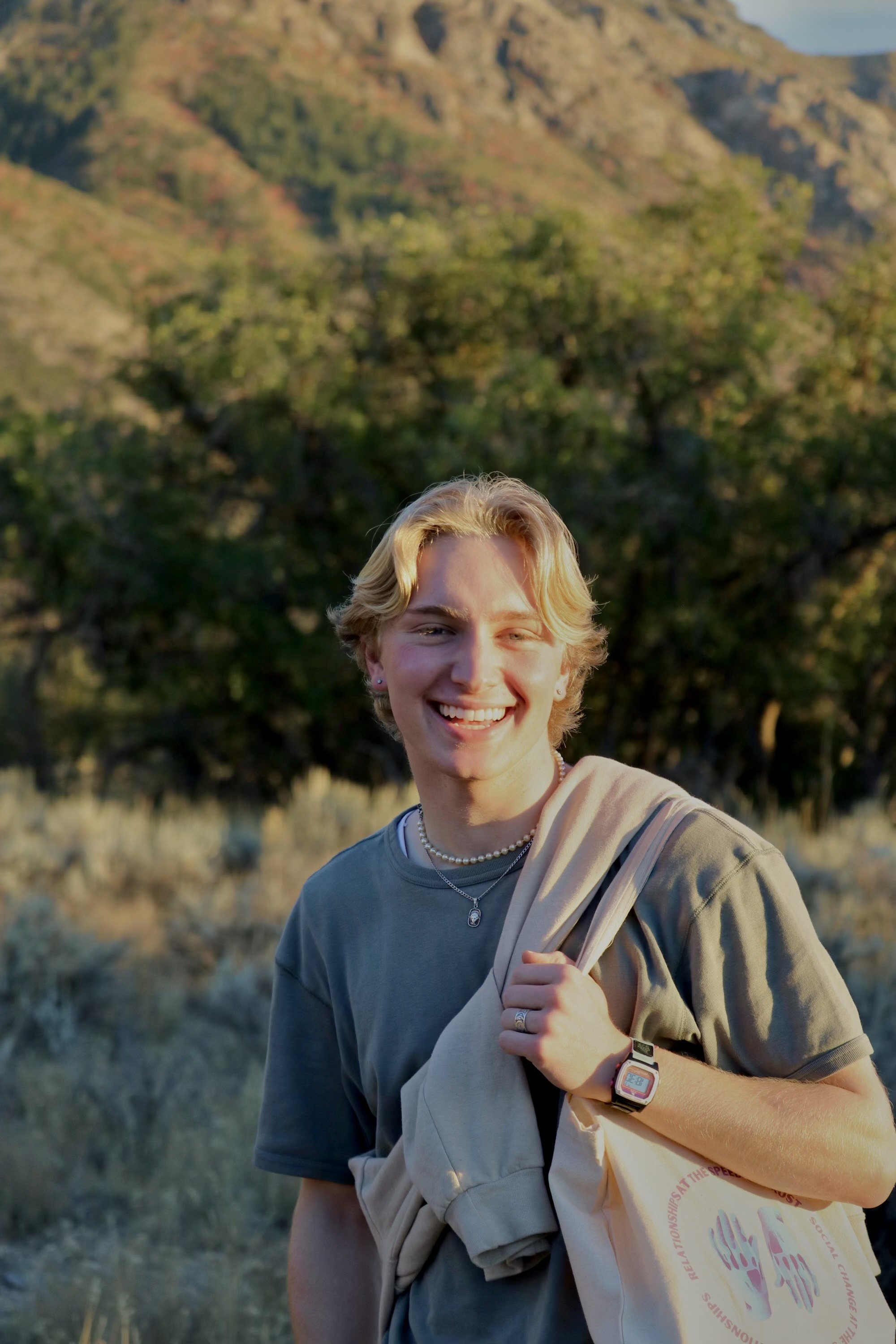

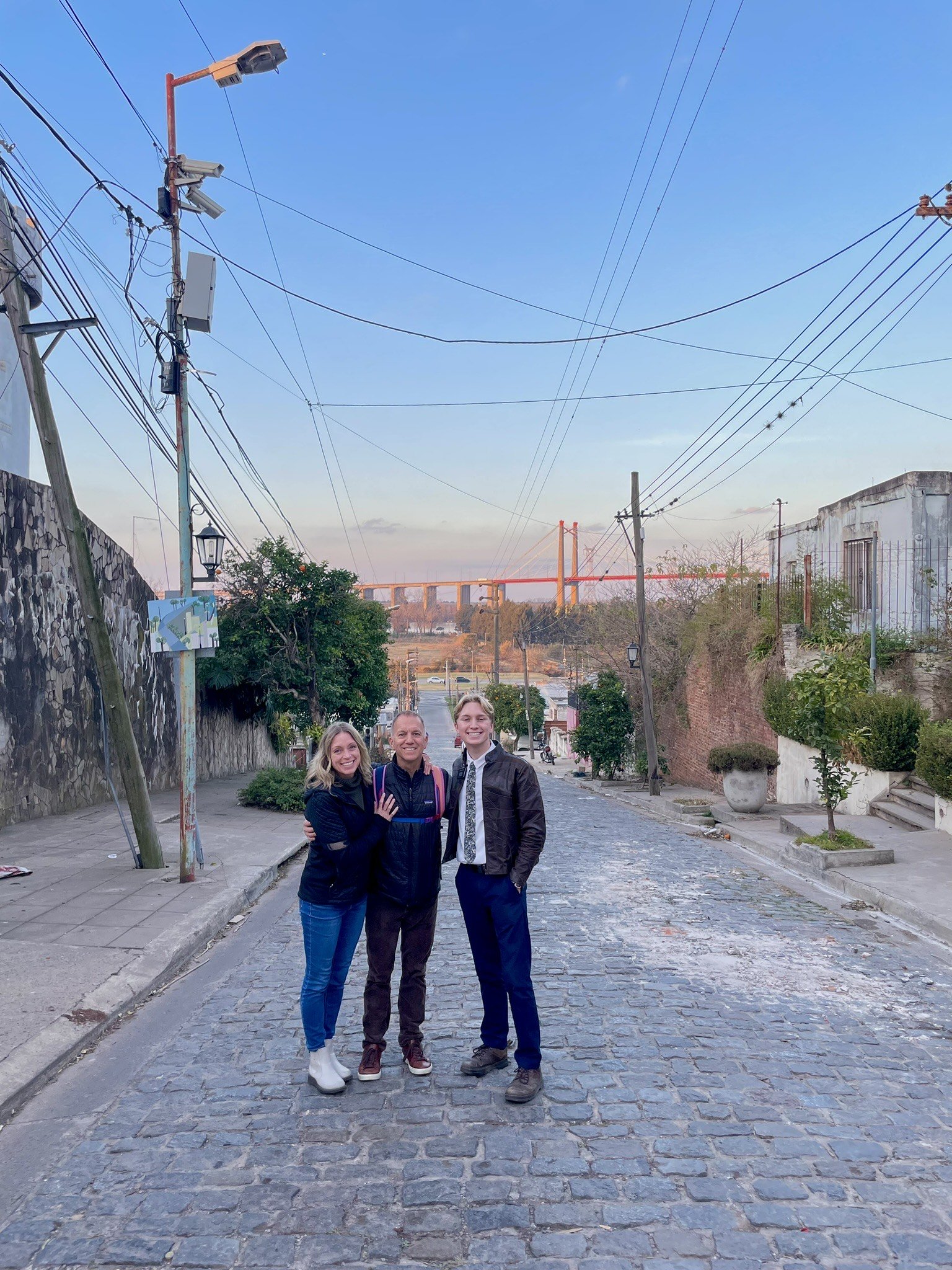


TRENT CLARKSON
“If you’ve ever had a debate with the spirit, you know you can’t win.” That was Trent Clarkson’s experience while sitting in a car late one night with a friend at age 17. The difficulties of his life had come to a head. School and the social scene were not going the way he wanted, which had wrecked his mental health. Looking to escape, he asked a friend to go to a movie and out for a drive. While navigating the dark roads, Trent felt a strong impression he needed to tell his friend what was really going on, including the things he’d been pushing down and trying not to consciously recognize himself. He started slowly, at first only sharing the depths of his severe depression. But it kept coming to his mind—the “it” he’d never told anyone about yet. “Saying those words felt physically impossible,” says Trent, “but I turned to him and said I need to tell you something else—I’m gay. It was the first time I’d actually acknowledged that part of my life, the first time I accepted it.”
“If you’ve ever had a debate with the spirit, you know you can’t win.” That was Trent Clarkson’s experience while sitting in a car late one night with a friend at age 17. The difficulties of his life had come to a head. School and the social scene were not going the way he wanted, which had wrecked his mental health. Looking to escape, he asked a friend to go to a movie and out for a drive. While navigating the dark roads, Trent felt a strong impression he needed to tell his friend what was really going on, including the things he’d been pushing down and trying not to consciously recognize himself. He started slowly, at first only sharing the depths of his severe depression. But it kept coming to his mind—the “it” he’d never told anyone about yet. “Saying those words felt physically impossible,” says Trent, “but I turned to him and said I need to tell you something else—I’m gay. It was the first time I’d actually acknowledged that part of my life, the first time I accepted it.”
Looking back now, Trent calls that night lifechanging. He says owning this part of him “set me on track to figure out what was really going on in my life.” Life didn’t immediately become easier; in fact, things got worse. Trent remembers being alone in his bedroom grappling with intense confusion. Since his childhood growing up in a “lovely little town called Kanab, UT” near Cedar City, one of six children in a devout family who practiced daily prayer and scripture study and weekly LDS church attendance, Trent had felt an instilled knowledge of not only who God was but that He loved him and wanted to communicate with him from a very young age. “I knew He was there and would talk to me if necessary, which set me up well for later in life when things went awry.”
Yet one Sunday at age 17, Trent battled darkness and gloom while sitting on a pew in church with his family thinking about “existential things”—who he was, what was his purpose, why this was happening to him and that if this was his reality, what else might be different than all he had learned since childhood? “I wondered if there was a God, where was He, and why He wouldn’t talk to me anymore.” Trent says an indescribable feeling washed over him and he felt an immense sense of peace, love and comfort. Words came into his mind: “I know you, I see you, I love you.” Trent says it took all that he had to not sob on that pew. “I like to reflect on that experience. It only answered three of my 1,000 questions but it confirmed God is there, God knows me, and God does care about what’s happening to me.” It also taught Trent that it’s ok to have unanswered questions, and that some questions are more important than others.
Over the next year, Trent was able to open up to more people—a few close friends, a trusted therapist. He accepted he was gay and came to the mindset that he didn’t have a problem with it because God didn’t have a problem with it. His senior year of high school was a little better, and soon it became time to put in his mission papers, something that had been impressed on his mind years before. But it took him a year to get the papers out, and his call to Independence, Missouri. A major history buff, Trent was thrilled to walk and talk through all the church history sites, but an upset occurred. In February 2020, Trent entered the Provo MTC where he stayed for three weeks and watched as the world crumbled with the pandemic. His second week in, they stopped admitting new missionaries and every day his MTC teachers would give updates that seemed unfathomable: “No NBA playoffs; no in person general Conference.” Trent was still headed to Missouri but the Frontrunner train he took to the airport suddenly stopped in Draper at 8am. There had been a huge earthquake (the one in which the SLC temple’s Moroni dropped his trumpet). Trent didn’t feel it on the train, but had to reroute to the MTC. Swept up in all the speculation at the time, he thought, “We’re going to the land of Zion, and with all the prophecies about earthquakes, plagues, locusts in Africa, I just wanted to get to Independence to be the first to meet Jesus.” The next day, he was given the all clear to go out. Five days later, lockdowns shut down most of the world. As a missionary, Trent wasn’t allowed to leave his apartment for the next four months besides P-day grocery runs, but he says, “I’m grateful for how it worked out. I’m a huge believer in the Lord’s timing.”
While Trent had reconciled being gay, he wasn’t quite sure how he’d navigate shelving it for two years. He was able to circumvent certain conversations and “pretend it’s not a thing,” but eventually realized, “God had other plans.” Two or three weeks in with his first trainer, an incredible person Trent learned a lot from, Trent felt an assurance from the spirit that he should tell his companion he was gay. He sat on it for a few days, then got the confirmation from above that the Lord would be ok, and the companion would be ok if he shared. Visibly shaking, Trent said, “I’m gay. I hope that’s not an issue.” Trent says the companion responded “as well as I could have hoped. I think it was a good experience for both of us.”
Throughout his mission, Trent would occasionally feel similar nudges that it would be ok to tell certain trusted people, and every time he did, he said it opened up some of the best experiences on his mission as he felt closer to those around him and better about himself as “the irreconcilable parts came together.” He emailed his mission president to let him know, and in return got the response, “If you need to talk to me, I’ve available, but I have no worries.” As missions are small communities, word spread, and Trent learned he wasn’t alone, estimating that about 10-15 other LGBTQ+ missionaries opened up in his zone over the next two years. Trent especially loved coming out to people who had little experience with the LGBTQ+ community. One day while doing their work on social media, a district leader next to Trent made a comment about a gay couple on a Facebook profile. Trent stopped and looked at him and said, “Elder, have you ever worked with LGBTQ individuals before?” The DL said, “I haven’t; have you?” Trent replied, “Yeah, I deal with that quite frequently. I’m gay.” The district leader immediately and profusely apologized. Trent replied, “Don’t worry, Elder, it’s understandable—not having worked with LGBTQ individuals before. Mind if we can talk about it?” Trent then shared his story and explained what life was like for him. He loved sharing that, “Even though I experience same sex attraction, I love the church and am on a mission.” Trent says he grew to treasure the connections that came from learning of others’ experiences with God and life as they exchanged stories.
Trent worried about returning home after his mission. He’d liked having his life put on pause, focusing instead on others’ lives. He knew when he returned, he’d have to deal with tough questions. Still, he filled out a “My Plan,” a tool missionaries are given to map out their return plan to follow. He saw how a good part of that deals with “how I will stay active in the church and marry in the temple,” something he knew might not fit in God’s plan for him. “While much of the plan was helpful, it wasn’t specific for my needs, and I had to figure out a lot on my own—something I’ve learned to become comfortable with.” Trent didn’t feel like he could try to date women, but also felt, “If by some act of God some amazing young lady comes up, I’ll put nothing outside of God’s power.” Trent says he loves the framework the church gives, although since he’s returned from his mission, he says, “I haven’t been the most active. I don’t know where I’m going or doing, but I know that God lives and that Jesus Christ is the son of God. I have immense faith in Jesus Christ as my Lord and Savior… That gives me light when there’s no path. If nothing else, I know that’s true.” Trent says he also loves the Bible and Book of Mormon and has felt a lot less alone listening to the Questions from the Closet podcast over the years. He says he’s fine sitting in ambiguity.
At his first Thanksgiving back from his mission, Trent sent a coming out text on his family group chat, and everyone was supportive. “My younger siblings were a little confused at first, but they figured it out and moved on. Things have gone great ever since.” Of the pretty seamless transition, Trent says most of them had already known, though he says he’s a “pretty straight-passing gay guy; the straightest gay person I know.” A mechanical engineering student at Southern Utah University, Trent hopes to work with robotics, possibly in aerospace, a shared passion with his brother with whom he’d love to go into business. Trent currently does 3D printing and loves fishing, cooking, reading, and again, all things history—whether it be church history or American history. He works at a historical museum outside of Kanab where he loves to exchange stories with patrons all day. “It’s amazing to see what inspires people to be people.”
While he doesn’t consider himself a social person, claiming “I like to maybe have ten people in my vicinity,” Trent braved up and went to the first Gather conference last year—an experience that he loved and that inspired him to go back this year and to also start a Gather group at his college campus. He says SUU can be a difficult place to be as it’s “more traditional than Provo. Finding connection there with the church isn’t hard, finding connection with LGBTQ+ people is harder. Finding connection with both is almost impossible.” Trent felt “immensely grateful” when the Gather curriculum was released. Though only about five people currently gather in his group, Trent is excited to be part of the influence where people can strand in a room comfortably and hold both identities—as a person of faith and LGBTQ+.
“Doing this work that I feel called to do—I feel it as strongly as I felt called to go on a mission. I love knowing this is a work the Lord is very interested in doing. It’s encouraging to know progress is being made. As hard as things get sometimes, I think things are only getting better. We’re on the right track; we’re headed where God wants us to be.”